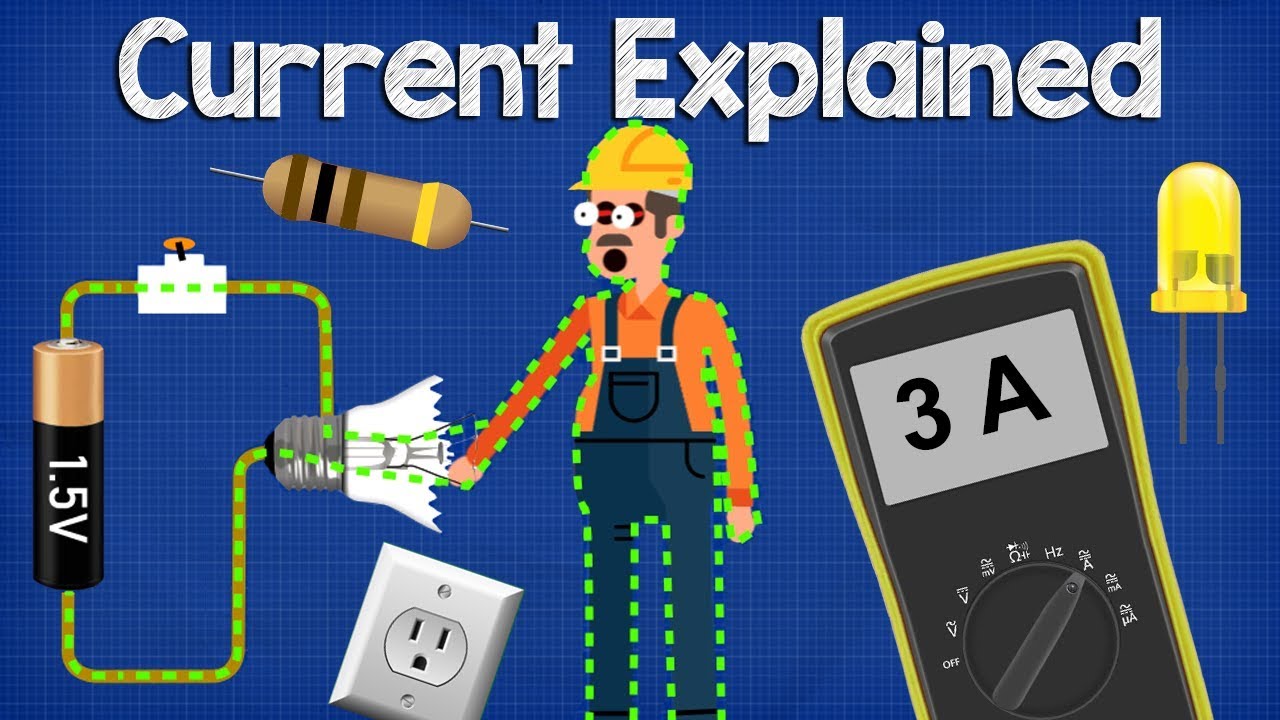
What is CURRENT electric current explained, electricity basics
video description
Date: 2023-11-17
Related videos



Comments and reviews: 25
TASan
I still don't understand how a led strip rated for 5V needs a 5V 40A power supply, and a 24V strip only needs 6A. Well, I do understand the mathematics behind it and that the amps can decrease when the voltage increases. But why? In this video we are talking current and volts and that the device can't handle too much. But if volts is the pressure and when the pressure is low, the number of electrons per second skyrockets to provide the same watt? Why? Shouldn't the amps also go down when the pressure gets very low? Instead it goes up and you need thick wires to stop burnout on a measly 5 volts? I don't get it.
reply
I still don't understand how a led strip rated for 5V needs a 5V 40A power supply, and a 24V strip only needs 6A. Well, I do understand the mathematics behind it and that the amps can decrease when the voltage increases. But why? In this video we are talking current and volts and that the device can't handle too much. But if volts is the pressure and when the pressure is low, the number of electrons per second skyrockets to provide the same watt? Why? Shouldn't the amps also go down when the pressure gets very low? Instead it goes up and you need thick wires to stop burnout on a measly 5 volts? I don't get it.
reply
Jonathan
Ok im still confused, so tge negative is trying to get rid of the extra electrons and the positive side is trying to het as many as it can get or suck in right, basically, so you are saying the possitive side is also tdying to get rid of to many electrons and the negitive side is excepting them, and in a way sucking them in from or through the positive side of the battery and the negative side is again trying to get rid of extra electrons ant the positive side is trying to suck in as many as it can get and so on and so on. and that makes a circuit? Please help thanks
reply
Ok im still confused, so tge negative is trying to get rid of the extra electrons and the positive side is trying to het as many as it can get or suck in right, basically, so you are saying the possitive side is also tdying to get rid of to many electrons and the negitive side is excepting them, and in a way sucking them in from or through the positive side of the battery and the negative side is again trying to get rid of extra electrons ant the positive side is trying to suck in as many as it can get and so on and so on. and that makes a circuit? Please help thanks
reply
Alexa
This video doesn't explain amps very well at all and is confusing in the way it says an amp is 1 coulomb, and a coulomb is however many atoms per second. A coulomb is just the amount of atoms. An amp is a coulomb per second. The amp is the rate not the coulomb.
Then jumps to an example that makes no sense to the layperson, why does a 1. 5 watt lamp with a 1. 5 volt battery need 1 amp? And why then when you measure it with the multimeter does it measure 1. 5 amps?
reply
This video doesn't explain amps very well at all and is confusing in the way it says an amp is 1 coulomb, and a coulomb is however many atoms per second. A coulomb is just the amount of atoms. An amp is a coulomb per second. The amp is the rate not the coulomb.
Then jumps to an example that makes no sense to the layperson, why does a 1. 5 watt lamp with a 1. 5 volt battery need 1 amp? And why then when you measure it with the multimeter does it measure 1. 5 amps?
reply
Boldrin
Electricity is a form of energy resulting from the movement or flow of electric charge. It is a fundamental force in nature.
Electrons play a crucial role in electricity as they are the carriers of electric charge. In most materials, electrons are loosely bound to their atoms and can move freely within the material when an external force, such as a voltage, is applied.
reply
Electricity is a form of energy resulting from the movement or flow of electric charge. It is a fundamental force in nature.
Electrons play a crucial role in electricity as they are the carriers of electric charge. In most materials, electrons are loosely bound to their atoms and can move freely within the material when an external force, such as a voltage, is applied.
reply
force
A small correction.
Current is not the flow of electrons. Electrons move very slowly.
Current is the flow of charge. And charge somehow travels at the speed of light.
This is why electricity confuses me. I cannot understand how electric signal can travel at speed of light while electrons travel at a few millimeters per second.
reply
A small correction.
Current is not the flow of electrons. Electrons move very slowly.
Current is the flow of charge. And charge somehow travels at the speed of light.
This is why electricity confuses me. I cannot understand how electric signal can travel at speed of light while electrons travel at a few millimeters per second.
reply
Chris
1: 18 The more voltage we have, the more electrons can flow. That could have been clearer imho. The number of electrons in a simple circuit is fixed (it's a function of the 'charge density' in the conductors. When you apply more voltage, that fixed number of electrons will move faster around the circuit, giving a higher current.
reply
1: 18 The more voltage we have, the more electrons can flow. That could have been clearer imho. The number of electrons in a simple circuit is fixed (it's a function of the 'charge density' in the conductors. When you apply more voltage, that fixed number of electrons will move faster around the circuit, giving a higher current.
reply
Possum
Your videos are outstanding, thank you for the effort you've put into them! So I have a gnawing question bothering me for eons. I hear the terms electron flow and current flow, and have a basic idea of the difference, but it would be helpful for a visual. Any recommendations?
reply
Your videos are outstanding, thank you for the effort you've put into them! So I have a gnawing question bothering me for eons. I hear the terms electron flow and current flow, and have a basic idea of the difference, but it would be helpful for a visual. Any recommendations?
reply
Rowan
One question if anyone can help - I dont understand the fuse example at the end with the four lights. Why does adding more lights cause the current to increase and break the fuse? Wouldnt adding more work to the same voltage reduce the current, not increase it?
reply
One question if anyone can help - I dont understand the fuse example at the end with the four lights. Why does adding more lights cause the current to increase and break the fuse? Wouldnt adding more work to the same voltage reduce the current, not increase it?
reply
Abu
Thank you for all this work! Just a question: you say one amp = one coulomb, and one coulomb is a lot of electron per second. From what I've seen, one amp is equal to one coulomb per second and a coulomb is just a quantity of electron, right?
reply
Thank you for all this work! Just a question: you say one amp = one coulomb, and one coulomb is a lot of electron per second. From what I've seen, one amp is equal to one coulomb per second and a coulomb is just a quantity of electron, right?
reply
Rohan
At 4: 05, you say we convert ac to dc using an inverter. But of course, the visuals show DC being converted to AC using the inverter, which is correct. I believe you've said in the past, that AC is converted to DC using a rectifier?
reply
At 4: 05, you say we convert ac to dc using an inverter. But of course, the visuals show DC being converted to AC using the inverter, which is correct. I believe you've said in the past, that AC is converted to DC using a rectifier?
reply
iii
something i dont understand, voltage is the amount of energy per 1 coulomb, based on that when the voltage increases, what is supposed to increase is the amount of energy per one coulomb, then why the number of electrons increases?
reply
something i dont understand, voltage is the amount of energy per 1 coulomb, based on that when the voltage increases, what is supposed to increase is the amount of energy per one coulomb, then why the number of electrons increases?
reply
Ghulam
Can you please clarify. AC being used for long distance and not the DC? There are many people saying that the DC is used for long distance and better efficiency and the AC is just easier for step down and step up scenarios?
reply
Can you please clarify. AC being used for long distance and not the DC? There are many people saying that the DC is used for long distance and better efficiency and the AC is just easier for step down and step up scenarios?
reply
Scott
Absolutely brilliant video series. I am training to become an electrician and these videos are accelerating my knowledge and learning. thanks for the clear instructions, great visual aids, and repeating key messages.
reply
Absolutely brilliant video series. I am training to become an electrician and these videos are accelerating my knowledge and learning. thanks for the clear instructions, great visual aids, and repeating key messages.
reply
Bruce
I've watched your videos on testing AA batteries - great stuff. You suggest using a 100 ohm resistor with a multimeter; but I find there are 1/4w and 1/2w resistors. Does it make any difference which resistor I use?
reply
I've watched your videos on testing AA batteries - great stuff. You suggest using a 100 ohm resistor with a multimeter; but I find there are 1/4w and 1/2w resistors. Does it make any difference which resistor I use?
reply
Fish
How are you connecting that voltmeter it doesnt make sense to me. Your portraying it as you cut the wire in half and testing each side of the wire? I dont find that to be a practical way of testing the amps
reply
How are you connecting that voltmeter it doesnt make sense to me. Your portraying it as you cut the wire in half and testing each side of the wire? I dont find that to be a practical way of testing the amps
reply
Fahmi
hi sir, there's something i want to ask
if resistance can make the electric current decrease, why does every point have the same amount of electric current, even though the point is before the obstacle
reply
hi sir, there's something i want to ask
if resistance can make the electric current decrease, why does every point have the same amount of electric current, even though the point is before the obstacle
reply
Liul
The coulomb measures charge, and the ampere measures the flow of charge. One ampere of current is equal to one coulomb of charge passing a point in a wire in one second.
reply
The coulomb measures charge, and the ampere measures the flow of charge. One ampere of current is equal to one coulomb of charge passing a point in a wire in one second.
reply
Jason
All was perfect except the end. a human touching a busted buld or an energized wire or component while completing the circuit will not trip the breaker.
reply
All was perfect except the end. a human touching a busted buld or an energized wire or component while completing the circuit will not trip the breaker.
reply
Kurt
Great videos! Thank you very much!
First time I get to understand how things are working.
But I realy realy don't like the background music.
reply
Great videos! Thank you very much!
First time I get to understand how things are working.
But I realy realy don't like the background music.
reply
Tony
Paul, a resistor is actually like a traffic jam, I'm pretty sure you've said that same thing in a later video, saying it isn't a speed bump
reply
Paul, a resistor is actually like a traffic jam, I'm pretty sure you've said that same thing in a later video, saying it isn't a speed bump
reply
kimsmoke17
The electrons dont actually flow. The electric/magnetic field carry the energy. The flow rate of the electrons is very very small.
reply
The electrons dont actually flow. The electric/magnetic field carry the energy. The flow rate of the electrons is very very small.
reply
LifeOnAgriculture
Why resister is connected in +ve side of the battery. Can we connect it in -ve side of the Battery also?
reply
Why resister is connected in +ve side of the battery. Can we connect it in -ve side of the Battery also?
reply
Sohel
4: 02 Inverter converts DC to AC not AC to DC. Your animation is right but you said opposite. And Excellent video
reply
4: 02 Inverter converts DC to AC not AC to DC. Your animation is right but you said opposite. And Excellent video
reply
Jonathan
Help i cant picture whats the difference between current and voltage it just doesnt make sense thanks
reply
Help i cant picture whats the difference between current and voltage it just doesnt make sense thanks
reply
Graham
i love these plumbing analogies, thinking about electricity as water makes it very easy to understand.
reply
i love these plumbing analogies, thinking about electricity as water makes it very easy to understand.
reply
Add a review, comment
Other channel videos