Ground Wire Explained
video description
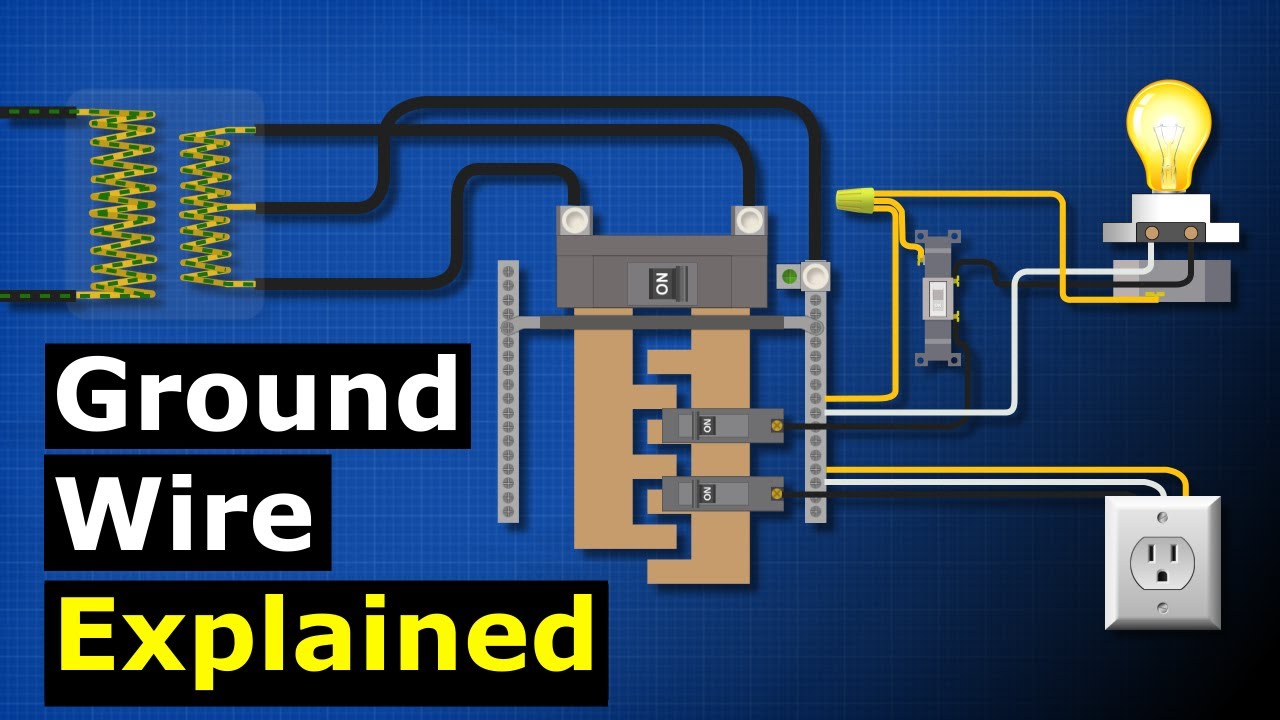
It does actually not apply to TN-S and TT earthing systems, used in Europe and Asia (and US at gas stations ect. by exception.
In a TT-earthing system (common in Europe) the return fault current actually IS returned by going trough your premise ground rod trough the earth to the distribution AC-transformer ground rod connected to its starpoint or neutral wire. There is here NO link between the neutral line from the supply at your premise to the grounding/earthing wires in your installation. Because of the higher resistance of the earth soil the current will in a lot of cases not be high enough to trip your normal circuit breaker (overcurrent protection) while still being deadly dangerous. Therefore a RCD/GFCI-device covering your entire installation at the supply is mandatory in most countries, as it will trip much faster at a the existence of a ground fault current of 300mA/30mA.
When in a TN-C earthing system the neutral gets broken (by heavy weather at power poles for example) you get a dangerous situation because (1) the only return path is trough the soil with higher resistance and the installation does not always have a general RCD covering the entire installation and (2) with the lack of a neutral conductor the devices connected between the 2/3 phases and the in-house neutral are getting connected in serie leading to a dangerous abnormal high voltage on your 'grounded' equipment. Using a PEN-conductor (combined neutral and protective earth condictor) as in this video can be really dangerous if the PEN-conductor is broken upstream. In the UK/Australia this setup is called PME (Protective Multiple Earthing, but it basically the same as TN-C-S with additional ground rods along the way to reduce the electric potential created by the PEN-conductors themselves because of the long distances/resistance of the cheap conductor materials used.
So based on your earthing system, the ground rod at your premise is besides lightning strike protection possible also used as a conductor back to the transformer neutral trough the earth as part of the normal earthing system.
The explanation in this video only applies to common household installations in North America, but not to a big part of the rest of the world.
Date: 2023-11-17
Related videos





Comments and reviews: 29
Taconiteable
There are some mistakes:
1. In Electronics the Ground Wire is more like the neutral line. Even in Electrical Engineering the correct term is PE-Wire (Protective Earth)
2. The PE-Wire is not most of the time a solid copper wire. It depends on the application. When it is not moving (like in house installation it is a solid wire) but most of the time it is not
3. It is insulated with not a green insulation but according to standard it is green-yellow
4. Actually the Ground/Earth has a very low resitance because the cross section is very big
5. When you have a ground fault what you want to trigger is the RCD, your normal circuit breaker is for a short circuit
reply
There are some mistakes:
1. In Electronics the Ground Wire is more like the neutral line. Even in Electrical Engineering the correct term is PE-Wire (Protective Earth)
2. The PE-Wire is not most of the time a solid copper wire. It depends on the application. When it is not moving (like in house installation it is a solid wire) but most of the time it is not
3. It is insulated with not a green insulation but according to standard it is green-yellow
4. Actually the Ground/Earth has a very low resitance because the cross section is very big
5. When you have a ground fault what you want to trigger is the RCD, your normal circuit breaker is for a short circuit
reply
Michael
. These ground rods seem to have multiple uses. Like extra solar panel electricity returning to the source, for use and storage, maybe lighting electricity is being used the same way. What do you think? Also, there seems to be a more direct electrical path, through the ground rod to the transformer. Why is there more resistance at this seemingly more direct path? Or are you saying, that is the least resistant rod for lighting and static electricity. Maybe there are less area and/or things connected to the house neutral, that gives it less resistance.
reply
. These ground rods seem to have multiple uses. Like extra solar panel electricity returning to the source, for use and storage, maybe lighting electricity is being used the same way. What do you think? Also, there seems to be a more direct electrical path, through the ground rod to the transformer. Why is there more resistance at this seemingly more direct path? Or are you saying, that is the least resistant rod for lighting and static electricity. Maybe there are less area and/or things connected to the house neutral, that gives it less resistance.
reply
Ann
To sum up. 1. We need a return path or closed circuit for OCPD ( circuit breaker or fuse) to shut off power. 2. All current (normal and fault) returns to origin but earth is not an effective conductor. 3. Instead we install our own path, as a green wire throughout electrical system. 4. That green wire jumps back to the neutral only once: at the service (disconnect. We don't want fault current going everywhere giving us noise, being a hazard, and parrelling paths which weaken it to not turn off OCPD.
reply
To sum up. 1. We need a return path or closed circuit for OCPD ( circuit breaker or fuse) to shut off power. 2. All current (normal and fault) returns to origin but earth is not an effective conductor. 3. Instead we install our own path, as a green wire throughout electrical system. 4. That green wire jumps back to the neutral only once: at the service (disconnect. We don't want fault current going everywhere giving us noise, being a hazard, and parrelling paths which weaken it to not turn off OCPD.
reply
You
Electricity does NOT take the path of least resistance. It will flow thru ALL paths back to the source, BUT the path WITH least resistance will have more current flow across it over the other path/s with more resistance.
It does not pick a path, it goes thru ALL paths.
Put 3 bulbs in parralel and see which path it picks or takes. and when ALL 3 light up, you tell me which path it took.
It took ALL 3 PATHS. and the one with least resistance will have the most current flow of the other 2.
reply
Electricity does NOT take the path of least resistance. It will flow thru ALL paths back to the source, BUT the path WITH least resistance will have more current flow across it over the other path/s with more resistance.
It does not pick a path, it goes thru ALL paths.
Put 3 bulbs in parralel and see which path it picks or takes. and when ALL 3 light up, you tell me which path it took.
It took ALL 3 PATHS. and the one with least resistance will have the most current flow of the other 2.
reply
Jeremy
I cannot understand why terms like neutral or hot are used for this industry. Theyre misnomers and misleading.
There are only open or closed circuits, no hot or neutral.
Neutral is just a transformer center tap at half voltage, connected to earth.
Neutral is only neutral because it is referenced to earth with no potential or voltage drop.
Really wish thats how it was explained to me. So much easier to understand that way. Because thats the way it actually is
reply
I cannot understand why terms like neutral or hot are used for this industry. Theyre misnomers and misleading.
There are only open or closed circuits, no hot or neutral.
Neutral is just a transformer center tap at half voltage, connected to earth.
Neutral is only neutral because it is referenced to earth with no potential or voltage drop.
Really wish thats how it was explained to me. So much easier to understand that way. Because thats the way it actually is
reply
Fat
May i ask, why if the person touches live wire, the current diverted into human body to the ground and back to the transformer, it being said that current flows a low resistance path, and you know that ground has high resistance, so why the current won't go the least resistance path like the neutral wire instead of flowing human body to the ground and back to the transformer?
reply
May i ask, why if the person touches live wire, the current diverted into human body to the ground and back to the transformer, it being said that current flows a low resistance path, and you know that ground has high resistance, so why the current won't go the least resistance path like the neutral wire instead of flowing human body to the ground and back to the transformer?
reply
PW
The ground rods at the bonded service and the grounds at the utility transformer does, in fact, provide a path back. Unless you have infinite resistance, there will be current flowing between the two. Electricity doesnt just take the patch of least resistance, it takes all available paths back. Ohms law is still in effect.
reply
The ground rods at the bonded service and the grounds at the utility transformer does, in fact, provide a path back. Unless you have infinite resistance, there will be current flowing between the two. Electricity doesnt just take the patch of least resistance, it takes all available paths back. Ohms law is still in effect.
reply
Mario
The part I dont get is why the current is going through you if you touch the receptacle. If the resistance through you is higher than the ground wire, shouldn't it go through the ground wire instead? Is it because you are going straight to the hot wire making you the ground that it does not go through the wire?
reply
The part I dont get is why the current is going through you if you touch the receptacle. If the resistance through you is higher than the ground wire, shouldn't it go through the ground wire instead? Is it because you are going straight to the hot wire making you the ground that it does not go through the wire?
reply
Sigmund
In Norway we have 3-phase 230v only, for most houses and buldings, with no neutral wire.
Here electricity actually returns to ground/earth rod when a ground fault happens.
Thou the rest of the continent (not Norway and Albania) i belive use 400v ( 3-phase 400v + 1-Neutral + Ground ) as standard
reply
In Norway we have 3-phase 230v only, for most houses and buldings, with no neutral wire.
Here electricity actually returns to ground/earth rod when a ground fault happens.
Thou the rest of the continent (not Norway and Albania) i belive use 400v ( 3-phase 400v + 1-Neutral + Ground ) as standard
reply
Biruk
Thank you very much! I felt like you made this video just for me. My washing machine gave me a bit of a shock when I touched the water and I wanted to ground it (pun intended. I only knew so little and this was the first video I opened, and to my surprise, you used washing machines as an example.
reply
Thank you very much! I felt like you made this video just for me. My washing machine gave me a bit of a shock when I touched the water and I wanted to ground it (pun intended. I only knew so little and this was the first video I opened, and to my surprise, you used washing machines as an example.
reply
James
All of this guys videos are really great! All you have to do is look at some of the other videos on various subjects to know that Toms videos all excellent, uniform, and a super great resource for learning said material. Definitely one of my favorite content creators on electrical subjects!
reply
All of this guys videos are really great! All you have to do is look at some of the other videos on various subjects to know that Toms videos all excellent, uniform, and a super great resource for learning said material. Definitely one of my favorite content creators on electrical subjects!
reply
Tom
Earth wires just add extra complexity resulting in higher earnings for electricians and more chance of mistakes not to mention the difficulties with working with different electrical regs from different eras. Nobody wants to say that earth wires are pointless. Who has the guts to share?
reply
Earth wires just add extra complexity resulting in higher earnings for electricians and more chance of mistakes not to mention the difficulties with working with different electrical regs from different eras. Nobody wants to say that earth wires are pointless. Who has the guts to share?
reply
Joseph
I am still confused as to why a breaker would trip. Dont they trip on amps? Would a person be enough of a load to trip it? Also, would a light receptacle be enough of a load (like the example in the video if hot was connected to the metal receptacle) to cause a tripped breaker?
reply
I am still confused as to why a breaker would trip. Dont they trip on amps? Would a person be enough of a load to trip it? Also, would a light receptacle be enough of a load (like the example in the video if hot was connected to the metal receptacle) to cause a tripped breaker?
reply
Milan
3: 00 this is partially true, if the circuit is installed with only a normal breaker: then yes, the breaker will not trip. BUT if the circuit is protected by an earth leakage circuit breaker then the power will be cut off when earth leakage is detected and therefor not kill you.
reply
3: 00 this is partially true, if the circuit is installed with only a normal breaker: then yes, the breaker will not trip. BUT if the circuit is protected by an earth leakage circuit breaker then the power will be cut off when earth leakage is detected and therefor not kill you.
reply
Michael
The fallacy that electricity takes the path of least resistance is dangerous. Electricity will take ANY path to the ground or back to its source, regardless. If you happen to be in the path, you're going to get shocked and to what degree depends on all sorts of other factors.
reply
The fallacy that electricity takes the path of least resistance is dangerous. Electricity will take ANY path to the ground or back to its source, regardless. If you happen to be in the path, you're going to get shocked and to what degree depends on all sorts of other factors.
reply
CubaPete101
You should watch Mikes real life experiment where he intentionally attached hot to a separate earthed rod, then measured the current on the grounded and ungrounded conductors. This animation is an approximation of that real world test, minus the actual readings taken.
reply
You should watch Mikes real life experiment where he intentionally attached hot to a separate earthed rod, then measured the current on the grounded and ungrounded conductors. This animation is an approximation of that real world test, minus the actual readings taken.
reply
A-ezzat
lovely as usual but this time it's hard a little bit to understand because the distraction of eyes in so many items in pictures shown unlike some previous videos were so simple cuz few itmes in pictures and deeply concentrated, specially of non english speakers like me: )
reply
lovely as usual but this time it's hard a little bit to understand because the distraction of eyes in so many items in pictures shown unlike some previous videos were so simple cuz few itmes in pictures and deeply concentrated, specially of non english speakers like me: )
reply
AGr0enew0ld
Depending of what type of grounding system you have, the ground rod can actually be used for fault currents. In my area, we dont get ground from the services. Nor is neutral connected to our ground wires. We call that TT. What you describe looks more like TN.
reply
Depending of what type of grounding system you have, the ground rod can actually be used for fault currents. In my area, we dont get ground from the services. Nor is neutral connected to our ground wires. We call that TT. What you describe looks more like TN.
reply
Minh
Why having the ground part in the first place? So that could make your body complete the circuit when touching the hot wire? Even when we have electricity leak at the box, without the ground rod, the user is still alright, since he/she is not part of the circuit.
reply
Why having the ground part in the first place? So that could make your body complete the circuit when touching the hot wire? Even when we have electricity leak at the box, without the ground rod, the user is still alright, since he/she is not part of the circuit.
reply
mark
I'm an residential electrician and I see Joe home owner AKA a wannabe electrician use the ground wire for a conductor. Ground wires are not used for conductors EVER. They are referred to as a mechanical ground for stray voltage to go back to the electrical panel.
reply
I'm an residential electrician and I see Joe home owner AKA a wannabe electrician use the ground wire for a conductor. Ground wires are not used for conductors EVER. They are referred to as a mechanical ground for stray voltage to go back to the electrical panel.
reply
SpaceFace
So is the implication that the ground wire returning the electricity to the source through touching the casing that there is a path back through the case? In my mind all the electricity is running through insulated wires. so I'm just confused about that.
reply
So is the implication that the ground wire returning the electricity to the source through touching the casing that there is a path back through the case? In my mind all the electricity is running through insulated wires. so I'm just confused about that.
reply
jerk_shop
Hi bro, why is it that when a strong lighting occurs some electronic devices get affected like they fail to work anymore example wireless access point or CCTV cameras tens to get affected even without direct hit just basically a lighting occured
reply
Hi bro, why is it that when a strong lighting occurs some electronic devices get affected like they fail to work anymore example wireless access point or CCTV cameras tens to get affected even without direct hit just basically a lighting occured
reply
education
Electricity takes all paths, not just the path of least resistance. It has no way of knowing ahead of time which is the lowest path of resistance. The percentage of total current in a conductor within a circuit is proportional to its resistance.
reply
Electricity takes all paths, not just the path of least resistance. It has no way of knowing ahead of time which is the lowest path of resistance. The percentage of total current in a conductor within a circuit is proportional to its resistance.
reply
Allen
What does it mean that hot and neutral wires bring current to and from devices? Doesn't the current change directions in AC current? Also then, why would touching the neutral wire not harm you, while touching the hot wire can kill you?
reply
What does it mean that hot and neutral wires bring current to and from devices? Doesn't the current change directions in AC current? Also then, why would touching the neutral wire not harm you, while touching the hot wire can kill you?
reply
Mark
Electricity will take every path back to the source. The most current will flow over the least resistance. This is why sub to main panel wiring must not be bonded in the sub and must have a discreet ground conductor back to the main.
reply
Electricity will take every path back to the source. The most current will flow over the least resistance. This is why sub to main panel wiring must not be bonded in the sub and must have a discreet ground conductor back to the main.
reply
Belcultassi
So, wait. if the ground wire is connected to neutral through the bus bar, isn't it basically shorted to neutral? Why does it need to be a separate wire? Couldn't the metal casing of an appliance just be connected to neutral?
reply
So, wait. if the ground wire is connected to neutral through the bus bar, isn't it basically shorted to neutral? Why does it need to be a separate wire? Couldn't the metal casing of an appliance just be connected to neutral?
reply
amandus
So all these ground wires will be a path for the electricity IF the outside of my electrical appliances somehow gets electrified. On the other hand, these cables seem like a perfect way to accidentally electrify said appliances
reply
So all these ground wires will be a path for the electricity IF the outside of my electrical appliances somehow gets electrified. On the other hand, these cables seem like a perfect way to accidentally electrify said appliances
reply
roslan
All I understand from the video is ground act as emergency neutral wire which return current back to life wire(just like neutral) BUT in case of overload or short circuit only. I might be wrong but that's all I understand.
reply
All I understand from the video is ground act as emergency neutral wire which return current back to life wire(just like neutral) BUT in case of overload or short circuit only. I might be wrong but that's all I understand.
reply
Ryan
All I know about grounding is that it can be used to create a faraday cage in an electric guitar. You just solder the ground wire to conductive tape. It's supposed to shield your guitar's pickups and potentiometer from EMI.
reply
All I know about grounding is that it can be used to create a faraday cage in an electric guitar. You just solder the ground wire to conductive tape. It's supposed to shield your guitar's pickups and potentiometer from EMI.
reply
Add a review, comment
Other channel videos