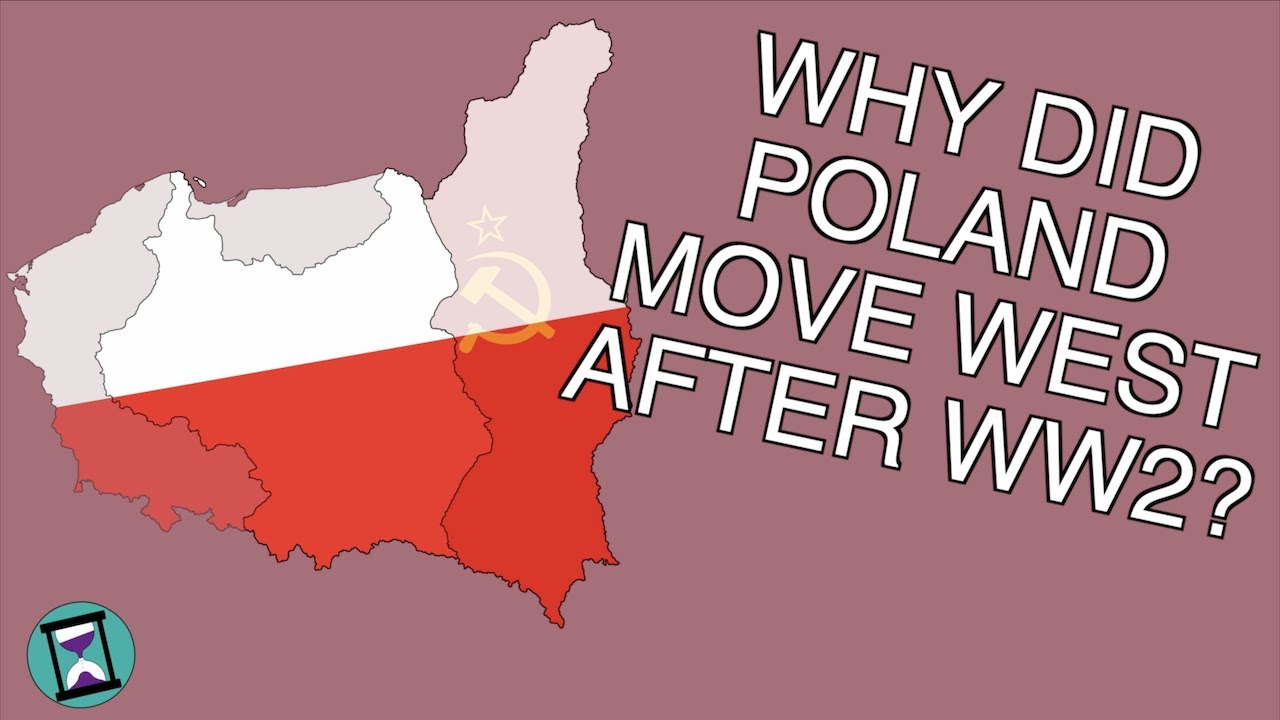
Why did Poland's border change so much after World War 2?
video description
Date: 2023-11-18
Related videos


Comments and reviews: 19
CV990A
During German reunification negotiations, Chancellor Helmut Kohl tried to retrade the border issue with Poland, saying that any agreement on permanent borders should be between the new German reunified state and Poland. This is because Silesian refugees (those Germans kicked out of the new Poland after WWII) were a significant portion of the CDU's support.
Pre-unification German maps always included the former German territories in Poland, which even when I saw them as a (non German) child in the 1970s seemed odd and frankly delusional.
The Poles and Soviets obviously were not happy with this - and neither were any of the other allies. The US made it very clear to Kohl that without a permanent agreement on the post-war German-Polish border, there would be no reunification and Kohl quickly climbed down.
It was frankly shocking that Kohl tried to do this. Perhaps he knew it was impossible and just did it to show the former Silesian Germans that he'd given it the old college try.
reply
During German reunification negotiations, Chancellor Helmut Kohl tried to retrade the border issue with Poland, saying that any agreement on permanent borders should be between the new German reunified state and Poland. This is because Silesian refugees (those Germans kicked out of the new Poland after WWII) were a significant portion of the CDU's support.
Pre-unification German maps always included the former German territories in Poland, which even when I saw them as a (non German) child in the 1970s seemed odd and frankly delusional.
The Poles and Soviets obviously were not happy with this - and neither were any of the other allies. The US made it very clear to Kohl that without a permanent agreement on the post-war German-Polish border, there would be no reunification and Kohl quickly climbed down.
It was frankly shocking that Kohl tried to do this. Perhaps he knew it was impossible and just did it to show the former Silesian Germans that he'd given it the old college try.
reply
Konrad
One more key point: the former German territories were called the Recovered Territories ( _Ziemie_ _Oddzysakne_, because prior to 1945 Poland had already a claim on these territories as they were part of the very first Polish state established by Mieszko I over 1000 years prior. Only gradually over centuries they shifted both culturally and politically towards Germany, but even in the 20th century many Poles still remained in those territories, although very often as regional minorities, and after the war they were permitted to stay under the condition they could show a link to Polishness (mostly linguistic. Ironically, many of the expelled Germans were in fact descendants of once Germanized-Poles.
If World War II never happened, it is likely the Polish-German borderlands would have ended up politically resembling modern Belgium or Luxemburg.
reply
One more key point: the former German territories were called the Recovered Territories ( _Ziemie_ _Oddzysakne_, because prior to 1945 Poland had already a claim on these territories as they were part of the very first Polish state established by Mieszko I over 1000 years prior. Only gradually over centuries they shifted both culturally and politically towards Germany, but even in the 20th century many Poles still remained in those territories, although very often as regional minorities, and after the war they were permitted to stay under the condition they could show a link to Polishness (mostly linguistic. Ironically, many of the expelled Germans were in fact descendants of once Germanized-Poles.
If World War II never happened, it is likely the Polish-German borderlands would have ended up politically resembling modern Belgium or Luxemburg.
reply
Neonach
A Few Fun Facts From a Pole (AFFFFaP)
1. Our communist goverment tried to legitemise us taking us those Lands by calling them Reclaimed Lands (Ziemie Odzyskane) Because we used to have these lands. When? During first Piasts In a year 1005 to be precise. Before WW2 not even the biggest nationalist thought abut these lands as Ours. But Stalin had outher Plans
2. Speaking of him. There is a prevaling belif that stalin took these lands (Especially Lvov) as a sort of revenge or personal trophy because he was one of the Leaders during Polish-Bolshevik war(and guess which city he attacted)
3. 1: 28 I like that you gave some time to to mine region. From the stories of some people who lived there threre was legitemate worry that we would become part of Belarus.
reply
A Few Fun Facts From a Pole (AFFFFaP)
1. Our communist goverment tried to legitemise us taking us those Lands by calling them Reclaimed Lands (Ziemie Odzyskane) Because we used to have these lands. When? During first Piasts In a year 1005 to be precise. Before WW2 not even the biggest nationalist thought abut these lands as Ours. But Stalin had outher Plans
2. Speaking of him. There is a prevaling belif that stalin took these lands (Especially Lvov) as a sort of revenge or personal trophy because he was one of the Leaders during Polish-Bolshevik war(and guess which city he attacted)
3. 1: 28 I like that you gave some time to to mine region. From the stories of some people who lived there threre was legitemate worry that we would become part of Belarus.
reply
Nils
Sadly, many Germans seem to have forgotten the memo that even a destroyed country can take up millions of refugees. Hating migrants is back on the menu for all parties at the center-right (liberals, christian democrats, even part of the social democrats. From the previously German areas, millions fled and were helped under great sacrifices (living packed in other people's homes. My grandma was one of them. She came from what is now the Czech Republic near the Polish border. She was a refugee for years, being only 8 years old when the war ended. I wish more people remembered that past and cared to hear refugee's stories first, before judging them one way or the other.
reply
Sadly, many Germans seem to have forgotten the memo that even a destroyed country can take up millions of refugees. Hating migrants is back on the menu for all parties at the center-right (liberals, christian democrats, even part of the social democrats. From the previously German areas, millions fled and were helped under great sacrifices (living packed in other people's homes. My grandma was one of them. She came from what is now the Czech Republic near the Polish border. She was a refugee for years, being only 8 years old when the war ended. I wish more people remembered that past and cared to hear refugee's stories first, before judging them one way or the other.
reply
CV990A
Saying the US and Britain threw Poland under the bus ignores the fact that the US and Britain had near zero ability to influence the outcome other than by going to war with the USSR, which was not going to happen.
The alliance with the USSR was always a bit of a devil's bargain. The USSR regime was, in absolute terms, horrific, but you go to war with the allies you have, not the ones you would like. The reality is that however horrible was the USSR, there was no choice but to ally with it to defeat the even more horrible regime in Germany. It was very much the enemy of my enemy is my friend.
reply
Saying the US and Britain threw Poland under the bus ignores the fact that the US and Britain had near zero ability to influence the outcome other than by going to war with the USSR, which was not going to happen.
The alliance with the USSR was always a bit of a devil's bargain. The USSR regime was, in absolute terms, horrific, but you go to war with the allies you have, not the ones you would like. The reality is that however horrible was the USSR, there was no choice but to ally with it to defeat the even more horrible regime in Germany. It was very much the enemy of my enemy is my friend.
reply
Ze
I've met a few people descended from the germans who were expulsed from the eastern lands as a result of this population transfer. There's still that longing for the past and all those german territories permanently lost, but there's an understanding that in order to prevent future conflicts with the polish, the germans had to go. Stettin was one city that still hurts for them because originally they were supposed to retain it and it's still seen as an honorary german city.
reply
I've met a few people descended from the germans who were expulsed from the eastern lands as a result of this population transfer. There's still that longing for the past and all those german territories permanently lost, but there's an understanding that in order to prevent future conflicts with the polish, the germans had to go. Stettin was one city that still hurts for them because originally they were supposed to retain it and it's still seen as an honorary german city.
reply
Michael
Both Poland before and after are relatively squarish, so it is easy to assume that their borders were just redrawn here and there. But one time I asked myself why the soviets would give back the lands they took in 1939 from Poland with a slightly redrawn border, and thats when I actually looked into it and realized that they didnt, they merely moved the poles west instead by giving them German lands.
reply
Both Poland before and after are relatively squarish, so it is easy to assume that their borders were just redrawn here and there. But one time I asked myself why the soviets would give back the lands they took in 1939 from Poland with a slightly redrawn border, and thats when I actually looked into it and realized that they didnt, they merely moved the poles west instead by giving them German lands.
reply
education
I wrote my big historical research paper on how the Soviet/Polish border would be drawn after WW2. He s right about the US/UK throwing the exiled govt under the bus. More so the US than the UK since the UK was the weakest of the Big Three.
Also, Lvov had a lot of oil surrounding the city and the Soviets wanted it under their direct rule which is a big reason why they annexed it.
reply
I wrote my big historical research paper on how the Soviet/Polish border would be drawn after WW2. He s right about the US/UK throwing the exiled govt under the bus. More so the US than the UK since the UK was the weakest of the Big Three.
Also, Lvov had a lot of oil surrounding the city and the Soviets wanted it under their direct rule which is a big reason why they annexed it.
reply
Zlituj
What is worth mentioning is that Germany and Poland came to an agreement on a common border and only recognised it in 1991. Germany agreed to recognise it and Poland agreed on German unification.
Also, these borders were justified by Stalin, because the border between the very first Polish state, ruled by Mieszko I, and the Holy Roman Empire in 10th century was in a similar place.
reply
What is worth mentioning is that Germany and Poland came to an agreement on a common border and only recognised it in 1991. Germany agreed to recognise it and Poland agreed on German unification.
Also, these borders were justified by Stalin, because the border between the very first Polish state, ruled by Mieszko I, and the Holy Roman Empire in 10th century was in a similar place.
reply
Mladen
River Elbe names from Slavic Laba godess name.
Pomerania is Slavic for 'by the sea'.
Some even say that Berlin name has Slavic origin.
Fun fact:
Slavic word for Germans is 'Nemci', which means 'mute' or 'unable to speak'.
Slav comes from 'slovo' - 'word' or 'able to speak in articulated manner'.
And German word for border 'grenze' comes from Slavic 'granica'.
reply
River Elbe names from Slavic Laba godess name.
Pomerania is Slavic for 'by the sea'.
Some even say that Berlin name has Slavic origin.
Fun fact:
Slavic word for Germans is 'Nemci', which means 'mute' or 'unable to speak'.
Slav comes from 'slovo' - 'word' or 'able to speak in articulated manner'.
And German word for border 'grenze' comes from Slavic 'granica'.
reply
education
Maybe forgot to mention that these lands were part of 10th - 12th century Poland, thus also giving potential justification for moving west. In Poland they also call these lands ziemie odzyskane or reclaimed land because of these historical claims. Nowdays borders of Poland are pretty much the same as they were from 10th to the 12th century.
reply
Maybe forgot to mention that these lands were part of 10th - 12th century Poland, thus also giving potential justification for moving west. In Poland they also call these lands ziemie odzyskane or reclaimed land because of these historical claims. Nowdays borders of Poland are pretty much the same as they were from 10th to the 12th century.
reply
ShEv441
Worth mantioning is that debate over easter boarder was also very long and there were concepts that could make Poland slightly bigger with Lviv and Brest as well. Imo current border are better, pre ww2 Poland access to sea was very small and there qere some problems with minorities in east.
reply
Worth mantioning is that debate over easter boarder was also very long and there were concepts that could make Poland slightly bigger with Lviv and Brest as well. Imo current border are better, pre ww2 Poland access to sea was very small and there qere some problems with minorities in east.
reply
F40PH-2CAT
The lands that the Soviets annexed were east of the Curzon line anyway. They had a Polish minority and were only incorporated into Poland because the Poles won the Polish Soviet war in 1920. It was very hard to justify them being part of Poland in 1920, and even less so in 1945.
reply
The lands that the Soviets annexed were east of the Curzon line anyway. They had a Polish minority and were only incorporated into Poland because the Poles won the Polish Soviet war in 1920. It was very hard to justify them being part of Poland in 1920, and even less so in 1945.
reply
Spudskie
I always chuckle at those who say Germany could have been defeated by a bombing campaign, without the need for American and British troops.
I then say So in that case, the only Allied ground forces would have been the Red Army.
I always get silence after that.
reply
I always chuckle at those who say Germany could have been defeated by a bombing campaign, without the need for American and British troops.
I then say So in that case, the only Allied ground forces would have been the Red Army.
I always get silence after that.
reply
KONO
You can thank Muscovy for it. Ironically, the border move enabled Poles to get access to more developed German technology and fertile farmland, which, after regaining freedom from Soviet colonial rule in 1989, managed to become one of Europe's fastest growing economies.
reply
You can thank Muscovy for it. Ironically, the border move enabled Poles to get access to more developed German technology and fertile farmland, which, after regaining freedom from Soviet colonial rule in 1989, managed to become one of Europe's fastest growing economies.
reply
Alex
if this is fine, then people should shut up about the two-state solution with Israel and Palestine. The West Bank settlements are a bit of a dick move. but the Western side of the area (as in the Israeli side) and East Jerusalem are Israel's fair and square.
reply
if this is fine, then people should shut up about the two-state solution with Israel and Palestine. The West Bank settlements are a bit of a dick move. but the Western side of the area (as in the Israeli side) and East Jerusalem are Israel's fair and square.
reply
Rose
topic suggestion: How did people react to the British Union?
(context: England and Scotland weren't exactly historic friends, yet they were still peacefully united gradually beginning with James I's accession and ending with Queen Anne's Acts of Union)
reply
topic suggestion: How did people react to the British Union?
(context: England and Scotland weren't exactly historic friends, yet they were still peacefully united gradually beginning with James I's accession and ending with Queen Anne's Acts of Union)
reply
Andrew
Thank you for explaining how Poland messed around by The Hundred Years War the congress of Vienna first world war and the Second World War became the way it is which I had noticed but never understood. Messed around is probably an oversimplification.
reply
Thank you for explaining how Poland messed around by The Hundred Years War the congress of Vienna first world war and the Second World War became the way it is which I had noticed but never understood. Messed around is probably an oversimplification.
reply
Luciano
Mustache Man: How about es both invade Poland and split it between the two of us and I definitely won t refrain and betray you sometime in the future?
Joseph Stalin: Sounds good suspicious
Oversimplified: This new alliance stunned the West.
reply
Mustache Man: How about es both invade Poland and split it between the two of us and I definitely won t refrain and betray you sometime in the future?
Joseph Stalin: Sounds good suspicious
Oversimplified: This new alliance stunned the West.
reply
Add a review, comment
Other channel videos