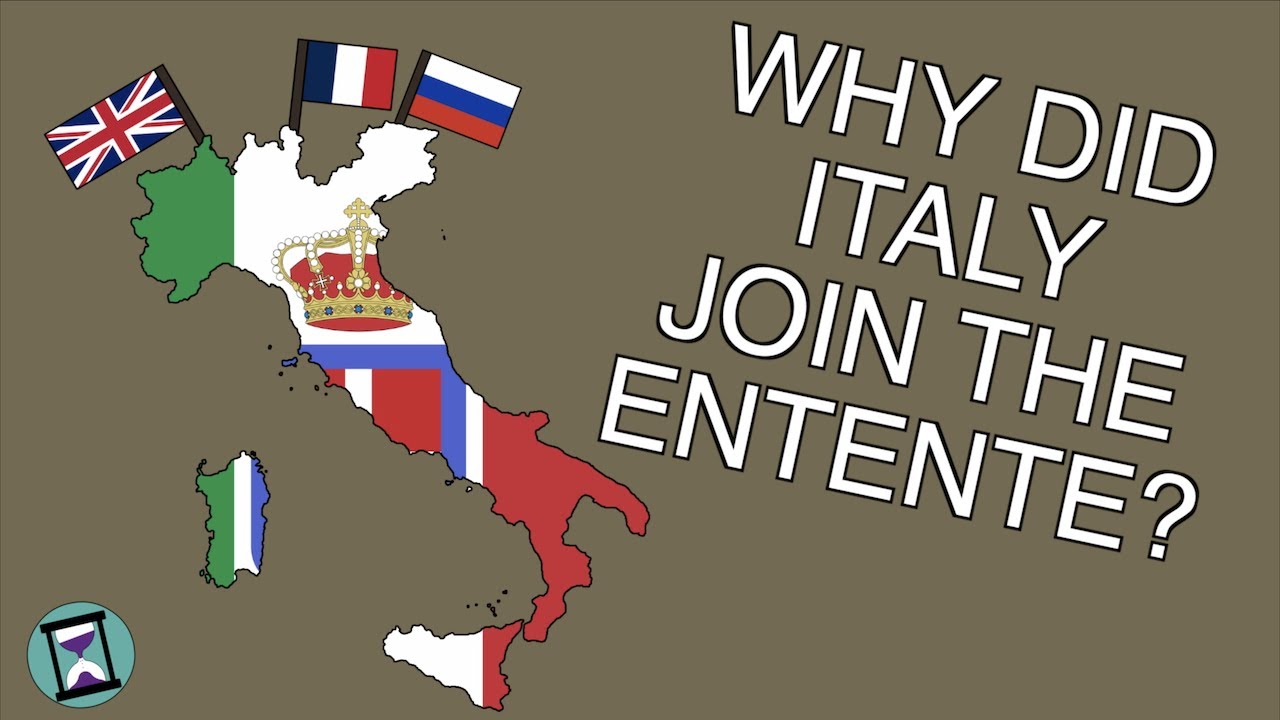
Why didn't Italy join the Central Powers in World War One?
video description
Austria broke the treat of the defensive alliance by declaring war on Serbia without the consent of Italy [treaty 2 1887] [ i put the treaty in the comment if you are interested].
Italy asked to join as ally of Austria but asked for territory [principle of mutual compensation (those are two words written in the treaty) [treaty 2 1887] but Austria preferred broke alliance off.
This should close the talk of Italy's turncoat which is often used online by people who don't want to get informed and simply do the edgylords or racists.
Date: 2022-12-13
Related videos



Comments and reviews: 14
Federico
simply put in italy we spent the vast majority of our unification efforts in pushing austrians back to their mountains
there was a deep animosity against the perceived historical enemy
not many were willing to go to war with the people that used to be our overlords for centuries
also the alliance was a defensive pact and to be completely frank it was austria who kickstarted the whole kerfuffle by sending serbia an ultimatum so demanding to be utterly unacceptable by the serbian state
sending an ultimatum that you know will be rejected is the same thing than declaring war
many in italy at the time were strongly opposed to go to war on this premise
later italy found herself in a formidable strategic positionboth for the alliance and the entente
italy could open a new war front and pinning a good chunk of the france or austrian armies respectevly(and i sincerely think that without italian choosing the entente the war would have been a lot different with potentially a radical different end to WWI)
t would be natural in that situation to consider the best offer to decide wich side to take
reply
simply put in italy we spent the vast majority of our unification efforts in pushing austrians back to their mountains
there was a deep animosity against the perceived historical enemy
not many were willing to go to war with the people that used to be our overlords for centuries
also the alliance was a defensive pact and to be completely frank it was austria who kickstarted the whole kerfuffle by sending serbia an ultimatum so demanding to be utterly unacceptable by the serbian state
sending an ultimatum that you know will be rejected is the same thing than declaring war
many in italy at the time were strongly opposed to go to war on this premise
later italy found herself in a formidable strategic positionboth for the alliance and the entente
italy could open a new war front and pinning a good chunk of the france or austrian armies respectevly(and i sincerely think that without italian choosing the entente the war would have been a lot different with potentially a radical different end to WWI)
t would be natural in that situation to consider the best offer to decide wich side to take
reply
Sasha
So what I don't understand is how the Austrian land offered to Italy was considered more desirable than the French land they were offered. Political reasons with regards to Salandra aside, what was more special about the Entente's offer? The amount of land (and possibly population) seemed about equal on either side, and Italian irredentism considered Savoy and Nice lost territories all the way back to the Risorgimento. Dalmatia was not unique in this regard. Plus conjecturally speaking, Italy could have gained dominion over more African colonies than they got from the compensation Britain and France gave in 1919. Was control over the Adriatic Sea a factor? Were those territories more resource rich?
reply
So what I don't understand is how the Austrian land offered to Italy was considered more desirable than the French land they were offered. Political reasons with regards to Salandra aside, what was more special about the Entente's offer? The amount of land (and possibly population) seemed about equal on either side, and Italian irredentism considered Savoy and Nice lost territories all the way back to the Risorgimento. Dalmatia was not unique in this regard. Plus conjecturally speaking, Italy could have gained dominion over more African colonies than they got from the compensation Britain and France gave in 1919. Was control over the Adriatic Sea a factor? Were those territories more resource rich?
reply
Luboman411
At 2: 00. Why would Austria-Hungary be against Italy joining the Central Powers? It would mean that Austria-Hungary would not have a war front on its Italian border. It would also mean a largish economy and a largish army and navy joining the Central Powers and their military cause. Italy was clearly a more powerful country--economically and militarily--than the Ottoman Empire, for example. Having Italy on the side of the Central Powers would be a lot of positives with not a lot of negatives. So why would the Austria-Hungarians not want this in their hour of need? Bizarre.
reply
At 2: 00. Why would Austria-Hungary be against Italy joining the Central Powers? It would mean that Austria-Hungary would not have a war front on its Italian border. It would also mean a largish economy and a largish army and navy joining the Central Powers and their military cause. Italy was clearly a more powerful country--economically and militarily--than the Ottoman Empire, for example. Having Italy on the side of the Central Powers would be a lot of positives with not a lot of negatives. So why would the Austria-Hungarians not want this in their hour of need? Bizarre.
reply
Nicola
Great video but one wrong detail. As Italian parliament and the people were anti war, they first sought to strike a deal with Austria Hungary where Italy would get Trento, Trieste, Istria and some of Dalmatia, but Austria responded that any agreed border change would have to wait until the end of the war, Italy didn't trust them so the treaty of London happened and Salandra convinced the public with propaganda to pressure parliament into accepting the treaty and declaring war
reply
Great video but one wrong detail. As Italian parliament and the people were anti war, they first sought to strike a deal with Austria Hungary where Italy would get Trento, Trieste, Istria and some of Dalmatia, but Austria responded that any agreed border change would have to wait until the end of the war, Italy didn't trust them so the treaty of London happened and Salandra convinced the public with propaganda to pressure parliament into accepting the treaty and declaring war
reply
MadAtreides1
Italy asked Austria-Hungary if they were to upheld the terms of the pakt both after the annexation of Bosnia and, later, the occupation of Serbia. The austrian response was something along the line of: better load your guns before coming to us with demands.
One more thing with Salandra: he also resigned because he feared that the anti-constitutionality of his (and the king's) maneuver to enter the war bypassing the parliament would lead to prison.
reply
Italy asked Austria-Hungary if they were to upheld the terms of the pakt both after the annexation of Bosnia and, later, the occupation of Serbia. The austrian response was something along the line of: better load your guns before coming to us with demands.
One more thing with Salandra: he also resigned because he feared that the anti-constitutionality of his (and the king's) maneuver to enter the war bypassing the parliament would lead to prison.
reply
Alessandro
Mmm no, the Triple started as Double Alliance (against Austria) and led to the war of 1866. Then Bismark decided to get Austria onboard, the PM of the time, Crispi, was literally subjugated by him and accepted to join, but until 1915 there were many protests against the Triple because of the Italian territories still under their control, the previous three wars and about two centuries of domination of the peninsula.
reply
Mmm no, the Triple started as Double Alliance (against Austria) and led to the war of 1866. Then Bismark decided to get Austria onboard, the PM of the time, Crispi, was literally subjugated by him and accepted to join, but until 1915 there were many protests against the Triple because of the Italian territories still under their control, the previous three wars and about two centuries of domination of the peninsula.
reply
Jarno
I read Erwin Rommels novel Infanterie Greift An and many of the the Italians were fans of Germany to the point that Rommel at one point (after already taken thousands of prisoners) just walked up to a few thousand Italians on his own and demanded their surrender, which they did. They just cheered for Germany, killed their officers when they tried to protest and carried Rommel on their shoulders to the German lines
reply
I read Erwin Rommels novel Infanterie Greift An and many of the the Italians were fans of Germany to the point that Rommel at one point (after already taken thousands of prisoners) just walked up to a few thousand Italians on his own and demanded their surrender, which they did. They just cheered for Germany, killed their officers when they tried to protest and carried Rommel on their shoulders to the German lines
reply
Callie
Gi = J sound in Italian
Giulia = Julia, not Gi-ulia
Gianni = Johnny, not Gi-onny
Therefore, whenever you want to start sounding the i and adding an extra syllable in an Italian word, just say the J sound instead. We do this in English already with the ch = k sound in chemical and school. This is because J and K are foreign letters in Italian, only used in foreign words.
reply
Gi = J sound in Italian
Giulia = Julia, not Gi-ulia
Gianni = Johnny, not Gi-onny
Therefore, whenever you want to start sounding the i and adding an extra syllable in an Italian word, just say the J sound instead. We do this in English already with the ch = k sound in chemical and school. This is because J and K are foreign letters in Italian, only used in foreign words.
reply
legregio2
Nice works, but there are a couple of blights:
1) there was an economic part also in the decision: Italy needed a LOT fo carbon and steel for its industries, and the Entente (specifically: England) was their principal supplier; Germany and Austria-Hungary had no possibility of taking over that burden;
2) Giolitti was a neutralist, more than a supporter of the Empires.
reply
Nice works, but there are a couple of blights:
1) there was an economic part also in the decision: Italy needed a LOT fo carbon and steel for its industries, and the Entente (specifically: England) was their principal supplier; Germany and Austria-Hungary had no possibility of taking over that burden;
2) Giolitti was a neutralist, more than a supporter of the Empires.
reply
Historian
No chance of gaining any European land from a Central Powers victory, except maybe France's Mediterranean coast. Most of what Italy wanted, Austria had. Since the CP's started the war, Italy could and did opt out of their alliance. A few sneaky promises from Britain and France later, and voila, new ally. Italy was unashamedly expansionist in WW1.
reply
No chance of gaining any European land from a Central Powers victory, except maybe France's Mediterranean coast. Most of what Italy wanted, Austria had. Since the CP's started the war, Italy could and did opt out of their alliance. A few sneaky promises from Britain and France later, and voila, new ally. Italy was unashamedly expansionist in WW1.
reply
HoundofJustice
But from what I have seen on the map, the territoy promised by the central powers looked MUCH better!
I mean, Corsica, Land on ANOTHER CONTINENT, the fully control of the alps to the west and austria even offered south tyrol in return for compensations. With this decision they shot themselves in the foot. just the foot for now; )
reply
But from what I have seen on the map, the territoy promised by the central powers looked MUCH better!
I mean, Corsica, Land on ANOTHER CONTINENT, the fully control of the alps to the west and austria even offered south tyrol in return for compensations. With this decision they shot themselves in the foot. just the foot for now; )
reply
trauko1388
Because they are Italian and that is their modus operandi?
They also had a treaty with France signed in 1902 indicating they would be neutral if France declared war on Germany, making their alliance with Germany a joke.
Simply put the Italians were stabbing someone n the back.
reply
Because they are Italian and that is their modus operandi?
They also had a treaty with France signed in 1902 indicating they would be neutral if France declared war on Germany, making their alliance with Germany a joke.
Simply put the Italians were stabbing someone n the back.
reply
Avante
Chad Antonio Salandra
Fragile political situation, palys 4D chess ahead of everyone to make the King decide Italy'allegiance and participation in the War. Manages to stay in power without threats, even in minority.
vs
Virgin Luigi Cadorna
Haha Isonzo goes Booooom again!
reply
Chad Antonio Salandra
Fragile political situation, palys 4D chess ahead of everyone to make the King decide Italy'allegiance and participation in the War. Manages to stay in power without threats, even in minority.
vs
Virgin Luigi Cadorna
Haha Isonzo goes Booooom again!
reply
Ulrich
Small addition to the background: Rome became only part of the Kingdom of Italy and its capital because the French lost the war to the Germans in 1870/71 (so it had been on Germanys side, sort of) On top of that the Italian state was a Monarchy and France became a Republic in 1871.
reply
Small addition to the background: Rome became only part of the Kingdom of Italy and its capital because the French lost the war to the Germans in 1870/71 (so it had been on Germanys side, sort of) On top of that the Italian state was a Monarchy and France became a Republic in 1871.
reply
Add a review, comment
Other channel videos