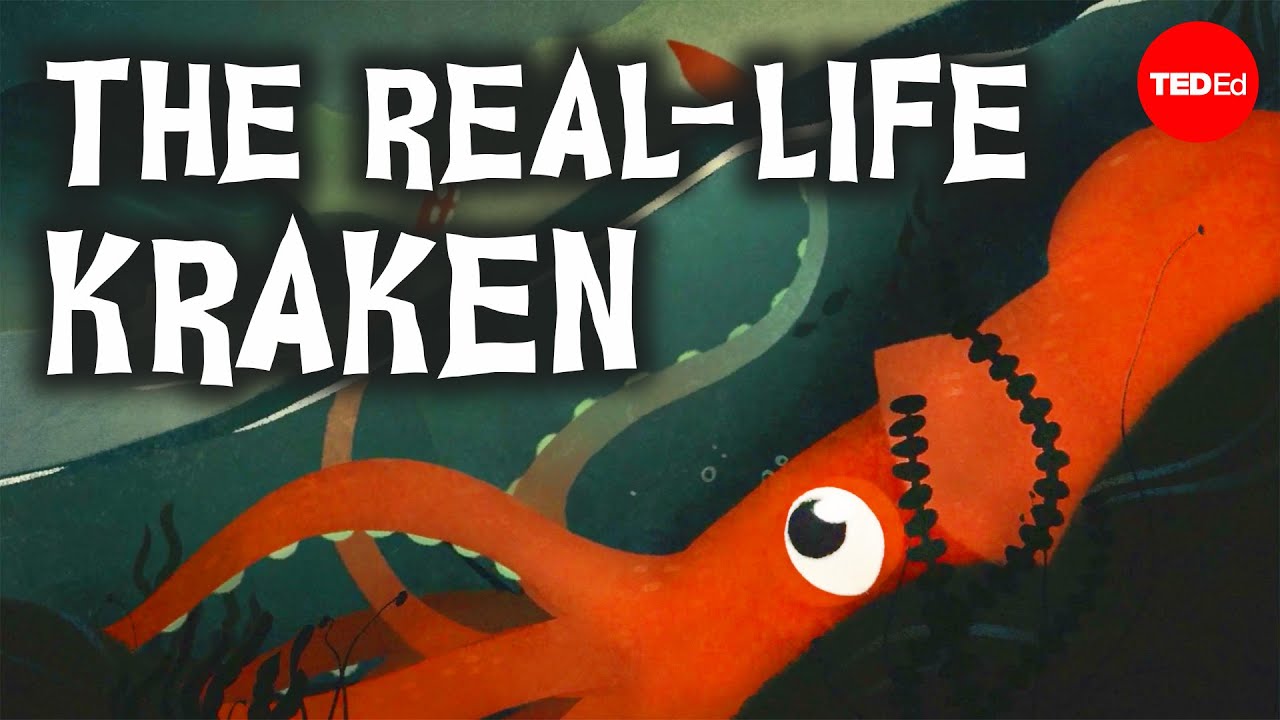
Why did it take so long to find giant squids - Anna Rothschild
video description
Date: 2024-09-27
Related videos




Comments and reviews: 20
jaspermcjasper3672
Some humans will always take anything that is both worrisome but LARGELY unknown, and complete the part of the picture that is unknown with the worst possible (or not even worst possible but worst imaginable) guess at the truth. That's why occasional sightings of the tentacles of a squid that mistook the silhouette of an ocean-going wooden sailing-ship's jolly-boat for some kind of fish resulted in the belief that the far ocean was home to sea-monsters that could swallow a three-masted moonraker wooden sailing-ship whole. Other humans fill in the missing data with a scenario of the least possible harmfulness. They are variously called courageous or foolish depending on the circumstances justifying the risks, and the outcomes.
reply
Some humans will always take anything that is both worrisome but LARGELY unknown, and complete the part of the picture that is unknown with the worst possible (or not even worst possible but worst imaginable) guess at the truth. That's why occasional sightings of the tentacles of a squid that mistook the silhouette of an ocean-going wooden sailing-ship's jolly-boat for some kind of fish resulted in the belief that the far ocean was home to sea-monsters that could swallow a three-masted moonraker wooden sailing-ship whole. Other humans fill in the missing data with a scenario of the least possible harmfulness. They are variously called courageous or foolish depending on the circumstances justifying the risks, and the outcomes.
reply
lavamountain5642
I remember as a kid being so enthralled with this animal it was just so amazing and other worldly. I remember being so excited to see the documentary they made when they first got it on camera and it was amazing seeing all the ways they tired to lure it out and then finally seeing an alive one! I’m currently in my third year of my undergraduate marine biology degree in another country from where I first watched that documentary all because this squid is so amazing. This video didn’t just have me just look back on such an amazing animal but also how it captivated me and lead me to go to new and amazing places and to meet some extraordinary people.
reply
I remember as a kid being so enthralled with this animal it was just so amazing and other worldly. I remember being so excited to see the documentary they made when they first got it on camera and it was amazing seeing all the ways they tired to lure it out and then finally seeing an alive one! I’m currently in my third year of my undergraduate marine biology degree in another country from where I first watched that documentary all because this squid is so amazing. This video didn’t just have me just look back on such an amazing animal but also how it captivated me and lead me to go to new and amazing places and to meet some extraordinary people.
reply
kvd1
The real life kraken is likely an omnivore.
Feeding on what ever is available.
Including foods we don’t expect cephalopods to eat, like plant material and certain animal carcasses.
Unfortunately this diet even includes pollution, like plastics, and that is the main threat to this animal.
Unlike the nomuras jellyfish, the giant squid often grows and reproduces slowly, when food is scarce.
They can live for up to five years or even more.
If food is abundant they will grow faster and reproduce slightly quicker and eventually die out after reproducing.
These squids will eventually eat their mates after mating(like mantises.
reply
The real life kraken is likely an omnivore.
Feeding on what ever is available.
Including foods we don’t expect cephalopods to eat, like plant material and certain animal carcasses.
Unfortunately this diet even includes pollution, like plastics, and that is the main threat to this animal.
Unlike the nomuras jellyfish, the giant squid often grows and reproduces slowly, when food is scarce.
They can live for up to five years or even more.
If food is abundant they will grow faster and reproduce slightly quicker and eventually die out after reproducing.
These squids will eventually eat their mates after mating(like mantises.
reply
jaspermcjasper3672
The other day a penguin walked into my apartment. I said Hello. Are you a Humboldt Penguin and he replied No! Not at all! Proud as ever. That pun got me into the Comedians Union because they said an amateur would have used a Humboldt Squid, not realizing that penguins are fluffy and warm and therefore relatable, while squid are cold and slimy. It gets a LOT more laughs when it's a penguin than a squid. FYI the Humboldt Current has never flowed into my apartment.
reply
The other day a penguin walked into my apartment. I said Hello. Are you a Humboldt Penguin and he replied No! Not at all! Proud as ever. That pun got me into the Comedians Union because they said an amateur would have used a Humboldt Squid, not realizing that penguins are fluffy and warm and therefore relatable, while squid are cold and slimy. It gets a LOT more laughs when it's a penguin than a squid. FYI the Humboldt Current has never flowed into my apartment.
reply
ted_ed
I’ve always wondered if giant or at least huge squids were common knowledge when Jules Verne published 20, 000 leagues under the sea. It’s pretty interesting to read now since a lot of suspense of what the creature is in the beginning has disappeared due to our knowledge of squids so you basically spend the entire first half of the book going Yeah that’s just a squid.
reply
I’ve always wondered if giant or at least huge squids were common knowledge when Jules Verne published 20, 000 leagues under the sea. It’s pretty interesting to read now since a lot of suspense of what the creature is in the beginning has disappeared due to our knowledge of squids so you basically spend the entire first half of the book going Yeah that’s just a squid.
reply
wildguy4773
It is so hard to find even one individuals of giant squid, but remember that monstrously enormous colossal squid was NEVER filmed in its natural habitat, wich makes colossal squid one of the, if not THE mysrerious creature of the sea
reply
It is so hard to find even one individuals of giant squid, but remember that monstrously enormous colossal squid was NEVER filmed in its natural habitat, wich makes colossal squid one of the, if not THE mysrerious creature of the sea
reply
auro1986
why stealing money and awarding few countries economic recessions only to know about secrets of giant or collosal squids is no easy task. as if learning their secrets will solve environmental and economic disasters
reply
why stealing money and awarding few countries economic recessions only to know about secrets of giant or collosal squids is no easy task. as if learning their secrets will solve environmental and economic disasters
reply
ValidatingUsername
Imagine people were generally shorter in the past with napoleon being tall for his time and krakens having more to feed on being able to take on whales the size of medium boats on the regular.
reply
Imagine people were generally shorter in the past with napoleon being tall for his time and krakens having more to feed on being able to take on whales the size of medium boats on the regular.
reply
Echo81Rumple83
The ocean is a more viable place to explore compared to outer space. The chance of finding alien creatures in the deeb is higher than in a vacuum that's incalculably larger than the ocean.
reply
The ocean is a more viable place to explore compared to outer space. The chance of finding alien creatures in the deeb is higher than in a vacuum that's incalculably larger than the ocean.
reply
TyronBezzina
what scares me is the fact squid never stopped growing. plus antartica can have heavens knows what down there: crabs, gulper eels. goblin sharks. things thatll make us fear the depths
reply
what scares me is the fact squid never stopped growing. plus antartica can have heavens knows what down there: crabs, gulper eels. goblin sharks. things thatll make us fear the depths
reply
Zunnerchia
It's interesting to think more is known about the surface of Mars than about Earth's own oceans. Still so much to explore and learn about in the blue depths of this wonderful planet
reply
It's interesting to think more is known about the surface of Mars than about Earth's own oceans. Still so much to explore and learn about in the blue depths of this wonderful planet
reply
derkaiser420
Imagine all the animals in the ocean we have no idea about. We only explored about 10% of the ocean so there are probably thousands of creatures we know nothing about.
reply
Imagine all the animals in the ocean we have no idea about. We only explored about 10% of the ocean so there are probably thousands of creatures we know nothing about.
reply
906087
Proof that Megalodon and Nessie don't still exist. Even with the huge ocean, we still find conclusive evidence like dead bodies and traces on or in other creatures
reply
Proof that Megalodon and Nessie don't still exist. Even with the huge ocean, we still find conclusive evidence like dead bodies and traces on or in other creatures
reply
KhoiruunisaRF
The squids most likely thought that the ships are another big creature, swimming on the surface. a huge prey, where they were trying to catch but failed.
reply
The squids most likely thought that the ships are another big creature, swimming on the surface. a huge prey, where they were trying to catch but failed.
reply
KaylaPearlCPNinja
Seeing OceanX as part of this video makes me so happy because at my workplace, we just had an entire exhibition dedicated to them and their work.
reply
Seeing OceanX as part of this video makes me so happy because at my workplace, we just had an entire exhibition dedicated to them and their work.
reply
Queen1001N
Which do you find more frightening The imagined sea monsters that humans have come up with Or the real ones that lurk in the depths of the ocean
reply
Which do you find more frightening The imagined sea monsters that humans have come up with Or the real ones that lurk in the depths of the ocean
reply
nilo70
I think quite a few people have discovered the Giant Squidand that was the last thing they ever saw because it discovered them all right back.
reply
I think quite a few people have discovered the Giant Squidand that was the last thing they ever saw because it discovered them all right back.
reply
SBorealForest
I really don't think expecting people to pronounce Newfoundland correctly is too much to ask, and yet I am disappointed once again
reply
I really don't think expecting people to pronounce Newfoundland correctly is too much to ask, and yet I am disappointed once again
reply
ThrillSeeker3524
According to legend, they can be summoned with a piercing call which sets the seas ablaze with fear: LEEDLE LEEDLE LEEDLE LEE!
reply
According to legend, they can be summoned with a piercing call which sets the seas ablaze with fear: LEEDLE LEEDLE LEEDLE LEE!
reply
opwave79
Cephalopods are my favorite marine animals. They’re amazingly intelligent and their chromatophores make them look freaking cool.
reply
Cephalopods are my favorite marine animals. They’re amazingly intelligent and their chromatophores make them look freaking cool.
reply
Add a review, comment
Other channel videos