
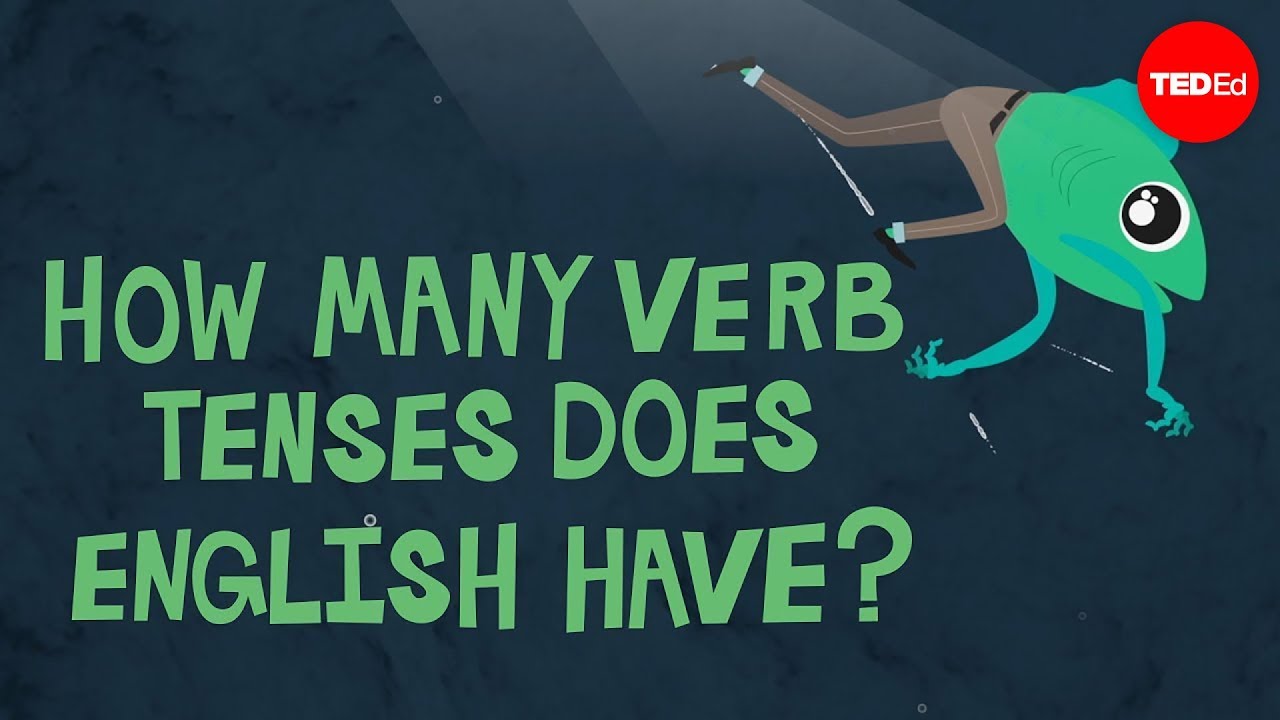
How many verb tenses are there in English? - Anna Ananichuk
video description
Date: 2020-08-22
Related videos





Comments and reviews: 10
Ric
English doesn't have a future tense. Every structure used for the future can be used to describe the present, and vice versa. Some of you will be shaking your head right now (but this sentence has just used 'will' for a present prediction. And even English books recognise that 'I fly tomorrow' and 'I'm flying tomorrow' are perfectly fine, but they give them ridiculous names like 'Present continuous for future use'. Such a mouthful! Just accept the facts: You're going to feel better for it (and 'going to' is actually present continuous structure that we sometimes pretend is a tense in its own right.
This isn't surprising since 'will'/'going to' etc are just words in their own right. They're not as strongly codified into a proper tense yet. This is what you get when you have linguists using terminology and concepts from Latin and applying it to every language, whether it fits nicely or not.
Similar deal with the 'perfect aspect' here. Using 'have' doesn't mean finished per se, it means 'finished in reference to the time frame we're talking about'. And if you don't specify a time frame, it means 'in your whole life' as in, 'I have the experience of X'. Have you been to a boring English class? Yes, I have.
reply
English doesn't have a future tense. Every structure used for the future can be used to describe the present, and vice versa. Some of you will be shaking your head right now (but this sentence has just used 'will' for a present prediction. And even English books recognise that 'I fly tomorrow' and 'I'm flying tomorrow' are perfectly fine, but they give them ridiculous names like 'Present continuous for future use'. Such a mouthful! Just accept the facts: You're going to feel better for it (and 'going to' is actually present continuous structure that we sometimes pretend is a tense in its own right.
This isn't surprising since 'will'/'going to' etc are just words in their own right. They're not as strongly codified into a proper tense yet. This is what you get when you have linguists using terminology and concepts from Latin and applying it to every language, whether it fits nicely or not.
Similar deal with the 'perfect aspect' here. Using 'have' doesn't mean finished per se, it means 'finished in reference to the time frame we're talking about'. And if you don't specify a time frame, it means 'in your whole life' as in, 'I have the experience of X'. Have you been to a boring English class? Yes, I have.
reply
education
A tense is when a verb physically changes to show time. English only has two tenses- present (which only changes to add the s to the third person singular) and simple past (which is usually +ed give or take about 200 exceptions. All the rest is aspect. We do not have a future tense- to talk about the future we may use simple present (I leave for Warsaw tomorrow, present continuous (I'm leaving for my vacation next Monday, be going + infinitive [sic] (What are you going to do for your project next month) and the modal will or (rarer) shall (She will be here in an hour)
When students learn this, it makes English so much easier! Then, rather than teaching them about the 14 or so tenses in English [sic], we can delve into the meaning behind the uses for the aspects of the verb (like this video attempts to do) and so we can talk about simple tenses as FACT and the continuous aspects as TEMPORARY and TAKES TIME. We can look at the perfect aspects as LOOKING BEFORE (Present Perfect, looking before now; Past Perfect, looking before a past fact; Future Perfect, jumping to a future time and looking before that.
A good reference for this information is Michael Lewis' book The English Verb.
reply
A tense is when a verb physically changes to show time. English only has two tenses- present (which only changes to add the s to the third person singular) and simple past (which is usually +ed give or take about 200 exceptions. All the rest is aspect. We do not have a future tense- to talk about the future we may use simple present (I leave for Warsaw tomorrow, present continuous (I'm leaving for my vacation next Monday, be going + infinitive [sic] (What are you going to do for your project next month) and the modal will or (rarer) shall (She will be here in an hour)
When students learn this, it makes English so much easier! Then, rather than teaching them about the 14 or so tenses in English [sic], we can delve into the meaning behind the uses for the aspects of the verb (like this video attempts to do) and so we can talk about simple tenses as FACT and the continuous aspects as TEMPORARY and TAKES TIME. We can look at the perfect aspects as LOOKING BEFORE (Present Perfect, looking before now; Past Perfect, looking before a past fact; Future Perfect, jumping to a future time and looking before that.
A good reference for this information is Michael Lewis' book The English Verb.
reply
DancingCheese
I think the main problem when it comes to discussing Englishs verb tenses is that by saying we have 12 tenses, were implying theyre all unique and need to be individually learned. But, its just not how it works. We may have 12 individual tenses in total, but they overlap by pretty predictable patterns. Our tenses are created by putting together the verbs tense itself (commonly in the form of a suffix) and helper verbs. Have or has implies that the action, in some form or another, was performed before this instance. Both been and -ing implies being in the middle of an action, etc etc. Yes, it adds up to 12 tenses, but you can learn all twelve by learning a few rules (and spending some time practicing.
This is different from languages like Spanish, which has a multitude of unique tenses, the conjugations of which are each unique and need to be individually memorized. Helper verbs barely play a part in tenses in Spanish. So, despite Spanish having a similar amount of tenses to English, its much harder to get them memorized in languages like Spanish as compared to English.
reply
I think the main problem when it comes to discussing Englishs verb tenses is that by saying we have 12 tenses, were implying theyre all unique and need to be individually learned. But, its just not how it works. We may have 12 individual tenses in total, but they overlap by pretty predictable patterns. Our tenses are created by putting together the verbs tense itself (commonly in the form of a suffix) and helper verbs. Have or has implies that the action, in some form or another, was performed before this instance. Both been and -ing implies being in the middle of an action, etc etc. Yes, it adds up to 12 tenses, but you can learn all twelve by learning a few rules (and spending some time practicing.
This is different from languages like Spanish, which has a multitude of unique tenses, the conjugations of which are each unique and need to be individually memorized. Helper verbs barely play a part in tenses in Spanish. So, despite Spanish having a similar amount of tenses to English, its much harder to get them memorized in languages like Spanish as compared to English.
reply
education
It is explaining why native English speakers write so bad and incorrectly, because the tenses aren't thought to them, it's ridiculous. There even are people who don't know the difference between its and it's, than and then. How is a education system this! In Turkey, we learn our grammar for 12 years. Basics at first like adjective, adverb and then more complicated things like active-passive sentences, causatives and the things that English speaker can't understand because they don't have, suffixes making the word noun, verb, adjective and so on. Which word does write how for some loan words and compound words, phonic events and rules and, of course we can speak without them but we cannot write without them just like the native English speakers. Save your language, don't damage it.
reply
It is explaining why native English speakers write so bad and incorrectly, because the tenses aren't thought to them, it's ridiculous. There even are people who don't know the difference between its and it's, than and then. How is a education system this! In Turkey, we learn our grammar for 12 years. Basics at first like adjective, adverb and then more complicated things like active-passive sentences, causatives and the things that English speaker can't understand because they don't have, suffixes making the word noun, verb, adjective and so on. Which word does write how for some loan words and compound words, phonic events and rules and, of course we can speak without them but we cannot write without them just like the native English speakers. Save your language, don't damage it.
reply
David
The answer seems obvious- past, present and. there is no future tense. English uses modals (auxiliaries) to add time or other interpretations to the verb. There are also tense-like forms using the past participle of a verb plus have to carry the time. Not mentioned in the video, English does not have a conditional tense. Conditional sentences use if and several different syntaxes to establish a conditional clause.
English has evolved from several historical languages that have been erratically merged ad hoc. (thats an example right there)
reply
The answer seems obvious- past, present and. there is no future tense. English uses modals (auxiliaries) to add time or other interpretations to the verb. There are also tense-like forms using the past participle of a verb plus have to carry the time. Not mentioned in the video, English does not have a conditional tense. Conditional sentences use if and several different syntaxes to establish a conditional clause.
English has evolved from several historical languages that have been erratically merged ad hoc. (thats an example right there)
reply
Vincent
You forgot moods. we have them in English and they make a huge difference in speech. Especially with the verb to be. So many people make mistakes with this to the point its sounds weird to say things properly.
Examples-
I am a great TED talk speaker.
If I were a bad TED talk speaker, I would be sad.
Be a good TED talk speaker!
Am I a good speaker?
I wish I were a great speaker.
almost all moods have what you described as aspects(tense aspects.
reply
You forgot moods. we have them in English and they make a huge difference in speech. Especially with the verb to be. So many people make mistakes with this to the point its sounds weird to say things properly.
Examples-
I am a great TED talk speaker.
If I were a bad TED talk speaker, I would be sad.
Be a good TED talk speaker!
Am I a good speaker?
I wish I were a great speaker.
almost all moods have what you described as aspects(tense aspects.
reply
FrostyWolfZ
While English may have a variety of auxiliary verb tenses, it interestingly only has 2 truly conjugated tenses, past and present. Compare that to Spanish, which has present, preterite (past, imperfect (past, future, conditional, present subjunctive, and the imperfect subjunctive. Of course both languages have several other tenses formed with past/present participles and an auxiliary verb as well.
reply
While English may have a variety of auxiliary verb tenses, it interestingly only has 2 truly conjugated tenses, past and present. Compare that to Spanish, which has present, preterite (past, imperfect (past, future, conditional, present subjunctive, and the imperfect subjunctive. Of course both languages have several other tenses formed with past/present participles and an auxiliary verb as well.
reply
John
English has two verb tenses -- present and past. All other temporal ideas require auxiliary verbs. Even if we were to grant future and perfect in the tenses (they qualify in some languages) it only brings it up to 6. Aspect is a different idea and does not contribute to tenses any more than an infinitive does. It would arguably contribute to the number of verb forms. But it is independent of tense.
reply
English has two verb tenses -- present and past. All other temporal ideas require auxiliary verbs. Even if we were to grant future and perfect in the tenses (they qualify in some languages) it only brings it up to 6. Aspect is a different idea and does not contribute to tenses any more than an infinitive does. It would arguably contribute to the number of verb forms. But it is independent of tense.
reply
Alberto
What she nicely walks around is that English does not have a future tense at all, because future tense is only expressed in aspect, but not in the verb itself. This is because the English language has been fit to Latin grammar.
Talk about round pegs.
In short the answer is two: past, and non-past.
reply
What she nicely walks around is that English does not have a future tense at all, because future tense is only expressed in aspect, but not in the verb itself. This is because the English language has been fit to Latin grammar.
Talk about round pegs.
In short the answer is two: past, and non-past.
reply
Allen
There are actually fourteen, not twelve. You havent even addressed the emphatic form, which involves the conjugation of the verb to do (I do speak, I did speak; but NOT I have done spoken, or I will have done spoken, or I will have done spoken, except, perhaps, in some dialects)
reply
There are actually fourteen, not twelve. You havent even addressed the emphatic form, which involves the conjugation of the verb to do (I do speak, I did speak; but NOT I have done spoken, or I will have done spoken, or I will have done spoken, except, perhaps, in some dialects)
reply
Add a review, comment
Other channel videos


