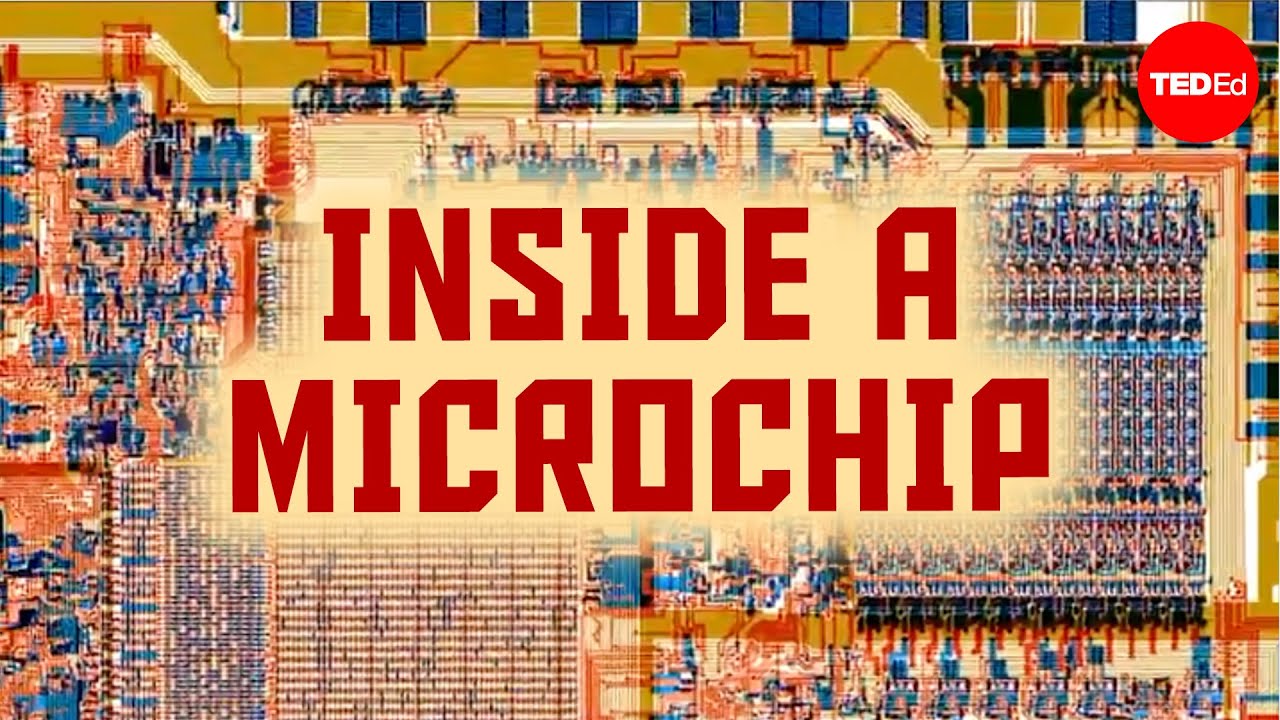
How are microchips made - George Zaidan and Sajan Saini
video description
Date: 2025-02-27
Related videos


Comments and reviews: 20
stayfrost04
And to think that this video is only a very high level explanation of what goes on is just mind boggling. Each aspect of chip manufacturing requires expertise of individuals who are at the forefront of their field. One of my favorite trivia is that the metal plate that holds the wafer in the Photolithography tool accelerates faster than a fighter jet, while having almost 0 vibrations, isolated from background seismic activity of earth itself, and moves to exact position with nanometers accuracy otherwise the pattern being etched is ruined. That's just ONE aspect in a Single Tool used for chip manufacturing. Each tool being used is a work of art, and as I said, made by those who are at the forefront of their field. A single human's life time isn't enough to accumulate enough PhD in all of the fields to be able to start a fab of his own. Quantum Mechanics, Plasma Physics, and Organic and Inorganic Chemistry, Mechanical Engineering, Electrical Engineering. they are just some of the domains involved, and even that is great simplification as these fields are vast and the Fabs require specialization in multiple particular areas of these wider fields.
reply
And to think that this video is only a very high level explanation of what goes on is just mind boggling. Each aspect of chip manufacturing requires expertise of individuals who are at the forefront of their field. One of my favorite trivia is that the metal plate that holds the wafer in the Photolithography tool accelerates faster than a fighter jet, while having almost 0 vibrations, isolated from background seismic activity of earth itself, and moves to exact position with nanometers accuracy otherwise the pattern being etched is ruined. That's just ONE aspect in a Single Tool used for chip manufacturing. Each tool being used is a work of art, and as I said, made by those who are at the forefront of their field. A single human's life time isn't enough to accumulate enough PhD in all of the fields to be able to start a fab of his own. Quantum Mechanics, Plasma Physics, and Organic and Inorganic Chemistry, Mechanical Engineering, Electrical Engineering. they are just some of the domains involved, and even that is great simplification as these fields are vast and the Fabs require specialization in multiple particular areas of these wider fields.
reply
mr. bennett108
My uncle was an FPGA guy and explained this to me when I was like 14, and it ABSOLUTELY blew my mind. It's interesting to consider that this is EQUALLY one of those things that everyone WANTS to do in unmanned factories in SPACE, but ALSO, doesn't ACTUALLY work correctly without GRAVITY, so kinda CAN'T be done in space. THAT part could PROBABLY (question mark) be solved (centrifugal gravity is probably worth considering as there'll be no actual need for LONG TERM human interaction) but the sheer WEIGHT AND RESOURCE consumption described at the end means it would be FINANCIALLY unfeasible without SPACE MINES, as LAUNCHING that much materiel would be WHOLLY unsustainable.
reply
My uncle was an FPGA guy and explained this to me when I was like 14, and it ABSOLUTELY blew my mind. It's interesting to consider that this is EQUALLY one of those things that everyone WANTS to do in unmanned factories in SPACE, but ALSO, doesn't ACTUALLY work correctly without GRAVITY, so kinda CAN'T be done in space. THAT part could PROBABLY (question mark) be solved (centrifugal gravity is probably worth considering as there'll be no actual need for LONG TERM human interaction) but the sheer WEIGHT AND RESOURCE consumption described at the end means it would be FINANCIALLY unfeasible without SPACE MINES, as LAUNCHING that much materiel would be WHOLLY unsustainable.
reply
MadlyFlyingCows1
I work at a fab in the photolithography department and every now and again I have to step back and look at some of the insanities that I work with in this tech. When we routinely qualify the photoresist on a tool we have to check each resists thickness in angstroms and the thickness can be as low as 200 angstroms. Not only that but the range for the thickness will be something like /-5 angstroms. I’ve literally had to make adjustments because a resist was 1 or 2 angstroms out of tolerance. For those of you that don’t know, an angstrom is a tenth a nanometer or about the diameter of a hydrogen atom.
reply
I work at a fab in the photolithography department and every now and again I have to step back and look at some of the insanities that I work with in this tech. When we routinely qualify the photoresist on a tool we have to check each resists thickness in angstroms and the thickness can be as low as 200 angstroms. Not only that but the range for the thickness will be something like /-5 angstroms. I’ve literally had to make adjustments because a resist was 1 or 2 angstroms out of tolerance. For those of you that don’t know, an angstrom is a tenth a nanometer or about the diameter of a hydrogen atom.
reply
stevenmonson
Very impressive presentation! It almost feels like an explanation from a Sci-Fi movie, and yet this is the age we currently live in!
It makes me think of the opening from A Tale of Two Cities:
It was the best of times, it was the worst of times, it was the age of wisdom, it was the age of foolishness, it was the epoch of belief, it was the epoch of incredulity, it was the season of Light, it was the season of Darkness, it was the spring of hope, it was the winter of despair, we had everything before us, we had nothing before us.
reply
Very impressive presentation! It almost feels like an explanation from a Sci-Fi movie, and yet this is the age we currently live in!
It makes me think of the opening from A Tale of Two Cities:
It was the best of times, it was the worst of times, it was the age of wisdom, it was the age of foolishness, it was the epoch of belief, it was the epoch of incredulity, it was the season of Light, it was the season of Darkness, it was the spring of hope, it was the winter of despair, we had everything before us, we had nothing before us.
reply
nidamirza9801
If you really want to contribute towards the sustainability and producing less E-Waste, I will always advice everyone to always try to get your electronics locally repaired. This might look like a small step, but local shops will always try to get your stuff repaired while mega corporations just want you to buy new stuff
reply
If you really want to contribute towards the sustainability and producing less E-Waste, I will always advice everyone to always try to get your electronics locally repaired. This might look like a small step, but local shops will always try to get your stuff repaired while mega corporations just want you to buy new stuff
reply
kirbymarchbarcena
4: 59 For the sake of the future of computing and our environment, tomorrow's leaner, cleaner, and greener fabs will need to run even smarter than the very chips they build.
Better pray that this will happen as soon as possible before our natural resources are totally exhausted.
reply
4: 59 For the sake of the future of computing and our environment, tomorrow's leaner, cleaner, and greener fabs will need to run even smarter than the very chips they build.
Better pray that this will happen as soon as possible before our natural resources are totally exhausted.
reply
NitemareMoon
Absolutely surreal how much compounded knowledge and cooperation it took globally to reach this point in human history. Like this is actually awe-inspiring. Now if only we could use it fully for humanity’s benefit and not AI powered war machines
reply
Absolutely surreal how much compounded knowledge and cooperation it took globally to reach this point in human history. Like this is actually awe-inspiring. Now if only we could use it fully for humanity’s benefit and not AI powered war machines
reply
joshvillanueva4124
As a former CMP process engineer at a major semiconductor manufacturer it’s nice to see CMP highlighted - it’s usually the step that gets glossed over in many of these videos. Appreciate the sustainability aspect of the video as well!
reply
As a former CMP process engineer at a major semiconductor manufacturer it’s nice to see CMP highlighted - it’s usually the step that gets glossed over in many of these videos. Appreciate the sustainability aspect of the video as well!
reply
RavGav72
All you spoke about is the negative spinoff of chip production. How about balancing it out with another video highlighting the positive effects and progress of these computer chips. You'll see that the benefits far outweigh the costs.
reply
All you spoke about is the negative spinoff of chip production. How about balancing it out with another video highlighting the positive effects and progress of these computer chips. You'll see that the benefits far outweigh the costs.
reply
KarlailMoon
Honestly, there are more reliable options with up to 2. 5% daily returns. Moonacy Protocol’s interesting. I’ve been earning steadily with them. The key is, it’s a real business, real money, and sustainable growth
reply
Honestly, there are more reliable options with up to 2. 5% daily returns. Moonacy Protocol’s interesting. I’ve been earning steadily with them. The key is, it’s a real business, real money, and sustainable growth
reply
nickvinsable3798
. .. Could we have bots create smaller bots & those smaller bots create even smaller bots, all the way down to nanobots so small that it’ll function like magic, such as casting a fireball spell or something
reply
. .. Could we have bots create smaller bots & those smaller bots create even smaller bots, all the way down to nanobots so small that it’ll function like magic, such as casting a fireball spell or something
reply
usmankhan-hk4pb
I don’t know if I should be recommending this book or warning people about it. The things it teaches are not for everyone. If you’re comfortable living in ignorance, do not read Vibrations of Manifestation.
reply
I don’t know if I should be recommending this book or warning people about it. The things it teaches are not for everyone. If you’re comfortable living in ignorance, do not read Vibrations of Manifestation.
reply
Remanshu223
I genuinely regret reading Vibrations of Manifestation by Alex Lane. Some things should stay unknown. Once you understand how manifestation actually works, you can’t unsee it. Be careful with this book.
reply
I genuinely regret reading Vibrations of Manifestation by Alex Lane. Some things should stay unknown. Once you understand how manifestation actually works, you can’t unsee it. Be careful with this book.
reply
OneMinuteToDo
They did NOT have to cook this hard. The animation and audio felt like absolute perfection, I couldn't take my eyes off!
Petition for TedEd to release the mesmerizing soundtrack of this video
reply
They did NOT have to cook this hard. The animation and audio felt like absolute perfection, I couldn't take my eyes off!
Petition for TedEd to release the mesmerizing soundtrack of this video
reply
Albertmars32
Whenever i watch videos like this im just baffled at how incredibly smart some people are to be able to think and engineer stuff up. Can you imagine how different our lives would be without smart ppl
reply
Whenever i watch videos like this im just baffled at how incredibly smart some people are to be able to think and engineer stuff up. Can you imagine how different our lives would be without smart ppl
reply
ytJona
Let's make more of this epic HD content that explains chips so we need more advanced chips which need to be explained more elaborately and with even higher resolution videos so we need more advanced chips.
reply
Let's make more of this epic HD content that explains chips so we need more advanced chips which need to be explained more elaborately and with even higher resolution videos so we need more advanced chips.
reply
topherthe11th23
According to my viewing of this video and a word-search of the Transcript, this video uses the term PFAS without telling us what it stands for. That's contrary to conventional practice.
reply
According to my viewing of this video and a word-search of the Transcript, this video uses the term PFAS without telling us what it stands for. That's contrary to conventional practice.
reply
DreamDaddie
Fascinating. I just assumed machines were just making chips. I didn’t know that the machines were sanding down the chips at nearly an atomic level just to add the micro thin copper
reply
Fascinating. I just assumed machines were just making chips. I didn’t know that the machines were sanding down the chips at nearly an atomic level just to add the micro thin copper
reply
pinkdinosaur222
i’m a tech at one of these fabs and this video is perfect to show my friends what kind of stuff goes on at my job because i have absolutely no clue how to put all of that simply
reply
i’m a tech at one of these fabs and this video is perfect to show my friends what kind of stuff goes on at my job because i have absolutely no clue how to put all of that simply
reply
Lily-xq1em
The tech industry has a kinda cringe habit of of techbros overhyping everything but this is genuinely a very cool video and the praise in this comments section is well deserved lol
reply
The tech industry has a kinda cringe habit of of techbros overhyping everything but this is genuinely a very cool video and the praise in this comments section is well deserved lol
reply
Add a review, comment
Other channel videos