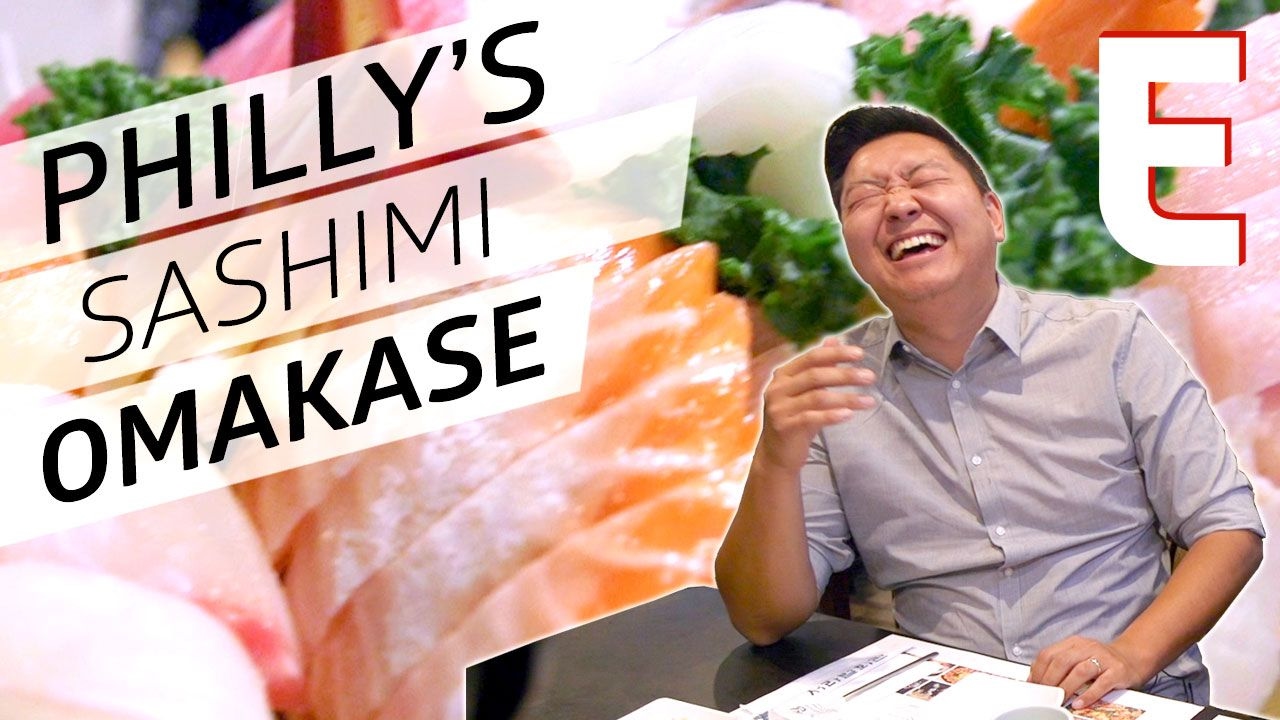
Philly's Hidden Korean Sashimi Omakase K-Town
video description
Date: 2020-05-20
Related videos




Comments and reviews: 10
Rdm
While there's no doubt a Japanese twist on the raw fish in this restaurant (makes sense since sushi is so popular in America and so they want to capitalize on that market, Koreans have been eating raw fish, nori (called kim in korean) rolls, and etc. just as long if not longer than the Japanese. That is not to say contemporary Japanese style sushi is Korean in origin nor vice versa. In fact, both Korean and Japanese methods of fish eating are its own unique type of food with their unique culture. Koreans, with their many types of fermented sauces, tend to eat fish with them especially things like gochujang or chojang. The wasabi is a more modern touch added from Japanese influence. So like bold Korean sauces, it's no surprise that Koreans took a liking to eating their fish with these sauces including Japanese wasabi. Japanese sushi actually derives from a type of fermented fish dish popular in Southeast Asia. Often times, even in Japan, many types of sushi were often consumed with many types of sweet soy sauces or marinated. It wasn't until Edo-style sushi became popular that many sushi restaurants in Japan started this whole, pure taste of the fish thing. It is similar to the flip in the attitude towards spices in Europe, especially France. Before spices were cheap, the rich often ate very expensive ingredients with a variety of spices. Essentially, the more spices the better. After spices became cheaper and readily available, the rich wanted to differentiate themselves (basically show off they weren't like the poor) by using as little spice as possible so that the pure taste of their expensive ingredients came through. It's why people like Ramsay throw a fit now when you put expensive meat in marinades and such instead of eating them pure. It's all hogwash. Eat food however you like. If you think someone is a dumbass for preferring more spiced or sauced foods instead of being an elitist purist like you, then they might not be the dumbass. More so that you just drank the koolaid on the French rejection of spices once they became cheap or the belief that Edo-style sushi is the best. Seriously, I love foodies in terms of their enthusiasm for food, but the whole elitist holier than thou attitude towards how food should be consumed annoys me. It's like vegans or vegetarians judging people for eating meat and animal products.
reply
While there's no doubt a Japanese twist on the raw fish in this restaurant (makes sense since sushi is so popular in America and so they want to capitalize on that market, Koreans have been eating raw fish, nori (called kim in korean) rolls, and etc. just as long if not longer than the Japanese. That is not to say contemporary Japanese style sushi is Korean in origin nor vice versa. In fact, both Korean and Japanese methods of fish eating are its own unique type of food with their unique culture. Koreans, with their many types of fermented sauces, tend to eat fish with them especially things like gochujang or chojang. The wasabi is a more modern touch added from Japanese influence. So like bold Korean sauces, it's no surprise that Koreans took a liking to eating their fish with these sauces including Japanese wasabi. Japanese sushi actually derives from a type of fermented fish dish popular in Southeast Asia. Often times, even in Japan, many types of sushi were often consumed with many types of sweet soy sauces or marinated. It wasn't until Edo-style sushi became popular that many sushi restaurants in Japan started this whole, pure taste of the fish thing. It is similar to the flip in the attitude towards spices in Europe, especially France. Before spices were cheap, the rich often ate very expensive ingredients with a variety of spices. Essentially, the more spices the better. After spices became cheaper and readily available, the rich wanted to differentiate themselves (basically show off they weren't like the poor) by using as little spice as possible so that the pure taste of their expensive ingredients came through. It's why people like Ramsay throw a fit now when you put expensive meat in marinades and such instead of eating them pure. It's all hogwash. Eat food however you like. If you think someone is a dumbass for preferring more spiced or sauced foods instead of being an elitist purist like you, then they might not be the dumbass. More so that you just drank the koolaid on the French rejection of spices once they became cheap or the belief that Edo-style sushi is the best. Seriously, I love foodies in terms of their enthusiasm for food, but the whole elitist holier than thou attitude towards how food should be consumed annoys me. It's like vegans or vegetarians judging people for eating meat and animal products.
reply
sheezy
If your gonna claim this a Korean dish, be careful what you call it. Use your native Korean language cuz those words are Japanese and it'll confuse people and some might assume sashimi omakases are like that in Japan as well, which is TOTALLY NOT! And while you're promoting Korean food you seem to come up with a way to disrespect Japanese chefs and peoples taste in food. Trying waaaaay too hard imo. I do like Korean food but you gotta admit this is a FUSION FOOD.
reply
If your gonna claim this a Korean dish, be careful what you call it. Use your native Korean language cuz those words are Japanese and it'll confuse people and some might assume sashimi omakases are like that in Japan as well, which is TOTALLY NOT! And while you're promoting Korean food you seem to come up with a way to disrespect Japanese chefs and peoples taste in food. Trying waaaaay too hard imo. I do like Korean food but you gotta admit this is a FUSION FOOD.
reply
kaisermuto
Korean's Japanese food is fake. Koreans began to eat Sashimi from 1980s. After Japan left Korea, all Japanese culture was banned included Sashimi, Sushi, Udon. And they did not use sugar with soysauce. They had used soysauce alone. BecauseKorean people didn't like sweet thing more over they like pepper hot. But recently, Japanese food became popular, so Korean accepted Japanese food to get money withquick-eyed mind.
reply
Korean's Japanese food is fake. Koreans began to eat Sashimi from 1980s. After Japan left Korea, all Japanese culture was banned included Sashimi, Sushi, Udon. And they did not use sugar with soysauce. They had used soysauce alone. BecauseKorean people didn't like sweet thing more over they like pepper hot. But recently, Japanese food became popular, so Korean accepted Japanese food to get money withquick-eyed mind.
reply
User
I feel like having strong sauces like that with the sashimi/sushi kind of takes away from the point of sashimi. The whole point of soy sauce with sashimi is to very lightly accent the flavor of the fish. I don't doubt that it tasted great, I just feel like strongly flavored sauces like those could be better used in dishes with stronger flavors. I might be wrong though, I've never tried it.
reply
I feel like having strong sauces like that with the sashimi/sushi kind of takes away from the point of sashimi. The whole point of soy sauce with sashimi is to very lightly accent the flavor of the fish. I don't doubt that it tasted great, I just feel like strongly flavored sauces like those could be better used in dishes with stronger flavors. I might be wrong though, I've never tried it.
reply
Ji
Just an FYI warning White Tuna 5: 05 is not tuna at all but is the Escolar (Lepidocybium flavobrunneum) aka Walu here in Hawai'i. It has very tasty oily flesh similar to toro maguro BUT the oil it contains does not digest so goes right through you (like castor oil and mineral oil) so eating too much will have a laxative effect sometimes severe. If you gotta have White Tuna eat it sparingly.
reply
Just an FYI warning White Tuna 5: 05 is not tuna at all but is the Escolar (Lepidocybium flavobrunneum) aka Walu here in Hawai'i. It has very tasty oily flesh similar to toro maguro BUT the oil it contains does not digest so goes right through you (like castor oil and mineral oil) so eating too much will have a laxative effect sometimes severe. If you gotta have White Tuna eat it sparingly.
reply
Guest
you can tell korean are trying to match to japanese quality when it comes to sashimi world, but little did you know guys, white tuna is never existed. They are selling the escolar under the name of white tuna, and its disgusting how they would exploited the word white tuna but indeed what they are really selling is Escolar pieces. There is no such thing as white tuna.
reply
you can tell korean are trying to match to japanese quality when it comes to sashimi world, but little did you know guys, white tuna is never existed. They are selling the escolar under the name of white tuna, and its disgusting how they would exploited the word white tuna but indeed what they are really selling is Escolar pieces. There is no such thing as white tuna.
reply
evolver
Reading through these comments is enlightening. So I have to ask. Why do Koreans appropriate Japanese culture and claim it as if it was always theirs? If you think about it this video is the same as if a group of, say, Belarusians claiming pizza as their cultural food. Say what you will but it is what it is - blatant cultural appropriation.
reply
Reading through these comments is enlightening. So I have to ask. Why do Koreans appropriate Japanese culture and claim it as if it was always theirs? If you think about it this video is the same as if a group of, say, Belarusians claiming pizza as their cultural food. Say what you will but it is what it is - blatant cultural appropriation.
reply
Geonho
Actually, what he calls 'Chojang' during the entire video is called 'Makjang'- Chojang has a distinctive red color with Gochujang (Korean Chili paste) and vinegar as its main ingredients. We also eat our Hwae (sashimi) with Chojang, of course, but that was DEFINITELY not Chojang.
reply
Actually, what he calls 'Chojang' during the entire video is called 'Makjang'- Chojang has a distinctive red color with Gochujang (Korean Chili paste) and vinegar as its main ingredients. We also eat our Hwae (sashimi) with Chojang, of course, but that was DEFINITELY not Chojang.
reply
Evenstar
I expect angry Koreans commenting That's not authentic Korean food. blah blah blah. Why do you use Japanese words to describe Korean dishes? blah blah blah. And angry Japanese people commenting That's Japanese food. Those Koreans stole our food blah blah blah.
reply
I expect angry Koreans commenting That's not authentic Korean food. blah blah blah. Why do you use Japanese words to describe Korean dishes? blah blah blah. And angry Japanese people commenting That's Japanese food. Those Koreans stole our food blah blah blah.
reply
Tosh
I'm good with multi cuisine restaurants as well as fusion but don't with sushi. I eat it once a week and only visit restos that specialize. Well, one Japanese joint in my rotation seems to sell more ramen or at lest just as much but they also offer great sushi.
reply
I'm good with multi cuisine restaurants as well as fusion but don't with sushi. I eat it once a week and only visit restos that specialize. Well, one Japanese joint in my rotation seems to sell more ramen or at lest just as much but they also offer great sushi.
reply
Add a review, comment
Other channel videos