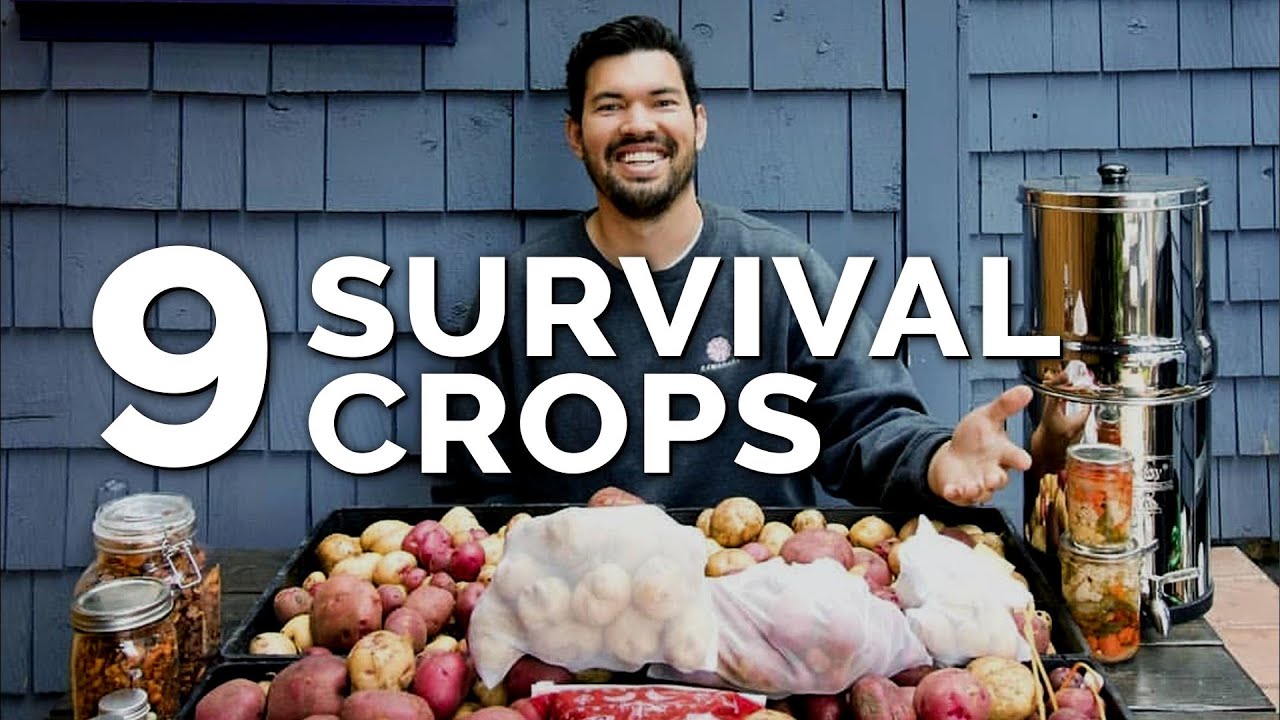
9 Survival Gardening Crops to Grow in a Post Apocalyptic World
video description
Date: 2022-07-18
Related videos


Comments and reviews: 15
Jack
Blackberries- They grow with minimal irrigation and spread like a disease so you won't need to propagate them. Literally NO work. Sadly, the harvest is late and only for a month or so in New York. I specifically transplanted a wild variety of blackberry into my garden for obvious reasons, faster spreading, more resilience. The fruits aren't as sweet but this is about long term survival.
I would also recommend mulberry trees. Again, no work and the fruit is amazing but short lived.
Strawberries, grapes, apples, honestly any perennial fruit of disease resistant varieties even if the fruits aren't your favorite. They will be your favorite in a survival situation; ) I can't keep onions alive in Western NY, winters are too wet and it seems like they always rot. Maybe my medium isn't right.
As far as annuals, I suck at cold weather crops because in Buffalo, NY, we get really hot stretches in as early as April so its easy to botch carrots, lettuce, kale, etc. I have mastered the cherry/grape tomatoes and nearly all varieties of pepper. Peppers are very good for you, fight disease and have a lot of potassium and other minerals. A must have. Just don't go too overboard with the hot peppers or you will be on the throne and could become dehydrated from diarrhea. The larger varieties of tomatoes require way more water and seem to always get blossom end rot or some disease like fusarium wilt. Not worth the effort for me so I stick with the little ones, hybrids performing the best but producing little to no viable seed.
Just a warning to aspiring herb growers: the rosemary doesn't tolerate cold NY winters. Sage and lavender are slightly more tolerant but still struggles with extra long/cold winters. Thyme will grow great for the first few years but if you don't start harvesting from it, the thin growth dies during late winter in NY and then it really struggles in spring but if you prune the shit out it, it grows lush each year. What you can also do is bury some of the thyme as it's growing and it will root and produce fresh basal growth. Be careful about mint. You might think it will be sweet to have mint everywhere until that actually happens and you wish the oregano had competed better. Harvest from your oregano early each year while it's young (1. 5 ft tall) and you will get a few good harvests before the flowers pop and the herb loses its flavor (make sure to leave healthy nodes.
reply
Blackberries- They grow with minimal irrigation and spread like a disease so you won't need to propagate them. Literally NO work. Sadly, the harvest is late and only for a month or so in New York. I specifically transplanted a wild variety of blackberry into my garden for obvious reasons, faster spreading, more resilience. The fruits aren't as sweet but this is about long term survival.
I would also recommend mulberry trees. Again, no work and the fruit is amazing but short lived.
Strawberries, grapes, apples, honestly any perennial fruit of disease resistant varieties even if the fruits aren't your favorite. They will be your favorite in a survival situation; ) I can't keep onions alive in Western NY, winters are too wet and it seems like they always rot. Maybe my medium isn't right.
As far as annuals, I suck at cold weather crops because in Buffalo, NY, we get really hot stretches in as early as April so its easy to botch carrots, lettuce, kale, etc. I have mastered the cherry/grape tomatoes and nearly all varieties of pepper. Peppers are very good for you, fight disease and have a lot of potassium and other minerals. A must have. Just don't go too overboard with the hot peppers or you will be on the throne and could become dehydrated from diarrhea. The larger varieties of tomatoes require way more water and seem to always get blossom end rot or some disease like fusarium wilt. Not worth the effort for me so I stick with the little ones, hybrids performing the best but producing little to no viable seed.
Just a warning to aspiring herb growers: the rosemary doesn't tolerate cold NY winters. Sage and lavender are slightly more tolerant but still struggles with extra long/cold winters. Thyme will grow great for the first few years but if you don't start harvesting from it, the thin growth dies during late winter in NY and then it really struggles in spring but if you prune the shit out it, it grows lush each year. What you can also do is bury some of the thyme as it's growing and it will root and produce fresh basal growth. Be careful about mint. You might think it will be sweet to have mint everywhere until that actually happens and you wish the oregano had competed better. Harvest from your oregano early each year while it's young (1. 5 ft tall) and you will get a few good harvests before the flowers pop and the herb loses its flavor (make sure to leave healthy nodes.
reply
Alexis
One of the nice side benefits of growing a nice, wide band of squash around your corn patch (at least 4' wide of dense vines and foliage) is that it's so prickly that it effectively fences off your corn, protecting it from furry thieves like raccoons. The prickles hurt their so-sensitive paws
In a survival environment, I would also recommend growing a few specific herbs: calendula, chamomile, feverfew and echniacea (purple coneflower) for medicinal value. Calendula is useful for topical injury (small wounds, rashes, localized inflammation, chamomile is a natural sedative (sleep is important for your health) and combines well with the last two herbs as a tea. Feverfew does exactly what it says on the tin, helping to reduce fevers, and echinacea is a nice immune system booster. Combine with wild violet blossoms or rosehips for a nice kick of vitamin C. Dandelion root tea is also very helpful for lower gastro-intestinal concerns, but never drink it right before bed! It's also a potent diuretic (it's so strong that the French name for dandelion root tea literally translates as _'pissing the bed'_ XD XD)
reply
One of the nice side benefits of growing a nice, wide band of squash around your corn patch (at least 4' wide of dense vines and foliage) is that it's so prickly that it effectively fences off your corn, protecting it from furry thieves like raccoons. The prickles hurt their so-sensitive paws
In a survival environment, I would also recommend growing a few specific herbs: calendula, chamomile, feverfew and echniacea (purple coneflower) for medicinal value. Calendula is useful for topical injury (small wounds, rashes, localized inflammation, chamomile is a natural sedative (sleep is important for your health) and combines well with the last two herbs as a tea. Feverfew does exactly what it says on the tin, helping to reduce fevers, and echinacea is a nice immune system booster. Combine with wild violet blossoms or rosehips for a nice kick of vitamin C. Dandelion root tea is also very helpful for lower gastro-intestinal concerns, but never drink it right before bed! It's also a potent diuretic (it's so strong that the French name for dandelion root tea literally translates as _'pissing the bed'_ XD XD)
reply
Sarah
Herbs are very worth it, but I will warn that you really want to make sure they are separated from other plants, as they will easily choke them out and take over your yard, and will be very difficult to remove. Even against other herbs (our mint choked out all the other herbs it was sharing a space with) I would personally also suggest growing strawberry plants. They would honestly survive nuclear fallout, lol (not literally, but you get the gist) So very easy to grow. Do best with lots of water, but are very difficult to kill. Even when it dies, new plants grow up in its place, and runners are quickly produced so that you can then give them to other people. Yet again, however, they grow and reproduce at an insane rate and will easily take over, so you also want to be super careful with them and make sure they're divided. But they contain more vitamin C than oranges, are a good source of manganese and potassium, and are rich in antioxidants.
reply
Herbs are very worth it, but I will warn that you really want to make sure they are separated from other plants, as they will easily choke them out and take over your yard, and will be very difficult to remove. Even against other herbs (our mint choked out all the other herbs it was sharing a space with) I would personally also suggest growing strawberry plants. They would honestly survive nuclear fallout, lol (not literally, but you get the gist) So very easy to grow. Do best with lots of water, but are very difficult to kill. Even when it dies, new plants grow up in its place, and runners are quickly produced so that you can then give them to other people. Yet again, however, they grow and reproduce at an insane rate and will easily take over, so you also want to be super careful with them and make sure they're divided. But they contain more vitamin C than oranges, are a good source of manganese and potassium, and are rich in antioxidants.
reply
Barbara
Red Chard i am a big fan of kale but red chard is slightly sweeter as a very young plant and grows all winter we get mild temp but lots of snow i didnt think my chard would live but after a really unusal heavy snow and lots of cold snaps they can through i would take off broken bits and any that was nipped by frost. I love this green for salads and it is great for cooking much like kale. lettuces but think the nutritional value is not there, but it grows every where for me. and all winter long, I am a bit north in the lower elevation of about 3400 feet. the soil is bad and the terrain can be very steep. This year both these crops will get my first ever hoop covers for frost kand snow. I am getting lots of potatoes in and now thinking sweet potatoes even better.
reply
Red Chard i am a big fan of kale but red chard is slightly sweeter as a very young plant and grows all winter we get mild temp but lots of snow i didnt think my chard would live but after a really unusal heavy snow and lots of cold snaps they can through i would take off broken bits and any that was nipped by frost. I love this green for salads and it is great for cooking much like kale. lettuces but think the nutritional value is not there, but it grows every where for me. and all winter long, I am a bit north in the lower elevation of about 3400 feet. the soil is bad and the terrain can be very steep. This year both these crops will get my first ever hoop covers for frost kand snow. I am getting lots of potatoes in and now thinking sweet potatoes even better.
reply
soskhan
YOU FORGOT - simple fruit tree: D an apple etc. - yes its seasonal but a fully grown apple tree can provide a large amount of calories, nutrient dense and its easy to preserve with say sugar (jams etc) its also a great way to actually attract small animals and birds - if you in the apocalypse a small bird to eat might be smart to eat and if the tree is fully developed and you live in a good rain spot you really dont need to do much, just let nature take its course. I say this to anyone, if you got a garden large enough, try and plant an apple tree, you will not be disappointed.
reply
YOU FORGOT - simple fruit tree: D an apple etc. - yes its seasonal but a fully grown apple tree can provide a large amount of calories, nutrient dense and its easy to preserve with say sugar (jams etc) its also a great way to actually attract small animals and birds - if you in the apocalypse a small bird to eat might be smart to eat and if the tree is fully developed and you live in a good rain spot you really dont need to do much, just let nature take its course. I say this to anyone, if you got a garden large enough, try and plant an apple tree, you will not be disappointed.
reply
RaccoonRoach
How many of these can be grown indoors? Let's say I build a underground room, with 4-5ft of dirt on the bottom, and half the room with a normal floor, and shelves. The dirt floor has a system that lets our excess water, but every now and then I have to take out the dirt and replace it with new dirt and stuff.
(EDIT)
Also, this was very helpful: ) I'm so stinky excited to get started X)
reply
How many of these can be grown indoors? Let's say I build a underground room, with 4-5ft of dirt on the bottom, and half the room with a normal floor, and shelves. The dirt floor has a system that lets our excess water, but every now and then I have to take out the dirt and replace it with new dirt and stuff.
(EDIT)
Also, this was very helpful: ) I'm so stinky excited to get started X)
reply
Tom
I think you've covered the basics of actual survival. Wisely you added herbs for flavouring and depending on space I would suggest onion, garlic, chillies and tomatoes, as between them they turn boring food into something delicious. The tomatoes I mean to be for drying or making passata for storing. Then throw in the olive oil that you should have a big store of and you're on your way.
reply
I think you've covered the basics of actual survival. Wisely you added herbs for flavouring and depending on space I would suggest onion, garlic, chillies and tomatoes, as between them they turn boring food into something delicious. The tomatoes I mean to be for drying or making passata for storing. Then throw in the olive oil that you should have a big store of and you're on your way.
reply
T. M.
The sweet potatoes have beta carotene, just like carrots. The Kale is a great source of vitamin A. I wished you had included some sort of seeds or nuts, like sunflowers, which is a good source of Vitamin E and are FAST To grow. If you get your E from green plant sources, you should eat it with some type of fat to help with the fat soluble uptake.
reply
The sweet potatoes have beta carotene, just like carrots. The Kale is a great source of vitamin A. I wished you had included some sort of seeds or nuts, like sunflowers, which is a good source of Vitamin E and are FAST To grow. If you get your E from green plant sources, you should eat it with some type of fat to help with the fat soluble uptake.
reply
Grow
This was really great! My suggested add would a few easy to grow trees like bananas and citrus. When you dry foods for survival or just surplus, some volatile vitamins like vitamin c will leave the food. So having a food like citrus to replace that would be great.
I totally love your garden, especially the new one. Thanks for all you do!
reply
This was really great! My suggested add would a few easy to grow trees like bananas and citrus. When you dry foods for survival or just surplus, some volatile vitamins like vitamin c will leave the food. So having a food like citrus to replace that would be great.
I totally love your garden, especially the new one. Thanks for all you do!
reply
epic_gardening
Great information to have - herbs are very healthy for us in so many ways, not just nutritionally. To actually carry this through this in a survival situation will be extremely challenging. When people have nothing left to lose - they lose it. Protecting your garden will be most challenging - especially in urban areas.
reply
Great information to have - herbs are very healthy for us in so many ways, not just nutritionally. To actually carry this through this in a survival situation will be extremely challenging. When people have nothing left to lose - they lose it. Protecting your garden will be most challenging - especially in urban areas.
reply
John
You have to have 2 others items in your list. summer types of squash and turnips. When you do the number of pounds of food per day and with poor soils turnips beat everything. The tops are nutrient dense and the roots are calorie dense. My top 5 plants are corn, turnips, yellow squash, potatoes and beans(all legumes types)
reply
You have to have 2 others items in your list. summer types of squash and turnips. When you do the number of pounds of food per day and with poor soils turnips beat everything. The tops are nutrient dense and the roots are calorie dense. My top 5 plants are corn, turnips, yellow squash, potatoes and beans(all legumes types)
reply
Namae
I went on a 2 week holiday once and forgot that I had potatoes in the cupboard. When I got home the roots had burst through the bag. Needless to say, they were planted in the garden the morning after I found them and I wound up with so many spuds from that two kilo bag I had to offload them on my neighbours.
reply
I went on a 2 week holiday once and forgot that I had potatoes in the cupboard. When I got home the roots had burst through the bag. Needless to say, they were planted in the garden the morning after I found them and I wound up with so many spuds from that two kilo bag I had to offload them on my neighbours.
reply
True
rule number one when growing your own food
never ever ever grow your food in a city or a town, cause the public is out of food and its thousands of them, you will be the target
best way to grow your food is off grid away from the city and town where there is alot of populations
reply
rule number one when growing your own food
never ever ever grow your food in a city or a town, cause the public is out of food and its thousands of them, you will be the target
best way to grow your food is off grid away from the city and town where there is alot of populations
reply
Danielle
I did sweet potatoes, but with how they sprawled I didn't get much in the way of tubers. However the greens on them were delicious. Even the mature leaves were great. I made them like I make cream spinach and it was perfect. They're great fresh as a salad too though
reply
I did sweet potatoes, but with how they sprawled I didn't get much in the way of tubers. However the greens on them were delicious. Even the mature leaves were great. I made them like I make cream spinach and it was perfect. They're great fresh as a salad too though
reply
MLAustin5
Would u mind sharing with us where u get your seeds? Do u get them certified? Online? I alos have a question about these crops you mentioned. Do you know if any of these would not do great in the desert of Nevada? Thank u for the great information!
reply
Would u mind sharing with us where u get your seeds? Do u get them certified? Online? I alos have a question about these crops you mentioned. Do you know if any of these would not do great in the desert of Nevada? Thank u for the great information!
reply
Add a review, comment
Other channel videos