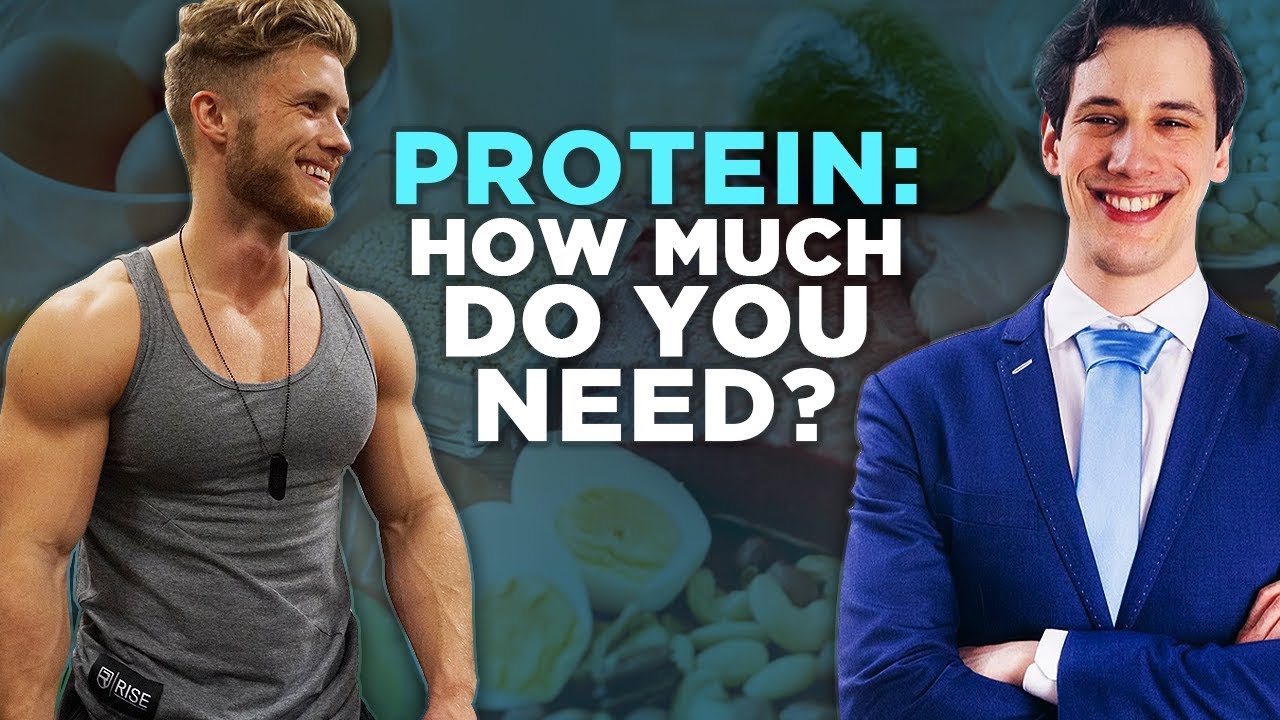
How Many Grams of Protein Do You Need Per Day & Per Meal? ft. Jorn Trommelen
video description
Date: 2019-11-06
Related videos


Comments and reviews: 9
Jeff Nippard
Please comment below who you'd like to see me interview next These will be re-posted on my podcast too (The Jeff Nippard Podcast on iTunes and Stitcher. Timestamps below for anyone on mobile. EnjoyKey: MPS = muscle protein synthesis0: 00 Intro1: 38 The role of carbs (insulin) and fats in stimulating MPS. Is insulin anabolic? 7: 46 Whole eggs more anabolic than egg whites? (New research)11: 00 Just hitting total daily protein intake and an IIFYM approach to protein13: 25 Collagen protein discussion14: 32 How much protein do you need per day? 1g/lb per day? (The controversy)20: 21 Does protein intake depend on lean body mass/body weight? 26: 13 Role of individual differences28: 02 Protein quality (plant vs animal protein)31: 46 Should vegans supplement leucine? (And leucine discussion)34: 25 How much leucine do you need per meal? (Is the leucine threshold legit)44: 17 Protein distribution (Can you eat all your protein in one meal)What is the muscle full effect? 47: 28 Intermittent fasting is it sub-obtimal for MPS? (What happens when you eat 50-100+g in one meal)52: 52 Is there a refractory period? 1: 03: 35 Protein before bed? How much and what type? 1: 09: 56 What about a protein feeding in the middle of the night? 1: 14: 35 Summary of training and nutrition for MPS 1: 17: 29 Practical takeaways for those wanting to really optimize results (3 things)
reply
Sigve Babatunde
nobody wondering how it is that newbies gain a LOT more muscle than intermediates or advanced people when he said that only about 2 of the 20 grams of protein is actually going in to the muscle stream? does this mean that adanced people absorb a lot less than this amount of does it mean that if u are a noob to training this amounts goes up to like 6 grams every 20 or something? cause noobs on a very good program can gain about 1 kg muscle every month in the starting phase, if u were to eat 100 g of protein every day and your muscles could only absorb 10 of it, that would take u 100 days to gain just 1kg of muscle? or do they actually gain about 0. 3 kg of actual contractile tissue through the month and the rest of it would be water weight? how does this work? is the rate of absorbtion in the muscle stream lower the more advanced u get or is the rate that its converted into contractile tissue lower the more advanced u geT? anyone have any toughts on this? am i missing something?
reply
Mike P
Love the video. The discussion seems to focus on intermittent fasting relative to muscle gain is short sighted, however. I. F. has other benefits regarding fat loss, mental clarity, gut cellular turnover, management of lower overall insulin levels and minimizing inflammatory response and overall insulin levels modulation, elevated levels of HGH etc. So I. F. is utilized for far more than simple muscle building. Ingestion of protein is only one variable of overall muscle growth as those other factors more realistically impact muscle growth (presumably) than solely assuming protein ingestion is any more than a partial factor. Fasting cardio and weight lifting mobilizes fats and utilizes intramyocellular lipid stores more efficiently helping to be more lean. BHB when fasting minimizes leucine oxidation as well preventing catabolism thereby enhancing organized muscle synthesis. GlobalWellnesscomcast. net
reply
Rebecca Nolan
This was such an amazing podcast I do have one Q that maybe Jorn can answer? Clearly we don't have a very clear standpoint on Intermittent Fasting, but are there particular assumptions we can make in relation to it and muscle gain? I train in the morning (7-9am) and like fasting until lunch time (1pm) when I'm in a deficit (more calories later in the day yesss) but I'm not sure how much I'm hindering myself by doing this, and I can't find a clear answer. If there's research I can look at please link me to it but otherwise I'd really love your personal thoughts on this. I could definitely eat sooner after training if that would be optimal. but if I can keep fasting and know I'm not hindering progress that would be nice [Note once I start eating I do get 4 protein feedings throughout the day hitting 25g min each time]
reply
Peter Griepink
1) is collagen a protein? seems debated sometimes. 2) how is collagen disgested? is it not broken down? 3) pro has a satiety factor that can lead to losing weight. However fats should also be ingested (at least every once and awhile. 4) more protein also leads to more digestion and pro digestion costs are high. 5) philips showed only 10% goes to muscle. So more pro can also lead to higher gut uptake )6) Intermitted fasting is not good related to a well protein diet7) whey in 8 hours can lead to whey going to the proximal part of the small intestine and influecing negatively the gastric emptying rate. 8) better plan training and pro after and at other times high whey ingestion to get to a higher MPS. So training and high whey ingestion might be not most optimal. Anyway lots to debate still
reply
Kevin de Lima Alves
About the muscle full effect. I actually read all the article and I couldn't help but notice that in the Artherton et al (2010) study the levels of EAA and Leucine were suboptimal after 180 min of bolus (thus suboptimal MPS, despite being above fasted. Could you shed some light on that? (IF they were actually fed after 3 hours, the result could be very different, most probably it is)Also, recently I've heard of bovine colostrum as a better source of protein than whey. There is a resonable amount of studies supporting this (some not so reliable, funded by a brand that makes then, but this doesn't seems to add up, since you don't see the fitness community talking about this. I'd really appreciate to hear your thoughts on this.
reply
Peter Griepink
No need for claiming to be natural. It has no meaning anyone can make this claim You are a pro bodybuilder that is all. If you are scientific that would give you more credit. That would be also a nice video/debate. I am not tending to insult you but just from a scientific perspective the claim is useless. There is no need for lean and bulk. Maybe the focus should be on this also. Many misunderstandings around this. Do you do cardio? Cardio is very important also for bodybuilding In stead of lean/bulk the focus should be on cardio and tapering this in function of diet and training goals. In the end more clean muscle mass will be made. Might also be a good video I will watch this now
reply
ShadowLeafAliyah
Ah thanks for this I really struggle to consume 130g-150g protein especially since my stomach started being upset with whey protein shakes. I was thinking to myself that it really didn't matter, that my caloric intake was the most important (losing weight, so deficit is the goal) but it sounds like it does matter significantly, and I need to get my ass in gear with meal prep if I want any results. I work a desk job 8-10 hours a day and today I forgot breakfast and worked through lunch (just a couple carb-heavy snacks while working) so I'm really in a difficult spot, and this happens on a fairly regular basis. Time to do better, and it helps to have this solid analysis of data
reply
Panos Lainas
OK this is really interesting and confusing at the same time. Jorn clearly says that the optimal amount of protein per meal is about 20g. He also says that over 4 meals per day wont do much either (1: 03: 00. So thats 80 grams of protein per day. But in the beginning he states that the total amount per day should be 1. 6gr/Kg (average) or 2. 2gr/Kg if you are older or in a calorie deficit. That is more than 80grams/day for most people. Even if you go with the 40grams per meal (or before sleep as mentioned) is still not enough for many. The numbers just dont add up. He does summarize at 1: 16: 30 but again. perspective. perspective.
reply
Add a review, comment
Other channel videos