Why Shopping Malls Refuse to Die
video description
Date: 2024-03-23
Related videos


Comments and reviews: 20
Duck-wc9de
Malls in my country seem to be prety fine. I've only seen one dying mall but it hangs on because its atached to one of the largest stadiums in the country and has several restaurants.
But I still like going to the mall. Its an experience. It a place where I can go with friends or even alone, going to the cinema, library, and just feast my eyes. We dont have that many malls, so they all feel their own thing, some are even astonishing. The best I ever saw was Colombo, in Lisbom (wich has its own metro station and several bus routes to it, being located near an hospital and the other largest stadium in Portugal)
I love those malls that have themes, one is about the portuguese explorations, other is themed about ice, other is inside iconic buildings in the city, other is themed on florests, some are themed to be like cities. I've noticed that malls without a theme tend to be bland and less interesting. Since I'm usually there just to hang out, watch the stores and go to the movies.
I also have this kind of feeling for malls. When I was a kid I also lived in a very rural and poor area in inner portugal. I went to the movies 1/year and it was basically a roadtrip to a small city that has a surprisinly large mall. I have such great childhood memories from going there
(in Portugal, cinema is basically a monopoly of NOS, wich has its cinemas inside malls, there are entire malls that exist only because of the cinemas, that can be, in certain cases, the only ones in a city)
reply
Malls in my country seem to be prety fine. I've only seen one dying mall but it hangs on because its atached to one of the largest stadiums in the country and has several restaurants.
But I still like going to the mall. Its an experience. It a place where I can go with friends or even alone, going to the cinema, library, and just feast my eyes. We dont have that many malls, so they all feel their own thing, some are even astonishing. The best I ever saw was Colombo, in Lisbom (wich has its own metro station and several bus routes to it, being located near an hospital and the other largest stadium in Portugal)
I love those malls that have themes, one is about the portuguese explorations, other is themed about ice, other is inside iconic buildings in the city, other is themed on florests, some are themed to be like cities. I've noticed that malls without a theme tend to be bland and less interesting. Since I'm usually there just to hang out, watch the stores and go to the movies.
I also have this kind of feeling for malls. When I was a kid I also lived in a very rural and poor area in inner portugal. I went to the movies 1/year and it was basically a roadtrip to a small city that has a surprisinly large mall. I have such great childhood memories from going there
(in Portugal, cinema is basically a monopoly of NOS, wich has its cinemas inside malls, there are entire malls that exist only because of the cinemas, that can be, in certain cases, the only ones in a city)
reply
smileyeagle1021
I think my favorite adaptive reuse of a dying mall in my area is Reno Town Mall. With the exception of Burlington Coat Factory, there are absolutely no chain retail stores in the mall. There is a regional chain restaurant and a chain adult education center, but otherwise, the mall can be broken into two sections. The upstairs is exclusively government services (our convention and visitors authority has a large office space there, it's the location of our local workforce services branch, and a non profit Access to Healthcare, the downstairs has a branch of the county library, Burlington, New Horizons (an adult education center, Round Table Pizza, an independent grocery store, several small to medium sized independent retail stores, and the Nevada Marketplace, which provides low cost space for local independent makers to display and sell their merchandise.
It's a bit disappointing that with a location right next to a BRT station (yeah, I debate whether or not RAPID can truthfully be called BRT, less than 1/4 of the route has dedicated lanes, there isn't off board fare collection, and while queue jumping and signal prioritization have supposedly been installed, I've never actually seen a bus utilizing either) that they haven't been willing to slay the sacred cow of their oversized parking lot to have more development around the periphery, but it's still an overall benefit for the community.
reply
I think my favorite adaptive reuse of a dying mall in my area is Reno Town Mall. With the exception of Burlington Coat Factory, there are absolutely no chain retail stores in the mall. There is a regional chain restaurant and a chain adult education center, but otherwise, the mall can be broken into two sections. The upstairs is exclusively government services (our convention and visitors authority has a large office space there, it's the location of our local workforce services branch, and a non profit Access to Healthcare, the downstairs has a branch of the county library, Burlington, New Horizons (an adult education center, Round Table Pizza, an independent grocery store, several small to medium sized independent retail stores, and the Nevada Marketplace, which provides low cost space for local independent makers to display and sell their merchandise.
It's a bit disappointing that with a location right next to a BRT station (yeah, I debate whether or not RAPID can truthfully be called BRT, less than 1/4 of the route has dedicated lanes, there isn't off board fare collection, and while queue jumping and signal prioritization have supposedly been installed, I've never actually seen a bus utilizing either) that they haven't been willing to slay the sacred cow of their oversized parking lot to have more development around the periphery, but it's still an overall benefit for the community.
reply
guyroach
Strong Towns and Urban 1 state that densely developed urban properties generate more tax revenue per acre than low density suburban car centric properties do. Suburban properties often cost the city more to service than they generate in property tax revenue. However, this low density suburban style housing isn't going to disappear over night, they're municipal costs need to be offset by densely developed property, and they will want a retail destination.
Building housing in these new age mixed use malls could accomplish 3 things. It could off set the municipal cost of suburban residential property, it could provide affordable housing to typically lower wage service industry workers, and it be the catalyst to a resilient, multimodal, interwoven community where people live, work, and can commute without a car.
This could be accomplished if the housing built at these malls included incentives for local retail employees that lowered the cost of housing. It would attract the kind of residents who's commute would be entirely within the development, reducing the demand for parking generated by residential uses. This lower parking demand would encourage developers to reserve minimal space for parking. Personally, I think a place that has more space for homes and retail contributes more to placemaking and community building than surface parking and parking garages do.
reply
Strong Towns and Urban 1 state that densely developed urban properties generate more tax revenue per acre than low density suburban car centric properties do. Suburban properties often cost the city more to service than they generate in property tax revenue. However, this low density suburban style housing isn't going to disappear over night, they're municipal costs need to be offset by densely developed property, and they will want a retail destination.
Building housing in these new age mixed use malls could accomplish 3 things. It could off set the municipal cost of suburban residential property, it could provide affordable housing to typically lower wage service industry workers, and it be the catalyst to a resilient, multimodal, interwoven community where people live, work, and can commute without a car.
This could be accomplished if the housing built at these malls included incentives for local retail employees that lowered the cost of housing. It would attract the kind of residents who's commute would be entirely within the development, reducing the demand for parking generated by residential uses. This lower parking demand would encourage developers to reserve minimal space for parking. Personally, I think a place that has more space for homes and retail contributes more to placemaking and community building than surface parking and parking garages do.
reply
connorscanlon6289
I think we are moving to a model where most American cities will have only one to two shopping centers as opposed to the five or six we saw develop in the latter half of the 20th century. There’s still a need for physical retail, but it can be more of a trip and less frequent than it was before online shopping. I think as this happens it will make sense to consolidate stores to a central location close to all parts of a metro area, and we may see a resurgence of downtown retail across the country as it nearly perfectly fits the bill. I would just expect there to be much smaller department stores than those originally present in downtown settings, and for it to be a slow start, with things like grocery stores and big box stores, like Target, leading the pack and proving the area before other retailers follow suit. It does face challenges in finding suitable leases, though, as there aren’t many national property owners, like Simon, that retailers can easily sign leases and establish relationships with like they can in mall settings. I think it’s incumbent upon downtown property owners around the US to find a way to appease tenants and structure their properties to make them as amenable as possible to retailers a shift is possible, it will just take some effort from stakeholders to fully realize it.
reply
I think we are moving to a model where most American cities will have only one to two shopping centers as opposed to the five or six we saw develop in the latter half of the 20th century. There’s still a need for physical retail, but it can be more of a trip and less frequent than it was before online shopping. I think as this happens it will make sense to consolidate stores to a central location close to all parts of a metro area, and we may see a resurgence of downtown retail across the country as it nearly perfectly fits the bill. I would just expect there to be much smaller department stores than those originally present in downtown settings, and for it to be a slow start, with things like grocery stores and big box stores, like Target, leading the pack and proving the area before other retailers follow suit. It does face challenges in finding suitable leases, though, as there aren’t many national property owners, like Simon, that retailers can easily sign leases and establish relationships with like they can in mall settings. I think it’s incumbent upon downtown property owners around the US to find a way to appease tenants and structure their properties to make them as amenable as possible to retailers a shift is possible, it will just take some effort from stakeholders to fully realize it.
reply
creaturexxii
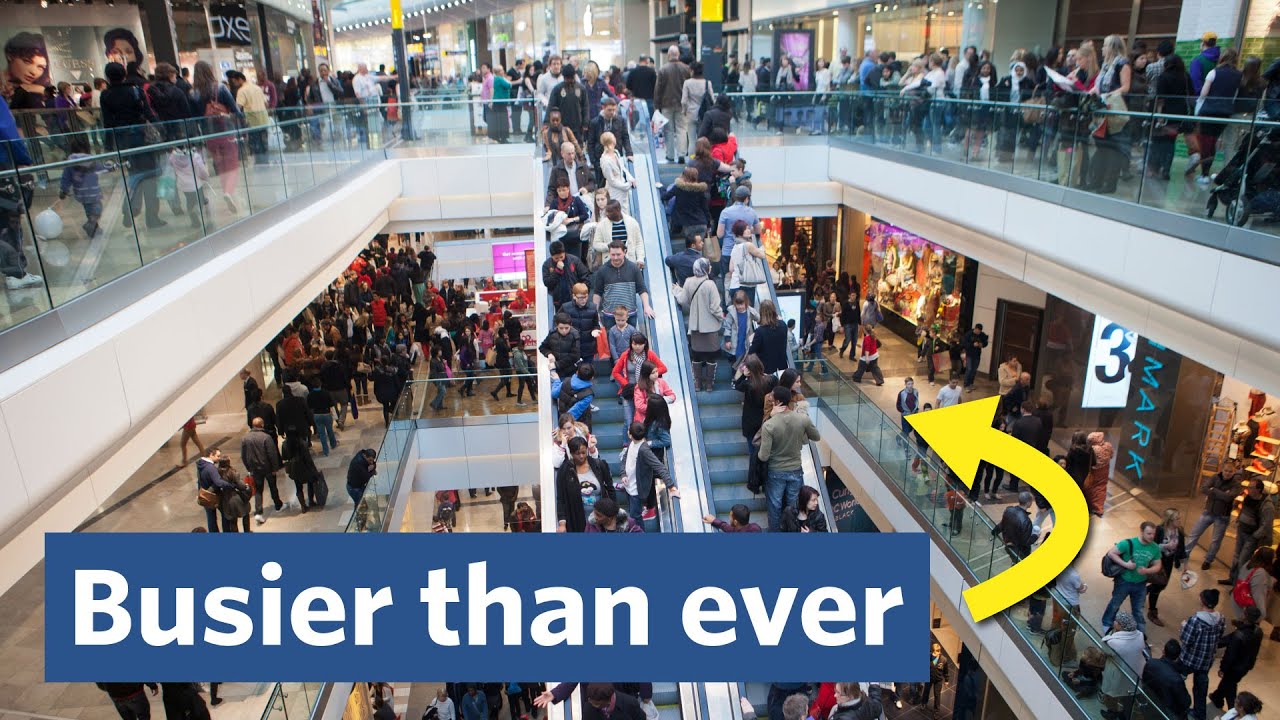
From my experience, mall that are connected to a transit system, especially with a metro system, tend to have more customers than car-centric malls.
Using these malls as an example, Pacific Centre, Brentwood, and Metrotown located in British Columbia, Canada all are connected to the SkyTrain, same as Eaton Centre and Yorkdale are with the TTC subway in Ontario. And these malls are always busy with a good chunk of patrons arriving via transit.
Whereas, a mall like Westfield Southcenter near Seattle, WA, United States, is relatively quiet.
Sure, it may be unfair to compared more urban malls like Metrotown and Eaton Centre that has dense development nearby to a more suburban one like Westfield Southcenter, but from my observations, having rapid transit connections, namely a metro system, tends to help a mall out.
By having accessible transit, a mall allows people who cannot/might choose not to drive to have access to the amenities that the mall has to offer as kids, teenagers, seniors, etc can access the mall without having to drive/be driven there.
But that's my observations, as from my perspective, malls connected to a metro system seem to have more customers than fully car-centric ones.
reply
From my experience, mall that are connected to a transit system, especially with a metro system, tend to have more customers than car-centric malls.
Using these malls as an example, Pacific Centre, Brentwood, and Metrotown located in British Columbia, Canada all are connected to the SkyTrain, same as Eaton Centre and Yorkdale are with the TTC subway in Ontario. And these malls are always busy with a good chunk of patrons arriving via transit.
Whereas, a mall like Westfield Southcenter near Seattle, WA, United States, is relatively quiet.
Sure, it may be unfair to compared more urban malls like Metrotown and Eaton Centre that has dense development nearby to a more suburban one like Westfield Southcenter, but from my observations, having rapid transit connections, namely a metro system, tends to help a mall out.
By having accessible transit, a mall allows people who cannot/might choose not to drive to have access to the amenities that the mall has to offer as kids, teenagers, seniors, etc can access the mall without having to drive/be driven there.
But that's my observations, as from my perspective, malls connected to a metro system seem to have more customers than fully car-centric ones.
reply
city_beautiful
Thank you for covering this topic! Not just shopping malls but retail in general is going through a survival of the fittest competition. Those that are better managed will survive, while the poorly managed retailers will die. The reuse of shopping malls for education (schools and colleges) is creative! Mall owners who attract mom-and-pop retailers looking to establish their customer base will fare better than those who keep raising leases until no store can afford to stay there. Some malls will have to be demolished and rebuilt to better satisfy today's consumers, who go to malls looking for specific products or to find something that interests them. Malls need to do more to accommodate pedestrian shoppers, while also allowing wheelchairs, bicycles and similar small vehicles to navigate their sidewalks. Constructing residential buildings on part of the site will certainly provide a customer base for the new stores or mall configuration. Yes, you are absolutely right that mall owners would prefer adaptive reuse to losing money on their investments!
reply
Thank you for covering this topic! Not just shopping malls but retail in general is going through a survival of the fittest competition. Those that are better managed will survive, while the poorly managed retailers will die. The reuse of shopping malls for education (schools and colleges) is creative! Mall owners who attract mom-and-pop retailers looking to establish their customer base will fare better than those who keep raising leases until no store can afford to stay there. Some malls will have to be demolished and rebuilt to better satisfy today's consumers, who go to malls looking for specific products or to find something that interests them. Malls need to do more to accommodate pedestrian shoppers, while also allowing wheelchairs, bicycles and similar small vehicles to navigate their sidewalks. Constructing residential buildings on part of the site will certainly provide a customer base for the new stores or mall configuration. Yes, you are absolutely right that mall owners would prefer adaptive reuse to losing money on their investments!
reply
ShaedeReshka
Malls are definitely temples to capitalism with each store but a single brand in our economic pantheon of deities. I've long been fascinated by their excess and their cold calculating profiteering. I grew up going to Highland Mall, and I'd love to visit Austin again one day and see what it looks like as Austin Community College. The campus actually looks rad; I wish I had been able to go to college where I used to shop as a kid.
Foothills Mall, in Fort Collins Colorado, is one of the malls being redeveloped into an outdoor mall complete with a mixed use development and of course lots of doomed office spaces. It seems every one of these projects overestimates future demand for offices. I spoke with the Foothill Mall team about that, and the suggestion was both surprising and welcoming. Have these people not considered such an obvious issue I kind of wonder about the long term success of these out door malls. At least the winters are mild in Fort Collins.
reply
Malls are definitely temples to capitalism with each store but a single brand in our economic pantheon of deities. I've long been fascinated by their excess and their cold calculating profiteering. I grew up going to Highland Mall, and I'd love to visit Austin again one day and see what it looks like as Austin Community College. The campus actually looks rad; I wish I had been able to go to college where I used to shop as a kid.
Foothills Mall, in Fort Collins Colorado, is one of the malls being redeveloped into an outdoor mall complete with a mixed use development and of course lots of doomed office spaces. It seems every one of these projects overestimates future demand for offices. I spoke with the Foothill Mall team about that, and the suggestion was both surprising and welcoming. Have these people not considered such an obvious issue I kind of wonder about the long term success of these out door malls. At least the winters are mild in Fort Collins.
reply
rio425ee
The best ideas for repurposing dead/dying malls I've come up with is conversion to food halls and entertainment with groceries chains as anchors instead of department stores. And some malls are perfect for conversion to expo/conference centers with hotels and possibly a smaller food hall to anchor them.
I live in New Hampshire and the plan to demolish the steeplegate mall is horrendous, if they converted the sears to a 4-5 restaurant food hall, and partnered with a hotel chain build a decent size hotel and attached it to the mall building, they could convert the empty retail into conference rooms, and build the condos they want on the opposite side and it would be a lot better than knocking down the entire thing and replacing it with junk retail, luxury condos, and twice as much parking lot. It's a shame developers have such a lack of vision for what to do with the properties they acquire
reply
The best ideas for repurposing dead/dying malls I've come up with is conversion to food halls and entertainment with groceries chains as anchors instead of department stores. And some malls are perfect for conversion to expo/conference centers with hotels and possibly a smaller food hall to anchor them.
I live in New Hampshire and the plan to demolish the steeplegate mall is horrendous, if they converted the sears to a 4-5 restaurant food hall, and partnered with a hotel chain build a decent size hotel and attached it to the mall building, they could convert the empty retail into conference rooms, and build the condos they want on the opposite side and it would be a lot better than knocking down the entire thing and replacing it with junk retail, luxury condos, and twice as much parking lot. It's a shame developers have such a lack of vision for what to do with the properties they acquire
reply
city_beautiful
In Vancouver, BC, almost all the malls around the Metro Vancouver area are starting to redevelop by building residential towers in their giant parking lots, then modifying the mall itself. For the mall itself, they seem to prioritize first building a new, nicer food court, then an experiential anchor like a theatre, arcade or entertainment plaza type place, and maybe a gym or something like that. Theoretically adds built in clientele right at the mall's doorstep, plus the revenue from rent or sale of those condos themselves, and usually brings better transit connections as well, while maintaining the parking in these towers, so really nothing is lost by the mall.
I'd rather a more traditional, natural city core setup, but considering these malls are already built, making better use of the current giant open parking lots is definitely an improvement anyhow
reply
In Vancouver, BC, almost all the malls around the Metro Vancouver area are starting to redevelop by building residential towers in their giant parking lots, then modifying the mall itself. For the mall itself, they seem to prioritize first building a new, nicer food court, then an experiential anchor like a theatre, arcade or entertainment plaza type place, and maybe a gym or something like that. Theoretically adds built in clientele right at the mall's doorstep, plus the revenue from rent or sale of those condos themselves, and usually brings better transit connections as well, while maintaining the parking in these towers, so really nothing is lost by the mall.
I'd rather a more traditional, natural city core setup, but considering these malls are already built, making better use of the current giant open parking lots is definitely an improvement anyhow
reply
natalierogers4678
This is so interesting to me. In my city, the mid-tier mall is always WAY more crowded than the high-tier mall right next door. The mid-tier has a single row of luxury stores, but is mostly high end brands, fast fashion brands and several anchor dept stores (along with huge brand locations for nike, apple, etc. The high end mall across the street is almost ALL luxury brands with the occasional local boutique. I've seen it busy, but never truly crowded. It may just be the nature of those two malls though. If the mid-tier mall has the luxury stores people want to shop at, it makes sense to go there instead of wandering a maze of luxury shops they don't want. Why go there when you can go to Gucci AND California pizza kitchen in one building across the street
reply
This is so interesting to me. In my city, the mid-tier mall is always WAY more crowded than the high-tier mall right next door. The mid-tier has a single row of luxury stores, but is mostly high end brands, fast fashion brands and several anchor dept stores (along with huge brand locations for nike, apple, etc. The high end mall across the street is almost ALL luxury brands with the occasional local boutique. I've seen it busy, but never truly crowded. It may just be the nature of those two malls though. If the mid-tier mall has the luxury stores people want to shop at, it makes sense to go there instead of wandering a maze of luxury shops they don't want. Why go there when you can go to Gucci AND California pizza kitchen in one building across the street
reply
JonBerry555
One of the things hurting Malls is also hurting America. My Local Mall and other have basically banned teenagers from visiting the mall. Sure they may not have been big spenders, but our society is building less and less spaces for kids and teens to hang out with their peers outside of schools. Watch any old sitcom and the Mall was a major teen hangout, sometimes they would shop, but at the very least they would be buying food. Teens need to have a safe place to associate with their peers outside of schools and the mall was a good option for many as it was indoors, had security and other around, and parents knew where their child was, but still gave the teens a place to be themselves without parents always watching them.
reply
One of the things hurting Malls is also hurting America. My Local Mall and other have basically banned teenagers from visiting the mall. Sure they may not have been big spenders, but our society is building less and less spaces for kids and teens to hang out with their peers outside of schools. Watch any old sitcom and the Mall was a major teen hangout, sometimes they would shop, but at the very least they would be buying food. Teens need to have a safe place to associate with their peers outside of schools and the mall was a good option for many as it was indoors, had security and other around, and parents knew where their child was, but still gave the teens a place to be themselves without parents always watching them.
reply
TheRandCrews
It seems apparent that some Canadian malls in cities with rapid transit found are still kicking when it became a transit hub or expanded upon their transit services with a subway, LRT, metro, or skytrain service. With it, it spirited Transit Oriented Devlopment practically building a city mall area in Vancouver and Toronto.
With my small city in canada on certain corridors still have malls and on one street they have 3 malls placed on different parts of it. Not as strong as it was years ago but still surviving with parking lots redeveloped, mid rise apartments around it, and being a bus hub. Though it be interesting if they implement a BRT or LRT on the road to have a better service on a major corridor.
reply
It seems apparent that some Canadian malls in cities with rapid transit found are still kicking when it became a transit hub or expanded upon their transit services with a subway, LRT, metro, or skytrain service. With it, it spirited Transit Oriented Devlopment practically building a city mall area in Vancouver and Toronto.
With my small city in canada on certain corridors still have malls and on one street they have 3 malls placed on different parts of it. Not as strong as it was years ago but still surviving with parking lots redeveloped, mid rise apartments around it, and being a bus hub. Though it be interesting if they implement a BRT or LRT on the road to have a better service on a major corridor.
reply
stickynorth
Enclosed malls certainly have their place here in Northern climates. When there's a choice between outdoor lifestyle centre and indoor mall I'll always take the indoor option especially if it has covered parking. What I'd like to see what we are slowly seeing is the Transit Oriented reDevelopment of most malls here in Canada into mini skyscraper districts with high rise apartments, retail and recreation. In Vancouver Almost every mall has a project plan, ditto for Calgary and Edmonton. Even West Edmonton Mall has had on the books plans to add office, condo and hotel towers up to 12 stories on top of its 8. 0 million square feet of enclosed space. As well as up to 3 more floors of mall in some places.
reply
Enclosed malls certainly have their place here in Northern climates. When there's a choice between outdoor lifestyle centre and indoor mall I'll always take the indoor option especially if it has covered parking. What I'd like to see what we are slowly seeing is the Transit Oriented reDevelopment of most malls here in Canada into mini skyscraper districts with high rise apartments, retail and recreation. In Vancouver Almost every mall has a project plan, ditto for Calgary and Edmonton. Even West Edmonton Mall has had on the books plans to add office, condo and hotel towers up to 12 stories on top of its 8. 0 million square feet of enclosed space. As well as up to 3 more floors of mall in some places.
reply
city_beautiful
The health system my wife works for purchased a shuttered Sears location in the mall and renovated it and converted it into patient offices. This allowed several different specialties to be under one roof. It just opened a few months ago and they are currently renovating the Sears auto location to more patient offices. This is incredibly powerful for their patients. Before their offices were spread out into many different patient offices, now most of them are under one roof. This is also better for patients that allows them to take public transport to the mall. There were no public transports to most of the patients offices before. So this is a win/win for the health system and its patients.
reply
The health system my wife works for purchased a shuttered Sears location in the mall and renovated it and converted it into patient offices. This allowed several different specialties to be under one roof. It just opened a few months ago and they are currently renovating the Sears auto location to more patient offices. This is incredibly powerful for their patients. Before their offices were spread out into many different patient offices, now most of them are under one roof. This is also better for patients that allows them to take public transport to the mall. There were no public transports to most of the patients offices before. So this is a win/win for the health system and its patients.
reply
GirtonOramsay
The size of the mall is also a big factor in its adaptability. I lived in a rural college town of 50K with a small suburban mall that was like one long hallway with one major anchor store at the end and no real food court. Just had a few local restaurants with interior entrances and a pretzel shop. The rest of the connected buildings were just large strip mall stores (Michaels, Ulta) and a large supermarket that attracted more traffic. Also the outdoor strip mall storefronts were connected by a short sidewalk to enter the indoor mall. It has never really been dead thanks to this layout. It has only gotten busier since a new Target took over the dead end anchor store.
reply
The size of the mall is also a big factor in its adaptability. I lived in a rural college town of 50K with a small suburban mall that was like one long hallway with one major anchor store at the end and no real food court. Just had a few local restaurants with interior entrances and a pretzel shop. The rest of the connected buildings were just large strip mall stores (Michaels, Ulta) and a large supermarket that attracted more traffic. Also the outdoor strip mall storefronts were connected by a short sidewalk to enter the indoor mall. It has never really been dead thanks to this layout. It has only gotten busier since a new Target took over the dead end anchor store.
reply
city_beautiful
The types of stores in malls are definitely changing to be more niche. Gone are the days where JCPenney's was the Top dog, now my nearest mall's largest store is Dick's Sporting Goods, opposite to the Five Below where you can buy funky little knick-knacks you see on TikTok. There's a store that exclusively sells souvenir and fandom socks, a Korean corn dog stand, and two different comic shops. These are businesses that would never survive renting a regular storefront, but because the mall has lease rentals so cheap all these very specific markets have a place in the real world to survive. Honestly, I'll take that over overpriced polo shirts at JCPenney's any day.
reply
The types of stores in malls are definitely changing to be more niche. Gone are the days where JCPenney's was the Top dog, now my nearest mall's largest store is Dick's Sporting Goods, opposite to the Five Below where you can buy funky little knick-knacks you see on TikTok. There's a store that exclusively sells souvenir and fandom socks, a Korean corn dog stand, and two different comic shops. These are businesses that would never survive renting a regular storefront, but because the mall has lease rentals so cheap all these very specific markets have a place in the real world to survive. Honestly, I'll take that over overpriced polo shirts at JCPenney's any day.
reply
lizcademy4809
I think of three very different malls in my area Minneapolis.
First and best known is Mall of America. It's huge, spans the entire economic range of stores, and last time I went, it was so crowded I got overwhelmed. It's nowhere near dying.
Then we have two malls across parking lots and a stroad, Southdale Mall and Edina Galleria. Southdale is semi-dead, lots of empty storefronts, entire wings and floors blocked off, and very sad anchor stores. Edina Galleria is a stereotype high end mall, no vacancies, many high end stores. the only thing it's missing is an anchor department store (and the space to add one. It's also very crowded and not sying.
reply
I think of three very different malls in my area Minneapolis.
First and best known is Mall of America. It's huge, spans the entire economic range of stores, and last time I went, it was so crowded I got overwhelmed. It's nowhere near dying.
Then we have two malls across parking lots and a stroad, Southdale Mall and Edina Galleria. Southdale is semi-dead, lots of empty storefronts, entire wings and floors blocked off, and very sad anchor stores. Edina Galleria is a stereotype high end mall, no vacancies, many high end stores. the only thing it's missing is an anchor department store (and the space to add one. It's also very crowded and not sying.
reply
Codraroll
Here in Norway, many malls are essentially parts of downtown developments, filling up a city block or two right by the main square, by the train station, or elsewhere with room for a big building. Most of them are located next to a downtown throughfare, however, and contain a rather large parking structure in the back. But as a general rule, they are quite accessible on foot too, and well integrated in the urban fabric. Then again, we also have plenty of the US-style malls at the outskirts of town, surrounded by parking lots and difficult to reach or traverse on foot. I think their construction has been banned in recent years, however.
reply
Here in Norway, many malls are essentially parts of downtown developments, filling up a city block or two right by the main square, by the train station, or elsewhere with room for a big building. Most of them are located next to a downtown throughfare, however, and contain a rather large parking structure in the back. But as a general rule, they are quite accessible on foot too, and well integrated in the urban fabric. Then again, we also have plenty of the US-style malls at the outskirts of town, surrounded by parking lots and difficult to reach or traverse on foot. I think their construction has been banned in recent years, however.
reply
Cynbel_Terreus
Though you say online shopping has killed malls, would it really be car culture that killed malls Basically malls like this, large indoor shopping centers, are a product of car centric suburban development. It just also happens that one of the big pulls for online shopping is not needing to drive everywhere, i. e. it's because of car centric development for why people would prefer shopping online instead. Also a bit ironic that the thing car centric suburban development took from people was in a sense recreated artificially in the form of malls. which in some cases is changing to fit that exact need.
reply
Though you say online shopping has killed malls, would it really be car culture that killed malls Basically malls like this, large indoor shopping centers, are a product of car centric suburban development. It just also happens that one of the big pulls for online shopping is not needing to drive everywhere, i. e. it's because of car centric development for why people would prefer shopping online instead. Also a bit ironic that the thing car centric suburban development took from people was in a sense recreated artificially in the form of malls. which in some cases is changing to fit that exact need.
reply
arrvidcarlson8107
Malls are a place teens can gather and socialize, in person. There are also many malls with senior walking and other non commercial activities that mimic the classic community center. Malls are also great places for seasonal storefronts to go to. Its a separate discussion if one use throw away seasonal stores should be catered to. Our local mall has many bus lines and serves as a transfer station. It has a dozen or so sit down restaurants and if they ever figure out light rail will double as an intermodal transport center. In sum a destination mall is more than the sum of its parts.
reply
Malls are a place teens can gather and socialize, in person. There are also many malls with senior walking and other non commercial activities that mimic the classic community center. Malls are also great places for seasonal storefronts to go to. Its a separate discussion if one use throw away seasonal stores should be catered to. Our local mall has many bus lines and serves as a transfer station. It has a dozen or so sit down restaurants and if they ever figure out light rail will double as an intermodal transport center. In sum a destination mall is more than the sum of its parts.
reply
Add a review, comment
Other channel videos