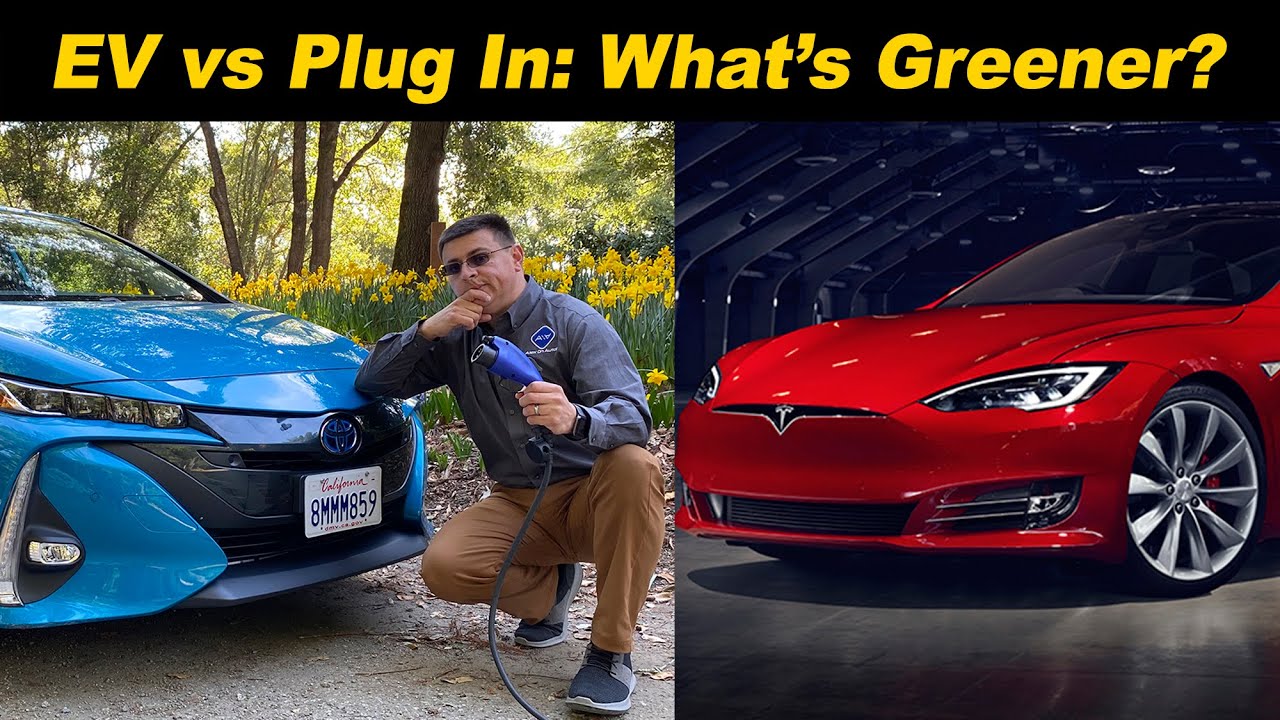
EV vs Plug In Hybrid - Pragmatic vs Idealistic?
video description
Date: 2020-03-07
Related videos


Comments and reviews: 9
Mark
From a UK perspective the key issue, alongside wishing to have a more fuel efficient vehicle (and remember that in the UK there are a number of cities and towns that have emission taxes charged on a day by day basis - London etc and we have national taxes that penalise high emission vehicles) is charging infrastructure. I have a Rav4 Hybrid 2020. This gives me excellent fuel economy and range, up to 500 miles, and also gives me peace of mind that I will reach my destination. We do not have, and neither do most western economies, a sufficiently expansive, in depth, EV charging structure. Pure EV's are expensive and lack the range. PHEV's are all well and good but there is evidence, in the UK, that through the lack of charging points, both off site and at consumers homes, these vehicles often run on gas alone. That's why I went hybrid. It seems to me to be the best compromise solution and the one that best delivers a reduced carbon emission and range security.
reply
From a UK perspective the key issue, alongside wishing to have a more fuel efficient vehicle (and remember that in the UK there are a number of cities and towns that have emission taxes charged on a day by day basis - London etc and we have national taxes that penalise high emission vehicles) is charging infrastructure. I have a Rav4 Hybrid 2020. This gives me excellent fuel economy and range, up to 500 miles, and also gives me peace of mind that I will reach my destination. We do not have, and neither do most western economies, a sufficiently expansive, in depth, EV charging structure. Pure EV's are expensive and lack the range. PHEV's are all well and good but there is evidence, in the UK, that through the lack of charging points, both off site and at consumers homes, these vehicles often run on gas alone. That's why I went hybrid. It seems to me to be the best compromise solution and the one that best delivers a reduced carbon emission and range security.
reply
dMb
Getting an EV with a big battery is bad for the environment. The correct size of battery is the smallest that gets the job done, and no, getting the job done doesn't mean enough range to cover your longest possible trip you will ever make. Most people will have a 'correct range' of a bit over 100 mi. Not only does the smaller battery save consumers thousands of dollars in purchase price, it reduces environmental issues for manufacture, allows car companies to make more EVs, reduces weight & space needed for the battery, etc. The single most important factor for EV acceptance is price. Not range, not recharge time--price. Get the price down, and they will undeniably be cheaper to own than gasoline, and that's what will drive up acceptance. Until that happens, EVs will continue to be a niche market.
reply
Getting an EV with a big battery is bad for the environment. The correct size of battery is the smallest that gets the job done, and no, getting the job done doesn't mean enough range to cover your longest possible trip you will ever make. Most people will have a 'correct range' of a bit over 100 mi. Not only does the smaller battery save consumers thousands of dollars in purchase price, it reduces environmental issues for manufacture, allows car companies to make more EVs, reduces weight & space needed for the battery, etc. The single most important factor for EV acceptance is price. Not range, not recharge time--price. Get the price down, and they will undeniably be cheaper to own than gasoline, and that's what will drive up acceptance. Until that happens, EVs will continue to be a niche market.
reply
Jonathan
I have a PHEV (Kia Niro) and the one thing that I feel is missing is that the heat is generated using the gas engine. If it had a longer range (52 rather than 26 miles) then there would be enough power to drive a heater, like the Chevy Volt. I would love something that had a 75 mile range and could be DC fast charged. Living in the Midwest, I doubt that my wife and I will get a full EV since her family lives 250-450 away and charging will be hard to find in rural areas. With a PHEV, we can just burn gas when on those long trips.
reply
I have a PHEV (Kia Niro) and the one thing that I feel is missing is that the heat is generated using the gas engine. If it had a longer range (52 rather than 26 miles) then there would be enough power to drive a heater, like the Chevy Volt. I would love something that had a 75 mile range and could be DC fast charged. Living in the Midwest, I doubt that my wife and I will get a full EV since her family lives 250-450 away and charging will be hard to find in rural areas. With a PHEV, we can just burn gas when on those long trips.
reply
James
IMO, the environment damage that fossil fuel usage contributes is been blown out of proportions. After all the eco friendly craze, when things calm down. Customers will go back to the grass-root tradition of what makes a product great and fun. Personally, it is a luxury car with great leather seats and upholstery, a great engine with personality and decent fuel consumption.
reply
IMO, the environment damage that fossil fuel usage contributes is been blown out of proportions. After all the eco friendly craze, when things calm down. Customers will go back to the grass-root tradition of what makes a product great and fun. Personally, it is a luxury car with great leather seats and upholstery, a great engine with personality and decent fuel consumption.
reply
TheMoni7548
I dont agree I think the real bottle neck is the infrastructure development people are scared to recharge all the time I think untill every gas station has a ev plug your argument that hybrid is better doesnt take into account societal infrastructure under foundation. I think evs are a new concept for the average joe
reply
I dont agree I think the real bottle neck is the infrastructure development people are scared to recharge all the time I think untill every gas station has a ev plug your argument that hybrid is better doesnt take into account societal infrastructure under foundation. I think evs are a new concept for the average joe
reply
1g2002541
I believe electric is the future However, even we as consumers buy the idea of EVa. What about the electric companies? Are they using electric vehicles to maintain electric infrastructure? You get my idea. We need to be all in for electric. Congress would have to pass some bill and forcefully make it a popular choice
reply
I believe electric is the future However, even we as consumers buy the idea of EVa. What about the electric companies? Are they using electric vehicles to maintain electric infrastructure? You get my idea. We need to be all in for electric. Congress would have to pass some bill and forcefully make it a popular choice
reply
dMb
The single best way to reduce emissions quickly is to live closer to work. Cut your commute in half, then you cut your fuel consumption in half, pollution in half, time stuck in traffic in half, contribution to traffic in half, your car lasts twice as long, you buy half as many cars over your life, etc.
reply
The single best way to reduce emissions quickly is to live closer to work. Cut your commute in half, then you cut your fuel consumption in half, pollution in half, time stuck in traffic in half, contribution to traffic in half, your car lasts twice as long, you buy half as many cars over your life, etc.
reply
Greg
What about the difference between EVs and PHEVs where PHEVs require all the components for a traditional ICE vehicle plus at least one electric motor, battery, and whatever additional hardware is required? The environmental cost of manufacturing those must have a significant impact.
reply
What about the difference between EVs and PHEVs where PHEVs require all the components for a traditional ICE vehicle plus at least one electric motor, battery, and whatever additional hardware is required? The environmental cost of manufacturing those must have a significant impact.
reply
DRACO
I think that we have to start assessing if that. 25 miles a day average is true nowadays. If you live in a dense city then sure but a lot of us do have to commute much further to work. I know very few people that travel less than 50 miles just to commute round trip daily.
reply
I think that we have to start assessing if that. 25 miles a day average is true nowadays. If you live in a dense city then sure but a lot of us do have to commute much further to work. I know very few people that travel less than 50 miles just to commute round trip daily.
reply
Add a review, comment
Other channel videos

 31:21
31:21