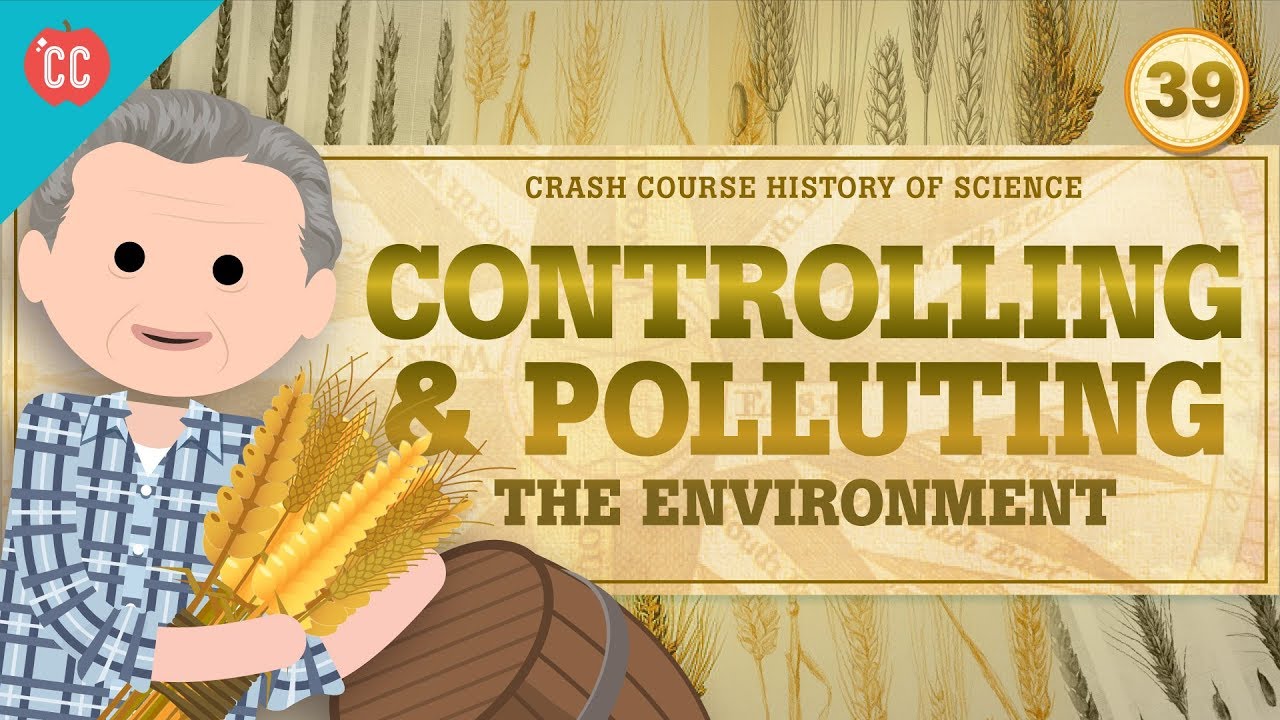
Controlling the Environment: Crash Course History of Science #39
video description
Date: 2022-04-04
Related videos


Comments and reviews: 10
David
I've just read up on Paul Ehrlich and the population bomb and it does look like it was the consensus of the time (not to the unaware general populace) and it does look like it was a close call. There probably isn't any practical way to slow world population growth artificially so we can only hope that the gambles that crop yields will continue to increase, there are no sudden crop diseases that hit the crop monoculture hard, climate change won't be as devastating to arable land as predicted, the reduction of the natural world due to land use won't have unforeseen impacts, we'll have as much potable water as necessary and that the world population will eventually peter out. (That is a long list)
On the other hand he did make one prediction that nobody can deny, he was to write a book that would sell.
reply
I've just read up on Paul Ehrlich and the population bomb and it does look like it was the consensus of the time (not to the unaware general populace) and it does look like it was a close call. There probably isn't any practical way to slow world population growth artificially so we can only hope that the gambles that crop yields will continue to increase, there are no sudden crop diseases that hit the crop monoculture hard, climate change won't be as devastating to arable land as predicted, the reduction of the natural world due to land use won't have unforeseen impacts, we'll have as much potable water as necessary and that the world population will eventually peter out. (That is a long list)
On the other hand he did make one prediction that nobody can deny, he was to write a book that would sell.
reply
John
I'm usually a fan of this series, but I feel like this episode missed the mark.
The reason most famines are political in nature is because of the work of agronomists like Borlaug. When the supply problem of food is solved, the only remaining reason for famine is distribution, but distribution can't save us when there's not enough food to go around. If we had a system of -perfect communism- and subsistence farming, there's no way the world would be able to support the population that it currently does.
Criticisms about mono-cultures, over-fertilization, and pesticides are quite fair, but I don't think the slightly dismissive stance this video took regarding agronomy is deserved. In my opinion, Crash Course Engineering handled this topic better.
reply
I'm usually a fan of this series, but I feel like this episode missed the mark.
The reason most famines are political in nature is because of the work of agronomists like Borlaug. When the supply problem of food is solved, the only remaining reason for famine is distribution, but distribution can't save us when there's not enough food to go around. If we had a system of -perfect communism- and subsistence farming, there's no way the world would be able to support the population that it currently does.
Criticisms about mono-cultures, over-fertilization, and pesticides are quite fair, but I don't think the slightly dismissive stance this video took regarding agronomy is deserved. In my opinion, Crash Course Engineering handled this topic better.
reply
Linda
I was born in 1954. For that I have witnessed the use of DDT used to fumigate our village. I saw the difference between the height of rice varieties between my uncle's farm in Upi, Maguindanao (1960) and the rice that was grown in my province (Lanao del Norte) later (1970. I have observed the difference between produce from non-fertilized farm and fertilized farms. I learned from my elementary science classes that man desires to control nature. Now, I realized that what was done during the time that I was growing up have negative effects to the environment and to us, HUMANS.
reply
I was born in 1954. For that I have witnessed the use of DDT used to fumigate our village. I saw the difference between the height of rice varieties between my uncle's farm in Upi, Maguindanao (1960) and the rice that was grown in my province (Lanao del Norte) later (1970. I have observed the difference between produce from non-fertilized farm and fertilized farms. I learned from my elementary science classes that man desires to control nature. Now, I realized that what was done during the time that I was growing up have negative effects to the environment and to us, HUMANS.
reply
aurorsforthewin
For anyone curious, Rachel Carson's Silent Spring is still very much worth a read today. I read it recently outside of my environmental science classes, and found it really easy to follow and understand. I took a great environmental history class that touched on a lot of this in depth- and while I love that Crash Course does so well at explaining big picture stuff, exploring some of these things in depth would be super cool. (I understand why that doesn't happen with these though, not meant as a critique)
reply
For anyone curious, Rachel Carson's Silent Spring is still very much worth a read today. I read it recently outside of my environmental science classes, and found it really easy to follow and understand. I took a great environmental history class that touched on a lot of this in depth- and while I love that Crash Course does so well at explaining big picture stuff, exploring some of these things in depth would be super cool. (I understand why that doesn't happen with these though, not meant as a critique)
reply
magister343
Have you been reading -The Wizard and the Prophet: Two Remarkable Scientists and Their Dueling Visions to Shape Tomorrow-s World, - by Charles C. Mann?
Most of this video sounds very familiar, based on the half of that book I read. I did not finish it yet because I got too busy with work and had to return it to the library as I had already renewed it the maximum number of times. I might check it out again to finish, but I have other things checked out now I'll try to read first.
reply
Have you been reading -The Wizard and the Prophet: Two Remarkable Scientists and Their Dueling Visions to Shape Tomorrow-s World, - by Charles C. Mann?
Most of this video sounds very familiar, based on the half of that book I read. I did not finish it yet because I got too busy with work and had to return it to the library as I had already renewed it the maximum number of times. I might check it out again to finish, but I have other things checked out now I'll try to read first.
reply
Emma
There should be a video on the in-depth description on Nutrition Facts. What each thing is and dose for you and how (much u should have, many garms, many percents, or high or low an item should be on it. Not really focusing on one specific food either. Like why carbs and trans fats are bad or why u need more saturated fat and less sugar for ketosis, etc. Ik this comment dosent matter this video, but yea.
reply
There should be a video on the in-depth description on Nutrition Facts. What each thing is and dose for you and how (much u should have, many garms, many percents, or high or low an item should be on it. Not really focusing on one specific food either. Like why carbs and trans fats are bad or why u need more saturated fat and less sugar for ketosis, etc. Ik this comment dosent matter this video, but yea.
reply
Beach&BoardFan
Controlling weather is much simpler than cloud seeding existing storms. Weather is fundamentally just pressure systems, pressure is just energy, pump enough energy into the atmosphere in the right locations (creating a low pressure system) and you can manipulate the high and low pressure systems around the world, move storms and such where you want them.
reply
Controlling weather is much simpler than cloud seeding existing storms. Weather is fundamentally just pressure systems, pressure is just energy, pump enough energy into the atmosphere in the right locations (creating a low pressure system) and you can manipulate the high and low pressure systems around the world, move storms and such where you want them.
reply
lowellhmills
Wait Hank, I'm confused. You said that plants cannot take nitrogen out of the air and fix it in the ground, but isn't this exactly what legumes like soybeans do? Also, why do the algae blooms from excess pesticides running off into nearby bodies of water use up the oxygen? Don't these green plants absorb CO2 and give off O2? Thanks in advance.
reply
Wait Hank, I'm confused. You said that plants cannot take nitrogen out of the air and fix it in the ground, but isn't this exactly what legumes like soybeans do? Also, why do the algae blooms from excess pesticides running off into nearby bodies of water use up the oxygen? Don't these green plants absorb CO2 and give off O2? Thanks in advance.
reply
Ian
As far as pollution a good documentary series to search for is 'late lessons from early warning' it covers asbestos to DDT and PCB's. These toxic chemicals added to products like plastic and how they effect the endocrine systems and animals offspring. When people are so focused on climate control the real disasters are happening in the environment.
reply
As far as pollution a good documentary series to search for is 'late lessons from early warning' it covers asbestos to DDT and PCB's. These toxic chemicals added to products like plastic and how they effect the endocrine systems and animals offspring. When people are so focused on climate control the real disasters are happening in the environment.
reply
Yadisf
So the solution for the biosphere that has gone bad because of the unintended consequences of engineering is geoengineering? Anyone else sees the dramatic logic flaw here? Can we engineer our way out of every problem? or maybe can we change the approach for more cultural/dietary/non-interventionist approach?
reply
So the solution for the biosphere that has gone bad because of the unintended consequences of engineering is geoengineering? Anyone else sees the dramatic logic flaw here? Can we engineer our way out of every problem? or maybe can we change the approach for more cultural/dietary/non-interventionist approach?
reply
Add a review, comment
Other channel videos