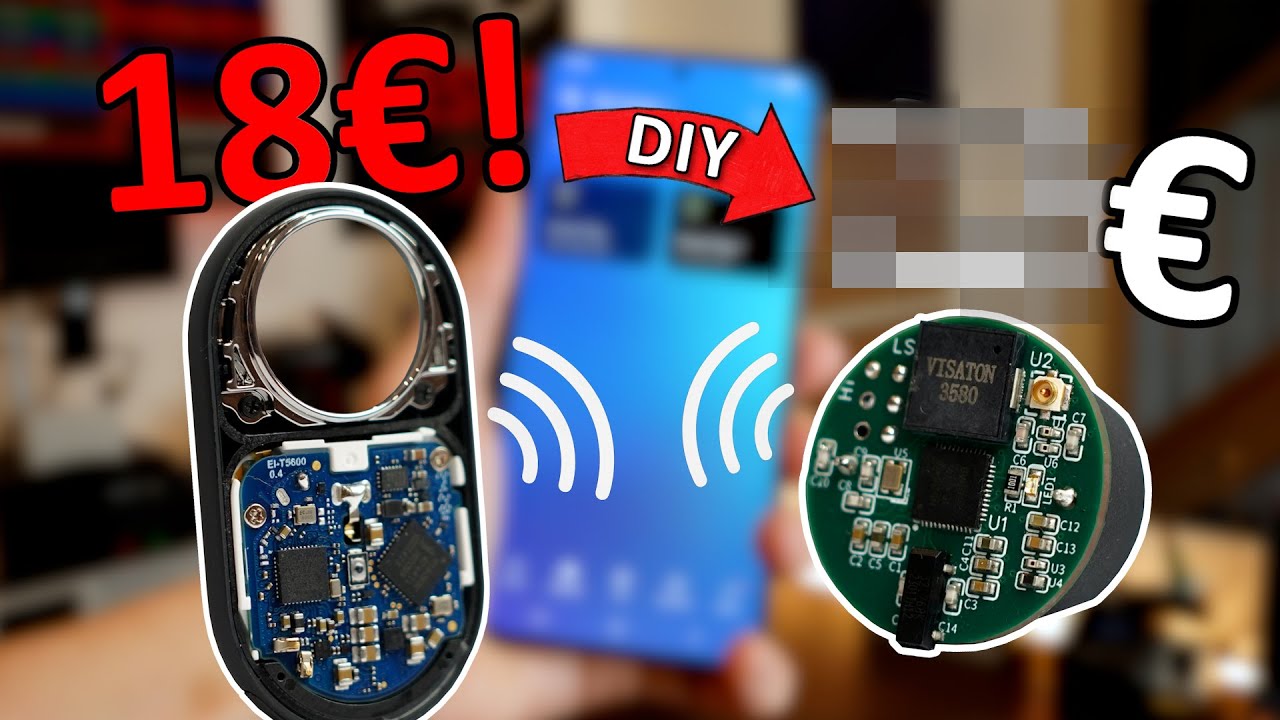
The Most Handy Gadget can be done. Cheaper! (DIY or Buy)
video description
Date: 2025-09-28
Related videos




Comments and reviews: 20
greatscott
You need an impedance in your antenna circuit of roughly 50 Ohms or you are going to have signal issues. That's what you likely have wrong going wrong, but the why is the problem here as it isn't as simple as just tossing in some parts and calling it good like with lower frequency radios. You need to calculate it for the frequency you are using as well, which is likely what you did. At high frequencies, the traces of the board have a capacitance and inductance that needs to be accounted for, which is likely where you have gone wrong in your design. Shielding high frequency traces with ground planes and ground traces needs to be done as well to prevent them from interacting with neighboring traces. You also don't want any sharp points or hard corners in the high frequency traces as that will cause internal reflections and leakage of signal. You don't even want corners on the solder pads. Only rounded edges.
Looking at what you showed of the board, the pads where you solder the antenna down need the corners knocked off and I spotted traces that have too sharp of angles in the design, but they aren't part of the RF circuit. This does show that you likely have issues with your trace to the antenna. You also look to have only a two layer board, so that whole trace is leaking RF the whole way, is capacitively coupling to everything around it since it isn't shielded. It needs to be inside ground planes and traces or this happens. A three layer board is the minimum for doing it with a PCB alone, but you can also do it with a two layer by using a ground plane on one side, two ground traces on either side, and metallic paint or tape over the top that is grounded, but it's not as robust.
I hope this helps and lets you revisit this project. I would also suggest looking at the traces for the rest of the board and removing any sharp corners from them as the clock can bounce off of those, resulting in the clock signal amplitude needing to be at a higher power level, so those traces need to be smoothed out as well if you want to get low power operation. Putting all data and clock signal traces in shielded traces would be the best way to ensure that they are also not needing to step up out of low power mode to deal with any outside interference for RF noise or internal noise, so going to a three layer board might be advisable as this would be possible.
reply
You need an impedance in your antenna circuit of roughly 50 Ohms or you are going to have signal issues. That's what you likely have wrong going wrong, but the why is the problem here as it isn't as simple as just tossing in some parts and calling it good like with lower frequency radios. You need to calculate it for the frequency you are using as well, which is likely what you did. At high frequencies, the traces of the board have a capacitance and inductance that needs to be accounted for, which is likely where you have gone wrong in your design. Shielding high frequency traces with ground planes and ground traces needs to be done as well to prevent them from interacting with neighboring traces. You also don't want any sharp points or hard corners in the high frequency traces as that will cause internal reflections and leakage of signal. You don't even want corners on the solder pads. Only rounded edges.
Looking at what you showed of the board, the pads where you solder the antenna down need the corners knocked off and I spotted traces that have too sharp of angles in the design, but they aren't part of the RF circuit. This does show that you likely have issues with your trace to the antenna. You also look to have only a two layer board, so that whole trace is leaking RF the whole way, is capacitively coupling to everything around it since it isn't shielded. It needs to be inside ground planes and traces or this happens. A three layer board is the minimum for doing it with a PCB alone, but you can also do it with a two layer by using a ground plane on one side, two ground traces on either side, and metallic paint or tape over the top that is grounded, but it's not as robust.
I hope this helps and lets you revisit this project. I would also suggest looking at the traces for the rest of the board and removing any sharp corners from them as the clock can bounce off of those, resulting in the clock signal amplitude needing to be at a higher power level, so those traces need to be smoothed out as well if you want to get low power operation. Putting all data and clock signal traces in shielded traces would be the best way to ensure that they are also not needing to step up out of low power mode to deal with any outside interference for RF noise or internal noise, so going to a three layer board might be advisable as this would be possible.
reply
tin2001
The thing thats seriously disappointing about these locator beacon thingies is the vendor lockin/incompatibility.
I would have bought dozens of airtags years ago if Apple had a simple activation and general location tracking app for Android. I know I wouldn't get the UWB direction and distance info without UWB support. But simply knowing if the missing car keys are at my house, at work, or at some other random location is way better than not being able to drive that car for 3 months. Yes, this has happened to us. Twice.
With an air tag, even with just the BLE tracking and the chirping, I'd have found the key both times within minutes of noticing it missing. But without an Android app, I didn't want to buy the airtags.
After the 2nd time losing those keys, I decided to buy a 2nd hand iPad and get a 4 pack of tags to test. And they saved our ass 2 days after I set them up
This video reminds me. I need to order another 4 pack.
reply
The thing thats seriously disappointing about these locator beacon thingies is the vendor lockin/incompatibility.
I would have bought dozens of airtags years ago if Apple had a simple activation and general location tracking app for Android. I know I wouldn't get the UWB direction and distance info without UWB support. But simply knowing if the missing car keys are at my house, at work, or at some other random location is way better than not being able to drive that car for 3 months. Yes, this has happened to us. Twice.
With an air tag, even with just the BLE tracking and the chirping, I'd have found the key both times within minutes of noticing it missing. But without an Android app, I didn't want to buy the airtags.
After the 2nd time losing those keys, I decided to buy a 2nd hand iPad and get a 4 pack of tags to test. And they saved our ass 2 days after I set them up
This video reminds me. I need to order another 4 pack.
reply
DoctorX17
I do wonder if there’s a way you could tap into the Galaxy network so your beacons can be seen the same obviously that would include a lot more cost and complexity, but being able to utilize the network while not having to buy THEIR device would be good. Same if you could use Apple’s FindMy, altho I expect that to be impossible to get access to [I think there are some FindMy compatible non-Apple products, but officially licensed by/partnered with Apple]
Adding UWB would be the biggest thing I’d really want for a DIY one. That’s my top used feature on FindMy devices finding where they are in my house, sometimes buried where a screaming beacon may not be audible, especially from another room
reply
I do wonder if there’s a way you could tap into the Galaxy network so your beacons can be seen the same obviously that would include a lot more cost and complexity, but being able to utilize the network while not having to buy THEIR device would be good. Same if you could use Apple’s FindMy, altho I expect that to be impossible to get access to [I think there are some FindMy compatible non-Apple products, but officially licensed by/partnered with Apple]
Adding UWB would be the biggest thing I’d really want for a DIY one. That’s my top used feature on FindMy devices finding where they are in my house, sometimes buried where a screaming beacon may not be audible, especially from another room
reply
canadatransistor
i wish samsung had a fixed position device to detect tags and connect to home internet. My elderly mother doesn't own a cell phone, nevermind an expensive flagship phone. I have provided her a smart tag for her car keys so I can generically track her movements in case she was in distress or we haven't heard from her in a while. It has come in handy on a few occasions when my sister called frantically where is mom. However, her neighbours are more apple people so we don't have a consistent scan of when she's actually safe at home. If such a product existed for 50-70 dollars, i would probably buy one.
reply
i wish samsung had a fixed position device to detect tags and connect to home internet. My elderly mother doesn't own a cell phone, nevermind an expensive flagship phone. I have provided her a smart tag for her car keys so I can generically track her movements in case she was in distress or we haven't heard from her in a while. It has come in handy on a few occasions when my sister called frantically where is mom. However, her neighbours are more apple people so we don't have a consistent scan of when she's actually safe at home. If such a product existed for 50-70 dollars, i would probably buy one.
reply
greatscott
Three things to look deeper into. Sleep Modes. Antenna selection and maybe other type devices. The omission of the LED may be a good idea as well. My experience with BLE is limited to the antenna portion of a project I was part of some time back. It was more testing the several antennas they chose for the project. Than actually working out the antenna design. Though I am not sure what the antennas were any more. We did not use the flat panel type you did. It was more like a strip that was in the 'buy' version you showed. Maybe I have my notes and there is some date there. See what I can find.
Peace
reply
Three things to look deeper into. Sleep Modes. Antenna selection and maybe other type devices. The omission of the LED may be a good idea as well. My experience with BLE is limited to the antenna portion of a project I was part of some time back. It was more testing the several antennas they chose for the project. Than actually working out the antenna design. Though I am not sure what the antennas were any more. We did not use the flat panel type you did. It was more like a strip that was in the 'buy' version you showed. Maybe I have my notes and there is some date there. See what I can find.
Peace
reply
tiagotiagot
Not fun fact: Until a few versions ago, Apple devices could register any bluetooth device (game controllers, laptops, headphones, other phones etc) as trackers without interacting with it, so bad people could track you around the world even without explicitly planting a tag on you just by telling the Apple tracker network that your device was one of their trackers. The attack was called nRootTag. Apple removed the ability in an later update, but did nothing to stuff already on the database AFAIK; and devices that didn't get updated could(can) still perform the attack.
reply
Not fun fact: Until a few versions ago, Apple devices could register any bluetooth device (game controllers, laptops, headphones, other phones etc) as trackers without interacting with it, so bad people could track you around the world even without explicitly planting a tag on you just by telling the Apple tracker network that your device was one of their trackers. The attack was called nRootTag. Apple removed the ability in an later update, but did nothing to stuff already on the database AFAIK; and devices that didn't get updated could(can) still perform the attack.
reply
VeniceInventors
You could try something in the middle, like the cheap HC-02/05/06 BT modules, powering it with a small Li-Po battery or 2 CR2032. They cost around $3 each, and while you couldn't make them beep without further modifications, by using Tasker on the phone, it can sound an alarm or speak a warning when the module is out of range or its signal strength drops below a certain level.
I'm not sure about the battery life though.
Another option is to use a BT audio receiver, a bit more expensive $10 but it has a built-in battery. I keep one in my backpack.
reply
You could try something in the middle, like the cheap HC-02/05/06 BT modules, powering it with a small Li-Po battery or 2 CR2032. They cost around $3 each, and while you couldn't make them beep without further modifications, by using Tasker on the phone, it can sound an alarm or speak a warning when the module is out of range or its signal strength drops below a certain level.
I'm not sure about the battery life though.
Another option is to use a BT audio receiver, a bit more expensive $10 but it has a built-in battery. I keep one in my backpack.
reply
walker1054
How about you try getting your antenna to work with the Samsung ones Or chinese ones. A mod to increase the range of existing ones sounds like an actual good project. It wont be as small but using it for something like a car tracker would be great if you could get 4x the range from the Samsung one, could mod it to have 2 coin batteries too. Trackers are so cheap these days for the complexity that I'm surprised it was worth attempting a DIY version. Modding an existing version to multiply the range would be amazing though if its at all possible.
reply
How about you try getting your antenna to work with the Samsung ones Or chinese ones. A mod to increase the range of existing ones sounds like an actual good project. It wont be as small but using it for something like a car tracker would be great if you could get 4x the range from the Samsung one, could mod it to have 2 coin batteries too. Trackers are so cheap these days for the complexity that I'm surprised it was worth attempting a DIY version. Modding an existing version to multiply the range would be amazing though if its at all possible.
reply
tdata545
The other thing with the BUY aspect, is it's also quite hackable. Also, someone created an APK on GITHUB that allows you to use the Samsung devices on other phones with more or less the same feature set. So, you're not even limited to SAMSUNG ONLY devices. I have played with said app and compared it to the FIND app on my S24, and I got to tell you, the hacked version is less annoying than the official app. There's like 4 steps to get into FINDING your lost item in FIND, but on the hacked app, it's RIGHT THERE. Like it is on Apple's AIR TAGS.
reply
The other thing with the BUY aspect, is it's also quite hackable. Also, someone created an APK on GITHUB that allows you to use the Samsung devices on other phones with more or less the same feature set. So, you're not even limited to SAMSUNG ONLY devices. I have played with said app and compared it to the FIND app on my S24, and I got to tell you, the hacked version is less annoying than the official app. There's like 4 steps to get into FINDING your lost item in FIND, but on the hacked app, it's RIGHT THERE. Like it is on Apple's AIR TAGS.
reply
Sacrolo
Respect for your effort and the PCB design! But it's nearly impossible to reach the nRF52840 hardware power consumption stated in the datasheet. I've never seen a DIY project design that even comes close to the energy efficiency of a standard professional product - and you can find a lot of attempts and dicussions. I would be happy if any working real low power approach would be available. (Nordic doesn't support makers at all - so far I know; but for professional developers they have experts - e. g. for RF customers design.
reply
Respect for your effort and the PCB design! But it's nearly impossible to reach the nRF52840 hardware power consumption stated in the datasheet. I've never seen a DIY project design that even comes close to the energy efficiency of a standard professional product - and you can find a lot of attempts and dicussions. I would be happy if any working real low power approach would be available. (Nordic doesn't support makers at all - so far I know; but for professional developers they have experts - e. g. for RF customers design.
reply
CalHallows
I respect the effort but I feel like most projects on the physical scale of a mass market device like this will be too much complexity for DIY to come close.
The PCBs are so densely populated, the enclosures so precise, proprietary ICs are so much more feature packed, the list goes on
It’s a great exercise to understand the technology but this is where there is no possible way to even match, let alone exceed, miniaturisation of consumer electronics.
reply
I respect the effort but I feel like most projects on the physical scale of a mass market device like this will be too much complexity for DIY to come close.
The PCBs are so densely populated, the enclosures so precise, proprietary ICs are so much more feature packed, the list goes on
It’s a great exercise to understand the technology but this is where there is no possible way to even match, let alone exceed, miniaturisation of consumer electronics.
reply
ConorFenlon
Irrespective of the result, I completely respect and admire your methodology, and for going through the rigourous process of not only designing your own version of this product, but pitting it against a commercially available version, and admitting defeat when the results of your measurements told you so. I sincerely respect and admire your honesty, and your willingness to share the results of your own defeat, in the name of Science.
reply
Irrespective of the result, I completely respect and admire your methodology, and for going through the rigourous process of not only designing your own version of this product, but pitting it against a commercially available version, and admitting defeat when the results of your measurements told you so. I sincerely respect and admire your honesty, and your willingness to share the results of your own defeat, in the name of Science.
reply
LFTRnow
One simple powersaving method during beep (and would sound better) is a lot more time between beeps. Running a 100% ON beep wastes way too much power (and sounds terrible. You can chirp it - a 1-2% on time with about a second of off time is easy enough to find and uses very little power. If you want to get fancy, add a tune like the regular ones do. The different frequencies make it easier to find and again, sound less annoying.
reply
One simple powersaving method during beep (and would sound better) is a lot more time between beeps. Running a 100% ON beep wastes way too much power (and sounds terrible. You can chirp it - a 1-2% on time with about a second of off time is easy enough to find and uses very little power. If you want to get fancy, add a tune like the regular ones do. The different frequencies make it easier to find and again, sound less annoying.
reply
davidkclayton
I'm sorry I didn't have a time to read all the comments so somebody might have noticed this too The inductor you have on the board seems excessively large for the amount current also the board thickness doesn't need to be that thick Another thing is if you're running the antenna through a cable That's only necessary if the electronics is shielded in a case a PCB antenna would have been more efficient in my experience
reply
I'm sorry I didn't have a time to read all the comments so somebody might have noticed this too The inductor you have on the board seems excessively large for the amount current also the board thickness doesn't need to be that thick Another thing is if you're running the antenna through a cable That's only necessary if the electronics is shielded in a case a PCB antenna would have been more efficient in my experience
reply
mcturan
Thank you for amazing project you've done.
I've been using Smarttags over 4 years. It is super for me because in Turkiye there are more Samsung users than IPhone users. It is a super helper for me to find my car ( always forget where I parked) and it helped me to find my duaghters bag which was stolen in France. After 2 weeks we found it somewhere between France and Spain, while we return we got it back.
TA1XTA 73
reply
Thank you for amazing project you've done.
I've been using Smarttags over 4 years. It is super for me because in Turkiye there are more Samsung users than IPhone users. It is a super helper for me to find my car ( always forget where I parked) and it helped me to find my duaghters bag which was stolen in France. After 2 weeks we found it somewhere between France and Spain, while we return we got it back.
TA1XTA 73
reply
Ramdaron
When developing modules powered by CR2032, I would be glad to see compatibility with LIR2032, which are lithium-ion batteries of the same form factor (2032, but have the voltage of a regular lithium battery and the ability to recharge.
CR2032 works noticeably longer (in my HolyIOT beacon the difference is about 9 times, but if there are at least several such devices, using batteries seems more profitable to me.
reply
When developing modules powered by CR2032, I would be glad to see compatibility with LIR2032, which are lithium-ion batteries of the same form factor (2032, but have the voltage of a regular lithium battery and the ability to recharge.
CR2032 works noticeably longer (in my HolyIOT beacon the difference is about 9 times, but if there are at least several such devices, using batteries seems more profitable to me.
reply
xandermora4046
Suggestions I have.
1. Antenna can not be flat since it's broadcast outwards on its flat which is why the buy version curves around the case to provide a more 360 degree coverage.
2. Try putting a timing chip that shut off power to the circuit every so often and capacitor after it to smooth out the voltage to the nrf chip.
I have no idea if this will work but may be worth a shot.
reply
Suggestions I have.
1. Antenna can not be flat since it's broadcast outwards on its flat which is why the buy version curves around the case to provide a more 360 degree coverage.
2. Try putting a timing chip that shut off power to the circuit every so often and capacitor after it to smooth out the voltage to the nrf chip.
I have no idea if this will work but may be worth a shot.
reply
isaacplaysbass8568
Could you reduce power consumption by:
1. increasing the inactive time period between polling,
2. instead of a continuous tone, output a stuttered tone so that 50% of the time it's silent
I. E. Given a 2khz tone, = 2000 cycles/s
1 cycle = 0. 00005, so output 1 cycle for 0. 00005s, silence for 0. 00005s, and repeat, until the tone has played for the desired 3 seconds
reply
Could you reduce power consumption by:
1. increasing the inactive time period between polling,
2. instead of a continuous tone, output a stuttered tone so that 50% of the time it's silent
I. E. Given a 2khz tone, = 2000 cycles/s
1 cycle = 0. 00005, so output 1 cycle for 0. 00005s, silence for 0. 00005s, and repeat, until the tone has played for the desired 3 seconds
reply
MarkxTube
Had something like this in mind several years back for sailing as a mob device. Basically a small wearable Bt device that checks in with your phone on board every 10 sec or so. If lost for more than a short period of time the phone gives off a alarm and loggs the gps position. Nowadays there are these things available but are insanely expensive. Especially considering the cheap tec inside.
reply
Had something like this in mind several years back for sailing as a mob device. Basically a small wearable Bt device that checks in with your phone on board every 10 sec or so. If lost for more than a short period of time the phone gives off a alarm and loggs the gps position. Nowadays there are these things available but are insanely expensive. Especially considering the cheap tec inside.
reply
JamsMinecraft
This video came out at the perfect time. I recently built my own BLE beacon.
By impedance matching and tuning the antenna, you can greatly improve the range. Also by decreasing the polling interval of the BLE you can decreasing the power draw. 1 second polling interval is honestly too frequent for most applications as the time it takes to scan is usually more than this anyways.
reply
This video came out at the perfect time. I recently built my own BLE beacon.
By impedance matching and tuning the antenna, you can greatly improve the range. Also by decreasing the polling interval of the BLE you can decreasing the power draw. 1 second polling interval is honestly too frequent for most applications as the time it takes to scan is usually more than this anyways.
reply
Add a review, comment
Other channel videos