5 Hard Riddles With Simple Answers - Tricky Hardest Riddles with Answers Episode #5
video description
It may look complicated but it is very easy you to know. Let me explain
Shopkeer initially = 0,
Then shopkeepr gets = 1000(fake)
On exchange of money
New shopkeeper = 1000(fake) Old shopkeeper = 1000(real)
Finally, after lady has taken goods & gone
LADY = 200(GOODS) + 800(REAL) New shopkeeper = 1000(fake, Old shopkeeper = 200(REAL)
Now after new shopkeeper demands all his money, Final account is
LADY = 200(GOODS) + 800(REAL), New shopkeeper = 1000(real, Old shopkeeper= 200(REAL)-1000-200(GOODS) = 1000.
Since now he realozed note was fake those goods were practically taken free from the old shopkeeper. Hnece we had subtracted 200 MORE.
Hence shopkeeper lost 1000 only.
Date: 2023-11-15
Related videos




Comments and reviews: 29
NzDyNamX
Logically, it's seems to me that the Shopkeeper lost 800 RS.
If he needed changed from the neighbour shop, you can assume he only holds 1, 000 RS notes.
Now lets assume he has, say, 10, 000 RS worth of 1, 000 RS notes on hand. When he takes the 1, 000 RS note from the lady (which is not his) he swaps it for smaller notes equating to 1, 000 RS. He keeps 200 RS for himself, covering the cost of the bag. This takes him to 10, 200 RS total. He gives the remaining 800 RS to the lady as her change.
When the boy from the neighbour shop says the note is fake, he then replaces it with a 1, 000 RS of his own.
10, 200 - 1, 000 = 9, 200
By keeping the smaller notes, he's technically still retained the cost of the good.
reply
Logically, it's seems to me that the Shopkeeper lost 800 RS.
If he needed changed from the neighbour shop, you can assume he only holds 1, 000 RS notes.
Now lets assume he has, say, 10, 000 RS worth of 1, 000 RS notes on hand. When he takes the 1, 000 RS note from the lady (which is not his) he swaps it for smaller notes equating to 1, 000 RS. He keeps 200 RS for himself, covering the cost of the bag. This takes him to 10, 200 RS total. He gives the remaining 800 RS to the lady as her change.
When the boy from the neighbour shop says the note is fake, he then replaces it with a 1, 000 RS of his own.
10, 200 - 1, 000 = 9, 200
By keeping the smaller notes, he's technically still retained the cost of the good.
reply
UnstableMe
Shopkeeper puzzle best explanation ever= Imagine shopkeeper has nothing intially with him except bags($200) suppose bag is in container( for future easy calculation, now lady buys it so shopkeeper has nothing now she gives him $1000 and shopkeeper gives it to next shopkeeper and returns $200+$800 in which he put 200 in that container(now money is replaced with bag. equivalent) and gives 800 to lady. So at this time the only thing happened to shopkeeper is that bag is replaced with money in the container(no loss no again till now, suddenly next shopkeeper arrives and says that $1000 was fake i need real money. so Now, Shopkeeper has to give 1000. So actual loss here is 1000. Hope you understand it, if so leave a like!
reply
Shopkeeper puzzle best explanation ever= Imagine shopkeeper has nothing intially with him except bags($200) suppose bag is in container( for future easy calculation, now lady buys it so shopkeeper has nothing now she gives him $1000 and shopkeeper gives it to next shopkeeper and returns $200+$800 in which he put 200 in that container(now money is replaced with bag. equivalent) and gives 800 to lady. So at this time the only thing happened to shopkeeper is that bag is replaced with money in the container(no loss no again till now, suddenly next shopkeeper arrives and says that $1000 was fake i need real money. so Now, Shopkeeper has to give 1000. So actual loss here is 1000. Hope you understand it, if so leave a like!
reply
L. W.
Look at the last problem this way: forget the lady. You ask your friend to give you five $20 bills in exchange for a $100 bill. Your friend obliges, then finds out the $100 bill is counterfeit. You give him the five $20 bills back. Your loss is $100. You had what you thought was $100, and it turned out to be worthless. By the same logic: your loss is 1000 rupees, the friend's loss is zero, and the lady's gain is 1000 rupees in money and merchandise, assuming the bill originated with her. If not, then she presumably earned the money in some way, and her loss is zero as well. The counterfeiter gained 1000 rupees, whoever he may be.
reply
Look at the last problem this way: forget the lady. You ask your friend to give you five $20 bills in exchange for a $100 bill. Your friend obliges, then finds out the $100 bill is counterfeit. You give him the five $20 bills back. Your loss is $100. You had what you thought was $100, and it turned out to be worthless. By the same logic: your loss is 1000 rupees, the friend's loss is zero, and the lady's gain is 1000 rupees in money and merchandise, assuming the bill originated with her. If not, then she presumably earned the money in some way, and her loss is zero as well. The counterfeiter gained 1000 rupees, whoever he may be.
reply
Vedran
The shopkeeper sold a bag which is Rs - 200 For him. The lady gave him Rs 1000 bill. He then mistakenly gave the lady Rs 800 bill instead of keeping it (Rs 800) because Rs 1000 - Rs 200 (bag) = Rs 800 for him. In that exchange he lost Rs 600 because He should have had Rs 800 but he has only Rs 200 because he kept Rs 200 and gave the lady Rs 800. He has Rs 200 but He should have had 800 Rs, so he is in loss for Rs 600 because of a money counting mistake. And as I already said he also lost Rs 200 worth bag.
Which makes a total of Rs 600 + Rs 200 = Rs 800 worth of loss
reply
The shopkeeper sold a bag which is Rs - 200 For him. The lady gave him Rs 1000 bill. He then mistakenly gave the lady Rs 800 bill instead of keeping it (Rs 800) because Rs 1000 - Rs 200 (bag) = Rs 800 for him. In that exchange he lost Rs 600 because He should have had Rs 800 but he has only Rs 200 because he kept Rs 200 and gave the lady Rs 800. He has Rs 200 but He should have had 800 Rs, so he is in loss for Rs 600 because of a money counting mistake. And as I already said he also lost Rs 200 worth bag.
Which makes a total of Rs 600 + Rs 200 = Rs 800 worth of loss
reply
Bibek
A loss of Rs. 1000!
Let's condense the equation this way -
The one who's neutral, the one who's on profit and the one who's on loss
1. The other shopkeeper gave the first shopkeeper 1000, then took back his 1000. So he's neutral.
2. The lady gave a fake note (Rs. 0) and took away Rs. 1000 (200bag + 1000. She got on profit of Rs. 1000.
3. The shopkeeper got no money from the lady, and gave goods worth Rs. 1000. A loss of Rs. 1000.
To the other shopkeeper, he gave the money which he asked for earlier. Nothing tough
reply
A loss of Rs. 1000!
Let's condense the equation this way -
The one who's neutral, the one who's on profit and the one who's on loss
1. The other shopkeeper gave the first shopkeeper 1000, then took back his 1000. So he's neutral.
2. The lady gave a fake note (Rs. 0) and took away Rs. 1000 (200bag + 1000. She got on profit of Rs. 1000.
3. The shopkeeper got no money from the lady, and gave goods worth Rs. 1000. A loss of Rs. 1000.
To the other shopkeeper, he gave the money which he asked for earlier. Nothing tough
reply
Mike
Sk1 has some money in till and a bag at the start. Lady comes in and after the SK1 gets change, she leaves with a bag worth Rs 200, and Rs 800 in cash. At this point, Sk1 has Rs 200 more in his till and no bag, so he's still net zero for the day. Now Sk2 comes over and returns the fake note and demands Rs 1000. Sk1 gives him Rs1000 (including, perhaps the Rs 200 he put in the till moments earlier. So Sk2 has his money back and Sk1 is out Rs 1000 (the lady made off with a bag worth Rs 200 and Rs 800 in real notes)
reply
Sk1 has some money in till and a bag at the start. Lady comes in and after the SK1 gets change, she leaves with a bag worth Rs 200, and Rs 800 in cash. At this point, Sk1 has Rs 200 more in his till and no bag, so he's still net zero for the day. Now Sk2 comes over and returns the fake note and demands Rs 1000. Sk1 gives him Rs1000 (including, perhaps the Rs 200 he put in the till moments earlier. So Sk2 has his money back and Sk1 is out Rs 1000 (the lady made off with a bag worth Rs 200 and Rs 800 in real notes)
reply
Sai
The shopkeeper will not get any profit for selling the bag, so by selling that bag he neither had profit not loss. But in this question the shopkeeper gave the got a loss of 1000 as the other person took his money and the costumers money is fake and he gave the bag worth Rs. 200 so his total loss should be 1000+1000+200=2200, but he gave only 800 to costumer and 1000 to the other shopkeeper and Rs. 200 worth bag to costumer so his total loss will be 200+800+1000= 2000
reply
The shopkeeper will not get any profit for selling the bag, so by selling that bag he neither had profit not loss. But in this question the shopkeeper gave the got a loss of 1000 as the other person took his money and the costumers money is fake and he gave the bag worth Rs. 200 so his total loss should be 1000+1000+200=2200, but he gave only 800 to costumer and 1000 to the other shopkeeper and Rs. 200 worth bag to costumer so his total loss will be 200+800+1000= 2000
reply
Ian
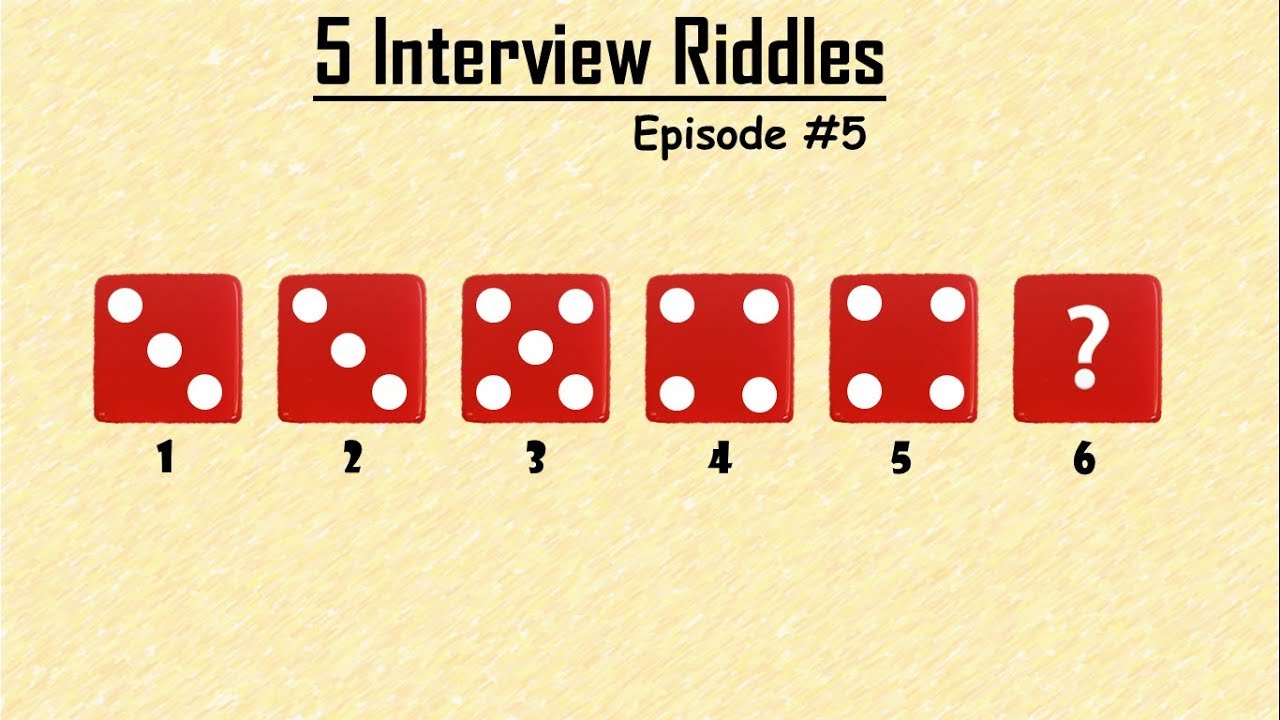
The answer to Q1 is not three spots - it is just the poster-s preferred one from several possible answers. For example, four spots is equally valid as an answer: the dice are in sets of 3, the third being the first rotated through 90 degrees then superimposed on the second, giving the answer as 4 spots rotated onto 4 spots, the superimposed image being four spots. There may be other languages where the letters match up for 1-5 but not the sixth.
reply
The answer to Q1 is not three spots - it is just the poster-s preferred one from several possible answers. For example, four spots is equally valid as an answer: the dice are in sets of 3, the third being the first rotated through 90 degrees then superimposed on the second, giving the answer as 4 spots rotated onto 4 spots, the superimposed image being four spots. There may be other languages where the letters match up for 1-5 but not the sixth.
reply
Simon
2 answers 1 the shop keeper lost 1000 total the bag and 800 in money and the borrowing the change makes no difference he lost total 1000 in goods and money for the fake note. 2 The wording says the lender of the 1000 in change took his money back which could mean he only took back the 200 that was his (it also doesn't say the shop keeper had any more money at this point) in which case the shop keeper is only down the bag or 200.
reply
2 answers 1 the shop keeper lost 1000 total the bag and 800 in money and the borrowing the change makes no difference he lost total 1000 in goods and money for the fake note. 2 The wording says the lender of the 1000 in change took his money back which could mean he only took back the 200 that was his (it also doesn't say the shop keeper had any more money at this point) in which case the shop keeper is only down the bag or 200.
reply
princy
Q5: The Shopkeeper will face the loss of Rs 1000.
Explanation: When the shopkeeper give the Rs 800 back, He faced no loss and no profit.
But when the boy from next shop comes that the Rs 1000 note is fake, the shopkeeper had to give Rs 200 and Rs 800 back to that boy.
So, The shopkeeper will face Rs 1000 loss as he had to give the money he had got from lady who had purchased the bag of cost Rs 200.
reply
Q5: The Shopkeeper will face the loss of Rs 1000.
Explanation: When the shopkeeper give the Rs 800 back, He faced no loss and no profit.
But when the boy from next shop comes that the Rs 1000 note is fake, the shopkeeper had to give Rs 200 and Rs 800 back to that boy.
So, The shopkeeper will face Rs 1000 loss as he had to give the money he had got from lady who had purchased the bag of cost Rs 200.
reply
Roger
At the time of the problem, the shop keeper had received a good 1000 r from the people next door and had off loaded his loss onto the next shop. Of course, this may be corrected as the shop keeper may need to make good on the 1000r note and may find the lady and require her to pay him back. but that is for the future. Big fan of yours, Ammar.
As to the dice, the pattern could have been 334335.
reply
At the time of the problem, the shop keeper had received a good 1000 r from the people next door and had off loaded his loss onto the next shop. Of course, this may be corrected as the shop keeper may need to make good on the 1000r note and may find the lady and require her to pay him back. but that is for the future. Big fan of yours, Ammar.
As to the dice, the pattern could have been 334335.
reply
Robert
He lost 1800. He took 1000 fake bill and changed it, giving the lady 800 and keeping 200. In total, he gave the lady a 200 bag plus 800 change = 1000. He then had to refund the other shop keeper. He had 200 left from the change but had to add his own 800 to pay back the total of 1000. So he lost 200 for the bag, 800 he gave the lady and another 800 for the repayment on the fake bill = 1800.
reply
He lost 1800. He took 1000 fake bill and changed it, giving the lady 800 and keeping 200. In total, he gave the lady a 200 bag plus 800 change = 1000. He then had to refund the other shop keeper. He had 200 left from the change but had to add his own 800 to pay back the total of 1000. So he lost 200 for the bag, 800 he gave the lady and another 800 for the repayment on the fake bill = 1800.
reply
Click
5: 03 Ans is -1800
because the lady gives him Rs1000 fake note and he exchange it with the next shop and the give's the lady Rs800(which is a loss) and keeps Rs200, and then the next shop owner comes and tell that it is a fake note so he has to give him Rs1000. Because he has Rs200 left so he adds it with another Rs800 and gives it to the next shop. So he is at a loss of Rs1800.
reply
5: 03 Ans is -1800
because the lady gives him Rs1000 fake note and he exchange it with the next shop and the give's the lady Rs800(which is a loss) and keeps Rs200, and then the next shop owner comes and tell that it is a fake note so he has to give him Rs1000. Because he has Rs200 left so he adds it with another Rs800 and gives it to the next shop. So he is at a loss of Rs1800.
reply
sorsocksfake
Q5: $1000. He had to pay $1k out of pocket and kept a $200 note, for $800. On top of that he has to replace the bag for $200, for $1000 total. Apologies for using $.
Exception case: if the bag was unsellable anyway and he doesn't wish to replace it, then he only lost $800 and the personal use of that bag (which presumably he wouldn't want to use either.
reply
Q5: $1000. He had to pay $1k out of pocket and kept a $200 note, for $800. On top of that he has to replace the bag for $200, for $1000 total. Apologies for using $.
Exception case: if the bag was unsellable anyway and he doesn't wish to replace it, then he only lost $800 and the personal use of that bag (which presumably he wouldn't want to use either.
reply
BANDANA
Rs 1000 is the loss as the lady had taken 200 rupees bag and also got 800 rupees but he did not give the real money so she has got rupees thousand profit but the boy who landed rupees thousand also got back his money so he was nowhere in the picture as a suffered no profit no loss so the total loss is rupees thousand as the total profit of lady is rupees 1000
reply
Rs 1000 is the loss as the lady had taken 200 rupees bag and also got 800 rupees but he did not give the real money so she has got rupees thousand profit but the boy who landed rupees thousand also got back his money so he was nowhere in the picture as a suffered no profit no loss so the total loss is rupees thousand as the total profit of lady is rupees 1000
reply
ILIA
About the last one should be E=1800. He borrows 1000 good notes from the next shop, then from them gives her 800. Later he has to give the guy back 1000 good notes, so he already lost 1800. He has 200 good notes remaining from the beginning, but 1 bag less, so this doesn't have to be considered. Actually, he lost 1800 good money and has 1000 fake ones.
reply
About the last one should be E=1800. He borrows 1000 good notes from the next shop, then from them gives her 800. Later he has to give the guy back 1000 good notes, so he already lost 1800. He has 200 good notes remaining from the beginning, but 1 bag less, so this doesn't have to be considered. Actually, he lost 1800 good money and has 1000 fake ones.
reply
Juan
The last problem is not confusing as long as we define properly what we mean by loss. I'm no accountant but in cash terms the shopkeeper lost 800 and in terms of goods the bag. If we covert everything into cash he lost 1000. In terms of bags: 5 bags. There's really no mistery to it once you are clear as to what you are refering to.
reply
The last problem is not confusing as long as we define properly what we mean by loss. I'm no accountant but in cash terms the shopkeeper lost 800 and in terms of goods the bag. If we covert everything into cash he lost 1000. In terms of bags: 5 bags. There's really no mistery to it once you are clear as to what you are refering to.
reply
Tech
5th one
let the amount of money he has be x
then amount of money after 1000 lady giving
x + 1000
gives 800
then, x + 200 is money he has now
again he gave 1000 to that guy but got nothing
x - 800 is money he has now
and but, he gave away that bag worth 200 for just free,
hence x-1000
he lost 1000
reply
5th one
let the amount of money he has be x
then amount of money after 1000 lady giving
x + 1000
gives 800
then, x + 200 is money he has now
again he gave 1000 to that guy but got nothing
x - 800 is money he has now
and but, he gave away that bag worth 200 for just free,
hence x-1000
he lost 1000
reply
Vianney
Total loss = 1000: Transactions are:
-200 Cost of buying the bag
+0 (effectively what the lady gave him)
-0 (effectively what he gave the other shopkeeper)
+1000 (what the other shopkeeper gave him)
-800 (what he gave the lady)
-1000 (what he gave the other shopkeeper back)
Total = -1000
reply
Total loss = 1000: Transactions are:
-200 Cost of buying the bag
+0 (effectively what the lady gave him)
-0 (effectively what he gave the other shopkeeper)
+1000 (what the other shopkeeper gave him)
-800 (what he gave the lady)
-1000 (what he gave the other shopkeeper back)
Total = -1000
reply
Rufferto
Q 1 is misleading in that you show numbers in the form of dice, but claim the -correct- answer is based on spelling. There is nothing in the riddle to suggest the answer is based on spelling and everything to indicate the answer is based on numbers. Therefore, the -logical- answer is 6.
reply
Q 1 is misleading in that you show numbers in the form of dice, but claim the -correct- answer is based on spelling. There is nothing in the riddle to suggest the answer is based on spelling and everything to indicate the answer is based on numbers. Therefore, the -logical- answer is 6.
reply
Freddy
The Q1 has multiple correct & logical answers even if options aren't offered, depending on how people looked at it. One: just like in the video. Two: pattern, 3, 3, 5, 4, 4, 6. Three: opposite dice. In dice, the opposite dots should equal to 7, so the last one could also be a 2.
reply
The Q1 has multiple correct & logical answers even if options aren't offered, depending on how people looked at it. One: just like in the video. Two: pattern, 3, 3, 5, 4, 4, 6. Three: opposite dice. In dice, the opposite dots should equal to 7, so the last one could also be a 2.
reply
Jitendra
1800/- rs loss
Because shopkeeper sale bag of 200 rs plus return 800 rs to leady in form of change this meens total 1000 rs
Now 200 rs remain at shopkeeper he add 800 rs and return to next shopkeeper this 800 loss plus previous 1000 total 1800/- rs loss
reply
1800/- rs loss
Because shopkeeper sale bag of 200 rs plus return 800 rs to leady in form of change this meens total 1000 rs
Now 200 rs remain at shopkeeper he add 800 rs and return to next shopkeeper this 800 loss plus previous 1000 total 1800/- rs loss
reply
SHUBHAM
1600+bag
Lady gave him zero rupees(fake note)
And shopkeeper borrow 1000 from another shop so ideally total loss=
800 to lady+(800 he add from his side to give back 1000 rs to other shopkeeper after adding remaining 200 with him)+ bag
reply
1600+bag
Lady gave him zero rupees(fake note)
And shopkeeper borrow 1000 from another shop so ideally total loss=
800 to lady+(800 he add from his side to give back 1000 rs to other shopkeeper after adding remaining 200 with him)+ bag
reply
Jesse
Last puzzle: In a normal situation, the shopkeeper would have 1 less bag, and 200$(or R) in profit. But here, he still has 1 less bag, has lost 800$ for the money he gave back to the lady, and didn't get the 200$ profit. So overall a 1000$ loss.
reply
Last puzzle: In a normal situation, the shopkeeper would have 1 less bag, and 200$(or R) in profit. But here, he still has 1 less bag, has lost 800$ for the money he gave back to the lady, and didn't get the 200$ profit. So overall a 1000$ loss.
reply
Amar
2k because he get 1k duplicate note from lady which ids equivalent to 0 rupees since he gave 200 price bag and 800 rs to lady so he get 1k loss at lady and from next shop he tooks 1k so he has to pay 1k which in total equals to 2k
reply
2k because he get 1k duplicate note from lady which ids equivalent to 0 rupees since he gave 200 price bag and 800 rs to lady so he get 1k loss at lady and from next shop he tooks 1k so he has to pay 1k which in total equals to 2k
reply
CaGoPaz
Q. 5 its 2000 rupees bucause he gives 200 rupee bag and gains nothing and borrows 1000 rupees and gives out 800 rupees for the exchange and after he gives the borrowed money which is 1000 the total sums up to 2000
reply
Q. 5 its 2000 rupees bucause he gives 200 rupee bag and gains nothing and borrows 1000 rupees and gives out 800 rupees for the exchange and after he gives the borrowed money which is 1000 the total sums up to 2000
reply
Sanket
Answer is F)2000 rupees as the shopkeeper loses his 200 rupees bag + 800 rupees ( 1000rupees ), now the lender comes and the shopkeeper has to give him 1000 rupees, so in total he loses 2000 rupees( 1000+1000 )
reply
Answer is F)2000 rupees as the shopkeeper loses his 200 rupees bag + 800 rupees ( 1000rupees ), now the lender comes and the shopkeeper has to give him 1000 rupees, so in total he loses 2000 rupees( 1000+1000 )
reply
Jay
2000 Bucks net loss as
1. Shopkeeper give bag(200 Bucks) +800 Bucks= 1000 Bucks
2. Return 1000 bucks to boy
3. Get fake note worth zero.
4. Out flow of cash= 1000(lady)+1000(boy) =
2000 bucks
reply
2000 Bucks net loss as
1. Shopkeeper give bag(200 Bucks) +800 Bucks= 1000 Bucks
2. Return 1000 bucks to boy
3. Get fake note worth zero.
4. Out flow of cash= 1000(lady)+1000(boy) =
2000 bucks
reply
akhil
1000 is the actual loss
Think your initial balance as O and a bag.
200 = price of bag lost
800= to be given back to shopkpr
Rest all transactions are coming and going type not yours
reply
1000 is the actual loss
Think your initial balance as O and a bag.
200 = price of bag lost
800= to be given back to shopkpr
Rest all transactions are coming and going type not yours
reply
Add a review, comment
Other channel videos