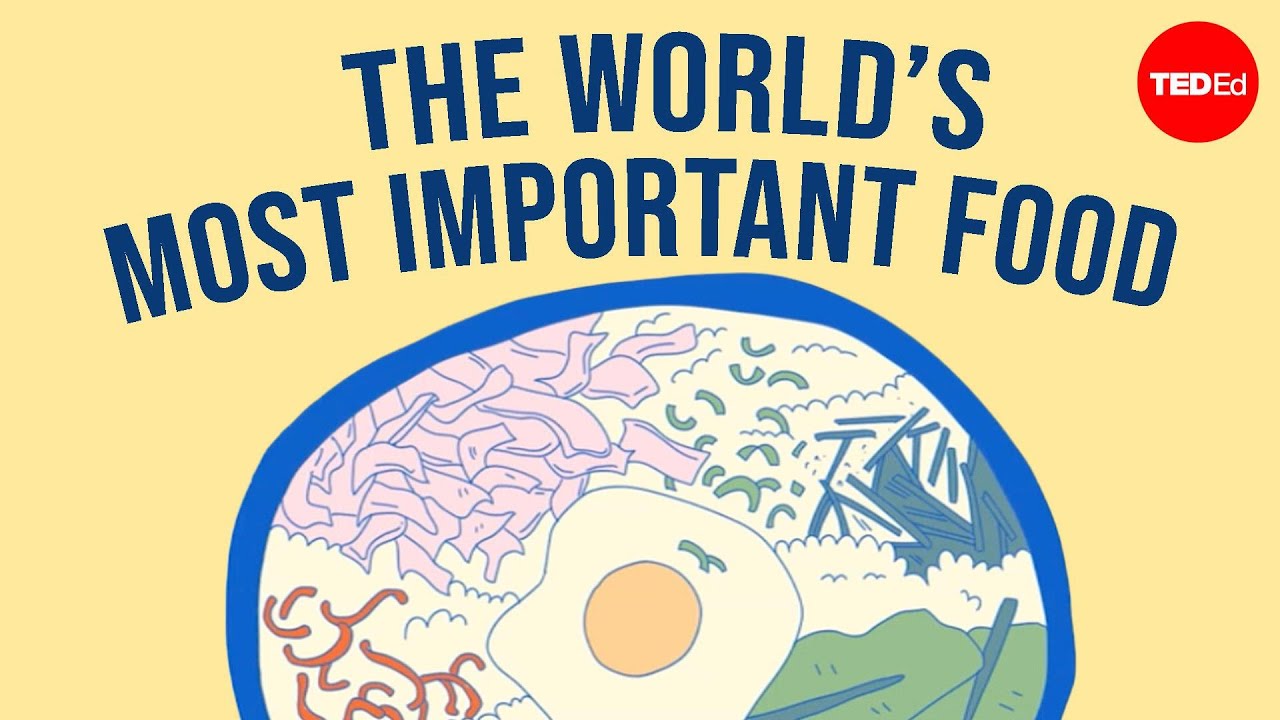
Why is rice so popular? Carolyn Beans
video description
Rice cultivation techniques spread to the Middle East, Africa, and Europe over time. In the Middle Ages, the Moors introduced rice to Spain, and from there, it spread to Italy. European colonial powers further contributed to the global dissemination of rice, bringing it to the Americas during the Age of Exploration.
In the modern era, rice has become a staple food worldwide, with various varieties adapted to different climates. It plays a vital role in the economies and diets of many countries, particularly in Asia, where it remains a dietary staple for billions of people.
Date: 2024-01-11
Related videos




Comments and reviews: 14
CrossTheGoat
I'm from south east Asia, we don't see rice as a popular food we got so used to it that we don't see it as a food anymore instead we see it as a requirement when we eat food, for instance when you go to school you need a bag to carry your books and pen its a requirement but optional you can still carry your books and pens without the bag but its also inconvinient and uncomfortable, same to rice. When we asians eat, rice is required but also optional since we can still eat without rice but for us it is inconvinient and uncomfortable to eat without it. Unlike western diet where they can eat anything like for example they could just eat chicken wings from mcdonald and go to statbucks then call it a lunch, but for us breakfast, lunch, and dinner always requires rice. That's why people here know how to cook dishes, unlike americans who don't, the only thing they know to cook are fried chicken, smoked steak, roasted turkey.
reply
I'm from south east Asia, we don't see rice as a popular food we got so used to it that we don't see it as a food anymore instead we see it as a requirement when we eat food, for instance when you go to school you need a bag to carry your books and pen its a requirement but optional you can still carry your books and pens without the bag but its also inconvinient and uncomfortable, same to rice. When we asians eat, rice is required but also optional since we can still eat without rice but for us it is inconvinient and uncomfortable to eat without it. Unlike western diet where they can eat anything like for example they could just eat chicken wings from mcdonald and go to statbucks then call it a lunch, but for us breakfast, lunch, and dinner always requires rice. That's why people here know how to cook dishes, unlike americans who don't, the only thing they know to cook are fried chicken, smoked steak, roasted turkey.
reply
derkaiser420
I am actually surprised they didn't mention how rice farmers get infected by parasitic worms at an alarming rate. They then contract some pretty terrible diseases as a result. Parasitic worms kill thousands of people a year in pretty horrible ways. I wouldn't be overly concerned with the methane distribution by flooding rice fields but instead making it a breading ground for worms. We should focus on draining these fields for the health of poor farmers because worms are very easy to get rid of by simple medications but most farmers cannot afford it.
reply
I am actually surprised they didn't mention how rice farmers get infected by parasitic worms at an alarming rate. They then contract some pretty terrible diseases as a result. Parasitic worms kill thousands of people a year in pretty horrible ways. I wouldn't be overly concerned with the methane distribution by flooding rice fields but instead making it a breading ground for worms. We should focus on draining these fields for the health of poor farmers because worms are very easy to get rid of by simple medications but most farmers cannot afford it.
reply
renn5771
In the north east part of India, in the state of mizoram, we mizo have this word Chaw meaning food, but when we use the word Chaw it mostly refers to rice, meaning that we believed that rice is the main food. Bread if also a food but for us, rice is the main thing, and bread is not consume for breakfast but is more viewed as a food to be eaten as a lunch.
reply
In the north east part of India, in the state of mizoram, we mizo have this word Chaw meaning food, but when we use the word Chaw it mostly refers to rice, meaning that we believed that rice is the main food. Bread if also a food but for us, rice is the main thing, and bread is not consume for breakfast but is more viewed as a food to be eaten as a lunch.
reply
lias934
Millennials depend on rice as their staple diet, and as population surge, we cannot control its production rather opt for a sustainable method.
But what we can control is Human-induced GHG which was shown vividly in the video by those— _Vehicular exhausts steering through the fields_
Thanks for the info. ;)❤⚡
reply
Millennials depend on rice as their staple diet, and as population surge, we cannot control its production rather opt for a sustainable method.
But what we can control is Human-induced GHG which was shown vividly in the video by those— _Vehicular exhausts steering through the fields_
Thanks for the info. ;)❤⚡
reply
Meeperstein101
Kind of a weak video. Don't get me wrong, the contribution of rice growing to methane emissions is a fascinating subject that many other videos have explored thoroughly, but the title and introduction for this one prepped me for a discussion of the cultural roots and effects of rice.
reply
Kind of a weak video. Don't get me wrong, the contribution of rice growing to methane emissions is a fascinating subject that many other videos have explored thoroughly, but the title and introduction for this one prepped me for a discussion of the cultural roots and effects of rice.
reply
HumbleAshe
Ah rice, so simple yet so iconic and important as a food staple. ESPECIALLY for Asian cultures and for people in my family and among many of my friends, rice makes up so much of the various foods we eat regularly.
reply
Ah rice, so simple yet so iconic and important as a food staple. ESPECIALLY for Asian cultures and for people in my family and among many of my friends, rice makes up so much of the various foods we eat regularly.
reply
knightshade6232
I thought rice grows in flooded feilds i was wrong i saw rice grow in the cornfeilds just like regular grass. They were only place on flooded plots cuz weeds cant grow on submerge environment
reply
I thought rice grows in flooded feilds i was wrong i saw rice grow in the cornfeilds just like regular grass. They were only place on flooded plots cuz weeds cant grow on submerge environment
reply
AmilaA-yq9dl
This video gives confusing messages, they say growing rice directly has a impact on global warming. I don’t see any historical data on 200 year ago, people were suffering from global warming.
reply
This video gives confusing messages, they say growing rice directly has a impact on global warming. I don’t see any historical data on 200 year ago, people were suffering from global warming.
reply
Dheeraj5373
In 1961, the total world production was 216 million tonnes.
But world rice production in 2023 was 523. 9 million tonnes.
So you can easily visualise how important food rice is.
reply
In 1961, the total world production was 216 million tonnes.
But world rice production in 2023 was 523. 9 million tonnes.
So you can easily visualise how important food rice is.
reply
squalltheonly
Because it tastes so goooood. I like to put shredded mozzarella cheese on it after it finishes cooking, mix it, and leave it on the rice cooker on the warm setting for a few minutes
reply
Because it tastes so goooood. I like to put shredded mozzarella cheese on it after it finishes cooking, mix it, and leave it on the rice cooker on the warm setting for a few minutes
reply
sunflower823
As a asian rice is literally our staple diet. Can't live without rice. ❤❤ I didn't actually know that growing rice also hurts the environment. You learn something new every day.
reply
As a asian rice is literally our staple diet. Can't live without rice. ❤❤ I didn't actually know that growing rice also hurts the environment. You learn something new every day.
reply
k. c. 5660
As a South Korean, that bibimbap thumbnail attracted me a little too much. that I actually didn't know the title until I started writing this comment
reply
As a South Korean, that bibimbap thumbnail attracted me a little too much. that I actually didn't know the title until I started writing this comment
reply
lucianoosorio5942
“Ok thanks to your new friend Ping, you spend tonight picking up every single grain of rice and tomorrow the real work begins. ” Shang
reply
“Ok thanks to your new friend Ping, you spend tonight picking up every single grain of rice and tomorrow the real work begins. ” Shang
reply
ted_ed
1: 48 we are these Indian Hindu who celebrates this Annaprashan. It's a Bengali word, and by the way we are Bengali too
reply
1: 48 we are these Indian Hindu who celebrates this Annaprashan. It's a Bengali word, and by the way we are Bengali too
reply
Add a review, comment
Other channel videos