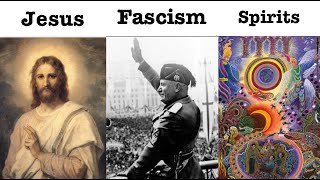
Another 7 Taboo Questions About History and Society
video description
I think the issue with eugenics is that we tend to vastly underestimate the power of biology. Biology has reshaped the Earth itself in massive, massive ways for hundreds of millions of years. Even more so in the modern human dominated era. The human brain is the most potent power in the known universe, in my opinion. Given enough time it may some day reshape entire galaxies. Whole clusters of galaxies spanning hundreds of thousands of light years may be shaped by human brains or brains descended from them. The power of biology.
I think thus that the danger in eugenics is in assuming humans are wise enough to wield the power directly over themselves and society as a whole. I do not think we are. We don't always know what is best in the eugenic sense. Is a phenotype with physical weakness, poor eyesight, allergies, and neurotic behavior inferior and undesirable? Maybe, but maybe not. It might come with other traits and expressions that are supremely valuable. The more stable a person. perhaps the less creative. Genius and madness, say.
I would say then that the only way we could utilize eugenics would be to try and structure a society that promoted healthy behavior and that this behavior included compassion for the outliers, the mutants. Towards that end the welfare state must be abolished. People too foolish to breed responsibly should not be encouraged to do so. My best guess is that we should desire a society which encourages strong families. Not just nuclear families, but extended families. A society that encourages strong extended families and local communities. Family and community can and will provide the appropriate level of charity or safety net to aid the unfortunate or odd but also be more likely to exercise restraint and callous dismissal of those who would abuse the generosity of their neighbors. A society such as that would be a freer society in which people have the comfort of familial and communal support. They would be more responsible and more stable, more rational, but tempered with generosity and a common bond.
That's just a pipe dream, though. Humans are corruptible and we chase after comfort. A lion in the wild is a noble being surviving in a harsh environment and winning through its strength and cunning every meal. However when you take a lion out of the wild and give it safety and a secure source of food it will be content to nap all day, even if you take it to an open field. It's not just human nature to desire comfort and be corrupted by it; it's innate to all life, probably.
Date: 2022-07-15
Related videos



Comments and reviews: 9
Volvith
I don't think i agree with the almost binary take on stakeholders being leaders of nations.
To a certain degree leaders of a nation need to be held accountable by the people for their actions, else the people will suffer under the thumb of unchecked autocracy turned authoritarian tyranny, but on the other hand, democracy at it's core is collective anarchy, where if 60% of all people want to murder each other, democracy dictates that should be law, an extreme, yes, but still.
I think that there's always a degree of nuance that needs to be applied, alongside a degree of leeway to catch policies otherwise swimming past the net.
The system modern nations currently have hold little to no tools to hold governments accountable other than pointing and yelling and expecting to have them hold themselves accountable.
I will admit i'm not sure what system would work best, but there needs to be a dynamic where the people hold power over the government, and the government power over the people, where neither is able to get a real, tangible upper hand on the other.
But much like with my stance on capitalism V. S. communism, where one works because it plays into human nature, and the other doesn't because it goes directly against human nature, i fear much the same is true for any governing structure scaled up sufficiently to form a nation; It simply isn't in human nature to not go to extremes in that scenario.
I really believe that globalism and the acceptance of others outside our own direct sphere of influence is going to be the death of the world, to at least a significant degree.
In the end, humans were never meant to be pushed into positions of power like these, and will always try to return to communal standards, which is now impossible because our over-dependence on hyper-industrialized society.
Governments of the world are probably going to switch between rampant authoritarianism and uncontrollable anarchism more and more often in the coming century, as we turn to industrialization and distribution of work more and more to solve the problem, which will eventually be our downfall.
Of course, i could be entirely wrong and we could be living in a globalist utopia a century from now, but granted what i've seen of the human part in humanity, i doubt any structure bar either a rigorous authoritarian dictatorship, or a total collapse into thousands of borderline city-states, would be able to continue our standards of modern civilization.
I think the United States had the right idea at the time of writing the constitution, except instead of 50 states there should have been 500.
And of course, technology complicates things beyond what we can deal with.
Nothing's ever going to be perfect, but i do think that systems of government we have set up today are even less perfect than the more cynical of us like it to be.
reply
I don't think i agree with the almost binary take on stakeholders being leaders of nations.
To a certain degree leaders of a nation need to be held accountable by the people for their actions, else the people will suffer under the thumb of unchecked autocracy turned authoritarian tyranny, but on the other hand, democracy at it's core is collective anarchy, where if 60% of all people want to murder each other, democracy dictates that should be law, an extreme, yes, but still.
I think that there's always a degree of nuance that needs to be applied, alongside a degree of leeway to catch policies otherwise swimming past the net.
The system modern nations currently have hold little to no tools to hold governments accountable other than pointing and yelling and expecting to have them hold themselves accountable.
I will admit i'm not sure what system would work best, but there needs to be a dynamic where the people hold power over the government, and the government power over the people, where neither is able to get a real, tangible upper hand on the other.
But much like with my stance on capitalism V. S. communism, where one works because it plays into human nature, and the other doesn't because it goes directly against human nature, i fear much the same is true for any governing structure scaled up sufficiently to form a nation; It simply isn't in human nature to not go to extremes in that scenario.
I really believe that globalism and the acceptance of others outside our own direct sphere of influence is going to be the death of the world, to at least a significant degree.
In the end, humans were never meant to be pushed into positions of power like these, and will always try to return to communal standards, which is now impossible because our over-dependence on hyper-industrialized society.
Governments of the world are probably going to switch between rampant authoritarianism and uncontrollable anarchism more and more often in the coming century, as we turn to industrialization and distribution of work more and more to solve the problem, which will eventually be our downfall.
Of course, i could be entirely wrong and we could be living in a globalist utopia a century from now, but granted what i've seen of the human part in humanity, i doubt any structure bar either a rigorous authoritarian dictatorship, or a total collapse into thousands of borderline city-states, would be able to continue our standards of modern civilization.
I think the United States had the right idea at the time of writing the constitution, except instead of 50 states there should have been 500.
And of course, technology complicates things beyond what we can deal with.
Nothing's ever going to be perfect, but i do think that systems of government we have set up today are even less perfect than the more cynical of us like it to be.
reply
Vaporwave
My opinions:
1) It's a great basis for knowledge, but it is impossible to preform the scientific method for all things.
2) It's a moral value, and as such, that is highly subjective. I personally would argue they are always morally good, regardless of potential negative consequence, while a Communist may argue the opposite.
3) We already know genetics affects diseases and such, as such, it's very likely there is a large influence in other ways.
4) I do not believe in Gods or Spirits but this is unquestionably true, the world of Spirits is simply our best estimation of things we did not understand, some things are likely based on cultural practices and have no natural connection to reality sure, but many things are based on nature.
5) No. People do their best, regardless of if they know what they're doing. But no we have no clue.
6) I'd argue no one outside of those in absolute power have stake in government, a vote is not a stake in government it's simply an act of oppression against those in minorities, just as a single centralized leader oppresses the majority. I think the true question is, do we need to use force to have a government?
7) Unquestionably no, but that's one of the best things about religious myths and ideals. Mormonism is far removed from Edomite Yahweh Worship but both created great works of art and influence history. Religions are more of a guide rather than a truth I'd say, spirituality isn't connection to another world, but an emotion all beings, even the most atheistic, are capable of feeling.
reply
My opinions:
1) It's a great basis for knowledge, but it is impossible to preform the scientific method for all things.
2) It's a moral value, and as such, that is highly subjective. I personally would argue they are always morally good, regardless of potential negative consequence, while a Communist may argue the opposite.
3) We already know genetics affects diseases and such, as such, it's very likely there is a large influence in other ways.
4) I do not believe in Gods or Spirits but this is unquestionably true, the world of Spirits is simply our best estimation of things we did not understand, some things are likely based on cultural practices and have no natural connection to reality sure, but many things are based on nature.
5) No. People do their best, regardless of if they know what they're doing. But no we have no clue.
6) I'd argue no one outside of those in absolute power have stake in government, a vote is not a stake in government it's simply an act of oppression against those in minorities, just as a single centralized leader oppresses the majority. I think the true question is, do we need to use force to have a government?
7) Unquestionably no, but that's one of the best things about religious myths and ideals. Mormonism is far removed from Edomite Yahweh Worship but both created great works of art and influence history. Religions are more of a guide rather than a truth I'd say, spirituality isn't connection to another world, but an emotion all beings, even the most atheistic, are capable of feeling.
reply
Ingold
28: 00 - It's inherent to managerialism in particular IMO. It has been the norm in the past decades for decision makers to have a very small stake in what they're actually deciding for, so they're incentivised to do everything on a short time horizon so that they get the accolades for the signs of success during their time in charge, while caring little for the long-term reality of the situation. This was always true of democratic leaders but it's intensified by business also working in the same way, so that anyone who wants to criticise or develop alternatives to those shortsighted decisions doesn't even have a modern point of comparison to reach for.
An old school tycoon like Henry Ford would raise wages and launch campaigns to clean up his factories knowing that in the long run more efficient and content workers would be attracted to the company, while a modern one would just move the factories somewhere with a more desperate labour market, brag about how much money will be saved in the next 2 years, and let the next guy worry about the quality control and supply chain issues. There are some downsides to the old paradigm too, such as callous decisions being less likely to be checked by public outcry, or owners using their business to test their personal idealistic theories with no-one able to stop them (Ford famously tried to turn his entire workforce into teetotalers at one point.
reply
28: 00 - It's inherent to managerialism in particular IMO. It has been the norm in the past decades for decision makers to have a very small stake in what they're actually deciding for, so they're incentivised to do everything on a short time horizon so that they get the accolades for the signs of success during their time in charge, while caring little for the long-term reality of the situation. This was always true of democratic leaders but it's intensified by business also working in the same way, so that anyone who wants to criticise or develop alternatives to those shortsighted decisions doesn't even have a modern point of comparison to reach for.
An old school tycoon like Henry Ford would raise wages and launch campaigns to clean up his factories knowing that in the long run more efficient and content workers would be attracted to the company, while a modern one would just move the factories somewhere with a more desperate labour market, brag about how much money will be saved in the next 2 years, and let the next guy worry about the quality control and supply chain issues. There are some downsides to the old paradigm too, such as callous decisions being less likely to be checked by public outcry, or owners using their business to test their personal idealistic theories with no-one able to stop them (Ford famously tried to turn his entire workforce into teetotalers at one point.
reply
Chris2theJ
You raise good points about science, it's also important to point out that science is ever-changing because of its nature. Science is simply the documented observation of objects, and as such the nature of that observation will always be biased based on the ability to observe. A good example is the flawed carbon dating system, as current dating processes assume that the average atmospheric carbon has never changed from the modern day, which is where we get the idea that certain things that can be dated could be as old as 20-30 million years old. However, when dating samples that have a known existent period (think grave sight of King Tut for as an example) the dating is wildly off.
To put it simply, the assumption of static variables skews the science and gives us bad data. We constantly hear that the climate changes (ie CO2 levels, hotter hots, cooler cools, etc) yet the scientific community assumes the base level of carbon one is exposed to has been the same throughout the existence of the Earth, which by simply logic cannot be the case. This is why there are those (myself included more recently) believe in a young-earth theory. Said theory is as provable as the old-earth theory, but that is something that we must accept along with other things we think we can prove. Sometimes its good/understandable to say, we cannot possibly solve this problem but thats ok.
reply
You raise good points about science, it's also important to point out that science is ever-changing because of its nature. Science is simply the documented observation of objects, and as such the nature of that observation will always be biased based on the ability to observe. A good example is the flawed carbon dating system, as current dating processes assume that the average atmospheric carbon has never changed from the modern day, which is where we get the idea that certain things that can be dated could be as old as 20-30 million years old. However, when dating samples that have a known existent period (think grave sight of King Tut for as an example) the dating is wildly off.
To put it simply, the assumption of static variables skews the science and gives us bad data. We constantly hear that the climate changes (ie CO2 levels, hotter hots, cooler cools, etc) yet the scientific community assumes the base level of carbon one is exposed to has been the same throughout the existence of the Earth, which by simply logic cannot be the case. This is why there are those (myself included more recently) believe in a young-earth theory. Said theory is as provable as the old-earth theory, but that is something that we must accept along with other things we think we can prove. Sometimes its good/understandable to say, we cannot possibly solve this problem but thats ok.
reply
Ken
8: 26 How do you measure this religiosity over the course of hundreds of years, especially as these imperial powers' boundaries changed dramatically over time? How can you say it abstained the most from scientism and that it was the only power to survive? The Brits still have a small empire of overseas territories and are still financial powerhouses with their political regime being untouched by the 20th century unlike, say, the soviet union, though they aren't the most dominant. America lost the Phillippines after WWII, though it never had much of a formal empire to begin with. Eugenics was popular in america, as was race science. The Nazis used segregation laws, eugenics, zyklon b, and various other American innovations and policies grounded in dubious race pseudoscience to formulate their own race laws.
reply
8: 26 How do you measure this religiosity over the course of hundreds of years, especially as these imperial powers' boundaries changed dramatically over time? How can you say it abstained the most from scientism and that it was the only power to survive? The Brits still have a small empire of overseas territories and are still financial powerhouses with their political regime being untouched by the 20th century unlike, say, the soviet union, though they aren't the most dominant. America lost the Phillippines after WWII, though it never had much of a formal empire to begin with. Eugenics was popular in america, as was race science. The Nazis used segregation laws, eugenics, zyklon b, and various other American innovations and policies grounded in dubious race pseudoscience to formulate their own race laws.
reply
Jeremy
Man that first point on how we all find ourselves on the right against social justice is so good. I used to be a Richard Dawkins type for a couple years. As the events of the last few years have transpired and I am also i bit older (26, honestly, i dont think humanity can handle a dawkins view of the world. I am still an advocate for science but i think religion is necessary. Just not the fundamentalist type of religion. The question is how do we reach a balance from the extremes of secularism and religiosity. Is that even possible?
reply
Man that first point on how we all find ourselves on the right against social justice is so good. I used to be a Richard Dawkins type for a couple years. As the events of the last few years have transpired and I am also i bit older (26, honestly, i dont think humanity can handle a dawkins view of the world. I am still an advocate for science but i think religion is necessary. Just not the fundamentalist type of religion. The question is how do we reach a balance from the extremes of secularism and religiosity. Is that even possible?
reply
Nick
The real problem with science is that it's constantly and consistently falsified to use as false proof or people personal dogma's and political agendas. To use the Galileo example of proving that weight has nothing to do with the rate fall due to gravity, imagine he dropped a feather, a sponge and a led dart and used that to prove that ancient Greeks were right. Such flawed tests and, far worse, flawed polls to scientists are used constantly to push false science. Science isn't the problem, dishonest humans are.
reply
The real problem with science is that it's constantly and consistently falsified to use as false proof or people personal dogma's and political agendas. To use the Galileo example of proving that weight has nothing to do with the rate fall due to gravity, imagine he dropped a feather, a sponge and a led dart and used that to prove that ancient Greeks were right. Such flawed tests and, far worse, flawed polls to scientists are used constantly to push false science. Science isn't the problem, dishonest humans are.
reply
Turna
The part about spirits made me think about Gods existence. For me God, the truth and the universe are the same. We will never fully understand the universe (aka God, but we can make connections to the point of inventing ideologies and religions.
Ideologies and religions want to define the truth, which they never fully will. They can have some strong points but will forever be unable to explain the absolute truth, therefore being unable to explain God. God is the creator of all, the universe houses all.
reply
The part about spirits made me think about Gods existence. For me God, the truth and the universe are the same. We will never fully understand the universe (aka God, but we can make connections to the point of inventing ideologies and religions.
Ideologies and religions want to define the truth, which they never fully will. They can have some strong points but will forever be unable to explain the absolute truth, therefore being unable to explain God. God is the creator of all, the universe houses all.
reply
James
Science and rationality has done so much for us that we like to think that theres a rational, scientific answer to every question, especially public policy. But a city council facing a decision of whether to fund repairs to the public library or to the swimming pool is faced with a question which can have no scientific answer.
Its a point made by Ed Banfield in his book City Politics. Very similar to the point made in the video, that science cannot tell you who to marry.
Great video! Thanks!
reply
Science and rationality has done so much for us that we like to think that theres a rational, scientific answer to every question, especially public policy. But a city council facing a decision of whether to fund repairs to the public library or to the swimming pool is faced with a question which can have no scientific answer.
Its a point made by Ed Banfield in his book City Politics. Very similar to the point made in the video, that science cannot tell you who to marry.
Great video! Thanks!
reply
Add a review, comment
Other channel videos