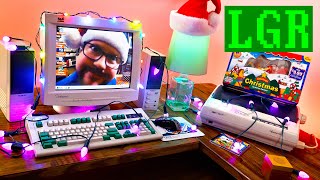
LGR Oddware - IBM 5151 Monitor with MDA & Hercules Graphics
video description
Date: 2022-04-14
Related videos





Comments and reviews: 10
SirMeatwad
I have a game I've been trying to remember for a long time. I played this game back in 3rd grade back in the early 90s. At my school we only had these old monochrome computers with games like Number Muncher, but I remember on one of the computers I would play this old monochrome fantasy type game.
I think there were little hexagon shaped cells (maybe the shape was something else) and I remember I would get attacked by monsters. We didn't have any kind of instruction booklet for it or anything so I just had to figure out the attack key through trial and error. I think it was a letter that made sense once you figured it out (like S for sword, H for hit, or A for attack. something like that) and I think there miiiight have been keys you collected?
i know I am giving very little to go on. I think I remember it having quite a bit of text involved as well. Text would come up letting you know that you had hit the enemy or that you found an item. I really would love to figure out what game this was so I could try it again now. I never made it very far back then. I could be wrong about some of these specifics so if any of you know of ANY old games that are remotely like this (fantasy, monochrome, collecting loot and items, super old even by 1993) Please name it off and I will look it up to see if that was it
reply
I have a game I've been trying to remember for a long time. I played this game back in 3rd grade back in the early 90s. At my school we only had these old monochrome computers with games like Number Muncher, but I remember on one of the computers I would play this old monochrome fantasy type game.
I think there were little hexagon shaped cells (maybe the shape was something else) and I remember I would get attacked by monsters. We didn't have any kind of instruction booklet for it or anything so I just had to figure out the attack key through trial and error. I think it was a letter that made sense once you figured it out (like S for sword, H for hit, or A for attack. something like that) and I think there miiiight have been keys you collected?
i know I am giving very little to go on. I think I remember it having quite a bit of text involved as well. Text would come up letting you know that you had hit the enemy or that you found an item. I really would love to figure out what game this was so I could try it again now. I never made it very far back then. I could be wrong about some of these specifics so if any of you know of ANY old games that are remotely like this (fantasy, monochrome, collecting loot and items, super old even by 1993) Please name it off and I will look it up to see if that was it
reply
darak2
Ages ago I used an ITT XTRA computer (a 'cheap' PC XT clone) which had an Hercules/MDA hybrid card. There was a switch at the back of the computer to select between both modes (you had to reboot each time. The MDA mode had no graphics support, and the Hercules emulation had a really bad text mode (no cursor) and no greyscale support at all (every pixel was pure black or white. I remember using a software emulator to enable CGA games to be played in the Hercules mode, but that used a pattern to simulate two of the three colours (in practice you only could distinguish between 3 colours instead of 4, making some games unplayable as you couldn't see things properly. It was also slow as hell. I played some early PC games in that computer, including Pipemania, Life&Death, and even Indiana Jones and the Last Crusade. Despite the issue, I remember little ghosting in the monitor.
Fun stuff: that particular machine had a 20MB hard disk that would occasionally have a seizure and stop working. To solve the issue you had to open the computer, pick a decent sized hammer, and go and hammer a few times at the disk. That would make the needle become loose so the disk could start working again (with no read errors.
reply
Ages ago I used an ITT XTRA computer (a 'cheap' PC XT clone) which had an Hercules/MDA hybrid card. There was a switch at the back of the computer to select between both modes (you had to reboot each time. The MDA mode had no graphics support, and the Hercules emulation had a really bad text mode (no cursor) and no greyscale support at all (every pixel was pure black or white. I remember using a software emulator to enable CGA games to be played in the Hercules mode, but that used a pattern to simulate two of the three colours (in practice you only could distinguish between 3 colours instead of 4, making some games unplayable as you couldn't see things properly. It was also slow as hell. I played some early PC games in that computer, including Pipemania, Life&Death, and even Indiana Jones and the Last Crusade. Despite the issue, I remember little ghosting in the monitor.
Fun stuff: that particular machine had a 20MB hard disk that would occasionally have a seizure and stop working. To solve the issue you had to open the computer, pick a decent sized hammer, and go and hammer a few times at the disk. That would make the needle become loose so the disk could start working again (with no read errors.
reply
darak2
Wow! I had an XT clone computer with an Hercules/CGA graphics card and a monochrome monitor for years, until it was replaced way into the 386 era. I distinctly remember the graphics card having a switch to change between CGA and Hercules modes (it would only work with the computer off, so you had to do hard reboot each time you wanted to play a game. In any case, the CGA mode was unplayable in the monochrome monitor because all colours except black would show as pure white in the monitor, so I had to use the Hercules mode with a CGA emulator like the one shown in the video. The compatibility was poor, and it was also slow compared to pure CGA mode (but still playable -- I suspect those 'emulators' had some hardware support going on. I completed Indiana Jones and the Last Crusade in glorious Hercules monochrome mode, all the way with PC speaker sound.
It actually was a nice machine to run Lotus 1-2-3 and Wordperfect, alongside a matrix dot printer. I even learned C in that machine (Lattice C, Turbo C didn't exist yet. Fortunately, the monitor didn't have as much ghost as the one in your video, that looks really crazy: )
reply
Wow! I had an XT clone computer with an Hercules/CGA graphics card and a monochrome monitor for years, until it was replaced way into the 386 era. I distinctly remember the graphics card having a switch to change between CGA and Hercules modes (it would only work with the computer off, so you had to do hard reboot each time you wanted to play a game. In any case, the CGA mode was unplayable in the monochrome monitor because all colours except black would show as pure white in the monitor, so I had to use the Hercules mode with a CGA emulator like the one shown in the video. The compatibility was poor, and it was also slow compared to pure CGA mode (but still playable -- I suspect those 'emulators' had some hardware support going on. I completed Indiana Jones and the Last Crusade in glorious Hercules monochrome mode, all the way with PC speaker sound.
It actually was a nice machine to run Lotus 1-2-3 and Wordperfect, alongside a matrix dot printer. I even learned C in that machine (Lattice C, Turbo C didn't exist yet. Fortunately, the monitor didn't have as much ghost as the one in your video, that looks really crazy: )
reply
geoffk777
If you want a fairly good emulation of this experience on a Linux system, one of the Xscreensaver modules is a Green screen monitor emulator. You can adjust the ghosting level and even use it as a regular Xterm.
Hercules cards also worked with the Amber monitors, and these usually had shorter-duration pixels that didn't ghost very much.
The real driver for Hercules was Lotus 123. Once Lotus became popular, business users needed to display graphs and charts, which MDA couldn't do, but Hercules could. So Hercules was the most common business standard until VGA got popular.
Some later Hercules boards let you load different font sets, which was very cool. You could compute in Old English letters or in a 1970's Sci-Fi -Computer- font (like the -Data 70- font. Lots of fun.
reply
If you want a fairly good emulation of this experience on a Linux system, one of the Xscreensaver modules is a Green screen monitor emulator. You can adjust the ghosting level and even use it as a regular Xterm.
Hercules cards also worked with the Amber monitors, and these usually had shorter-duration pixels that didn't ghost very much.
The real driver for Hercules was Lotus 123. Once Lotus became popular, business users needed to display graphs and charts, which MDA couldn't do, but Hercules could. So Hercules was the most common business standard until VGA got popular.
Some later Hercules boards let you load different font sets, which was very cool. You could compute in Old English letters or in a 1970's Sci-Fi -Computer- font (like the -Data 70- font. Lots of fun.
reply
Marc
The original Hercules did not have a CGA compatible mode, someone wrote a TSR that would emulate CGA mostly. It worked 80% of the time. Clone cards did add the CGA capability with some shady color emulation system, it was terrible but since it mostly worked we used it. Most of the time though, we'd get a CGA card and pipe it thru the VCR to TV and played games on there. I was nuts, I used Lotus 1-2-3 on both monitor, it was great to make pie charts.
Kept my Herc clone well into my VGA days, it was nice to have dual screens for Lotus 1-2-3, Symphony, Framework II, DBase III and IV. Even early Windows on two screens was a blast. Desqview was also pretty cool on two screens, I could work while checking up on my BBS!
reply
The original Hercules did not have a CGA compatible mode, someone wrote a TSR that would emulate CGA mostly. It worked 80% of the time. Clone cards did add the CGA capability with some shady color emulation system, it was terrible but since it mostly worked we used it. Most of the time though, we'd get a CGA card and pipe it thru the VCR to TV and played games on there. I was nuts, I used Lotus 1-2-3 on both monitor, it was great to make pie charts.
Kept my Herc clone well into my VGA days, it was nice to have dual screens for Lotus 1-2-3, Symphony, Framework II, DBase III and IV. Even early Windows on two screens was a blast. Desqview was also pretty cool on two screens, I could work while checking up on my BBS!
reply
deeiks12
The only PC compatibles I had when growing up had hercules only, i never had a machine with CGA or EGA or VGA, from hercules straight to a -modern- machine which had a P II 350mhz with Matrox millenium i think it was g420 or 440 graphics. So i pretty much had to find all the games that were compatible with hercules. If I had known about the CGA emulation thingy back then it would've changed my childhood: D. Back then then there was no internet, and we even didn't have a phone line at home to connect to BBSs (early 90s late 80s. I didnt even have access to any computer magazines back in the soviet union days. so all the software was moving from people to people on disks, pirated copies of course.
reply
The only PC compatibles I had when growing up had hercules only, i never had a machine with CGA or EGA or VGA, from hercules straight to a -modern- machine which had a P II 350mhz with Matrox millenium i think it was g420 or 440 graphics. So i pretty much had to find all the games that were compatible with hercules. If I had known about the CGA emulation thingy back then it would've changed my childhood: D. Back then then there was no internet, and we even didn't have a phone line at home to connect to BBSs (early 90s late 80s. I didnt even have access to any computer magazines back in the soviet union days. so all the software was moving from people to people on disks, pirated copies of course.
reply
arupian666
Ahhhh. that free bytes total. how many times, back in the day, did you have a program not run due to it needing 620k RAM, and all you could muster was 610k. so you'd have to create ANOTHER config. sys and/or autoexec. bat. you'd end up with one version for if you needed a printer, one for if you needed a joystick, one for XMS, one for EMS (noems, for sensitive software. and with DOS 5 came the -LH- or load high command which was like a gift from an angel. you could load all your stuff above 640k. it felt so powerful.
Kids today, have no idea what we went through being a PC owner back in the day.
reply
Ahhhh. that free bytes total. how many times, back in the day, did you have a program not run due to it needing 620k RAM, and all you could muster was 610k. so you'd have to create ANOTHER config. sys and/or autoexec. bat. you'd end up with one version for if you needed a printer, one for if you needed a joystick, one for XMS, one for EMS (noems, for sensitive software. and with DOS 5 came the -LH- or load high command which was like a gift from an angel. you could load all your stuff above 640k. it felt so powerful.
Kids today, have no idea what we went through being a PC owner back in the day.
reply
Jeff
Back in the day a friend of mine killed an IBM 5151 monitor with a Hercules graphics card. He was programming to show data plots and sent data to the monitor without switching to the proper graphics mode. The signal sent to the monitor was outside the frequency range the monitor was capable of and the monitor literally died with smoke coming out. IBM said that the Hercules card shouldn't send a signal outside of the approved frequency range for the 5151 and Hercules said that IBM should have included a frequency filter on the 5151 input to prevent damage to the monitor.
reply
Back in the day a friend of mine killed an IBM 5151 monitor with a Hercules graphics card. He was programming to show data plots and sent data to the monitor without switching to the proper graphics mode. The signal sent to the monitor was outside the frequency range the monitor was capable of and the monitor literally died with smoke coming out. IBM said that the Hercules card shouldn't send a signal outside of the approved frequency range for the 5151 and Hercules said that IBM should have included a frequency filter on the 5151 input to prevent damage to the monitor.
reply
Okaro
Color monitors have no pixels. The way the pixels the graphics card output has no relation to the color dots on the screen. If you do not get it think about Trinitron. The afterglow is not a disadvantage but advantage. The monochrome display was only 50 Hz. The afterglow prevented flicker. A proper screen saver just blanked the screen. You cannot put images on a text screen. The irony is that if you used an MDA screen saver on a Hercules it could break your monitor.
reply
Color monitors have no pixels. The way the pixels the graphics card output has no relation to the color dots on the screen. If you do not get it think about Trinitron. The afterglow is not a disadvantage but advantage. The monochrome display was only 50 Hz. The afterglow prevented flicker. A proper screen saver just blanked the screen. You cannot put images on a text screen. The irony is that if you used an MDA screen saver on a Hercules it could break your monitor.
reply
cbsboyer
This was actually really useful long after the early 80's. You could plug in an MDA or Hercules card with a mono monitor to use for debugging with a lot of different software development packages. I used one a lot for line-by-line debugging when writing graphics routines - the graphics were happening on my SVGA monitor while the code listing was on the monochrome text display and I could just step through the code one line at a time when I needed to.
reply
This was actually really useful long after the early 80's. You could plug in an MDA or Hercules card with a mono monitor to use for debugging with a lot of different software development packages. I used one a lot for line-by-line debugging when writing graphics routines - the graphics were happening on my SVGA monitor while the code listing was on the monochrome text display and I could just step through the code one line at a time when I needed to.
reply
Add a review, comment
Other channel videos