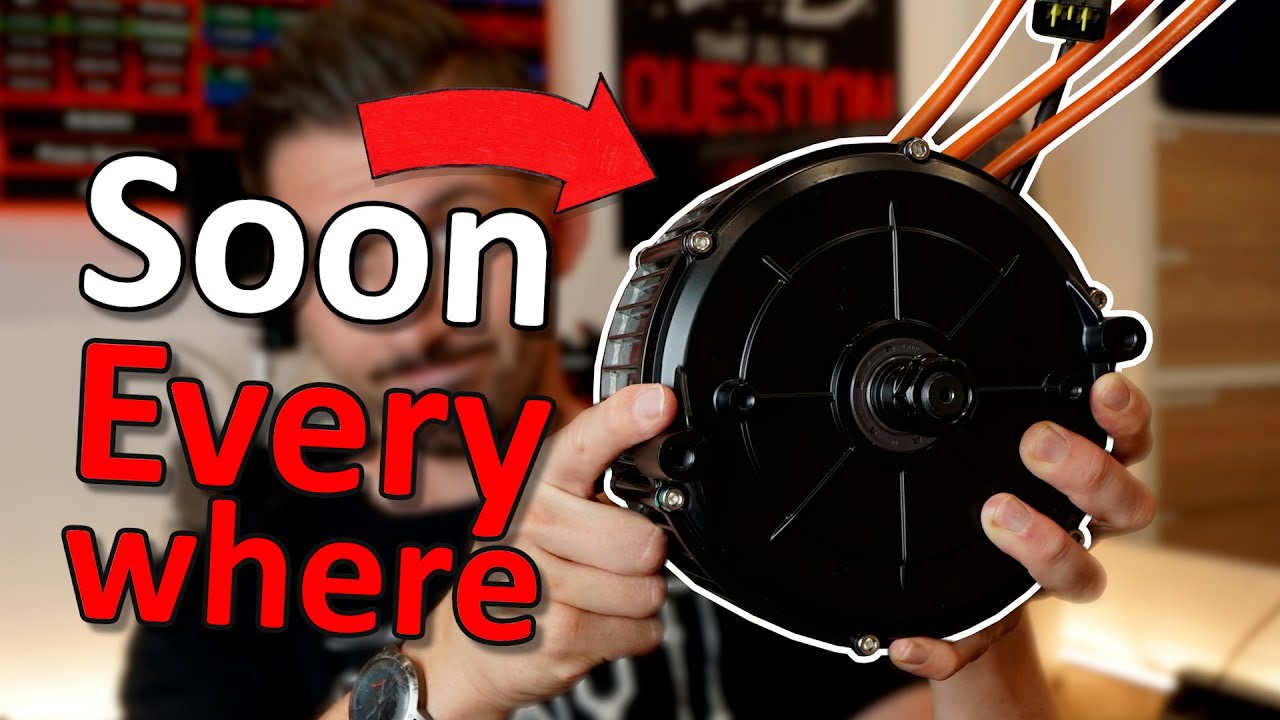
The Most Important Motor for our Electrical Future!
video description
Date: 2025-07-20
Related videos




Comments and reviews: 20
wolpumba4099
AI Summary
Abstract:
This video provides a detailed comparison between Permanent Magnet Synchronous Motors (PMSM) and Brushless DC (BLDC) motors, explaining why PMSMs are crucial for electric vehicles but less common in hobbyist projects. The core difference is identified through their back-EMF waveforms: BLDCs produce a trapezoidal waveform, while PMSMs produce a sinusoidal one due to their internal magnet and winding structure. The video demonstrates that while a standard BLDC ESC can run a PMSM, it is inefficient. The proper method involves a sine wave controller (e. g, a Fardriver) that uses Sinusoidal Pulse Width Modulation (SPWM) to generate a matching sinusoidal current. This results in significantly higher efficiency, quieter operation, and smoother low-speed performance compared to the 6-step commutation of a BLDC. The necessity of Hall effect sensors for providing precise rotor position feedback to the controller, enabling advanced techniques like Field-Oriented Control (FOC) for maximum efficiency, is also highlighted.
PMSM vs. BLDC: Unpacking the Motors of the Electric Future
00: 00: 04 PMSM Explained: The video introduces Permanent Magnet Synchronous Motors (PMSMs) as a vital, high-efficiency motor type used in electric vehicles, but notes their complexity has limited hobbyist adoption.
00: 02: 11 Comparison with BLDC Motors: BLDC motors are contrasted as the go-to for hobbyists (drones, electric skateboards) because they are robust and easy to control with a standard Electronic Speed Controller (ESC.
00: 03: 02 The Fundamental Difference is the Waveform: When spun manually, a BLDC motor generates a trapezoidal back-EMF voltage waveform. A PMSM, due to its different internal construction, generates a pure sinusoidal waveform.
00: 04: 43 Inefficient Control Mismatch: While a standard trapezoidal ESC can spin a PMSM, the mismatched waveforms lead to inefficiency and rough operation.
00: 04: 58 Proper PMSM Control: A dedicated sine wave controller is required to drive a PMSM optimally. These controllers can be complex to set up due to poor documentation and specific wiring requirements for ignition and throttle.
00: 06: 24 Sinusoidal Drive Method: Sine wave controllers use a technique called Sinusoidal Pulse Width Modulation (SPWM) to approximate a smooth sine wave current. This creates a smoothly rotating magnetic field inside the motor.
00: 07: 14 Key Advantages of a PMSM System: The matched sinusoidal drive provides significant benefits over a standard BLDC motor setup:
Higher Efficiency: Less energy is wasted, which is crucial for battery-powered applications.
Quieter Operation: The smooth drive eliminates the harsh noise associated with 6-step BLDC commutation.
Superior Low-Speed Performance: The motor runs smoothly without the cogging or jerkiness typical of BLDC motors at low speeds.
00: 08: 06 Field-Oriented Control (FOC): Advanced sine wave controllers use FOC to precisely manage the magnetic field, applying the minimum current necessary for the desired torque, which further maximizes efficiency.
00: 08: 36 The Critical Role of Hall Effect Sensors: To achieve the precise control needed for FOC, the controller requires exact rotor position data. PMSMs use built-in Hall effect sensors to provide this constant feedback.
00: 09: 29 Conclusion: The Right Motor for the Job: BLDCs are popular for simple, low-cost hobby projects. PMSMs, however, dominate the EV and E-Bike market because their superior efficiency is a critical requirement for extending range in battery-powered vehicles.
I used gemini-2. 5-pro| input-price: 1. 25 output-price: 10 max-context-length: 200_000 on rocketrecap dot com to summarize the transcript.
Cost (if I didn't use the free tier): $0. 02
Input tokens: 12795
Output tokens: 821
reply
AI Summary
Abstract:
This video provides a detailed comparison between Permanent Magnet Synchronous Motors (PMSM) and Brushless DC (BLDC) motors, explaining why PMSMs are crucial for electric vehicles but less common in hobbyist projects. The core difference is identified through their back-EMF waveforms: BLDCs produce a trapezoidal waveform, while PMSMs produce a sinusoidal one due to their internal magnet and winding structure. The video demonstrates that while a standard BLDC ESC can run a PMSM, it is inefficient. The proper method involves a sine wave controller (e. g, a Fardriver) that uses Sinusoidal Pulse Width Modulation (SPWM) to generate a matching sinusoidal current. This results in significantly higher efficiency, quieter operation, and smoother low-speed performance compared to the 6-step commutation of a BLDC. The necessity of Hall effect sensors for providing precise rotor position feedback to the controller, enabling advanced techniques like Field-Oriented Control (FOC) for maximum efficiency, is also highlighted.
PMSM vs. BLDC: Unpacking the Motors of the Electric Future
00: 00: 04 PMSM Explained: The video introduces Permanent Magnet Synchronous Motors (PMSMs) as a vital, high-efficiency motor type used in electric vehicles, but notes their complexity has limited hobbyist adoption.
00: 02: 11 Comparison with BLDC Motors: BLDC motors are contrasted as the go-to for hobbyists (drones, electric skateboards) because they are robust and easy to control with a standard Electronic Speed Controller (ESC.
00: 03: 02 The Fundamental Difference is the Waveform: When spun manually, a BLDC motor generates a trapezoidal back-EMF voltage waveform. A PMSM, due to its different internal construction, generates a pure sinusoidal waveform.
00: 04: 43 Inefficient Control Mismatch: While a standard trapezoidal ESC can spin a PMSM, the mismatched waveforms lead to inefficiency and rough operation.
00: 04: 58 Proper PMSM Control: A dedicated sine wave controller is required to drive a PMSM optimally. These controllers can be complex to set up due to poor documentation and specific wiring requirements for ignition and throttle.
00: 06: 24 Sinusoidal Drive Method: Sine wave controllers use a technique called Sinusoidal Pulse Width Modulation (SPWM) to approximate a smooth sine wave current. This creates a smoothly rotating magnetic field inside the motor.
00: 07: 14 Key Advantages of a PMSM System: The matched sinusoidal drive provides significant benefits over a standard BLDC motor setup:
Higher Efficiency: Less energy is wasted, which is crucial for battery-powered applications.
Quieter Operation: The smooth drive eliminates the harsh noise associated with 6-step BLDC commutation.
Superior Low-Speed Performance: The motor runs smoothly without the cogging or jerkiness typical of BLDC motors at low speeds.
00: 08: 06 Field-Oriented Control (FOC): Advanced sine wave controllers use FOC to precisely manage the magnetic field, applying the minimum current necessary for the desired torque, which further maximizes efficiency.
00: 08: 36 The Critical Role of Hall Effect Sensors: To achieve the precise control needed for FOC, the controller requires exact rotor position data. PMSMs use built-in Hall effect sensors to provide this constant feedback.
00: 09: 29 Conclusion: The Right Motor for the Job: BLDCs are popular for simple, low-cost hobby projects. PMSMs, however, dominate the EV and E-Bike market because their superior efficiency is a critical requirement for extending range in battery-powered vehicles.
I used gemini-2. 5-pro| input-price: 1. 25 output-price: 10 max-context-length: 200_000 on rocketrecap dot com to summarize the transcript.
Cost (if I didn't use the free tier): $0. 02
Input tokens: 12795
Output tokens: 821
reply
LeeWhitcher
I strongly recommend the textbook Design of Brushless Permanent-Magnet Machines by Hendershot and Miller that discusses these distinctions and many more. FWIW I'd explicitly define 'ESC' as meaning 'trapezoidal commutation' at the beginning since it's now possible to buy a decent number of FOC ESCs; I wouldn't assume ESC always means trapezoidal. Also. the summary of BLDC v. PMSM is not strictly true; it's really sine wave commutation versus trapezoidal commutation. BLDCs can be driven by sine wave controllers and will also see massive performance increase compared to BLDC driven by trapezoidal controllers in the same way that PMSMs do.
reply
I strongly recommend the textbook Design of Brushless Permanent-Magnet Machines by Hendershot and Miller that discusses these distinctions and many more. FWIW I'd explicitly define 'ESC' as meaning 'trapezoidal commutation' at the beginning since it's now possible to buy a decent number of FOC ESCs; I wouldn't assume ESC always means trapezoidal. Also. the summary of BLDC v. PMSM is not strictly true; it's really sine wave commutation versus trapezoidal commutation. BLDCs can be driven by sine wave controllers and will also see massive performance increase compared to BLDC driven by trapezoidal controllers in the same way that PMSMs do.
reply
stevec5000
So how can I tell what type of motor I have I took apart a broken Greenworks garden tiller that has a pretty hefty 3 phase brushless motor with speed control that runs on an 80 volt battery and the problem is that it only has one speed, full on. I'd like to run it with a variable speed controller but haven't found any that work. A drone motor controller wouldn't turn it at all so I tried a 220 volts controller that can run the motor out of a Maytag washer successfully but this motor only hums and jerks around a little. I never thought of spinning it and checking to see what kind of output I get though, maybe that will be a clue
reply
So how can I tell what type of motor I have I took apart a broken Greenworks garden tiller that has a pretty hefty 3 phase brushless motor with speed control that runs on an 80 volt battery and the problem is that it only has one speed, full on. I'd like to run it with a variable speed controller but haven't found any that work. A drone motor controller wouldn't turn it at all so I tried a 220 volts controller that can run the motor out of a Maytag washer successfully but this motor only hums and jerks around a little. I never thought of spinning it and checking to see what kind of output I get though, maybe that will be a clue
reply
johnrobholmes
Excellent vid!
A bldc motor can have a sine bEMF. Most are just more trap shaped because the designers do near zero work to refine the magnetics and we can get pretty clean switching (and more power) using a cheap/easy 6 step controller.
A common issue with most bldc is magnet coverage vs winding pattern. Most factories pump out both wye and delta with no changes to the magnet coverage or shape. So dofferent kv motors may have vastly different bEMF shape!
Ive designed bldc with sine bemf, using an off the shelf stator that originally produced a trap bemf. Had to change the magnet shape and backiron.
reply
Excellent vid!
A bldc motor can have a sine bEMF. Most are just more trap shaped because the designers do near zero work to refine the magnetics and we can get pretty clean switching (and more power) using a cheap/easy 6 step controller.
A common issue with most bldc is magnet coverage vs winding pattern. Most factories pump out both wye and delta with no changes to the magnet coverage or shape. So dofferent kv motors may have vastly different bEMF shape!
Ive designed bldc with sine bemf, using an off the shelf stator that originally produced a trap bemf. Had to change the magnet shape and backiron.
reply
joeholland9593
There are some issues with symantics here. What you are calling a synchronous permanent magnet motor is just an embedded interior magnet BLDC motor. I design and my company manufactures these interior magnet motors. As you indicated a sinusoidal back EMF is preferred. We use sensorless FOC control. The motor in the video has separate rotor positioning, but this really is only required for fine servo applications. There are also line start synchronous permanent magnet motors with an induction motor squirrel cage that allow the motor to start and run without a contol.
reply
There are some issues with symantics here. What you are calling a synchronous permanent magnet motor is just an embedded interior magnet BLDC motor. I design and my company manufactures these interior magnet motors. As you indicated a sinusoidal back EMF is preferred. We use sensorless FOC control. The motor in the video has separate rotor positioning, but this really is only required for fine servo applications. There are also line start synchronous permanent magnet motors with an induction motor squirrel cage that allow the motor to start and run without a contol.
reply
rootwad
i am absolutely DYING to try one of these E-bike motors as a boat motor. In particular, i'd like to find a way to mount to a Thai Longtail style kit. It should be able to push a small boat with a good load, provided we can get the batteries and range sorted. The advantage to the Thai Longtail form factor is that it can go in extremely shallow water, and additionally, the electric drive is practically silent when compared to current gas motors. There can be some unique torque loading on propellers though, i have some concerns.
reply
i am absolutely DYING to try one of these E-bike motors as a boat motor. In particular, i'd like to find a way to mount to a Thai Longtail style kit. It should be able to push a small boat with a good load, provided we can get the batteries and range sorted. The advantage to the Thai Longtail form factor is that it can go in extremely shallow water, and additionally, the electric drive is practically silent when compared to current gas motors. There can be some unique torque loading on propellers though, i have some concerns.
reply
Thornik2012
Motor is not (and never was) a problem! ENERGY, this is the key. Modern batteries is cr__ap - short life, degradation, small capacity. Maybe not store energy, but PRODUCE Again NO WAY - we have no such mobile nuclear station, which will work forever. So. your pipe dreams about electric cars just pathetic. FIRST - technology, THEN - production. Musk did quite opposite made Tesla on sh__ty batteries and now we have future car, which CANNOT DRIVE TODAY.
reply
Motor is not (and never was) a problem! ENERGY, this is the key. Modern batteries is cr__ap - short life, degradation, small capacity. Maybe not store energy, but PRODUCE Again NO WAY - we have no such mobile nuclear station, which will work forever. So. your pipe dreams about electric cars just pathetic. FIRST - technology, THEN - production. Musk did quite opposite made Tesla on sh__ty batteries and now we have future car, which CANNOT DRIVE TODAY.
reply
alexwolfeboy
Should definitely try making an electric go-kart or something. You have several two-wheel devices, why not move to four wheels! Definitely adds some engineering challenges (2WD or 4WD, direct drive or shared motors. Could definitely be a small series, from motor choice, building and wiring, adding regen breaks, computer-vision projects, bunch of later things could be added. I know they make frame kits for carts for people to build themselves.
reply
Should definitely try making an electric go-kart or something. You have several two-wheel devices, why not move to four wheels! Definitely adds some engineering challenges (2WD or 4WD, direct drive or shared motors. Could definitely be a small series, from motor choice, building and wiring, adding regen breaks, computer-vision projects, bunch of later things could be added. I know they make frame kits for carts for people to build themselves.
reply
andreassetterlind
Suggest you buy and analyze the VESC-based Floatwheel ADV2 and compare it against an original Onewheel GTS, which are both self-balansing one-wheeled mix of a skateboard and a snowboard or wakeskate. Floatwheel is uses open-source software while Onewheel is closed source. Tony from Floatwheel has posted a few videos explaining some things and think your viewers might find those interesting hearing the difference from you.
reply
Suggest you buy and analyze the VESC-based Floatwheel ADV2 and compare it against an original Onewheel GTS, which are both self-balansing one-wheeled mix of a skateboard and a snowboard or wakeskate. Floatwheel is uses open-source software while Onewheel is closed source. Tony from Floatwheel has posted a few videos explaining some things and think your viewers might find those interesting hearing the difference from you.
reply
ismaelyu5
As far as I remember, BLDC started with encoder, when they came available for RC hobby. Just to even start them, else they just could wiggle. But that made them way more expensive. Then came the first ESC, that used a better starting logic and even ones that used the backward current to sense where the motor is. By this time BDLC took off for RC hobby.
Nowadays you rarely see a BDLC with the sensor output.
reply
As far as I remember, BLDC started with encoder, when they came available for RC hobby. Just to even start them, else they just could wiggle. But that made them way more expensive. Then came the first ESC, that used a better starting logic and even ones that used the backward current to sense where the motor is. By this time BDLC took off for RC hobby.
Nowadays you rarely see a BDLC with the sensor output.
reply
MaximumBan
The last thing you said about the PMSM, that is more efficient, is just a small part of the reason for it's wide use in EV industry.
The main reason is. drums. it can provide generative breaking. Induction motor is incapable of such performance. So, though induction motor and PMSM are not far from each other in efficiency, this key feature makes the choice of PMSM a favorable choice in EVs.
reply
The last thing you said about the PMSM, that is more efficient, is just a small part of the reason for it's wide use in EV industry.
The main reason is. drums. it can provide generative breaking. Induction motor is incapable of such performance. So, though induction motor and PMSM are not far from each other in efficiency, this key feature makes the choice of PMSM a favorable choice in EVs.
reply
RulgertGhostalker
of course electric sailboat drive re-generation wants an entirely different circuit to handle the regeneration.
motor controllers do not make good re-gen controllers, I would think it better to re-gen into a charging boost converter.
of course any magnetic cogging would result in a degree of drag at lower speeds, until the propeller inertia was adequate to smooth it out.
reply
of course electric sailboat drive re-generation wants an entirely different circuit to handle the regeneration.
motor controllers do not make good re-gen controllers, I would think it better to re-gen into a charging boost converter.
of course any magnetic cogging would result in a degree of drag at lower speeds, until the propeller inertia was adequate to smooth it out.
reply
cryptoslacker-464
I would love to see a type of motorcycle/ trike 3 wheel maybe. One with the latest batteries from Catl or other manufacturer. With the aim of reaching a solid 300km range. Also one with ability to charge in 15 to 20 minutes at tesla super chargers. Liquid cooling of battery to maximising battery life. Get this happening and you revolutionise the motorcycle market.
reply
I would love to see a type of motorcycle/ trike 3 wheel maybe. One with the latest batteries from Catl or other manufacturer. With the aim of reaching a solid 300km range. Also one with ability to charge in 15 to 20 minutes at tesla super chargers. Liquid cooling of battery to maximising battery life. Get this happening and you revolutionise the motorcycle market.
reply
RulgertGhostalker
what to make with it
well, that is 4HP. hmmm. a sail drive motor ( a motor for a small sailboat ). then rig it up to also generate power under sail.
of course finding a roughly 600 to 800 Kg displacement sailboat, at a decent price, is probably easier in Europe . but it's still a bit of money to come up with. or maybe an electric unicycle
reply
what to make with it
well, that is 4HP. hmmm. a sail drive motor ( a motor for a small sailboat ). then rig it up to also generate power under sail.
of course finding a roughly 600 to 800 Kg displacement sailboat, at a decent price, is probably easier in Europe . but it's still a bit of money to come up with. or maybe an electric unicycle
reply
mateusseer5353
This video is misleading. The two motors are essentially the same thing, Optimised for a more crude swithched output from a 3-phase ESC, it's known as BLDC, whilst if optimised for a more sophistocated 3-phase sinewave controller, it's known as a PMSM. In some cases there is zero difference between the two 'types' other than the name.
reply
This video is misleading. The two motors are essentially the same thing, Optimised for a more crude swithched output from a 3-phase ESC, it's known as BLDC, whilst if optimised for a more sophistocated 3-phase sinewave controller, it's known as a PMSM. In some cases there is zero difference between the two 'types' other than the name.
reply
canonest
no, they are not going to be because of that. it is because, they overheat under stress and permanent magnets lose their magnetic field and kW or horsepower decreases from 500 to 200 and you will be essentially driving a nissan micra with all that battery weight. this is called corporate greed perfect capitalism planned obsolescence
reply
no, they are not going to be because of that. it is because, they overheat under stress and permanent magnets lose their magnetic field and kW or horsepower decreases from 500 to 200 and you will be essentially driving a nissan micra with all that battery weight. this is called corporate greed perfect capitalism planned obsolescence
reply
marcelb3645
One thing you are skipping over is that efficiency of electric motors is not a single number, it is dependent on torque and rpm.
This makes the choice between PMSM and induction a little less obvious in EV's, explaining the market share of induction motors.
Would be great to see a slightly deeper dive into efficiency!
reply
One thing you are skipping over is that efficiency of electric motors is not a single number, it is dependent on torque and rpm.
This makes the choice between PMSM and induction a little less obvious in EV's, explaining the market share of induction motors.
Would be great to see a slightly deeper dive into efficiency!
reply
vikramrosebud
What you should do with your motor Buy a used cheap petrol car and use this motor as an added boost to the existing petrol engine without any modifications to the ECU.
See real fuel efficiency gains, especially tune the motor to operate while moving the car from a stand still and while needing sudden acceleration
reply
What you should do with your motor Buy a used cheap petrol car and use this motor as an added boost to the existing petrol engine without any modifications to the ECU.
See real fuel efficiency gains, especially tune the motor to operate while moving the car from a stand still and while needing sudden acceleration
reply
BillMitchell-lm8dg
What is the EMI (electromagnetic interference) situation with the PMSM motor and controller
Shouldn't some of that wiring be shielded to avoid radio interference
Permanent magnets also use Rare Earth minerals - which are currently politically sensitive as
China seems to mine and produce most of it.
reply
What is the EMI (electromagnetic interference) situation with the PMSM motor and controller
Shouldn't some of that wiring be shielded to avoid radio interference
Permanent magnets also use Rare Earth minerals - which are currently politically sensitive as
China seems to mine and produce most of it.
reply
LeRaphael2600
It's not pmsm but imp motor
Pmsm = permanent magnets surface mount
Ipm = internal permanent magnets
In this case it's IPM Vshape type
We can say also motor with variable reluctance
Can be more torque and speed than basic pmsm with the good algorithme
reply
It's not pmsm but imp motor
Pmsm = permanent magnets surface mount
Ipm = internal permanent magnets
In this case it's IPM Vshape type
We can say also motor with variable reluctance
Can be more torque and speed than basic pmsm with the good algorithme
reply
Add a review, comment
Other channel videos