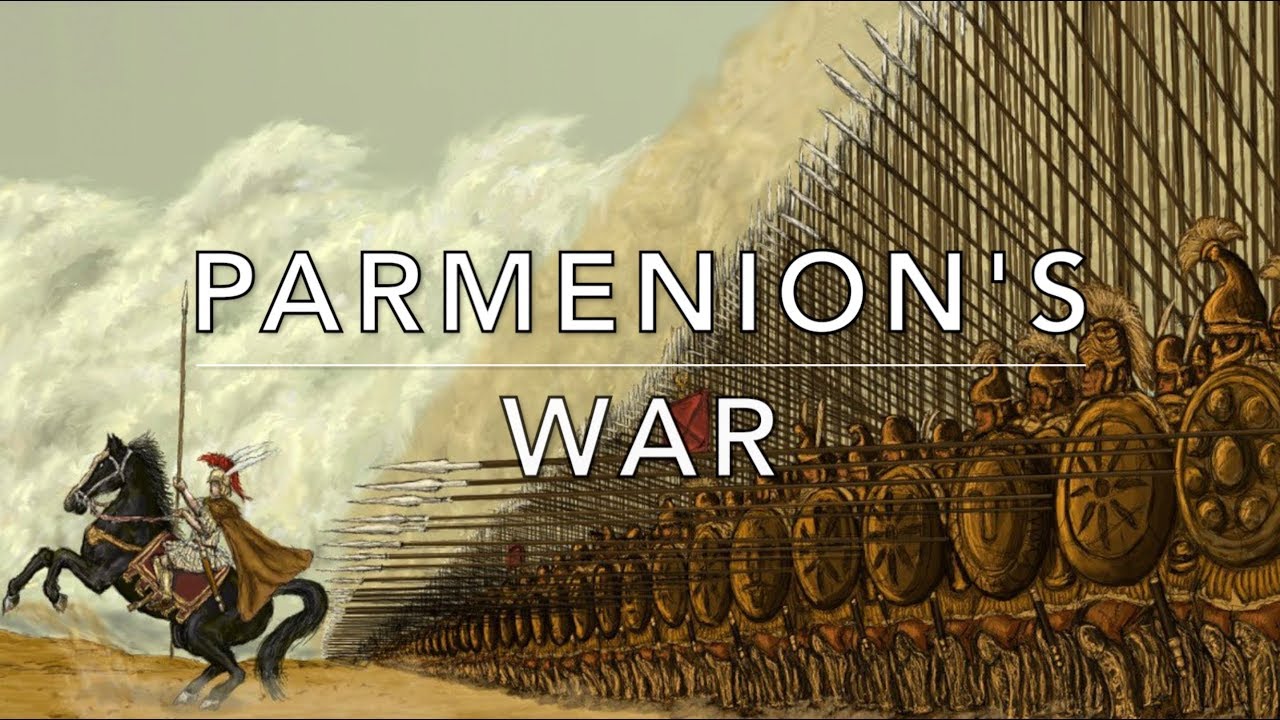
Parmenion's War 400 - 330 BC
video description
Date: 2022-09-10
Related videos




Comments and reviews: 19
Panos
The circle of Alexander the Great was one of those rare moments in history where such a large number of generals and officers of the highest-quality worked under one leader and in the same army - the reason why Alexander the Great managed to beat down the greatest Empire the then world had ever seen plus expand further fighting all sorts of enemies and all types of troops in all types of terrain in countries where Greeks went for the first time. Some Alexander's detractors, claim that it was not him but his generals who did all the work. Fact is though that had it not been Alexander, the generals would not be there to do that work but would fight civil wars in the small locality of the region of Macedonia in North Greece, at best mingling around the rest of Greeks in their wars. It was Alexander who took the Greek army to India and Western China, not Parmenion, or Crateros or Ptolemey.
reply
The circle of Alexander the Great was one of those rare moments in history where such a large number of generals and officers of the highest-quality worked under one leader and in the same army - the reason why Alexander the Great managed to beat down the greatest Empire the then world had ever seen plus expand further fighting all sorts of enemies and all types of troops in all types of terrain in countries where Greeks went for the first time. Some Alexander's detractors, claim that it was not him but his generals who did all the work. Fact is though that had it not been Alexander, the generals would not be there to do that work but would fight civil wars in the small locality of the region of Macedonia in North Greece, at best mingling around the rest of Greeks in their wars. It was Alexander who took the Greek army to India and Western China, not Parmenion, or Crateros or Ptolemey.
reply
John
Oh dear macedonian close formation foot are phalangites not hopolites. Hopolites were armed differently most notably with the Hoplon shield from which they get their name. The Companions were normally used on one flank not both flanks the other flank was often held by the thessalian cavalry. The immortal infantry no longer existed under the late achaemenid they had been replaced with 2 different guard units. The applebearers were the foot gaurds taking the name from the shape of the butspike on the spears used by them. More important were the kinsmen who were a mounted unit ( i think the name says what they were composed of. Indeed the Persian elite were cavalry at this time and the lower classes were skirmishing infantry, this is why the majority of the good close order foot were greek mercenaries and these were indeed mostly hopolites.
reply
Oh dear macedonian close formation foot are phalangites not hopolites. Hopolites were armed differently most notably with the Hoplon shield from which they get their name. The Companions were normally used on one flank not both flanks the other flank was often held by the thessalian cavalry. The immortal infantry no longer existed under the late achaemenid they had been replaced with 2 different guard units. The applebearers were the foot gaurds taking the name from the shape of the butspike on the spears used by them. More important were the kinsmen who were a mounted unit ( i think the name says what they were composed of. Indeed the Persian elite were cavalry at this time and the lower classes were skirmishing infantry, this is why the majority of the good close order foot were greek mercenaries and these were indeed mostly hopolites.
reply
Neal
Are we certain that the term hoplite, a descriptor commonly associated with classical Greece, fully applies to the Greco-Macedonian heavy infantry of Hellenistic Age? Hoplite arms, armor, and fighting style were quite different from those of Alexander's infantry, who fought using the long sarissa rather than the shorter dory of previous centuries. in place of than the hoplon, the characteristic heavy shield of the classical hoplite warrior, Hellenistic troops used a smaller shield, probably because the sarissa often needed both hands. Furthermore, the Greco-Macedonian phalanx was both deeper and looser than its classical counterpart, which prevented the overlapping shield-wall typical of 5th-century BC Greek warfare but compensated with much-increased maneuverability on the battlefield.
reply
Are we certain that the term hoplite, a descriptor commonly associated with classical Greece, fully applies to the Greco-Macedonian heavy infantry of Hellenistic Age? Hoplite arms, armor, and fighting style were quite different from those of Alexander's infantry, who fought using the long sarissa rather than the shorter dory of previous centuries. in place of than the hoplon, the characteristic heavy shield of the classical hoplite warrior, Hellenistic troops used a smaller shield, probably because the sarissa often needed both hands. Furthermore, the Greco-Macedonian phalanx was both deeper and looser than its classical counterpart, which prevented the overlapping shield-wall typical of 5th-century BC Greek warfare but compensated with much-increased maneuverability on the battlefield.
reply
Matthew
The macedonians were phalangites not hoplites. The greek allies and mercenaries, well some of them were armed as hoplites. Some were cavalry, others as peltasts, some slingers. Eitherway the point is the constant drill and training of the phalangites by phillip then alexander was neccessary because the 18 to 20 foot long sarissa was unwieldy and hard to use. It required much discipline to stay together. They were also more tightly packed with small pelte shields compared to the three foot round hoplon used by hoplites. Their spear was the dory about 8 foot long. But great video man. Love em. Keep em up
reply
The macedonians were phalangites not hoplites. The greek allies and mercenaries, well some of them were armed as hoplites. Some were cavalry, others as peltasts, some slingers. Eitherway the point is the constant drill and training of the phalangites by phillip then alexander was neccessary because the 18 to 20 foot long sarissa was unwieldy and hard to use. It required much discipline to stay together. They were also more tightly packed with small pelte shields compared to the three foot round hoplon used by hoplites. Their spear was the dory about 8 foot long. But great video man. Love em. Keep em up
reply
Konstantinos
Parmenion was an old veteran general. He was the only one that was also a general of Phillipos the father of Alexander. He was very respected. He was followed by elite veteran troops fought under Phillipos! They only fought at the battlefield only towards the end of the battle, after the normal troops have fought OR if they were needed to bring the FINAL SOLUTION by defeating a bad ass opponent! When they entered the field a huge wave of enthusiasm raised to the army.
reply
Parmenion was an old veteran general. He was the only one that was also a general of Phillipos the father of Alexander. He was very respected. He was followed by elite veteran troops fought under Phillipos! They only fought at the battlefield only towards the end of the battle, after the normal troops have fought OR if they were needed to bring the FINAL SOLUTION by defeating a bad ass opponent! When they entered the field a huge wave of enthusiasm raised to the army.
reply
Rex
It's almost as if he sacrificed all his rationality, statesmanship, diplomacy and long term planning in favor of being a great general.
Apart from being an excellent military commander, though arguably in command of the most trained, experienced and advanced army of the era, there wasn't much great about him after all.
He could've chosen to return to Persopolis and consolidate his rule in Asia than go around burning and pillaging regions in the East, tiring his armies
reply
It's almost as if he sacrificed all his rationality, statesmanship, diplomacy and long term planning in favor of being a great general.
Apart from being an excellent military commander, though arguably in command of the most trained, experienced and advanced army of the era, there wasn't much great about him after all.
He could've chosen to return to Persopolis and consolidate his rule in Asia than go around burning and pillaging regions in the East, tiring his armies
reply
Konstantinos
Thracians were also a Greek tribe. The famous scientist of antiquity Democritus (the 1st person that understood the molecules and atoms) was from the Greek Thracian city of Abdera. All the Thracian coins have Greek writings and depict Greek gods and Greek mythology characters. It is funny that modern day Bulgarians, which first came in the Balkans at 680 AD about 1000 years after Alexander's era are trying to laughably adopt the Thracian legacy!
reply
Thracians were also a Greek tribe. The famous scientist of antiquity Democritus (the 1st person that understood the molecules and atoms) was from the Greek Thracian city of Abdera. All the Thracian coins have Greek writings and depict Greek gods and Greek mythology characters. It is funny that modern day Bulgarians, which first came in the Balkans at 680 AD about 1000 years after Alexander's era are trying to laughably adopt the Thracian legacy!
reply
Free
there was not a single greek soldier in alexander army. Greeks even allied with persians to get rid of him. His army was mainly Macedonian with Epirotes and Illyrians. Now im waiting for that smart greek internet histarion reply withe standart BS that alexander unified greeks and made they pay tribute and he was greek because he learned greek at school.
reply
there was not a single greek soldier in alexander army. Greeks even allied with persians to get rid of him. His army was mainly Macedonian with Epirotes and Illyrians. Now im waiting for that smart greek internet histarion reply withe standart BS that alexander unified greeks and made they pay tribute and he was greek because he learned greek at school.
reply
blagoja
Macedonians, Spartans, Thracians and other nations who came into contact with greeks/Helots used them only as slaves and thought of greeks/Helots as something that is lower then a Macedonian or a Spartan, so you should make a difference between all those ethnicites who share nothing with greek/Helot except for using them as slaves.
reply
Macedonians, Spartans, Thracians and other nations who came into contact with greeks/Helots used them only as slaves and thought of greeks/Helots as something that is lower then a Macedonian or a Spartan, so you should make a difference between all those ethnicites who share nothing with greek/Helot except for using them as slaves.
reply
DT
Dude you've been watching too much Oliver Stone films. How do you know he greeted them like brothers? Where you actually there? No one knows what happened there and who was actually betraying who. When you are referring to historical events try to be more objective and don't try to push people to what suits you better.
reply
Dude you've been watching too much Oliver Stone films. How do you know he greeted them like brothers? Where you actually there? No one knows what happened there and who was actually betraying who. When you are referring to historical events try to be more objective and don't try to push people to what suits you better.
reply
Mati
The Persians had roughly the same number of men as the Greeks at Gaugamela. At the very best they probably had around ten thousand more troops. No modern historian accepts the fantastic numbers the Greek sources tell us.
reply
The Persians had roughly the same number of men as the Greeks at Gaugamela. At the very best they probably had around ten thousand more troops. No modern historian accepts the fantastic numbers the Greek sources tell us.
reply
Nikzad
gaugamela was not the last battle! Aria barzan's last stand near persepolis witch was very much like the battle of thermopylae. just saying, though its not intresting for the westerns
reply
gaugamela was not the last battle! Aria barzan's last stand near persepolis witch was very much like the battle of thermopylae. just saying, though its not intresting for the westerns
reply
Ha. Ko.
A message to the southern slavs of Vardarska Banovina who call themselves Macedonians stealing Greek history: The whole world is laughing at you clowns.
reply
A message to the southern slavs of Vardarska Banovina who call themselves Macedonians stealing Greek history: The whole world is laughing at you clowns.
reply
james
Alexander the great against the weakest Iranian king ever
look to Chinese history for largest empire or a Indian empire
Western History is to bias
reply
Alexander the great against the weakest Iranian king ever
look to Chinese history for largest empire or a Indian empire
Western History is to bias
reply
Crafty
Nice video but with some unnecessary errors to be honest: -) Like it says in the map Ionian cities would be located on the Western Agean
reply
Nice video but with some unnecessary errors to be honest: -) Like it says in the map Ionian cities would be located on the Western Agean
reply
ilejovcevski79
And that's how megalomaniacs get recorded in history. on top of the corpses of their most capable and trusted associates: '(
reply
And that's how megalomaniacs get recorded in history. on top of the corpses of their most capable and trusted associates: '(
reply
Indrek
7. SEVEN
THE MARK OF THE UNDEAD
THE MARK OF EVIL
YE FOOLS >BLIND TO THE UNDEAD ARE SWINE AND CATTLE aAWAITING YOUR DOOM
reply
7. SEVEN
THE MARK OF THE UNDEAD
THE MARK OF EVIL
YE FOOLS >BLIND TO THE UNDEAD ARE SWINE AND CATTLE aAWAITING YOUR DOOM
reply
Miguel
Imagine what went through Alexander's head. Greek customs were weird. I think imprisioning Philotas could have worked better.
reply
Imagine what went through Alexander's head. Greek customs were weird. I think imprisioning Philotas could have worked better.
reply
Cry
Exceptionally long spears are a good thing, because everyone knows, without adequate penetration, you're just wasting your time.
reply
Exceptionally long spears are a good thing, because everyone knows, without adequate penetration, you're just wasting your time.
reply
Add a review, comment
Other channel videos