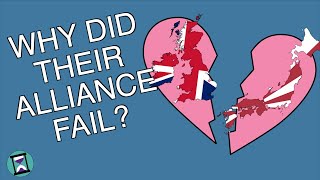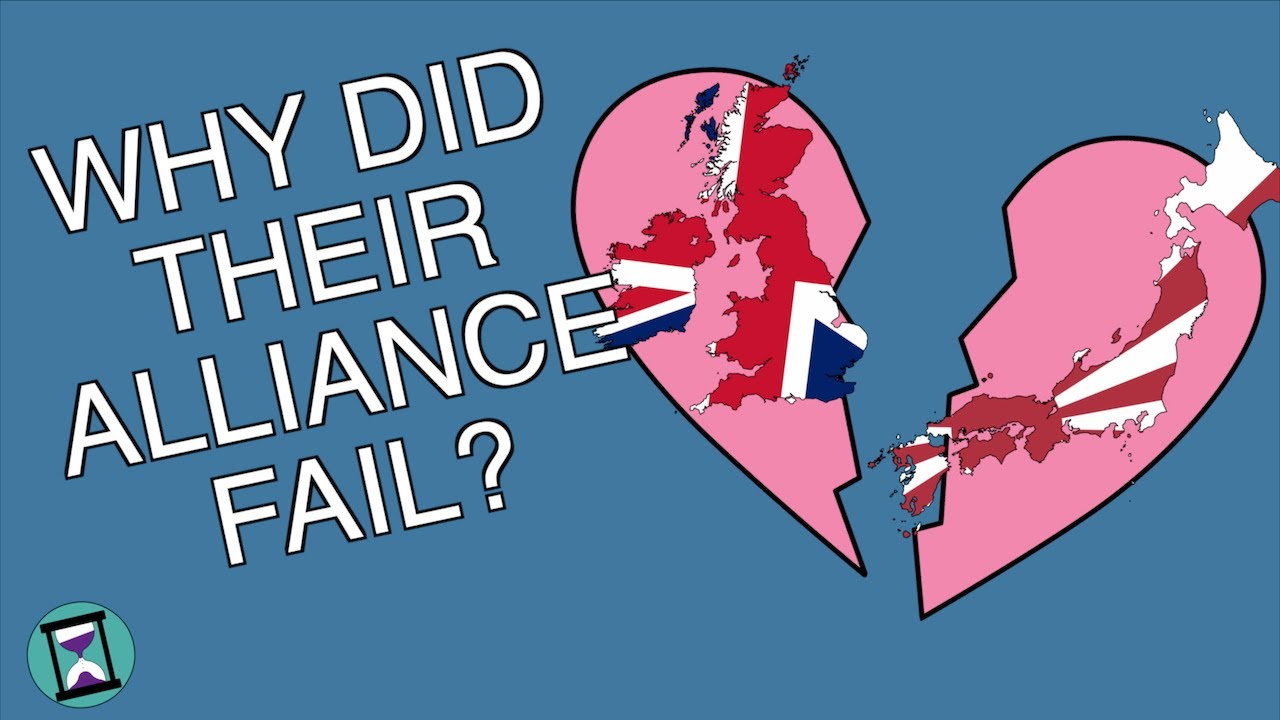
Why did the Anglo-Japanese Alliance Fail?
video description
Date: 2023-06-30
Related videos




Comments and reviews: 20
education
err. I see you've soft-balled the single most important factor on why it was dropped: The USA. They didn't just put pressure they made it a condition that there would be no deal of any kind with the US (including the Washington Treaty and the Four Power Pacific Treaty) if the British Commonwealth kept the Alliance with Japan. Far from distrusting Japan, the Canadian and Australian Prime Ministers at the time (Arthur Meighan and Bill Hughes) strongly came out in favor of maintaining the treaty. Hughes in particular was furious with the US' shenanigans believing that it would cause instability and future conflict in their area of the Pacific and denounced them publicly for it (and he was right. US history likes to gloss over this, but the US' hostile stance on Japan for decades is the biggest factor in driving them to the Axis.
reply
err. I see you've soft-balled the single most important factor on why it was dropped: The USA. They didn't just put pressure they made it a condition that there would be no deal of any kind with the US (including the Washington Treaty and the Four Power Pacific Treaty) if the British Commonwealth kept the Alliance with Japan. Far from distrusting Japan, the Canadian and Australian Prime Ministers at the time (Arthur Meighan and Bill Hughes) strongly came out in favor of maintaining the treaty. Hughes in particular was furious with the US' shenanigans believing that it would cause instability and future conflict in their area of the Pacific and denounced them publicly for it (and he was right. US history likes to gloss over this, but the US' hostile stance on Japan for decades is the biggest factor in driving them to the Axis.
reply
Michail
So, let me get this straight. Japan dissolved its mutually beneficial alliance with Britain because Britain didn't grant the Japanese the status of human and allied itself with Germany after some years which they did (see them as humans? And Britain was the non-racist ones in WWII? I believe it is time to shed this nativity that WWII was fought between good and evil nations with the good people winning and rather see it as the business as usual war that it was. Where the empires, states and nations just wanted to gain as much territory as they wanted to enslave the populus. And to do that they followed whatever ideology suited them.
reply
So, let me get this straight. Japan dissolved its mutually beneficial alliance with Britain because Britain didn't grant the Japanese the status of human and allied itself with Germany after some years which they did (see them as humans? And Britain was the non-racist ones in WWII? I believe it is time to shed this nativity that WWII was fought between good and evil nations with the good people winning and rather see it as the business as usual war that it was. Where the empires, states and nations just wanted to gain as much territory as they wanted to enslave the populus. And to do that they followed whatever ideology suited them.
reply
MM2
I've gotten a general sense of reading/watching different things that another aspect of the break in relationship was that the Japanese were slowly turning into the homicidal fascist a holes we all know and love from WW2 fame, and the Brits were getting very uncomfortable with helping them/seeing how fast their tech and goals were advancing. Plus, Japan was never going to get the overseas colonial empire it really wanted unless it was prepared to shoot one of the existing member (or members, plural) of that club out of the way.
reply
I've gotten a general sense of reading/watching different things that another aspect of the break in relationship was that the Japanese were slowly turning into the homicidal fascist a holes we all know and love from WW2 fame, and the Brits were getting very uncomfortable with helping them/seeing how fast their tech and goals were advancing. Plus, Japan was never going to get the overseas colonial empire it really wanted unless it was prepared to shoot one of the existing member (or members, plural) of that club out of the way.
reply
Holy
Japan took over the islands during great war for itself, not for goodwill for Britain. Not like much battle was gonna be fought in those small island theatres anyways. In the Versailles conference it turned out the right move for Japan as if it had become a signatory, they would have quite likely would have had to give up those islands to Britain who loves making trade and naval hubs out of small islands.
edit: I stand slightly corrected, the battle for Tsingtao island was major.
reply
Japan took over the islands during great war for itself, not for goodwill for Britain. Not like much battle was gonna be fought in those small island theatres anyways. In the Versailles conference it turned out the right move for Japan as if it had become a signatory, they would have quite likely would have had to give up those islands to Britain who loves making trade and naval hubs out of small islands.
edit: I stand slightly corrected, the battle for Tsingtao island was major.
reply
mattharcla
There was also that bit about Britain abolishing slavery, abhorring genocide, and gradually getting around to agreeing that having an empire wasn't cool, and expanding one being in bad taste. All things the Empire of Japan was pretty keen on. Japan had not had a Lanfranc, a Granville Sharpe, nor a Gladstone. Or if they had, they'd killed them. Timing is everything.
reply
There was also that bit about Britain abolishing slavery, abhorring genocide, and gradually getting around to agreeing that having an empire wasn't cool, and expanding one being in bad taste. All things the Empire of Japan was pretty keen on. Japan had not had a Lanfranc, a Granville Sharpe, nor a Gladstone. Or if they had, they'd killed them. Timing is everything.
reply
Veridian
Western Powers pushed Japan to WWII. But history classes taught me differently. becoz. its made by the winners. Glad the Internet exist. Western Powers never want to treat Asian nations as equals. But once the Japanese started to become a growing power that can go on par with Western nations, they start to view Japan as a problem rather than possible ally.
reply
Western Powers pushed Japan to WWII. But history classes taught me differently. becoz. its made by the winners. Glad the Internet exist. Western Powers never want to treat Asian nations as equals. But once the Japanese started to become a growing power that can go on par with Western nations, they start to view Japan as a problem rather than possible ally.
reply
XXXTENTAClON
3: 00 Australia was a big advocate for its renewal, as they did not believe they could rely on the United States to come to their aid in any potential conflict
Canada said it couldn t agree because Japan was becoming more hostile with the USA, and in the event of war it knew that it would be screwed in comparison to everyone else declaring war
reply
3: 00 Australia was a big advocate for its renewal, as they did not believe they could rely on the United States to come to their aid in any potential conflict
Canada said it couldn t agree because Japan was becoming more hostile with the USA, and in the event of war it knew that it would be screwed in comparison to everyone else declaring war
reply
history_matters
I'm American, so hearing that my nation scared the shit out of major powers makes me happy, but the fact that the reason the alliance fell apart was literally RACISM kinda shocks me. I didn't realize that it could have that much influence in politics, especially in those circumsatances! Great video.
reply
I'm American, so hearing that my nation scared the shit out of major powers makes me happy, but the fact that the reason the alliance fell apart was literally RACISM kinda shocks me. I didn't realize that it could have that much influence in politics, especially in those circumsatances! Great video.
reply
Klep
If the Anglo-Japanese alliance still existed up until WW2 then Pearl Harbor wouldn't have happened, right? Because Japan would've been on the Alliance's side, right? Which would mean that Hiroshima wouldn't have happened, right? Or would we have just kicked the can down the road with regards to Hiroshima?
reply
If the Anglo-Japanese alliance still existed up until WW2 then Pearl Harbor wouldn't have happened, right? Because Japan would've been on the Alliance's side, right? Which would mean that Hiroshima wouldn't have happened, right? Or would we have just kicked the can down the road with regards to Hiroshima?
reply
Namath
This is a real interesting topic, and something that's rarely brought up or mentioned (as well as a lot of other obscure but important events.
It sucks that most historical books barely mention the alliance considering how important it was for history (as well as the events it helped cause.
reply
This is a real interesting topic, and something that's rarely brought up or mentioned (as well as a lot of other obscure but important events.
It sucks that most historical books barely mention the alliance considering how important it was for history (as well as the events it helped cause.
reply
R.
2: 29 - 2: 45 So basically, Britain told Japan: Yeah, we're friends, but equals, no, we British are clearly better.
And Japan responded by telling Britain, We'll see how better you are, when I'm helping the other side against you in the next World War! . And then they lost 25 years later.
reply
2: 29 - 2: 45 So basically, Britain told Japan: Yeah, we're friends, but equals, no, we British are clearly better.
And Japan responded by telling Britain, We'll see how better you are, when I'm helping the other side against you in the next World War! . And then they lost 25 years later.
reply
education
To be honest, that was diplomacy back then, and, in a way, right now. And in the case of Japan, you can be sure you can trust them as far as you can throw them, in the sense that they will be your ally as long as they can get something in exchange. Like anyone else.
reply
To be honest, that was diplomacy back then, and, in a way, right now. And in the case of Japan, you can be sure you can trust them as far as you can throw them, in the sense that they will be your ally as long as they can get something in exchange. Like anyone else.
reply
Jeppe
Its interesting to see how certain events play out down the line. Trump cheered on British leaving of the EU. Making the EU and GB weaker is great for America obviously and now it had a much better position vs Great Britain. Japan mightve been a better ally at this stage
reply
Its interesting to see how certain events play out down the line. Trump cheered on British leaving of the EU. Making the EU and GB weaker is great for America obviously and now it had a much better position vs Great Britain. Japan mightve been a better ally at this stage
reply
masterchinese28
I went scuba diving in Yap (Fed States of Micronesia) several years ago. In one dive we saw the telegraph cable at the bottom of the bay that was installed by the German's during their brief occupation of the island before it was handed over to Japan.
reply
I went scuba diving in Yap (Fed States of Micronesia) several years ago. In one dive we saw the telegraph cable at the bottom of the bay that was installed by the German's during their brief occupation of the island before it was handed over to Japan.
reply
Malint
On a sidenote there was a secret clause to the original treaty between Britain and Japan about the prohibition of fascism in either nation, authored by Lord James Bisonette. Eventually Japan wouldn't oblige because of boogly woogly.
reply
On a sidenote there was a secret clause to the original treaty between Britain and Japan about the prohibition of fascism in either nation, authored by Lord James Bisonette. Eventually Japan wouldn't oblige because of boogly woogly.
reply
ondank
Japan: Racial Equality clause?
Britain: Erm. no?
Japan: How about you Germany and Italy
Germany: Bro. do you even know who I am? . I mean, sure. totally. crosses fingers behind back lemme sign that.
reply
Japan: Racial Equality clause?
Britain: Erm. no?
Japan: How about you Germany and Italy
Germany: Bro. do you even know who I am? . I mean, sure. totally. crosses fingers behind back lemme sign that.
reply
mapping
Im torn on this. On the one hand japan is a more reliable and equal ally than america. On the other hand, the Japanese empire was led by a bunch of fools whom caused severe problems for their allies in OTL.
reply
Im torn on this. On the one hand japan is a more reliable and equal ally than america. On the other hand, the Japanese empire was led by a bunch of fools whom caused severe problems for their allies in OTL.
reply
Ghastly
The Imperial Japanese wanting an equality clause and the refusal of implementing that being a reason why broke down their alliance is incredibly ironic considering what they will do around 20 years later.
reply
The Imperial Japanese wanting an equality clause and the refusal of implementing that being a reason why broke down their alliance is incredibly ironic considering what they will do around 20 years later.
reply
NinjaMan47
Let's not pretend the British ever considered it an alliance of equals. Japan was forever the junior partner and would relish the chance to turn the table on the British during the Second World War.
reply
Let's not pretend the British ever considered it an alliance of equals. Japan was forever the junior partner and would relish the chance to turn the table on the British during the Second World War.
reply
NIDELLANEUM
I wonder how could WW2 have looked like, if Britain and Japan were still allies. Who was going to be part of the AXIS if Japan wasn't? Would the US have joined, if no enemy Japan = no Pearl Harbor?
reply
I wonder how could WW2 have looked like, if Britain and Japan were still allies. Who was going to be part of the AXIS if Japan wasn't? Would the US have joined, if no enemy Japan = no Pearl Harbor?
reply
Add a review, comment
Other channel videos