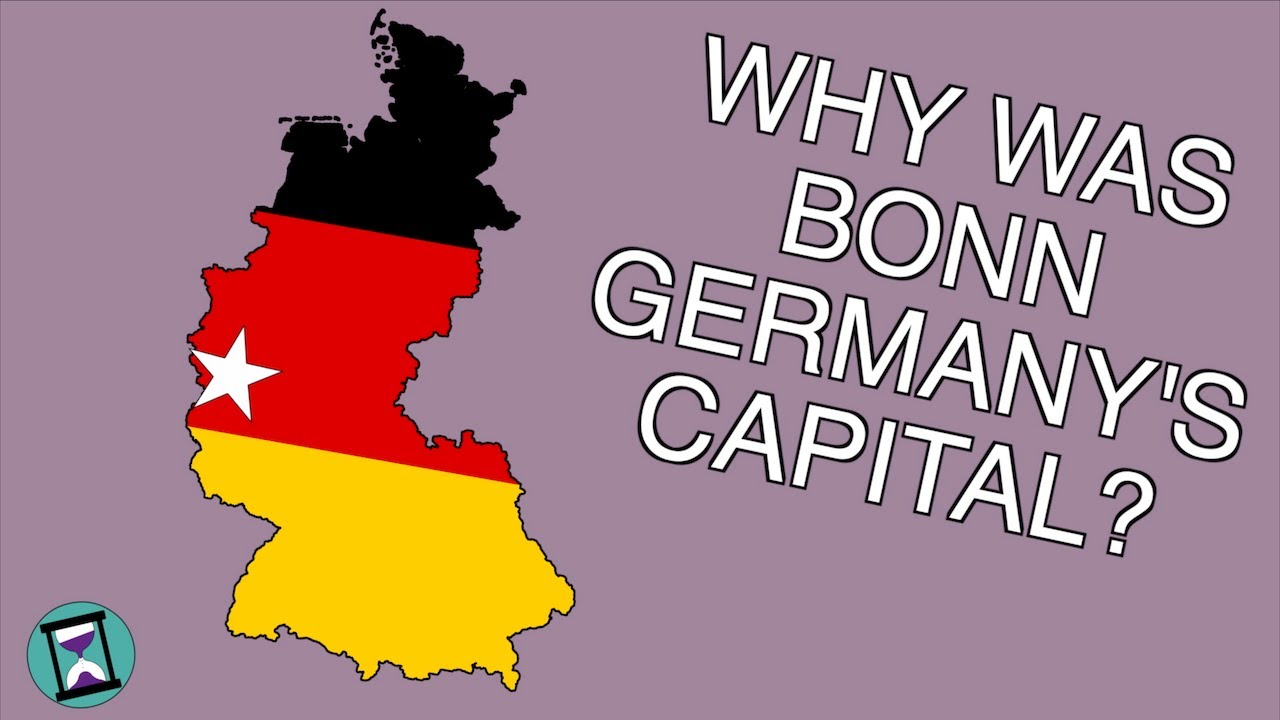
Why was Bonn the Capital of West Germany?
video description
There was already a parliament building under construction in Frankfurt when deciding for the new capital, since the congressmen were sure that the Capital would be Frankfurt. They were furious when they heared it's gonna be Bonn. Today the building is the headquarters of the German Radio Station Hessischer Rundfunk which basically means Broadcast Hessen or Radio Hessen (Hessen is a federal state in center germany.
Date: 2023-06-22
Related videos




Comments and reviews: 19
Simon
It's interesting that you mention that the BRD (i, e West Germany) didn't want to give any excuse to the DDR (East Germany) to split away permanently and declare itself the one true Germany, because the DDR did the same thing - it was official state policy that the DDR was the whole of post-war Germany, but the territories outside of the DDR borders were just occupied by the West.
One of the stated aims of the DDR (aside from creating a Socialist utopia of course) was therefore to re-unify Germany under the DDR flag.
This caused a lot of problems when the BRD tried to establish friendlier and later normalise diplomatic relations with the DDR. Around the 1980s, however, it became clear any unification under the DDR was a pipe dream, so the policy was quietly dropped and the DDR stopped referring to itself as the one true Germany. The DDR Museum in Berlin goes into this in more detail.
It's a bit like how the Irish people on the island of Ireland refer to Northern Ireland as the North, as if it was still part of a pre-Partition united Ireland, even though Northern Ireland has been part of a different country - the UK - since Partition in 1921.
reply
It's interesting that you mention that the BRD (i, e West Germany) didn't want to give any excuse to the DDR (East Germany) to split away permanently and declare itself the one true Germany, because the DDR did the same thing - it was official state policy that the DDR was the whole of post-war Germany, but the territories outside of the DDR borders were just occupied by the West.
One of the stated aims of the DDR (aside from creating a Socialist utopia of course) was therefore to re-unify Germany under the DDR flag.
This caused a lot of problems when the BRD tried to establish friendlier and later normalise diplomatic relations with the DDR. Around the 1980s, however, it became clear any unification under the DDR was a pipe dream, so the policy was quietly dropped and the DDR stopped referring to itself as the one true Germany. The DDR Museum in Berlin goes into this in more detail.
It's a bit like how the Irish people on the island of Ireland refer to Northern Ireland as the North, as if it was still part of a pre-Partition united Ireland, even though Northern Ireland has been part of a different country - the UK - since Partition in 1921.
reply
TheMasterTeddy
The true reason why Bonn became the capital instead of Frankfurt (which was a candidate due to the 1848/1849 revolution and the Frankfurt Paulskirche as the all-German parliament at that time) was because it was believed that the German division was only temporary. It was certain that if Frankfurt became the new capital, the parliament would be left there even after reunification. However, Bonn was a city without prestige. The representatives would abandon Bonn and agree to the move to Berlin. This happened in a heated debate and a close vote in June 1991 in the Capital City Decision. If Frankfurt had been the capital of West Germany, it would still be the capital of an united Germany today. Adenauer planned with foresight. Other considerations, such as the strategically secure location behind the Rhine in the event of a third world war, also played a role. The proximity to Adenauer's residence was also a factor.
reply
The true reason why Bonn became the capital instead of Frankfurt (which was a candidate due to the 1848/1849 revolution and the Frankfurt Paulskirche as the all-German parliament at that time) was because it was believed that the German division was only temporary. It was certain that if Frankfurt became the new capital, the parliament would be left there even after reunification. However, Bonn was a city without prestige. The representatives would abandon Bonn and agree to the move to Berlin. This happened in a heated debate and a close vote in June 1991 in the Capital City Decision. If Frankfurt had been the capital of West Germany, it would still be the capital of an united Germany today. Adenauer planned with foresight. Other considerations, such as the strategically secure location behind the Rhine in the event of a third world war, also played a role. The proximity to Adenauer's residence was also a factor.
reply
MaCo1981
You made some errors. First Kurt Schumacher died in 1952 and was still allive when the parliamentary council voted with 33-29 for Bonn and against Frankfurt in May 1949 Second Adenaur was not Federal Chancellor at this moment. He was then the Chairman of the Parliamentary Council and just later Chancellor after the first Elections. Third as a native of Frankfurt/M i regret that you missed to mention that Frankfurts strongest argument as capital was his historical significance as the Place of Election and Coronation of German Emperors ovrr centuries and ass the location of the first national assembly in 1848/49. Fourth Bonn is still our Semi-Capital until now because a lot of Federal Departments and Agencies with many employees are still working from Bonn because just very few were eager to settle down in Berlin.
reply
You made some errors. First Kurt Schumacher died in 1952 and was still allive when the parliamentary council voted with 33-29 for Bonn and against Frankfurt in May 1949 Second Adenaur was not Federal Chancellor at this moment. He was then the Chairman of the Parliamentary Council and just later Chancellor after the first Elections. Third as a native of Frankfurt/M i regret that you missed to mention that Frankfurts strongest argument as capital was his historical significance as the Place of Election and Coronation of German Emperors ovrr centuries and ass the location of the first national assembly in 1848/49. Fourth Bonn is still our Semi-Capital until now because a lot of Federal Departments and Agencies with many employees are still working from Bonn because just very few were eager to settle down in Berlin.
reply
kartoffelman111
Ah. how many of your videos I've watched during my studies in dear little Bonn. This makes me all nostalgic for the good old times!
It was a weird city to pick for spending 7 years in but it grew on me quite easily. It's got some 300. 000 inhabitants now but feels like a cute, smallish town with lots of greenery and a wonderful city centre. Besides, the university is in a 19th cty palace with a large garden in front of it, certainly a pretty place. Overall a great and underrated place to visit when you're ever in Germany (and it's a 30-minute drive away from Cologne, always an argument.
reply
Ah. how many of your videos I've watched during my studies in dear little Bonn. This makes me all nostalgic for the good old times!
It was a weird city to pick for spending 7 years in but it grew on me quite easily. It's got some 300. 000 inhabitants now but feels like a cute, smallish town with lots of greenery and a wonderful city centre. Besides, the university is in a 19th cty palace with a large garden in front of it, certainly a pretty place. Overall a great and underrated place to visit when you're ever in Germany (and it's a 30-minute drive away from Cologne, always an argument.
reply
mehmetalipasa
I love your videos but, this has some inaccuracies.
Bonn was not the capital of Western Germany, it was the seat of the government.
West Germany always claimed to be the rightful successor of the German Empire, as such Berlin remain the capital, but the government would have to choose a location to run its business, because obviously it wasn t an option to be in Berlin.
Funnily enough, West Berlin wasn t an official Part of West Germany, it was associated.
Furthermore, Germany officially claimed its territories east to the Oder River until reunification in 1990.
reply
I love your videos but, this has some inaccuracies.
Bonn was not the capital of Western Germany, it was the seat of the government.
West Germany always claimed to be the rightful successor of the German Empire, as such Berlin remain the capital, but the government would have to choose a location to run its business, because obviously it wasn t an option to be in Berlin.
Funnily enough, West Berlin wasn t an official Part of West Germany, it was associated.
Furthermore, Germany officially claimed its territories east to the Oder River until reunification in 1990.
reply
phiwemu
I think you forgot to mention the military/ tactical argument of why Bonn was chosen. (I remember my history teacher mentioning that from a military perspective Bonn made most sense)
Since in the case of a Soviet invasion - the permanent damokles sword during the cold war - it was expected to first stop the Warsaw pact troops at the Rhine. Therfore the capital should be west of this natural line of defense. Moreover the proximity of the Rhineland mountains (also west of the Rhine) offered an additional security for the government to retreat to in case of an invasion.
reply
I think you forgot to mention the military/ tactical argument of why Bonn was chosen. (I remember my history teacher mentioning that from a military perspective Bonn made most sense)
Since in the case of a Soviet invasion - the permanent damokles sword during the cold war - it was expected to first stop the Warsaw pact troops at the Rhine. Therfore the capital should be west of this natural line of defense. Moreover the proximity of the Rhineland mountains (also west of the Rhine) offered an additional security for the government to retreat to in case of an invasion.
reply
Guilherme
One interisting fact of Bonn is the city was very far from the eastern border and will take some time to reach it in case of and invasion from the east( It was common Cold War though that time. I don't know if they had this in mind when moved too, but had it's capital moved to interior is a good point and the city can grow by the passing years since politician live there.
Great video! I allways wondering if the capital of East and West Germany was trully Berlin, even the city making part of the east. Thanks for answering me!
reply
One interisting fact of Bonn is the city was very far from the eastern border and will take some time to reach it in case of and invasion from the east( It was common Cold War though that time. I don't know if they had this in mind when moved too, but had it's capital moved to interior is a good point and the city can grow by the passing years since politician live there.
Great video! I allways wondering if the capital of East and West Germany was trully Berlin, even the city making part of the east. Thanks for answering me!
reply
Edenjung
Well they moved to a degree.
Yes most ministires now are in Berlin, but some are still in Bonn.
Our defense ministry is still in Bonn.
Our food and agriculture ministry, the Federal Ministry for Economic Cooperation and Development, the Federal Ministry for the Environment, Nature Conservation, Nuclear Safety and Consumer Protection,
The ministry of health and the Federal Ministry of Education and Research are still in Bonn.
So yeah not everything moved.
reply
Well they moved to a degree.
Yes most ministires now are in Berlin, but some are still in Bonn.
Our defense ministry is still in Bonn.
Our food and agriculture ministry, the Federal Ministry for Economic Cooperation and Development, the Federal Ministry for the Environment, Nature Conservation, Nuclear Safety and Consumer Protection,
The ministry of health and the Federal Ministry of Education and Research are still in Bonn.
So yeah not everything moved.
reply
ceaabe
Berlin was a ruined city 1991 and today still is. The city only can survive because the other regions are paying for it. So Berlin can do new communism and the richer regions have to pay for it. Berlin can pay things this way for people, which no other region will pay, like child care and recreated some holidays from the communist era like International woman's day. But beside green communist phantasies nothing works there.
reply
Berlin was a ruined city 1991 and today still is. The city only can survive because the other regions are paying for it. So Berlin can do new communism and the richer regions have to pay for it. Berlin can pay things this way for people, which no other region will pay, like child care and recreated some holidays from the communist era like International woman's day. But beside green communist phantasies nothing works there.
reply
Rondaru
When Berlin became the capital of reunified Germany, both the Government and the Bundestag - which is Germany's primary parliament comparable to the US House of Representatives - moved there, but the Bundesrat - the second parliament comparable to the US Senate - stayed in Bonn until 2000. Meanwhile Germany's judicative branch, the Bundesverfassungsgericht, still resides in the southwestern city of Karlsruhe.
reply
When Berlin became the capital of reunified Germany, both the Government and the Bundestag - which is Germany's primary parliament comparable to the US House of Representatives - moved there, but the Bundesrat - the second parliament comparable to the US Senate - stayed in Bonn until 2000. Meanwhile Germany's judicative branch, the Bundesverfassungsgericht, still resides in the southwestern city of Karlsruhe.
reply
IPYES
Short answer?
Haribo
They wanted to secure the legendary gummi bears. So they decided to chose Bonn as their new capital city. It all made sense. After all Haribos are the most valuable good from Germany.
You may come to the conclusion it is all made up. But here is the thing, it's actually true. It was verified by Jonathan Frakes.
It is a true story, ask Barney Stinson.
All hail Haribo
reply
Short answer?
Haribo
They wanted to secure the legendary gummi bears. So they decided to chose Bonn as their new capital city. It all made sense. After all Haribos are the most valuable good from Germany.
You may come to the conclusion it is all made up. But here is the thing, it's actually true. It was verified by Jonathan Frakes.
It is a true story, ask Barney Stinson.
All hail Haribo
reply
Stefan
In 1949, the Parliamentary Council (the West German constituent assembly between 1945-1949) even held a vote on which city should become the capital of West Germany. Shortly before, it had even been a close call between Bonn and Frankfurt. In the secret ballot, 33 of 62 votes went to Bonn and 29 to Frankfurt, and thus Bonn became the capital of West Germany, much to Adenauer's delight.
reply
In 1949, the Parliamentary Council (the West German constituent assembly between 1945-1949) even held a vote on which city should become the capital of West Germany. Shortly before, it had even been a close call between Bonn and Frankfurt. In the secret ballot, 33 of 62 votes went to Bonn and 29 to Frankfurt, and thus Bonn became the capital of West Germany, much to Adenauer's delight.
reply
Lodrik18
It annoys me to remember that they took the effort to move some ministries but failed to create a new and proper constitution. This was specified in the crossover constitution from 1949 (it wasnt meant to be permanent. They created new work that wasnt needed (new capital) and ignored the work they had to do. (The intention was to create a new constitution after the reunion)
reply
It annoys me to remember that they took the effort to move some ministries but failed to create a new and proper constitution. This was specified in the crossover constitution from 1949 (it wasnt meant to be permanent. They created new work that wasnt needed (new capital) and ignored the work they had to do. (The intention was to create a new constitution after the reunion)
reply
Ryan
I love these videos but I'm so tired of them all ending with, James Bissenett, Kelley Moneymaker. - I don't mean to be rude but it's a bit annoying, seriously. I would love it if you could just change up the order of the Patrons a each time. Possible? I hope James Bissenett doesn't get too pissed at the suggestion.
reply
I love these videos but I'm so tired of them all ending with, James Bissenett, Kelley Moneymaker. - I don't mean to be rude but it's a bit annoying, seriously. I would love it if you could just change up the order of the Patrons a each time. Possible? I hope James Bissenett doesn't get too pissed at the suggestion.
reply
Dan
Knowing a few Germans who were born in the West, they'd sooner have the Capital in Bonn rather than a Capital surrounded by 'Easty Beasties'. Disclaimer time: these Germans were at various BAOR bases, including Sennelager (must have been the largest right, and migrated to the UK once the MOD closed the bases.
reply
Knowing a few Germans who were born in the West, they'd sooner have the Capital in Bonn rather than a Capital surrounded by 'Easty Beasties'. Disclaimer time: these Germans were at various BAOR bases, including Sennelager (must have been the largest right, and migrated to the UK once the MOD closed the bases.
reply
Nikioko
After its defeat in WWII, Germany was split into a lot more than just two parts. Even after some unification, there were at least three German states during the Cold War: The Federal Republic of Germany (aka West Germany, the German Democratic Republic (aka East Germany) and the Republic of Austria.
reply
After its defeat in WWII, Germany was split into a lot more than just two parts. Even after some unification, there were at least three German states during the Cold War: The Federal Republic of Germany (aka West Germany, the German Democratic Republic (aka East Germany) and the Republic of Austria.
reply
Nikioko
Actually, Bonn was chosen because Adenauer wanted Bonn. The alternative would have been Frankfurt. And Berlin wasn't capital of East Germany, only East Berlin. Which was a violation of the status of the four sector city of Berlin. So, legally, East Germany had its capital outside its own territory.
reply
Actually, Bonn was chosen because Adenauer wanted Bonn. The alternative would have been Frankfurt. And Berlin wasn't capital of East Germany, only East Berlin. Which was a violation of the status of the four sector city of Berlin. So, legally, East Germany had its capital outside its own territory.
reply
Sandiges
The city of Frankfurt probably tried to push there historic claims of being somewhat of a capital city of Germany in the past. Mostly because of the revolution of 1848, were was the seat of the first democratically elected German national parliament, which was coming together in the Paulskirche.
reply
The city of Frankfurt probably tried to push there historic claims of being somewhat of a capital city of Germany in the past. Mostly because of the revolution of 1848, were was the seat of the first democratically elected German national parliament, which was coming together in the Paulskirche.
reply
aix
Somwhat shows that politicians in the 1950s where somewhat more ralistic. They looked at the cost/benefit ratio of moving the capital, and shelfed the plan. In the 1990 the mood had already shifted to We do what we want, and don't care how much of the taxpayers money we senselessly burn of today.
reply
Somwhat shows that politicians in the 1950s where somewhat more ralistic. They looked at the cost/benefit ratio of moving the capital, and shelfed the plan. In the 1990 the mood had already shifted to We do what we want, and don't care how much of the taxpayers money we senselessly burn of today.
reply
Add a review, comment
Other channel videos