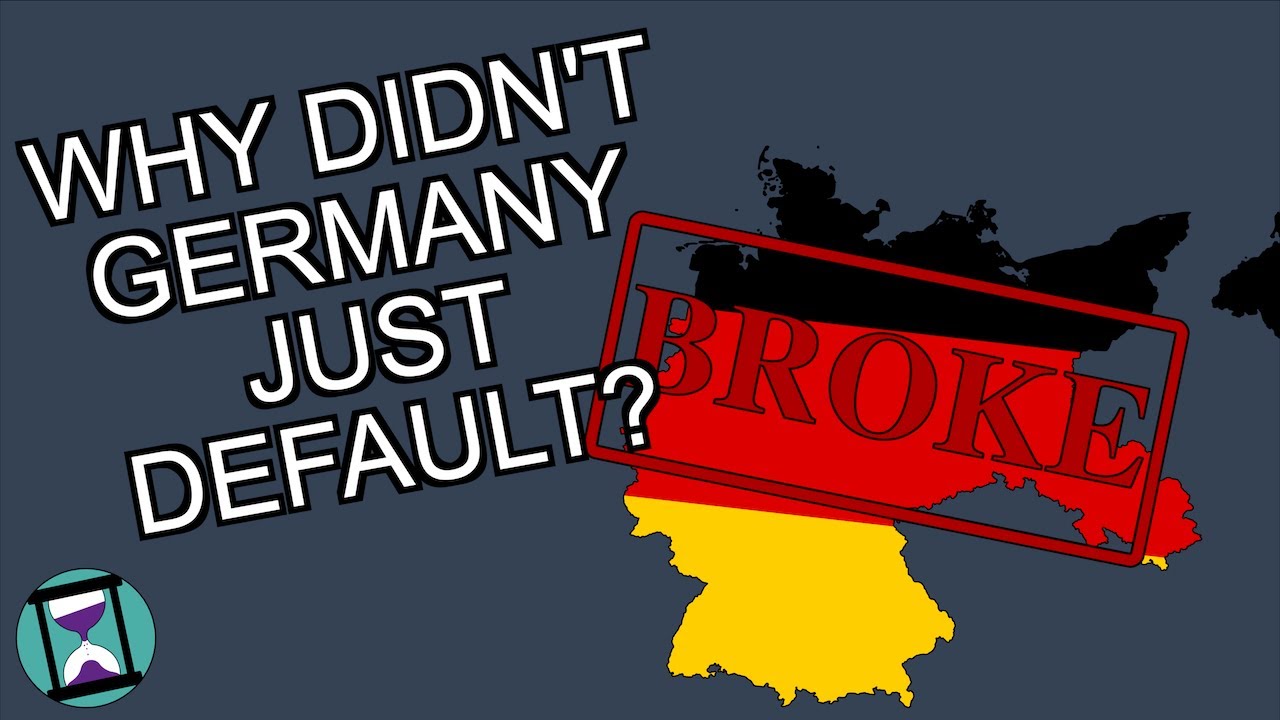
Why didn't Weimar Germany just default (Short Animated Documentary)
video description
Date: 2025-02-27
Related videos



Comments and reviews: 20
venkelos6996
I'm going to sound dumb, but you'd think that the Weimar government might just call the Allies' bluff, and what that means is see what they were really prepared to do. Germany wasn't the only country on hard times, after juat having fought a World War, and the Great Depression didn't exactly help. I can't imagine any of the Ally countries being willing to allow one of them to take over Germany, and thus gain territory, resources, and taxable citizens, nor any of them actually wanting to step up, and assume responsibility for the administration of Germany, considering how they were already doing. In some ways, Germany wasn't wrong; it was nigh impossible what was being asked of them, considering their post-war state, and it would seem like no one would have had the stomach to mobilize, again, to force Germany's compliance, and risk riots, cost, and consternation from their allies, who also wanted their share of reparations owed. It might also seem like some tired Weimar government members might even welcome outside meddling. Either they would get it right, and things might even improve, or they'd bewak themselves, and show everyone else how tall the order being asked was. I get that they'd still want it to be Germans governing Germany, instead of just being some French puppet state, but it almost might have been neat to see them dare another government to deal with things, if it was apparently so easy.
reply
I'm going to sound dumb, but you'd think that the Weimar government might just call the Allies' bluff, and what that means is see what they were really prepared to do. Germany wasn't the only country on hard times, after juat having fought a World War, and the Great Depression didn't exactly help. I can't imagine any of the Ally countries being willing to allow one of them to take over Germany, and thus gain territory, resources, and taxable citizens, nor any of them actually wanting to step up, and assume responsibility for the administration of Germany, considering how they were already doing. In some ways, Germany wasn't wrong; it was nigh impossible what was being asked of them, considering their post-war state, and it would seem like no one would have had the stomach to mobilize, again, to force Germany's compliance, and risk riots, cost, and consternation from their allies, who also wanted their share of reparations owed. It might also seem like some tired Weimar government members might even welcome outside meddling. Either they would get it right, and things might even improve, or they'd bewak themselves, and show everyone else how tall the order being asked was. I get that they'd still want it to be Germans governing Germany, instead of just being some French puppet state, but it almost might have been neat to see them dare another government to deal with things, if it was apparently so easy.
reply
superunwichtig3333
1: 47 and having every three seconds military coup or civil War.
Coal: Germany lost many mines in the east, but the deliveries weren't adjusted for that loss, you can either export coal or steel, the government decided that not only is it for the number of employed labour better, but also because coal was much more worth.
printing money was also fuelled by the enormous internal debt (that's debt in Reichsmark) hold by Germans and neutral countries, which was even a bigger strain on the budget, because selling in 1917 war bonds wasn't to the most favourable German terms.
reply
1: 47 and having every three seconds military coup or civil War.
Coal: Germany lost many mines in the east, but the deliveries weren't adjusted for that loss, you can either export coal or steel, the government decided that not only is it for the number of employed labour better, but also because coal was much more worth.
printing money was also fuelled by the enormous internal debt (that's debt in Reichsmark) hold by Germans and neutral countries, which was even a bigger strain on the budget, because selling in 1917 war bonds wasn't to the most favourable German terms.
reply
thevoidlord1796
It's interesting to compare the Treaty of Versailles with the Paris Peace Conferences of WW2. After the latter, Germany's economy was not annihilated, and both West and East Germany basically had their economies inherently tied to the victor's economies. Germany would remain economically stable, but it would become economically unviable for it to lash out again.
Essentially, a carrot-and-stick treaty, rather than an outright Carthaginian peace like we see in WW1.
reply
It's interesting to compare the Treaty of Versailles with the Paris Peace Conferences of WW2. After the latter, Germany's economy was not annihilated, and both West and East Germany basically had their economies inherently tied to the victor's economies. Germany would remain economically stable, but it would become economically unviable for it to lash out again.
Essentially, a carrot-and-stick treaty, rather than an outright Carthaginian peace like we see in WW1.
reply
Afrologist
People are always shocked when I state that the Entente directly ensured the inevitability of WWII due to how they antagonized Germany after WWI. Treaty of Versailles is always mentioned, never the two decades of constant pisstaking the Germans were expected to deal with after barely losing the Great War. Not even remotely surprising that the NSDAP soared in popularity once the Weimar Republic really began to sell out. It was never a matter of if, only when.
reply
People are always shocked when I state that the Entente directly ensured the inevitability of WWII due to how they antagonized Germany after WWI. Treaty of Versailles is always mentioned, never the two decades of constant pisstaking the Germans were expected to deal with after barely losing the Great War. Not even remotely surprising that the NSDAP soared in popularity once the Weimar Republic really began to sell out. It was never a matter of if, only when.
reply
history_matters
and they only had to endure a potential communist breakaway state & a nasty low intensity civil warn in Silesia to get there, Imagine if Britain had a bit more leverage or if the US didn't jump right back into isolationism, even just having one or two of the entente members be seen by the German public as being on their side in that they didn't want to seek wildly punitive reparations that'd cripple the civilian population, not just the government.
reply
and they only had to endure a potential communist breakaway state & a nasty low intensity civil warn in Silesia to get there, Imagine if Britain had a bit more leverage or if the US didn't jump right back into isolationism, even just having one or two of the entente members be seen by the German public as being on their side in that they didn't want to seek wildly punitive reparations that'd cripple the civilian population, not just the government.
reply
SeverityOne
Out of curiosity, I looked up loans pertaining to the Netherlands and the USA. And indeed, the Dutch lent the equivalent of $22bn today to the fledgling USA, at the end of the 18th century. The Louisiana Purchase was completed with help of the Amsterdam trading company Hope & Co. The Dutch also financed the construction of railways in the USA, with over 100 American railway companies having a registration at the Amsterdam stock exchange.
reply
Out of curiosity, I looked up loans pertaining to the Netherlands and the USA. And indeed, the Dutch lent the equivalent of $22bn today to the fledgling USA, at the end of the 18th century. The Louisiana Purchase was completed with help of the Amsterdam trading company Hope & Co. The Dutch also financed the construction of railways in the USA, with over 100 American railway companies having a registration at the Amsterdam stock exchange.
reply
simonburrows137
negotiate it to a lower settlement yeah but like unbuckling your seat after your cars at the bottom of the lake they ran out of air on the way back up for a breath, i know the treaty smashed them but i didnt know that life blood WW2 causing amount of debt was just the 15% they paid, makes it seem like WW2 was inevitable because no matter what shape it took the germans where rightfully not going to be condemned to that enormous sum
reply
negotiate it to a lower settlement yeah but like unbuckling your seat after your cars at the bottom of the lake they ran out of air on the way back up for a breath, i know the treaty smashed them but i didnt know that life blood WW2 causing amount of debt was just the 15% they paid, makes it seem like WW2 was inevitable because no matter what shape it took the germans where rightfully not going to be condemned to that enormous sum
reply
stevec. 9037
Long story short, if the french weren't massive dicks about the treaty of Versailles, the economic collapse of germany could've been drastically lessened & the political climate would've been much less amenable to moustache man & friends. It's almost like holding an entire nation hostage & taking revenge on citizens who didn't ask for a world war because you're pissy is a terrible idea that can only ever lead to brewing hatred
reply
Long story short, if the french weren't massive dicks about the treaty of Versailles, the economic collapse of germany could've been drastically lessened & the political climate would've been much less amenable to moustache man & friends. It's almost like holding an entire nation hostage & taking revenge on citizens who didn't ask for a world war because you're pissy is a terrible idea that can only ever lead to brewing hatred
reply
EmpiresGenerals
Weimar Germany was stuck between a rock and a hard placedefaulting would have meant international isolation, but paying led to hyperinflation and internal chaos. It’s fascinating how economic and political pressures forced them into an impossible situation. Do you think defaulting could have actually led to a better long-term outcome, or would it have just accelerated the collapse
reply
Weimar Germany was stuck between a rock and a hard placedefaulting would have meant international isolation, but paying led to hyperinflation and internal chaos. It’s fascinating how economic and political pressures forced them into an impossible situation. Do you think defaulting could have actually led to a better long-term outcome, or would it have just accelerated the collapse
reply
history_matters
You should do a video on how France recovered economically from the Seven Years' War and the American Revolution amid the French Revolution and Napoleonic Wars. The catastrophic economic conditions were what started the French Revolution in the first place, but after the Napoleonic Wars, France's economy seemed fine again with no clear explanation about how it got fixed.
reply
You should do a video on how France recovered economically from the Seven Years' War and the American Revolution amid the French Revolution and Napoleonic Wars. The catastrophic economic conditions were what started the French Revolution in the first place, but after the Napoleonic Wars, France's economy seemed fine again with no clear explanation about how it got fixed.
reply
seanlander9321
When Germany restarted reparations in 1953, it did so under three conditions:
1. Halving of the debt.
2. Most payments subject to reunification.
3. Australia to be paid nothing.
The final payment was made in 2010. The Germans never made any payment to Australia, such was their hatred.
reply
When Germany restarted reparations in 1953, it did so under three conditions:
1. Halving of the debt.
2. Most payments subject to reunification.
3. Australia to be paid nothing.
The final payment was made in 2010. The Germans never made any payment to Australia, such was their hatred.
reply
chrismarcellus6933
Following the Second World War, West Germany took up the payments. The 1953 London Agreement on German External Debts resulted in an agreement to pay 50 percent of the remaining balance. The final payment was made on 3 October 2010, settling German loan debts in regard to reparations.
reply
Following the Second World War, West Germany took up the payments. The 1953 London Agreement on German External Debts resulted in an agreement to pay 50 percent of the remaining balance. The final payment was made on 3 October 2010, settling German loan debts in regard to reparations.
reply
phnv
Every country in WWI ended up in debt, except for Britain whose debt balanced the credit they had previously with rest of the world, and the US who ended up being the new global creditor - and about 90% of global reserves of gold, thus starting what is about to end in the next few years.
reply
Every country in WWI ended up in debt, except for Britain whose debt balanced the credit they had previously with rest of the world, and the US who ended up being the new global creditor - and about 90% of global reserves of gold, thus starting what is about to end in the next few years.
reply
history_matters
This is what commun people got wrong. Versaille was not a so bad diktak and despite this Germany paid barely a fraction of what due. At the end the fault came back to USA because GB and France owned loan. By comparaison France pay everything back in 1870.
reply
This is what commun people got wrong. Versaille was not a so bad diktak and despite this Germany paid barely a fraction of what due. At the end the fault came back to USA because GB and France owned loan. By comparaison France pay everything back in 1870.
reply
Pattern_Noticer
That truly puts into perspective how punitive and impossible to pay the reparations demanded by the entente were. In the end a mere 15% was enough to drive Germany into a war for its very survival, or such was the spirit capitalized on by Hortler.
reply
That truly puts into perspective how punitive and impossible to pay the reparations demanded by the entente were. In the end a mere 15% was enough to drive Germany into a war for its very survival, or such was the spirit capitalized on by Hortler.
reply
Bean-boi
Also, the majority of allied politicians and diplomats knew Germany wouldn't pay even the 50 billion they imposed on them. They just threw out a big number to appease the public, which had the side effect of Germans believing they were punished severely
reply
Also, the majority of allied politicians and diplomats knew Germany wouldn't pay even the 50 billion they imposed on them. They just threw out a big number to appease the public, which had the side effect of Germans believing they were punished severely
reply
flyboymb
Germany: We don't have a lot of Marks to give you. The war was hard on our male population.
France: Do you have any Franks
Britain: Maybe a new law making all new children named Mark Though we prefer Stirling.
U. S.: We'll also take Bills.
reply
Germany: We don't have a lot of Marks to give you. The war was hard on our male population.
France: Do you have any Franks
Britain: Maybe a new law making all new children named Mark Though we prefer Stirling.
U. S.: We'll also take Bills.
reply
briannewman6216
Paying a fraction (roughly 15%) is a default.
So Germany did default on its treaty obligations.
The main problem with this is that historians refuse to acknowledge the fact that Germany defaulted on its treaty obligations.
reply
Paying a fraction (roughly 15%) is a default.
So Germany did default on its treaty obligations.
The main problem with this is that historians refuse to acknowledge the fact that Germany defaulted on its treaty obligations.
reply
history_matters
The Versailles treaty was in no way responsible for the hyperinflation that happened in Weimar Germany. The sole cause of that inflation was the wild socialistic spending on programs that eventually bankrupted Weimar Germany.
reply
The Versailles treaty was in no way responsible for the hyperinflation that happened in Weimar Germany. The sole cause of that inflation was the wild socialistic spending on programs that eventually bankrupted Weimar Germany.
reply
shayan99999
I mean, it did have to pay off the reparations. Even after it was obliterated, divided in half, reunified, became the indsiputed leader of the Europe, there was no forgiveness and the Germans only finished paying it off in 2010.
reply
I mean, it did have to pay off the reparations. Even after it was obliterated, divided in half, reunified, became the indsiputed leader of the Europe, there was no forgiveness and the Germans only finished paying it off in 2010.
reply
Add a review, comment
Other channel videos