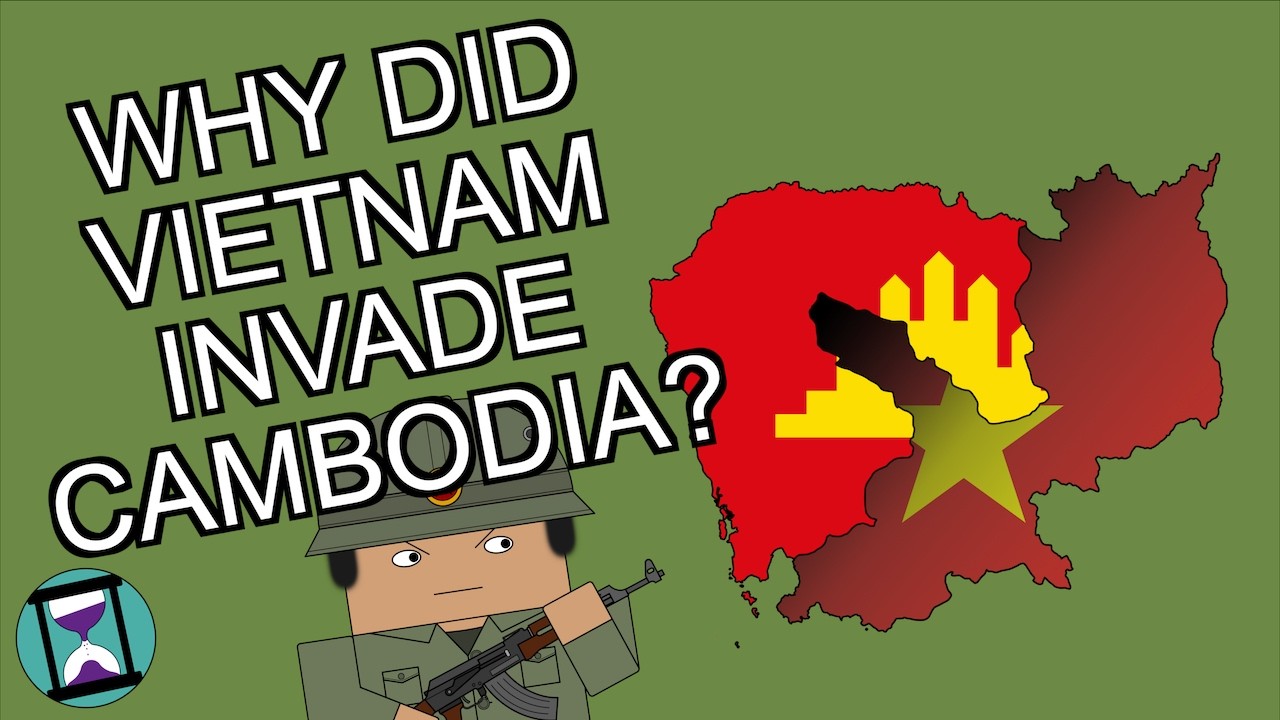
Why did Communist Vietnam invade Communist Cambodia (Animated History Documentary)
video description
Date: 2025-05-10
Related videos

• TED-Ed



Comments and reviews: 20
thien_nee
Causes of the war According to many remaining documents and evidences, in 3 years (from April 1975 to the end of 1978, the Pol Pot regime implemented a savage political, economic, and social policy: abolishing all human rights, civil rights - from the right to life to the minimum freedoms. In order to cleanse the population, they implemented a policy of brutally killing millions of people (beating them to death with hoes, shovels, disemboweling, removing livers. Nearly 3 million Cambodians were killed in just nearly 3 years. They eliminated all social foundations of a civilization (such as eliminating urban areas, eliminating industrial and handicraft production, eliminating commodity-monetary relations, pushing the entire Cambodian nation into a disaster of extinction, while also erasing the culture and civilization of a nation with thousands of years of history. Regarding Vietnam, Pol Pot tried to slander: Vietnam invaded, robbed land, robbed islands. of Cambodia. They incited narrow nationalist ideology, killed many Vietnamese compatriots; demanded to re-determine the Vietnam-Cambodia border. Pol Pot declared Vietnam as the traditional enemy, enemy number 1, and the greatest disaster of the Cambodian people Immediately after Vietnam was completely liberated, they attacked Phu Quoc Island (May 3, 1975); attacked Tho Chu Island (May 10, 1975. Here, they captured and killed more than 500 civilians. On land, they provoked and attacked border guards, arbitrarily moving border markers in the provinces of Tay Ninh, Kon Tum, Dak Lak This war was thoroughly prepared by the Pol Pot government with the ambition of being able to win. They developed the main force from 7 divisions when it was liberated to 12 regular army divisions with full components and arms. At the end of April 1977, Pol Pot mobilized 5 divisions and hundreds of artillery pieces and tanks close to the Vietnamese border - carrying out a large-scale war of invasion into the territory of the southwestern border region of Vietnam. The counterattack of our army and people in self-defense It cannot be denied that, in the early period of the raids and provocations at the southwestern border, we were off guard because we believed in the Cambodian government led by Pol Pot-Ieng Sari. Vietnam did not think that a neighboring country that had been helped by the Vietnamese army and people, sacrificing blood and bones for their national independence, would turn its guns and kill its own people and compatriots. However, when they revealed themselves as traitors - truly launching a war of aggression against Vietnam, the Vietnamese army and people, with their legitimate right to self-defense, responded appropriately. In particular, right after the Cambodian National United Front for National Salvation was officially established (December 3, 1978, responding to the call of the Cambodian National United Front for National Salvation, from December 23, 1978, the Vietnamese Volunteer Army and the Cambodian National United Front for National Salvation launched a general counter-offensive and offensive, successively breaking the entire defense system of the Pol Pot army. On January 7, 1979, the Vietnamese Volunteer Army and the Cambodian National United Front for National Salvation liberated Phnom Penh, marking the complete collapse of the Pol Pot reactionary group and the genocidal regime in Cambodia. Today, looking back at the war to protect the southwestern border of the Fatherland, we can draw many noble meanings: First of all, protecting national independence, national sovereignty, and territorial integrity is always the top goal and task of our army and people. In any situation, in any international relations, we must not be less vigilant in our mission to protect the Fatherland. Nowadays, explaining the fact that our army and people did not immediately strike back against the Pol Pot clique, many of our compatriots and veterans say: At that time, we thought that there was no way the Cambodian army would attack Vietnam. Although the international and regional situation has changed differently from the Cold War period (1945-1991, Vietnam and the East Sea are one of the important geopolitical positions in the region. The competition between major countries in this region can use different methods to compete for international relations. This can lead to conflicts between small countries in the region. This is a reality that has happened in history that Vietnam cannot ignore. Second, the events that took place during this war have completely refuted all the distortions of hostile forces at home and abroad about the war, especially the argument that Vietnam invaded and encroached on Cambodia. Reality shows that the war in the southwestern border was a war to protect the territorial integrity of our nation. At the same time, it was also a war to protect the lives and human rights of both the Cambodian and Vietnamese peoples; it was a just war - a legitimate war of self-defense, to strike back at the invaders, and had no other goals. Regarding the reason why the Vietnamese army did not withdraw from Cambodia in 1979, Prime Minister Hun Sen said: After the victory on January 7, 1979, if according to the original plan, the Vietnamese army would have withdrawn from Cambodia in 1979. However, at that time, Cambodia was not strong enough to fight Pol Pot and needed time to consolidate its forces and restore its economy. If Vietnam withdrew its troops and Pol Pot returned, more Cambodians would have been killed, The Vietnamese government did not want to leave its troops behind. We asked them to do so(1. Third, regarding the Vietnam-Cambodia relationship, the war to protect the sovereignty of our army and people simultaneously dealt a decisive blow to the genocidal regime in Cambodia, and had no other goal. The victory of our army and people can also be said to be the victory of the traditional friendship and solidarity between Vietnam and Cambodia, restoring the existing friendship and solidarity between the two Parties and peoples. Prime Minister Hun Sen once said: Faced with that situation (genocide, he decided to flee to Vietnam to ask for help in organizing the resistance movement to liberate the country. At that time, he learned that a number of Cambodians had also left their homeland to seek refuge in Vietnam. He trusted Vietnam, because this is a neighboring country that has shared hardships and stood shoulder to shoulder with Cambodia in the struggle against the common enemy for independence. During his recent visit to Vietnam, he said: Without Vietnam's help, Cambodia would not exist today. Prime Minister Hun Sen also affirmed: We can ask, in this world, which country has helped the Cambodian people, especially liberating them from the Pol Pot genocidal regime and preventing their return The answer is the people and the People's Army of Vietnam. The Cambodian people believe that only fairies and Buddha can save people when they are in dire straits. Right when the Cambodian people were about to die, and could only clasp their hands and pray for fairies and Buddha to come to their rescue, the Vietnamese volunteer army appeared. The Vietnamese army is the army of Buddha (2. The Pol Pot genocidal regime was not only a disaster for the Cambodian people but also a
reply
Causes of the war According to many remaining documents and evidences, in 3 years (from April 1975 to the end of 1978, the Pol Pot regime implemented a savage political, economic, and social policy: abolishing all human rights, civil rights - from the right to life to the minimum freedoms. In order to cleanse the population, they implemented a policy of brutally killing millions of people (beating them to death with hoes, shovels, disemboweling, removing livers. Nearly 3 million Cambodians were killed in just nearly 3 years. They eliminated all social foundations of a civilization (such as eliminating urban areas, eliminating industrial and handicraft production, eliminating commodity-monetary relations, pushing the entire Cambodian nation into a disaster of extinction, while also erasing the culture and civilization of a nation with thousands of years of history. Regarding Vietnam, Pol Pot tried to slander: Vietnam invaded, robbed land, robbed islands. of Cambodia. They incited narrow nationalist ideology, killed many Vietnamese compatriots; demanded to re-determine the Vietnam-Cambodia border. Pol Pot declared Vietnam as the traditional enemy, enemy number 1, and the greatest disaster of the Cambodian people Immediately after Vietnam was completely liberated, they attacked Phu Quoc Island (May 3, 1975); attacked Tho Chu Island (May 10, 1975. Here, they captured and killed more than 500 civilians. On land, they provoked and attacked border guards, arbitrarily moving border markers in the provinces of Tay Ninh, Kon Tum, Dak Lak This war was thoroughly prepared by the Pol Pot government with the ambition of being able to win. They developed the main force from 7 divisions when it was liberated to 12 regular army divisions with full components and arms. At the end of April 1977, Pol Pot mobilized 5 divisions and hundreds of artillery pieces and tanks close to the Vietnamese border - carrying out a large-scale war of invasion into the territory of the southwestern border region of Vietnam. The counterattack of our army and people in self-defense It cannot be denied that, in the early period of the raids and provocations at the southwestern border, we were off guard because we believed in the Cambodian government led by Pol Pot-Ieng Sari. Vietnam did not think that a neighboring country that had been helped by the Vietnamese army and people, sacrificing blood and bones for their national independence, would turn its guns and kill its own people and compatriots. However, when they revealed themselves as traitors - truly launching a war of aggression against Vietnam, the Vietnamese army and people, with their legitimate right to self-defense, responded appropriately. In particular, right after the Cambodian National United Front for National Salvation was officially established (December 3, 1978, responding to the call of the Cambodian National United Front for National Salvation, from December 23, 1978, the Vietnamese Volunteer Army and the Cambodian National United Front for National Salvation launched a general counter-offensive and offensive, successively breaking the entire defense system of the Pol Pot army. On January 7, 1979, the Vietnamese Volunteer Army and the Cambodian National United Front for National Salvation liberated Phnom Penh, marking the complete collapse of the Pol Pot reactionary group and the genocidal regime in Cambodia. Today, looking back at the war to protect the southwestern border of the Fatherland, we can draw many noble meanings: First of all, protecting national independence, national sovereignty, and territorial integrity is always the top goal and task of our army and people. In any situation, in any international relations, we must not be less vigilant in our mission to protect the Fatherland. Nowadays, explaining the fact that our army and people did not immediately strike back against the Pol Pot clique, many of our compatriots and veterans say: At that time, we thought that there was no way the Cambodian army would attack Vietnam. Although the international and regional situation has changed differently from the Cold War period (1945-1991, Vietnam and the East Sea are one of the important geopolitical positions in the region. The competition between major countries in this region can use different methods to compete for international relations. This can lead to conflicts between small countries in the region. This is a reality that has happened in history that Vietnam cannot ignore. Second, the events that took place during this war have completely refuted all the distortions of hostile forces at home and abroad about the war, especially the argument that Vietnam invaded and encroached on Cambodia. Reality shows that the war in the southwestern border was a war to protect the territorial integrity of our nation. At the same time, it was also a war to protect the lives and human rights of both the Cambodian and Vietnamese peoples; it was a just war - a legitimate war of self-defense, to strike back at the invaders, and had no other goals. Regarding the reason why the Vietnamese army did not withdraw from Cambodia in 1979, Prime Minister Hun Sen said: After the victory on January 7, 1979, if according to the original plan, the Vietnamese army would have withdrawn from Cambodia in 1979. However, at that time, Cambodia was not strong enough to fight Pol Pot and needed time to consolidate its forces and restore its economy. If Vietnam withdrew its troops and Pol Pot returned, more Cambodians would have been killed, The Vietnamese government did not want to leave its troops behind. We asked them to do so(1. Third, regarding the Vietnam-Cambodia relationship, the war to protect the sovereignty of our army and people simultaneously dealt a decisive blow to the genocidal regime in Cambodia, and had no other goal. The victory of our army and people can also be said to be the victory of the traditional friendship and solidarity between Vietnam and Cambodia, restoring the existing friendship and solidarity between the two Parties and peoples. Prime Minister Hun Sen once said: Faced with that situation (genocide, he decided to flee to Vietnam to ask for help in organizing the resistance movement to liberate the country. At that time, he learned that a number of Cambodians had also left their homeland to seek refuge in Vietnam. He trusted Vietnam, because this is a neighboring country that has shared hardships and stood shoulder to shoulder with Cambodia in the struggle against the common enemy for independence. During his recent visit to Vietnam, he said: Without Vietnam's help, Cambodia would not exist today. Prime Minister Hun Sen also affirmed: We can ask, in this world, which country has helped the Cambodian people, especially liberating them from the Pol Pot genocidal regime and preventing their return The answer is the people and the People's Army of Vietnam. The Cambodian people believe that only fairies and Buddha can save people when they are in dire straits. Right when the Cambodian people were about to die, and could only clasp their hands and pray for fairies and Buddha to come to their rescue, the Vietnamese volunteer army appeared. The Vietnamese army is the army of Buddha (2. The Pol Pot genocidal regime was not only a disaster for the Cambodian people but also a
reply
noone-jg2sb
This video was produced from the perspective of the United States and Western countries during the 1980s with the intention of undermining, humiliating, and weakening Vietnam’s role in eradicating the genocidal Pol Pot regime. Fundamentally, many have argued that Vietnam and China had supported Pol Pot before the genocide occurred, and therefore Vietnam should bear some responsibility for the massacre. However, this is a distorted and shallow viewpoint - similar to recent media campaigns that equate the Soviet Union’s non-aggression pact with Nazi Germany to an invasion of Europe, while conveniently ignoring that other European countries like Britain, France, and Poland had signed agreements with Nazi Germany nearly a decade earlier.
Yes, Pol Pot led a communist regime, but after the Paris Peace Accords, when China turned its back on the communist block, betrayed the Soviet Union, and aligned itself with the West to stab the USSR in the back for its own benefit, communism in Cambodia came entirely under Chinese control. This is evident from China’s direct support to Pol Pot in terms of military training, military equipment, and logistics. Eventually, China used Cambodia as a strategic pawn to destabilize Vietnam in preparation for its invasion in 1979. When the Cambodian genocide unfolded, what did the West and the United Nations do They just sat and watched, mocking and ignoring Vietnam’s accusations at the UN. There was only indifference and coldness (what could one expected when 4 out of the 5 permanent members of the UN Security Council had either invaded or aided invasions of Vietnam) Pol Pot massacred tens of thousands of civilians along the Vietnamese border and occupied Vietnamese islands. Vietnam reported this to the UN, yet the UN did nothing.
Vietnam had to act on its own to save its people and respond to the plea for help from Hun Sen, a Cambodian. After pushing Pol Pot back to the Thai border, the second major supporter behind China was revealed - none other than the United States. Under the pretense of aid and human rights protection, the U. S. provided food, supplies, and medical equipment to Pol Pot through Thailand.
Despite pressure from the UN, China's invasion in the north, and economic sanctions from the hole World, Vietnam persisted. Pol Pot was eventually overthrown, and Vietnam withdrew its troops. You say we invaded Cambodia - what did we take from them All we received was death and sacrifice our soldiers laid down their lives. Meanwhile, China committed another massacre in the north while our main forces were in Cambodia.
In the end, it was the West and the UN that reaped the benefits. They only appeared after everything was over to begin their farcical reconstruction efforts, claiming credit for ending the bloody genocide. What right do you have to judge Vietnam, when all you've done is manipulate the media and remain silent like the deaf and blind
You speak of human rights, but are willing to kick yourselves in the face the moment those rights no longer serve your interests, hilariousl. And lastly, before China's influence in Cambodia surged post-2012, it was the United States pulling the strings. It was the U. S. that had the privilege of stationing troops in Cambodian ports.
reply
This video was produced from the perspective of the United States and Western countries during the 1980s with the intention of undermining, humiliating, and weakening Vietnam’s role in eradicating the genocidal Pol Pot regime. Fundamentally, many have argued that Vietnam and China had supported Pol Pot before the genocide occurred, and therefore Vietnam should bear some responsibility for the massacre. However, this is a distorted and shallow viewpoint - similar to recent media campaigns that equate the Soviet Union’s non-aggression pact with Nazi Germany to an invasion of Europe, while conveniently ignoring that other European countries like Britain, France, and Poland had signed agreements with Nazi Germany nearly a decade earlier.
Yes, Pol Pot led a communist regime, but after the Paris Peace Accords, when China turned its back on the communist block, betrayed the Soviet Union, and aligned itself with the West to stab the USSR in the back for its own benefit, communism in Cambodia came entirely under Chinese control. This is evident from China’s direct support to Pol Pot in terms of military training, military equipment, and logistics. Eventually, China used Cambodia as a strategic pawn to destabilize Vietnam in preparation for its invasion in 1979. When the Cambodian genocide unfolded, what did the West and the United Nations do They just sat and watched, mocking and ignoring Vietnam’s accusations at the UN. There was only indifference and coldness (what could one expected when 4 out of the 5 permanent members of the UN Security Council had either invaded or aided invasions of Vietnam) Pol Pot massacred tens of thousands of civilians along the Vietnamese border and occupied Vietnamese islands. Vietnam reported this to the UN, yet the UN did nothing.
Vietnam had to act on its own to save its people and respond to the plea for help from Hun Sen, a Cambodian. After pushing Pol Pot back to the Thai border, the second major supporter behind China was revealed - none other than the United States. Under the pretense of aid and human rights protection, the U. S. provided food, supplies, and medical equipment to Pol Pot through Thailand.
Despite pressure from the UN, China's invasion in the north, and economic sanctions from the hole World, Vietnam persisted. Pol Pot was eventually overthrown, and Vietnam withdrew its troops. You say we invaded Cambodia - what did we take from them All we received was death and sacrifice our soldiers laid down their lives. Meanwhile, China committed another massacre in the north while our main forces were in Cambodia.
In the end, it was the West and the UN that reaped the benefits. They only appeared after everything was over to begin their farcical reconstruction efforts, claiming credit for ending the bloody genocide. What right do you have to judge Vietnam, when all you've done is manipulate the media and remain silent like the deaf and blind
You speak of human rights, but are willing to kick yourselves in the face the moment those rights no longer serve your interests, hilariousl. And lastly, before China's influence in Cambodia surged post-2012, it was the United States pulling the strings. It was the U. S. that had the privilege of stationing troops in Cambodian ports.
reply
anlinh944
Khmer Rouge troops entered Chau Doc town - An Giang on May 1, 1975.
Taking advantage of the chaotic situation in the Southwest after Saigon fell on April 30 and the Liberation Army had not yet taken over, the Pol Pot government ordered Khmer Rouge troops to raid Chau Doc town on the night of May 1 and early morning of May 2. On May 4, the Khmer Rouge launched a surprise attack on Phu Quoc Island, Tho Chu. Here, the Khmer Rouge organized the killing of 500 people on the island using the most barbaric methods. On May 6, Pol Pot completely controlled Tinh Bien area, and continued to cause many massacres in Tay Ninh.
The Khmer Rouge's unreasonable aggression made the government of the unified Vietnam extremely angry. On May 4, the 9th Military Region Command, authorized by the military government of the South, established the 4th division to organize a counterattack and repel many Khmer Rouge troops. On May 27, all Khmer Rouge troops were driven out of Phu Quoc and Tho Chu. By June, all Khmer Rouge troops were completely wiped out of the territory of South Vietnam. Although the conflict between the two sides was not part of the Southwest border war, it was the first trigger signaling this war two years later.
The Vietnam - Khmer Rouge conflict in 1975 affected many major countries. In particular, the battle in Phu Quoc on May 27 made the Chinese government worried, which they called Vietnam's expansion. Therefore, China took actions to increase aid to the Khmer Rouge as well as repeatedly sent warning letters to the Vietnamese government. On the Khmer Rouge side, after being driven out of An Giang, Pol Pot declared that he would not give up on erasing Vietnam. The Pol Pot regime continued to commit acts of aggression in the Vietnam-Cambodia border area, such as shelling residential areas or secretly kidnapping Vietnamese people to bring them back to Cambodia for execution during the period 1976-1977.
reply
Khmer Rouge troops entered Chau Doc town - An Giang on May 1, 1975.
Taking advantage of the chaotic situation in the Southwest after Saigon fell on April 30 and the Liberation Army had not yet taken over, the Pol Pot government ordered Khmer Rouge troops to raid Chau Doc town on the night of May 1 and early morning of May 2. On May 4, the Khmer Rouge launched a surprise attack on Phu Quoc Island, Tho Chu. Here, the Khmer Rouge organized the killing of 500 people on the island using the most barbaric methods. On May 6, Pol Pot completely controlled Tinh Bien area, and continued to cause many massacres in Tay Ninh.
The Khmer Rouge's unreasonable aggression made the government of the unified Vietnam extremely angry. On May 4, the 9th Military Region Command, authorized by the military government of the South, established the 4th division to organize a counterattack and repel many Khmer Rouge troops. On May 27, all Khmer Rouge troops were driven out of Phu Quoc and Tho Chu. By June, all Khmer Rouge troops were completely wiped out of the territory of South Vietnam. Although the conflict between the two sides was not part of the Southwest border war, it was the first trigger signaling this war two years later.
The Vietnam - Khmer Rouge conflict in 1975 affected many major countries. In particular, the battle in Phu Quoc on May 27 made the Chinese government worried, which they called Vietnam's expansion. Therefore, China took actions to increase aid to the Khmer Rouge as well as repeatedly sent warning letters to the Vietnamese government. On the Khmer Rouge side, after being driven out of An Giang, Pol Pot declared that he would not give up on erasing Vietnam. The Pol Pot regime continued to commit acts of aggression in the Vietnam-Cambodia border area, such as shelling residential areas or secretly kidnapping Vietnamese people to bring them back to Cambodia for execution during the period 1976-1977.
reply
ironheart1803
Calling Vietnam Communist invaded Cambodia is completely wrong in terms of the nature of the matter. What both China and the West (led by the US) have used their huge media systems at that time to slander and defame the righteousness of this military intervention of the Viet Cong. The US used that as an excuse to embargo Vietnam for many years as a punitive measure, China used that as an excuse to launch the war on the northern border of Vietnam in 1979, and Vietnamese bravely overcame all of that to fulfill their noble international duty, helping Hunsen and his country avoid Pol pot. The fact that Vietnam did not withdraw its troops immediately but had to wait 10 years was to give the Cambodian government enough time to rebuild the country, the military strength to be able to stand on its own two feet in the face of potential threats. History has not recorded any criminal acts by the Viet Cong soldiers during their time stationed in Cambodia, on the contrary, the Cambodian people have a very good relationship with Uncle Ho's soldiers. Even nowaday, many Cambodian families still consider those young Vietcong soldiers as their adopted children, and today those soldiers from the past often return and meet their Cambodian mother, brothers, sisters who used to live, eat, and take care of each other in a time imbued with humanity.
reply
Calling Vietnam Communist invaded Cambodia is completely wrong in terms of the nature of the matter. What both China and the West (led by the US) have used their huge media systems at that time to slander and defame the righteousness of this military intervention of the Viet Cong. The US used that as an excuse to embargo Vietnam for many years as a punitive measure, China used that as an excuse to launch the war on the northern border of Vietnam in 1979, and Vietnamese bravely overcame all of that to fulfill their noble international duty, helping Hunsen and his country avoid Pol pot. The fact that Vietnam did not withdraw its troops immediately but had to wait 10 years was to give the Cambodian government enough time to rebuild the country, the military strength to be able to stand on its own two feet in the face of potential threats. History has not recorded any criminal acts by the Viet Cong soldiers during their time stationed in Cambodia, on the contrary, the Cambodian people have a very good relationship with Uncle Ho's soldiers. Even nowaday, many Cambodian families still consider those young Vietcong soldiers as their adopted children, and today those soldiers from the past often return and meet their Cambodian mother, brothers, sisters who used to live, eat, and take care of each other in a time imbued with humanity.
reply
KimNguyen-bu2nf
It seems to me that Vietnam’s intervention in Cambodia can reasonably be seen as both an invasion and a liberation.
According to the English dictionary, an invasion is when a foreign military force enters and attacks a regime currently in control. In this case, the Khmer Rouge was the ruling power in Cambodia, so Vietnam’s military action seems to fit the definition of an invasion.
At the same time, liberation is defined as the act of freeing people from oppression or brutality. Vietnam did, in fact, put an end to a genocidal regime and liberated millions of Cambodians from extreme suffering.
I understand that the true purposes can be complex and it’s a gray area. People interpret it differently depending on their lens. But one undeniable fact is that without Vietnam’s intervention, Cambodia may have continued to suffer under the Khmer Rouge even more, especially given the strong backing Pol Pot received from China and Thailand.
Regardless of Vietnam’s true motivations or whether the action is labeled an invasion or a liberation, the outcome was arguably more positive with their intervention than withOUT it. No other nations were willing to intervene the genocide at that point, not to mention the significant casualties from both countries, Vietnam and Cambodia.
reply
It seems to me that Vietnam’s intervention in Cambodia can reasonably be seen as both an invasion and a liberation.
According to the English dictionary, an invasion is when a foreign military force enters and attacks a regime currently in control. In this case, the Khmer Rouge was the ruling power in Cambodia, so Vietnam’s military action seems to fit the definition of an invasion.
At the same time, liberation is defined as the act of freeing people from oppression or brutality. Vietnam did, in fact, put an end to a genocidal regime and liberated millions of Cambodians from extreme suffering.
I understand that the true purposes can be complex and it’s a gray area. People interpret it differently depending on their lens. But one undeniable fact is that without Vietnam’s intervention, Cambodia may have continued to suffer under the Khmer Rouge even more, especially given the strong backing Pol Pot received from China and Thailand.
Regardless of Vietnam’s true motivations or whether the action is labeled an invasion or a liberation, the outcome was arguably more positive with their intervention than withOUT it. No other nations were willing to intervene the genocide at that point, not to mention the significant casualties from both countries, Vietnam and Cambodia.
reply
xhuydeptrai
It is a distortion of history to characterize Vietnam's intervention in Cambodia in 1978 as an act of aggression or invasion. This perspective willfully ignores the horrific reality of the Khmer Rouge regime under Pol Pot, which subjected the Cambodian people to a brutal and genocidal rule from 1975 to 1979. The Khmer Rouge systematically murdered an estimated 1. 5 to 3 million Cambodians through forced labor, starvation, torture, and execution in the infamous Killing Fields. They also launched unprovoked and violent border attacks against Vietnam, resulting in thousands of Vietnamese civilian deaths. Faced with this extreme barbarity and a severe humanitarian crisis on its doorstep, Vietnam intervened at the request of Cambodian resistance forces. This action was not taken with territorial ambitions, but as a necessary measure to stop the genocide and rescue the surviving Cambodian population from the atrocities of the Khmer Rouge. The swift collapse of the Khmer Rouge regime following Vietnam's intervention and the subsequent discovery of the full extent of their crimes underscore the fact that Vietnam's military action was a liberation, bringing an end to a horrific period of suffering for the Cambodian people.
reply
It is a distortion of history to characterize Vietnam's intervention in Cambodia in 1978 as an act of aggression or invasion. This perspective willfully ignores the horrific reality of the Khmer Rouge regime under Pol Pot, which subjected the Cambodian people to a brutal and genocidal rule from 1975 to 1979. The Khmer Rouge systematically murdered an estimated 1. 5 to 3 million Cambodians through forced labor, starvation, torture, and execution in the infamous Killing Fields. They also launched unprovoked and violent border attacks against Vietnam, resulting in thousands of Vietnamese civilian deaths. Faced with this extreme barbarity and a severe humanitarian crisis on its doorstep, Vietnam intervened at the request of Cambodian resistance forces. This action was not taken with territorial ambitions, but as a necessary measure to stop the genocide and rescue the surviving Cambodian population from the atrocities of the Khmer Rouge. The swift collapse of the Khmer Rouge regime following Vietnam's intervention and the subsequent discovery of the full extent of their crimes underscore the fact that Vietnam's military action was a liberation, bringing an end to a horrific period of suffering for the Cambodian people.
reply
mosesracal6758
The US reacting negatively was actually because of Thailand. Thailand saw the invasion and feared that if left alone, Vietnam would dominate Indochina and since Thailand was part of SEATO - it also saw communism as a threat. In response to the invasion, Thailand actually managed to rally the newly formed ASEAN to denounce the invasion and issue sanctions against Vietnam which became the playbook for how ASEAN would intervene despite having a no interventions clause in its constitution, this also was ASEAN''s first major crisis so Thailand together with the Philippines urged the USA to support its position against Vietnam when as the US was concerned, it wouldve let Vietnam and Cambodia fight each other.
This was in stark contrast as what was mentioned, that the international community actually saw Vietnam's invasion as humanitarian since Pol Pot was just that evil. However politics will do its thing and so the US and the rest of the West condoned the invasion.
This led to Vietnam being soft on the reforms of Cambodia (which meant Pol Pot remained alive and was never put to trial. Keep in mind that they also had to deal with China as they declared war and invaded Vietnam (which they actually won.
reply
The US reacting negatively was actually because of Thailand. Thailand saw the invasion and feared that if left alone, Vietnam would dominate Indochina and since Thailand was part of SEATO - it also saw communism as a threat. In response to the invasion, Thailand actually managed to rally the newly formed ASEAN to denounce the invasion and issue sanctions against Vietnam which became the playbook for how ASEAN would intervene despite having a no interventions clause in its constitution, this also was ASEAN''s first major crisis so Thailand together with the Philippines urged the USA to support its position against Vietnam when as the US was concerned, it wouldve let Vietnam and Cambodia fight each other.
This was in stark contrast as what was mentioned, that the international community actually saw Vietnam's invasion as humanitarian since Pol Pot was just that evil. However politics will do its thing and so the US and the rest of the West condoned the invasion.
This led to Vietnam being soft on the reforms of Cambodia (which meant Pol Pot remained alive and was never put to trial. Keep in mind that they also had to deal with China as they declared war and invaded Vietnam (which they actually won.
reply
lordofwar1302
A little correction: The war is more like a liberation and an act of self-defense rather than an invasion. Because Pol Pot attacked Vietnam first, many Vietnamese were killed and captured. The sad part is that the Vietnamese never found their people until later on. But by then, all of the Vietnamese prisoners had been executed. Despite Vietnam's effort to find a peaceful solution, Pol Pot still committed crimes against humanity at the Vietnam-Cambodia border. Furthermore, the other reason it should not be called an invasion is that the current President of the Senate of Cambodia, Hun Sen, asked Vietnam for help to save the Cambodian people, and Vietnam responded. A majority of people call it an invasion is due to Western propagate, because a matter of fact. Throughout the whole event, Vietnam did not commit any action that could be considered an invasion. We did not occupy any land because we did not hold any authority over it, nor did we take any resources from the country. We just came and protect the Cambodian. All political action is run by Hun Sen and his party.
reply
A little correction: The war is more like a liberation and an act of self-defense rather than an invasion. Because Pol Pot attacked Vietnam first, many Vietnamese were killed and captured. The sad part is that the Vietnamese never found their people until later on. But by then, all of the Vietnamese prisoners had been executed. Despite Vietnam's effort to find a peaceful solution, Pol Pot still committed crimes against humanity at the Vietnam-Cambodia border. Furthermore, the other reason it should not be called an invasion is that the current President of the Senate of Cambodia, Hun Sen, asked Vietnam for help to save the Cambodian people, and Vietnam responded. A majority of people call it an invasion is due to Western propagate, because a matter of fact. Throughout the whole event, Vietnam did not commit any action that could be considered an invasion. We did not occupy any land because we did not hold any authority over it, nor did we take any resources from the country. We just came and protect the Cambodian. All political action is run by Hun Sen and his party.
reply
nufheronufhero9007
The creator of this video has blood on his hands, because he helped a genocidal regime and its former supporters rewrite history, change history, to cover up their crimes. Answer the following questions to see that morality is just a tool of politics: 1. How many Cambodians were killed by the Khmer Rouge 2. How many Vietnamese civilians were killed by the Khmer Rouge 3. If Vietnam had not destroyed the Khmer Rouge, would Vietnamese and Cambodian people have continued to be killed 4. If Vietnam had driven the Khmer Rouge out of Phnom Penh, and then withdrawn its troops, would the Khmer Rouge have returned and continued to kill more people 5. Which countries declared war, condemned, or punished the Khmer Rouge regime for its genocide 6. Which countries supported the Khmer Rouge in its war with Vietnam 7. Why did the Khmer Rouge have a seat in the United Nations until 1993 8. If the Mexican army invaded the US and killed 1, 000 Americans, how would the US react (About 30, 000 Vietnamese were killed by the Khmer Rouge)
reply
The creator of this video has blood on his hands, because he helped a genocidal regime and its former supporters rewrite history, change history, to cover up their crimes. Answer the following questions to see that morality is just a tool of politics: 1. How many Cambodians were killed by the Khmer Rouge 2. How many Vietnamese civilians were killed by the Khmer Rouge 3. If Vietnam had not destroyed the Khmer Rouge, would Vietnamese and Cambodian people have continued to be killed 4. If Vietnam had driven the Khmer Rouge out of Phnom Penh, and then withdrawn its troops, would the Khmer Rouge have returned and continued to kill more people 5. Which countries declared war, condemned, or punished the Khmer Rouge regime for its genocide 6. Which countries supported the Khmer Rouge in its war with Vietnam 7. Why did the Khmer Rouge have a seat in the United Nations until 1993 8. If the Mexican army invaded the US and killed 1, 000 Americans, how would the US react (About 30, 000 Vietnamese were killed by the Khmer Rouge)
reply
azulperezoso8352
Reminder: Vietnam did not invade Cambodia as the Western videos and articles show. They were forced to destroy the Khmer Rouge because they crossed the Vietnamese border, killing more than 18, 000 border residents. With the plea of Hunsen (current Cambodian prime minister, the Vietnamese People's Army attacked and completely liberated Cambodia in 15 days. The remnants of Polpot fled across the Thai border to seek refuge, and the Vietnamese army also attacked deep into Thai territory. To save the Polpot regime, China launched an attack on Vietnam on the northern border with the encouragement of the US and the West. But they were defeated by the local army (the main Vietnamese army was still present in Cambodia. and retreated with the loss of more than 600, 000 soldiers killed.
reply
Reminder: Vietnam did not invade Cambodia as the Western videos and articles show. They were forced to destroy the Khmer Rouge because they crossed the Vietnamese border, killing more than 18, 000 border residents. With the plea of Hunsen (current Cambodian prime minister, the Vietnamese People's Army attacked and completely liberated Cambodia in 15 days. The remnants of Polpot fled across the Thai border to seek refuge, and the Vietnamese army also attacked deep into Thai territory. To save the Polpot regime, China launched an attack on Vietnam on the northern border with the encouragement of the US and the West. But they were defeated by the local army (the main Vietnamese army was still present in Cambodia. and retreated with the loss of more than 600, 000 soldiers killed.
reply
reisen1932
I'm not a historian, but the title already says it's not going to be very accurate. Cambodia invaded a Vietnamese village and killed over 3000 Vietnamese, Vietnam retaliated, although it was really weakened and tired after fighting the French, Japanese and the US off, and then dealing with China. Pol Pot was a monster, no doubt about it. Meanwhile China and USSR were on bad terms that led China backstabbing Vietnam. Just like France that didn't want to give up on Vietnam and installed a puppet country South Vietnam with the US overlooking for them after the British hold for a week and said nope, I'm out
Without Vietnam, Indochina would speak French even today. I hope ASEAN can prosper together!
reply
I'm not a historian, but the title already says it's not going to be very accurate. Cambodia invaded a Vietnamese village and killed over 3000 Vietnamese, Vietnam retaliated, although it was really weakened and tired after fighting the French, Japanese and the US off, and then dealing with China. Pol Pot was a monster, no doubt about it. Meanwhile China and USSR were on bad terms that led China backstabbing Vietnam. Just like France that didn't want to give up on Vietnam and installed a puppet country South Vietnam with the US overlooking for them after the British hold for a week and said nope, I'm out
Without Vietnam, Indochina would speak French even today. I hope ASEAN can prosper together!
reply
hthien1__394
As a Vietnamese who has been living in SG for a few years, this is my unbias viewpoint, I have some Khmer friends and my relatives are living in Cambodia:
Cambodia-Vietnam has the same relationship as Vietnam-China (Nice in pictures but actually do not like each other. Every ancient Chinese empire always invaded Vietnam like Vietnam invaded Khmer Empire.
Camobodians mostly have been brainwashed by their own gov, the fact that they received funding from China to invade Vietnam from both side (North and South) => thats not good for Vietnam's Communist Gov.
reply
As a Vietnamese who has been living in SG for a few years, this is my unbias viewpoint, I have some Khmer friends and my relatives are living in Cambodia:
Cambodia-Vietnam has the same relationship as Vietnam-China (Nice in pictures but actually do not like each other. Every ancient Chinese empire always invaded Vietnam like Vietnam invaded Khmer Empire.
Camobodians mostly have been brainwashed by their own gov, the fact that they received funding from China to invade Vietnam from both side (North and South) => thats not good for Vietnam's Communist Gov.
reply
gurumine6617
You probably don't know about this case. The Ba Chuc massacre was a war crime committed by the Khmer Rouge regime. The incident occurred in Ba Chuc commune (now Ba Chuc town, Tri Ton district, An Giang province. From April 30, 1978, the Khmer Rouge army began to simultaneously open fire on the Southwest border with Vietnam. On April 18, 1978, the Khmer Rouge army flooded into Ba Chuc, brutally killing innocent civilians. Many people ran to Phi Lai and Tam Buu pagodas and up to Tuong mountain to hide, but were also brutally massacred by the Khmer Rouge army.
reply
You probably don't know about this case. The Ba Chuc massacre was a war crime committed by the Khmer Rouge regime. The incident occurred in Ba Chuc commune (now Ba Chuc town, Tri Ton district, An Giang province. From April 30, 1978, the Khmer Rouge army began to simultaneously open fire on the Southwest border with Vietnam. On April 18, 1978, the Khmer Rouge army flooded into Ba Chuc, brutally killing innocent civilians. Many people ran to Phi Lai and Tam Buu pagodas and up to Tuong mountain to hide, but were also brutally massacred by the Khmer Rouge army.
reply
chouchaudagame7244
British journalist and military historian Max Hastings wrote in his book Vietnam an epic tragedy 1945-1975:
I once asked Vietnam’s foreign minister Nguyen Co Thach why, after his country was attacked by the Khmer Rouge, it had not taken its case to the UN instead of invading Cambodia late in 1978. We do not have such a high regard for the UN as you do, ’ he replied.
How so’
Because during the last forty years we have been invaded by four of the five permanent members of the Security Council. ’
Now we all understand why.
reply
British journalist and military historian Max Hastings wrote in his book Vietnam an epic tragedy 1945-1975:
I once asked Vietnam’s foreign minister Nguyen Co Thach why, after his country was attacked by the Khmer Rouge, it had not taken its case to the UN instead of invading Cambodia late in 1978. We do not have such a high regard for the UN as you do, ’ he replied.
How so’
Because during the last forty years we have been invaded by four of the five permanent members of the Security Council. ’
Now we all understand why.
reply
Tuan_Gatre_mini
If we study Vietnam's history carefully, we will see a truth: Vietnam has never actively invaded any country.
In the 11th century, it attacked the border of the Song Dynasty (China) to destroy the logistical bases that the Song Dynasty was preparing to use in the campaign to invade Dai Viet (Vietnam.
Annexation of Champa/Champa: after many times these dynasties attacked Dai Viet (Vietnam, looted and killed many Vietnamese civilians. Dai Viet responded and annexed them into its territory.
reply
If we study Vietnam's history carefully, we will see a truth: Vietnam has never actively invaded any country.
In the 11th century, it attacked the border of the Song Dynasty (China) to destroy the logistical bases that the Song Dynasty was preparing to use in the campaign to invade Dai Viet (Vietnam.
Annexation of Champa/Champa: after many times these dynasties attacked Dai Viet (Vietnam, looted and killed many Vietnamese civilians. Dai Viet responded and annexed them into its territory.
reply
Chan-kg2yc
The soldiers of Uncle Ho's army who fought bravely and sacrificed their blood to liberate Cambodia will forever be in our hearts, and their blood also flows in the blood of young Vietnamese people today. They are Buddhist soldiers - this is the name that the Cambodian people themselves gave to the Vietnamese army. The title of the video uses the word invade which comes from hostile force who want to oppose Vietnam. But truth and justice will be the eternal light that dispels all evil things.
reply
The soldiers of Uncle Ho's army who fought bravely and sacrificed their blood to liberate Cambodia will forever be in our hearts, and their blood also flows in the blood of young Vietnamese people today. They are Buddhist soldiers - this is the name that the Cambodian people themselves gave to the Vietnamese army. The title of the video uses the word invade which comes from hostile force who want to oppose Vietnam. But truth and justice will be the eternal light that dispels all evil things.
reply
vantran-vg4pw
You close your eyes and pretend you did not see, does not mean it won’t happen. American dropped almost 8 millions ton of bomb in Laos, Cambodia and Vietnam, killed millions people. You just close your eyes. When Pol Pot and his regime killed nearly 2 millions. You kept your eyes closing again. Where is humanity where is morality And after all we did, we got 20 years embargo, isolated as an award. You are shameless when you say Viet Nam invade Cambodia.
reply
You close your eyes and pretend you did not see, does not mean it won’t happen. American dropped almost 8 millions ton of bomb in Laos, Cambodia and Vietnam, killed millions people. You just close your eyes. When Pol Pot and his regime killed nearly 2 millions. You kept your eyes closing again. Where is humanity where is morality And after all we did, we got 20 years embargo, isolated as an award. You are shameless when you say Viet Nam invade Cambodia.
reply
lelongviet3622
If you're wondering why Pol Pot and his group were never properly held accountable for the deaths of a quarter of Cambodia's population during the genocide, just listen to Khieu Samphan, one of the Khmer Rouge leaders. He once said:
If you want to convict us, then you must also convict those who supported us in Beijing and Washington!
This condition, deeply ironic, was clearly unacceptableafter all, who would ever prosecute the patrons
reply
If you're wondering why Pol Pot and his group were never properly held accountable for the deaths of a quarter of Cambodia's population during the genocide, just listen to Khieu Samphan, one of the Khmer Rouge leaders. He once said:
If you want to convict us, then you must also convict those who supported us in Beijing and Washington!
This condition, deeply ironic, was clearly unacceptableafter all, who would ever prosecute the patrons
reply
branz5177
Pol Pot sent the Khmer Rouge across the border to attack several southwestern provinces of Vietnam, most notably committing a brutal massacre of over 3, 000 civilians in Ba Chuc (An Giang. In response to these acts of aggression and atrocities, Vietnam was compelled to send troops into Cambodia in late 1978, coordinating with revolutionary forces to overthrow the genocidal regime and liberate Phnom Penh on January 7, 1979
reply
Pol Pot sent the Khmer Rouge across the border to attack several southwestern provinces of Vietnam, most notably committing a brutal massacre of over 3, 000 civilians in Ba Chuc (An Giang. In response to these acts of aggression and atrocities, Vietnam was compelled to send troops into Cambodia in late 1978, coordinating with revolutionary forces to overthrow the genocidal regime and liberate Phnom Penh on January 7, 1979
reply
MichaelQuinton141
The other Cambodian government who wanted to free the people from Pol Pot's cruel ways so they actually asked Vietnam for help
The Khmer Rouge (ruled by Pol Pot) attacked Vietnam's southern border first so we and the prementioned Cambodians fought back against the Khmer Rouge and won
We also had to fight China invading our northern border at practically the same time in 1979
reply
The other Cambodian government who wanted to free the people from Pol Pot's cruel ways so they actually asked Vietnam for help
The Khmer Rouge (ruled by Pol Pot) attacked Vietnam's southern border first so we and the prementioned Cambodians fought back against the Khmer Rouge and won
We also had to fight China invading our northern border at practically the same time in 1979
reply
Add a review, comment
Other channel videos