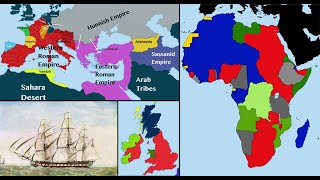
Top 11 Historical Misconceptions.
video description
Date: 2022-07-15
Related videos




Comments and reviews: 9
ethan
Your championing of industrialisation is perhaps misguided. While primitive farming is not a great life, it usually allows a longer life span than that enjoyed by early industrial workers and (depending on the working relationship the farmer had with their local class superiors) a degree of general health and liberty in excess of these same factory workers. The flight to the cities may have had much to do with the economic unsustainability of farms subdivided to tiny size between sons or the decreased economic viability of cottage industry (these being outsold by the rise of industry. The original retrograde conservatism of the early socialists (who sought a way back to communal farming rather than a way forward to industrial socialism) might hint at the true opinions held by industrial workers at the time, with wrecking of industrial machinery and the dead of the Peterloo riots speaking of the magnitude of the early worker's grievances. watching your videos I agree that standard histories are a wash with misconception and the imposition of later ideology, but your attempt to shoehorn western capitalism into a role as liberator is misguided. It is industrial labour who have created the relative ease in which we now live and not the business men to who western liberty is often falsely attributed (and who would sell your soul if they could get a good price for it. forget criticising the woke white-noise: both woke and neo-conservatism are divide and conquer for the new millennium: two untenable extremes the middle class media have devised to maintain the status quo.
reply
Your championing of industrialisation is perhaps misguided. While primitive farming is not a great life, it usually allows a longer life span than that enjoyed by early industrial workers and (depending on the working relationship the farmer had with their local class superiors) a degree of general health and liberty in excess of these same factory workers. The flight to the cities may have had much to do with the economic unsustainability of farms subdivided to tiny size between sons or the decreased economic viability of cottage industry (these being outsold by the rise of industry. The original retrograde conservatism of the early socialists (who sought a way back to communal farming rather than a way forward to industrial socialism) might hint at the true opinions held by industrial workers at the time, with wrecking of industrial machinery and the dead of the Peterloo riots speaking of the magnitude of the early worker's grievances. watching your videos I agree that standard histories are a wash with misconception and the imposition of later ideology, but your attempt to shoehorn western capitalism into a role as liberator is misguided. It is industrial labour who have created the relative ease in which we now live and not the business men to who western liberty is often falsely attributed (and who would sell your soul if they could get a good price for it. forget criticising the woke white-noise: both woke and neo-conservatism are divide and conquer for the new millennium: two untenable extremes the middle class media have devised to maintain the status quo.
reply
Youtube
Well, I'm sorry, but public executions were a direct result of what you claim is a false accusation.
These people were in fact uneducated, they knew a lot about how to live and survive in their society, but they weren't educated in the common sense of the term as in they couldn't read and most couldn't even count, much less do math.
Also, they were angry. Angry about their condition although they didn't knew better, angry about living in fear of hell, angry about their hunger and the constant losses of loved one, people used to die all the time from things seen as completely harmless nowadays. Take a sip at the wrong fountain, dead, cut your finger on something rusted, dead again!
I don't blame them for being that way, I don't think less of them for being that way, they didn't do it on purpose, they were kept that way because the leaders figured it was easier to control such a crowd, until they realized that this bloodlust they kept unfocused could spontaneously focused itself on them, like it did in France.
Now they're trying 'happy and educated, which has been working flawlessly except. It necessitates giving us more, a larger part of the wealth that could be theirs and so some forces are relying on the angry and uneducated to gain power to change that, hoping to rebuild the medieval society in which people were angry and uneducated.
That's why right wing party are spreading hate against minority groups, so that unfocused anger is focused on these groups instead of on them, them who are causing anger, hunger and pain.
reply
Well, I'm sorry, but public executions were a direct result of what you claim is a false accusation.
These people were in fact uneducated, they knew a lot about how to live and survive in their society, but they weren't educated in the common sense of the term as in they couldn't read and most couldn't even count, much less do math.
Also, they were angry. Angry about their condition although they didn't knew better, angry about living in fear of hell, angry about their hunger and the constant losses of loved one, people used to die all the time from things seen as completely harmless nowadays. Take a sip at the wrong fountain, dead, cut your finger on something rusted, dead again!
I don't blame them for being that way, I don't think less of them for being that way, they didn't do it on purpose, they were kept that way because the leaders figured it was easier to control such a crowd, until they realized that this bloodlust they kept unfocused could spontaneously focused itself on them, like it did in France.
Now they're trying 'happy and educated, which has been working flawlessly except. It necessitates giving us more, a larger part of the wealth that could be theirs and so some forces are relying on the angry and uneducated to gain power to change that, hoping to rebuild the medieval society in which people were angry and uneducated.
That's why right wing party are spreading hate against minority groups, so that unfocused anger is focused on these groups instead of on them, them who are causing anger, hunger and pain.
reply
Tu
I dont agree with much of what was said here, but its interesting to hear other perspectives on history.
The ranking is completely random and Yankocentric. The USA is currently the richest and most powerful country on Earth and its ideas tend to swamp the rest of the worlds. Concepts like USAs greed for Oil and obsession with the evils of Communism has driven much of post WWII conflict and global relations, but its rare to hear that view uttered by Americans. Similarly Americans view themselves as the good guys and always right and seem surprised when that view is not shared by many around the world. In fact USA is often viewed as an intellectual backwater by other countries. Trumpism and the related Socio-Political divisiveness, gun culture, religiosity, political corruption, corporate greed and systemic racism in USA have dominated the global cultural landscape of the years since WWII, while American self-image as being the good guys and always right, skews our views on history, and because of the power and reach of Hollywood and American media has hugely influenced modern history.
This should easily be number one on this ranking.
reply
I dont agree with much of what was said here, but its interesting to hear other perspectives on history.
The ranking is completely random and Yankocentric. The USA is currently the richest and most powerful country on Earth and its ideas tend to swamp the rest of the worlds. Concepts like USAs greed for Oil and obsession with the evils of Communism has driven much of post WWII conflict and global relations, but its rare to hear that view uttered by Americans. Similarly Americans view themselves as the good guys and always right and seem surprised when that view is not shared by many around the world. In fact USA is often viewed as an intellectual backwater by other countries. Trumpism and the related Socio-Political divisiveness, gun culture, religiosity, political corruption, corporate greed and systemic racism in USA have dominated the global cultural landscape of the years since WWII, while American self-image as being the good guys and always right, skews our views on history, and because of the power and reach of Hollywood and American media has hugely influenced modern history.
This should easily be number one on this ranking.
reply
Colm
Cool vid, but I have a problem with the europe didnt exploit Africa part. I think its just dead wrong and focused on the wrong things. I mean the Belgium Congo alone is proof that exploitation was a huge part of African colonization. Leopold made millions of dollars, what would be billions today. The exploitation of local cheifs was also an example of disruption of classical african structures, where cheifs were non existant or temporary, into a eurocentric style king. The lack of state investment is because though for european governemnts this was a vanity project private companies and citizens made vast sums from african and asian colonies that cant be ingnored. German colonial countires like modern Angola saw genocidal practices, german farmers held all the good land afterwards and gained the mineral rights. Britain plundered many of the cultural artifacts of countries for their own prestige. I just think your definition of exploitation is super narrow.
reply
Cool vid, but I have a problem with the europe didnt exploit Africa part. I think its just dead wrong and focused on the wrong things. I mean the Belgium Congo alone is proof that exploitation was a huge part of African colonization. Leopold made millions of dollars, what would be billions today. The exploitation of local cheifs was also an example of disruption of classical african structures, where cheifs were non existant or temporary, into a eurocentric style king. The lack of state investment is because though for european governemnts this was a vanity project private companies and citizens made vast sums from african and asian colonies that cant be ingnored. German colonial countires like modern Angola saw genocidal practices, german farmers held all the good land afterwards and gained the mineral rights. Britain plundered many of the cultural artifacts of countries for their own prestige. I just think your definition of exploitation is super narrow.
reply
brontew
About Africa - you have misstated the myth about exploitation - because perhaps exploitation is the wrong word. The myth refers to colonialism. It was not about what Europe got out of Africa, but the impact of Europeans being in Africa had on Africa, and the impact Europeans (or perhaps a better way of looking at it is wealthier countries) continue to have on Africa.
The actual amount of profit may have been very small, but the impact of having non-African peoples go into Africa and take huge amounts of natural resources (including people) out of Africa was and is hugely problematic. It continues today in the form of debt and debt repayments.
Colonisation was not and is not the only cause of the unequal levels of poverty in large areas of the sub Saharan African continent compared to other parts of the world, but it has played a part.
reply
About Africa - you have misstated the myth about exploitation - because perhaps exploitation is the wrong word. The myth refers to colonialism. It was not about what Europe got out of Africa, but the impact of Europeans being in Africa had on Africa, and the impact Europeans (or perhaps a better way of looking at it is wealthier countries) continue to have on Africa.
The actual amount of profit may have been very small, but the impact of having non-African peoples go into Africa and take huge amounts of natural resources (including people) out of Africa was and is hugely problematic. It continues today in the form of debt and debt repayments.
Colonisation was not and is not the only cause of the unequal levels of poverty in large areas of the sub Saharan African continent compared to other parts of the world, but it has played a part.
reply
John
A very interesting video. I enjoyed it a great deal.
The part on slavery and holding people in the past up to our modern standard and finding them lacking.
I think you need to sit down all these woke idiots and explain it to them!
I was born in Northern rhodesia and should point out that when the British left a country they left it with a working police force a working judicial system a working civil service ect ect.
What these independent countries then did was all their own work!
The big mistake in my opinion was to leave them such large countries. It should have been divided up better along tribunal lands. This is why a scumbag like Mugabe could stay in power so long is because his tribe makes up over two thirds of the country so as they vote tribal lines the smaller tribe is totally f##$%$ked.
reply
A very interesting video. I enjoyed it a great deal.
The part on slavery and holding people in the past up to our modern standard and finding them lacking.
I think you need to sit down all these woke idiots and explain it to them!
I was born in Northern rhodesia and should point out that when the British left a country they left it with a working police force a working judicial system a working civil service ect ect.
What these independent countries then did was all their own work!
The big mistake in my opinion was to leave them such large countries. It should have been divided up better along tribunal lands. This is why a scumbag like Mugabe could stay in power so long is because his tribe makes up over two thirds of the country so as they vote tribal lines the smaller tribe is totally f##$%$ked.
reply
Alec
The ways and means of warfare reflect the balance between the efficacy of defence and offence. WW1 marked a period when the power of defence substantially outweighed those of offence. The horror of the war resulted from politicians demanding unachievable results. Technological developments did swing the balance in favour of offence late in the war, but the blockade of Germany won the war and the intellectual developments like combined arms tactics and creeping barrages! we're the blunt, but, effective tools which won the battle. Most of the generals we're actually quite competent, and some like Haig were loved by their men - hated only by latter generations. War is hell, but it is usually politicians who act as Satan.
unt, bit egfective
ments
reply
The ways and means of warfare reflect the balance between the efficacy of defence and offence. WW1 marked a period when the power of defence substantially outweighed those of offence. The horror of the war resulted from politicians demanding unachievable results. Technological developments did swing the balance in favour of offence late in the war, but the blockade of Germany won the war and the intellectual developments like combined arms tactics and creeping barrages! we're the blunt, but, effective tools which won the battle. Most of the generals we're actually quite competent, and some like Haig were loved by their men - hated only by latter generations. War is hell, but it is usually politicians who act as Satan.
unt, bit egfective
ments
reply
William
The point about the Industrial Revolution is really weak. The situation in rural areas during the Industrial Revolution was in no way representative of what it would have been like before pre-Industrial Revolution. Agriculture at that time was also impacted by new technologies and techniques. These impacted on rural communities. In many cases farmers were thrown off their lands. Others were made unemployed due to the impact of new machines. These people were forced into the rapidly expanding cities. Countryside and cities were both parts in the same dynamic process. I appreciate that the creator is American or Canadian so might not be an expert of the British Industrial Revolution but this is basic stuff that UK kids learn in high school.
reply
The point about the Industrial Revolution is really weak. The situation in rural areas during the Industrial Revolution was in no way representative of what it would have been like before pre-Industrial Revolution. Agriculture at that time was also impacted by new technologies and techniques. These impacted on rural communities. In many cases farmers were thrown off their lands. Others were made unemployed due to the impact of new machines. These people were forced into the rapidly expanding cities. Countryside and cities were both parts in the same dynamic process. I appreciate that the creator is American or Canadian so might not be an expert of the British Industrial Revolution but this is basic stuff that UK kids learn in high school.
reply
Whatifalthist
Sorry for number 3 I made a mistake and left out the reason for the why we look down upon the Middle Ages. The big reason is that modern Western civilization came out of the failings of 14th century Medieval Civilization. Medieval Civilization lasted longer than it probably should have and thus collapsed spectacularly in the 14th century. Thus, since modern Western Civilization was formed out of Medieval Civilization, we remember it at its most brutal and dysfunctional and forget all the successes it had in the previous 500 years.
The best source for #3 is The Age of Faith by Will Durant
reply
Sorry for number 3 I made a mistake and left out the reason for the why we look down upon the Middle Ages. The big reason is that modern Western civilization came out of the failings of 14th century Medieval Civilization. Medieval Civilization lasted longer than it probably should have and thus collapsed spectacularly in the 14th century. Thus, since modern Western Civilization was formed out of Medieval Civilization, we remember it at its most brutal and dysfunctional and forget all the successes it had in the previous 500 years.
The best source for #3 is The Age of Faith by Will Durant
reply
Add a review, comment
Other channel videos