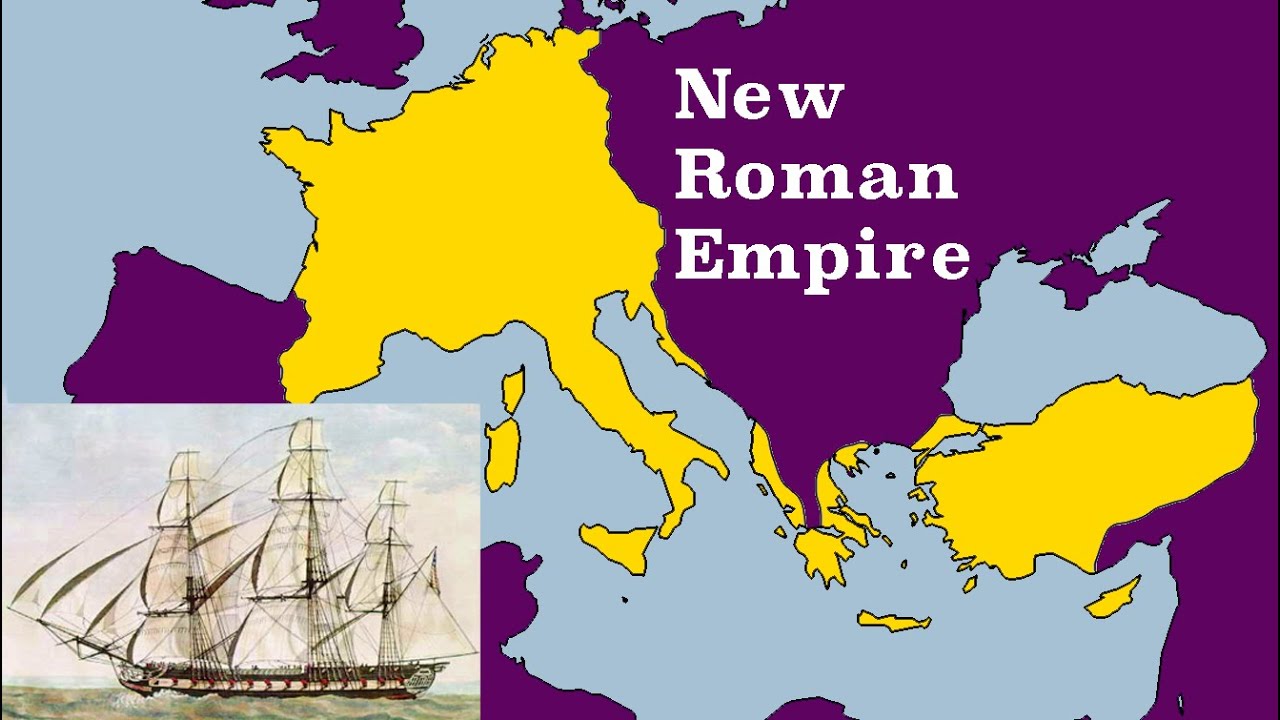
What if Irene and Charlemagne Married?
video description
In my view, the Frankish city state would be likewise ambitiously trying to seize control of Papal territory, resulting in the same disparate appeal to Otto. Due to the rebelliousness of northern Italy, and the weaknesses of feudalism in the urban environment, Otto would still conquer northern Italy and march on Rome, where he would still be crowned Emperor. Sardinia, Corsica and south Italy would still be part of the Frankish Empire and Italy would turn into a battlefield between the Empire in Germany and the allies of France and South Italy.
Date: 2022-07-15
Related videos


Comments and reviews: 9
Cory
I guess it all depends on the succession after Charlemagne. But with his views becoming more and more Roman, wouldn't his successor more likely be one person due to the fact he was Emperor of both Empires now. Don't get me wrong, his son's would have most likely wanted a civil war expecting there entire lives to become king at some point. But I do believe Charlemagne would have most likely had two sons killed at this point to stabilize this new empire. He wanted power above all else. So wouldn't that mean he would want that to happen for his son with the Eastern Empire or Roman Empire far outdating the Frankish Empire. In other words, now that they have the Eastern Roman Empire, why not try to keep it instead of just saying, oooo we are germans so let's just go back to way things were, and I'll just throw away my greatest achievement so my son's can kill each other faster. Nooo, I think at this point he would think like a Roman Emperor, not a Frankish germanic king because be would be Roman Emperor. Who knows what would all happen in the next 100 years but I do believe this would have been a moment in history that would change things forever. Not just like a speed bump your prediction is portraying.
reply
I guess it all depends on the succession after Charlemagne. But with his views becoming more and more Roman, wouldn't his successor more likely be one person due to the fact he was Emperor of both Empires now. Don't get me wrong, his son's would have most likely wanted a civil war expecting there entire lives to become king at some point. But I do believe Charlemagne would have most likely had two sons killed at this point to stabilize this new empire. He wanted power above all else. So wouldn't that mean he would want that to happen for his son with the Eastern Empire or Roman Empire far outdating the Frankish Empire. In other words, now that they have the Eastern Roman Empire, why not try to keep it instead of just saying, oooo we are germans so let's just go back to way things were, and I'll just throw away my greatest achievement so my son's can kill each other faster. Nooo, I think at this point he would think like a Roman Emperor, not a Frankish germanic king because be would be Roman Emperor. Who knows what would all happen in the next 100 years but I do believe this would have been a moment in history that would change things forever. Not just like a speed bump your prediction is portraying.
reply
blkgardner
Charlemagne's empire did pass undivided to his remaining son, Louis the Pious. Barbarians tend to adopt the cultural practices of more civilized nations, not vice versa. Louis would have likely been able to pass the imperial title to Lothair I, while granting his other sons kingdom titles beyond the Alps.
The end result would have likely been Germany and France obtaining eventual independence, while Italy and possibly southern France remain part of the Byzantine empire. In that timeline, the Pope is still under Byzantine control, so he remains a Patriarch. The Imperial line of the Carolingians would become culturally Greek, while North European branch remains German and Proto-French.
The Holy Roman Empire never exists in this timeline. Even though Charlemagne was declared emperor by the Pope in 800, he became Emperor in fact by marriage to Irene. This event would be re-interpreted not as founding a new empire, but as a claim on the Byzantine crown, which he soon obtained.
reply
Charlemagne's empire did pass undivided to his remaining son, Louis the Pious. Barbarians tend to adopt the cultural practices of more civilized nations, not vice versa. Louis would have likely been able to pass the imperial title to Lothair I, while granting his other sons kingdom titles beyond the Alps.
The end result would have likely been Germany and France obtaining eventual independence, while Italy and possibly southern France remain part of the Byzantine empire. In that timeline, the Pope is still under Byzantine control, so he remains a Patriarch. The Imperial line of the Carolingians would become culturally Greek, while North European branch remains German and Proto-French.
The Holy Roman Empire never exists in this timeline. Even though Charlemagne was declared emperor by the Pope in 800, he became Emperor in fact by marriage to Irene. This event would be re-interpreted not as founding a new empire, but as a claim on the Byzantine crown, which he soon obtained.
reply
Bhaam
One point about frankish succession law: there were none. What we call frankish succession is an a posteriori reconstruction when looking at what happened, but there never were a rule of royal succession within the kingdom of the Franks. What happened instead is that a king would grant titles to his sons, and they would rule beside him as secondary kings. After he dies, they were supposed to cooperate and share the administration of the kingdom. That's what happened with Charlemagne, who granted titles of kings to his sons even before his coronation as emperor: Charles was made king of the Franks (Neustria and Austrasia, Pepin was made king of the Lombards and duke of Bavaria, and Louis was made king of the Aquitains. Louis was the only one to survive his father so he inherited everything, but Charlemagne crowned him emperor himself.
reply
One point about frankish succession law: there were none. What we call frankish succession is an a posteriori reconstruction when looking at what happened, but there never were a rule of royal succession within the kingdom of the Franks. What happened instead is that a king would grant titles to his sons, and they would rule beside him as secondary kings. After he dies, they were supposed to cooperate and share the administration of the kingdom. That's what happened with Charlemagne, who granted titles of kings to his sons even before his coronation as emperor: Charles was made king of the Franks (Neustria and Austrasia, Pepin was made king of the Lombards and duke of Bavaria, and Louis was made king of the Aquitains. Louis was the only one to survive his father so he inherited everything, but Charlemagne crowned him emperor himself.
reply
Gaius
_De Jure_ Roman Empire never ceased both in East and West, and the Barbarians recognized Emperor's suzerainty after 5 c. It explains why Charlemagne laid claims to the Imperial throne: his sovereignty existed in the domain of the Roman Empire, he wasn't a stranger, a foreign ruler. If he married Irene it would mean only that he'd become the first Roman Emperor for the last 400 years that would rule both West and East not _de jure_ but _de facto_. Even in reality, Charlemagne and his successors on one hand, and Constantinople Emperors on the other hand declared the unity of the Roman state and were calling each other brothers in official documents, so Roman Empire was considered one Empire at that time.
reply
_De Jure_ Roman Empire never ceased both in East and West, and the Barbarians recognized Emperor's suzerainty after 5 c. It explains why Charlemagne laid claims to the Imperial throne: his sovereignty existed in the domain of the Roman Empire, he wasn't a stranger, a foreign ruler. If he married Irene it would mean only that he'd become the first Roman Emperor for the last 400 years that would rule both West and East not _de jure_ but _de facto_. Even in reality, Charlemagne and his successors on one hand, and Constantinople Emperors on the other hand declared the unity of the Roman state and were calling each other brothers in official documents, so Roman Empire was considered one Empire at that time.
reply
Rey
Frankly, the left division of the empire shown at 9: 24 actually makes _far_ more sense than the one on the right.
This middle empire is simply undefendable(even by modern standards) and bound to break up or get squished between the other two. It really bothers me a statesmen like Charlemagne would carve up his empire like this, basically setting his sons up for war against each other(or maybe he disliked Lothar smh) and thus the destruction of his empire. The left setup would result in much earlier reunification of Germany and Italy, giving continental Europe 3 strong players to content with each other instead of just France out-populating the other two combined.
reply
Frankly, the left division of the empire shown at 9: 24 actually makes _far_ more sense than the one on the right.
This middle empire is simply undefendable(even by modern standards) and bound to break up or get squished between the other two. It really bothers me a statesmen like Charlemagne would carve up his empire like this, basically setting his sons up for war against each other(or maybe he disliked Lothar smh) and thus the destruction of his empire. The left setup would result in much earlier reunification of Germany and Italy, giving continental Europe 3 strong players to content with each other instead of just France out-populating the other two combined.
reply
Federico
As an Italian, I often see people who say that Italy is the heir of the Roma. Empire; I dont think so. Italy is the country of the Italians, the RE was the country of the romans.
I think that there is no heir to the Roman Empire, but if I had to choose I would find two options: Greece and the Vatican. The Vatican technically speaks Latin, but everyone can see that its a different thing, this is just the state of the pope, not the romans. Greece makes more sense as the heir of the byzantines, but still its not the country of the Romans, its the country of the Greek.
So my opinion is that theres no heir of the RE
reply
As an Italian, I often see people who say that Italy is the heir of the Roma. Empire; I dont think so. Italy is the country of the Italians, the RE was the country of the romans.
I think that there is no heir to the Roman Empire, but if I had to choose I would find two options: Greece and the Vatican. The Vatican technically speaks Latin, but everyone can see that its a different thing, this is just the state of the pope, not the romans. Greece makes more sense as the heir of the byzantines, but still its not the country of the Romans, its the country of the Greek.
So my opinion is that theres no heir of the RE
reply
Piece
There's a problem with this ALT: Irene wasn't the one who cancelled the marriage. That was Charlemagne's doing. Irene had every reason to maintain the marriage being that it helped secure her Empire's Italian holdings. That was the sole reason why the Eastern Empire agreed to the marriage proposal. The Empire's Italian holdings had been held on only tenuously at best since 568 with the Lombard invasion of the Peninsula and with the Frankish take over of the Lombard Kingdom this only became worse because now the Romans had to contend with a state that covered most of Christian Europe outside of the Empire and Hispania.
reply
There's a problem with this ALT: Irene wasn't the one who cancelled the marriage. That was Charlemagne's doing. Irene had every reason to maintain the marriage being that it helped secure her Empire's Italian holdings. That was the sole reason why the Eastern Empire agreed to the marriage proposal. The Empire's Italian holdings had been held on only tenuously at best since 568 with the Lombard invasion of the Peninsula and with the Frankish take over of the Lombard Kingdom this only became worse because now the Romans had to contend with a state that covered most of Christian Europe outside of the Empire and Hispania.
reply
1000eau
You made an error, in reality, Charlemagne only had one son who didn't die too young to become king, Louis the pious, he had 3 sons, and originally, he wanted to only have one inherit the throne, but at his death, there was a civil war between the 3 brothers, the 2 brothers of Lothar (the son who was supposed to be the only one to inherit the throne, Louis and Charles won. So, if they lost against Lothar, the Carolingian Empire could remain united, and thus in this scenario, the whole Roman Empire could remain united.
reply
You made an error, in reality, Charlemagne only had one son who didn't die too young to become king, Louis the pious, he had 3 sons, and originally, he wanted to only have one inherit the throne, but at his death, there was a civil war between the 3 brothers, the 2 brothers of Lothar (the son who was supposed to be the only one to inherit the throne, Louis and Charles won. So, if they lost against Lothar, the Carolingian Empire could remain united, and thus in this scenario, the whole Roman Empire could remain united.
reply
Christopher
Call me cynical, but I don't think the Renaissance was that important to humanity's progress, is one of the most asinine and ridiculous statements I've ever heard. Listening to this man drone on in his monotone voice, it becomes painfully obvious that: 1. he is blatantly anti-Italian and anti-Mediterranean, perhaps due to his uninspired Teutonic and Germanic background and 2. he knows nothing about this time frame of history.
reply
Call me cynical, but I don't think the Renaissance was that important to humanity's progress, is one of the most asinine and ridiculous statements I've ever heard. Listening to this man drone on in his monotone voice, it becomes painfully obvious that: 1. he is blatantly anti-Italian and anti-Mediterranean, perhaps due to his uninspired Teutonic and Germanic background and 2. he knows nothing about this time frame of history.
reply
Add a review, comment
Other channel videos