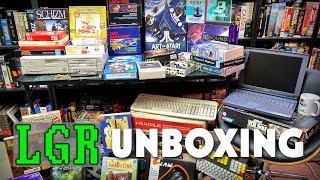
TRS-80 Color Computer: Radio Shack's $399 Micro from 1980!
video description
Date: 2022-04-14
Related videos


Comments and reviews: 10
Ryder
I purchased my Coco on Kodiak Island, Alaska right after release. The 4K model. With it, I taught myself programming during the long Alaskan winter. I upgraded it myself to 32K by stacking memory chips (the -piggy-back- method. The joysticks were -must-have-. and eventually I got the disk drive as well as the 300 baud Modem 1. I was on-line since about 1981 or 82. long before this -internet- thing was a household word. The disk drive was magic. I also purchased the mouse. but it was not implemented in too many commercial titles. The Coco was the first consumer computer I ever heard of that had a multitasking operating system available, OS-9. I ultimately upgraded the keyboard to a full-stroke after-market one. I had the 4-pen color plotter, the CGP-115 which I ended up mounting INSIDE the Coco. flush with the top of the case in the left rear. So far as I know, the only Coco that existed with a printer built right in.
In around 1985, I connected the Coco to a movie camera capable of taking single frame exposures. With custom software I wrote in Extended Basic, the Coco did 2-d animation, frame by frame, and commanded the Super-8 camera to record it. which, when sent off for development, returned what must have been some of the earliest home computer animation ever produced.
I also wrote a few bits of code in 6809 assembly. stunning speed (great for joystick interfacing to graphics) when compared to the basic interpreter, but SO difficult to program. Glad I did it just to say I did: )
The other fun thing Coco users did was participate in -one-liner- program contests. seeing what you could write in one line of basic code. Today the very concept makes no sense, but back then memory was at a premium, so writing compact, efficient code was a necessary skill. I was able to write a joystick controllable lunar lander simulator. two versions, one that had sound with the rocket thrust, and the other that had no sound, but actually detected the moon and landed on it without falling through. I couldn't have both: . Another was an Evil Kneivel simulator where the motorcycle would jump busses, based on the arcade game.
Take that, modern coders. All in 256 characters of basic code, -looping within a PORTION of one line of code- (the initial portion was needed to initialize the graphics mode.
Amazing computer. a serious love affair, until the Amiga 1000 came out!
reply
I purchased my Coco on Kodiak Island, Alaska right after release. The 4K model. With it, I taught myself programming during the long Alaskan winter. I upgraded it myself to 32K by stacking memory chips (the -piggy-back- method. The joysticks were -must-have-. and eventually I got the disk drive as well as the 300 baud Modem 1. I was on-line since about 1981 or 82. long before this -internet- thing was a household word. The disk drive was magic. I also purchased the mouse. but it was not implemented in too many commercial titles. The Coco was the first consumer computer I ever heard of that had a multitasking operating system available, OS-9. I ultimately upgraded the keyboard to a full-stroke after-market one. I had the 4-pen color plotter, the CGP-115 which I ended up mounting INSIDE the Coco. flush with the top of the case in the left rear. So far as I know, the only Coco that existed with a printer built right in.
In around 1985, I connected the Coco to a movie camera capable of taking single frame exposures. With custom software I wrote in Extended Basic, the Coco did 2-d animation, frame by frame, and commanded the Super-8 camera to record it. which, when sent off for development, returned what must have been some of the earliest home computer animation ever produced.
I also wrote a few bits of code in 6809 assembly. stunning speed (great for joystick interfacing to graphics) when compared to the basic interpreter, but SO difficult to program. Glad I did it just to say I did: )
The other fun thing Coco users did was participate in -one-liner- program contests. seeing what you could write in one line of basic code. Today the very concept makes no sense, but back then memory was at a premium, so writing compact, efficient code was a necessary skill. I was able to write a joystick controllable lunar lander simulator. two versions, one that had sound with the rocket thrust, and the other that had no sound, but actually detected the moon and landed on it without falling through. I couldn't have both: . Another was an Evil Kneivel simulator where the motorcycle would jump busses, based on the arcade game.
Take that, modern coders. All in 256 characters of basic code, -looping within a PORTION of one line of code- (the initial portion was needed to initialize the graphics mode.
Amazing computer. a serious love affair, until the Amiga 1000 came out!
reply
FaeAlicia
This was my first computer at age 4, given as a hand-me-down from family in the late 1980s. It's weird, though. I wasn't aware that I had most of the higher end hardware. I had both the 32k Model I and the white 64k Model III you showed off. On top of that, I had two of the big white joysticks that you briefly showed in a magazine ad in the video, two floppy drives daisy chained together, and even the single button mouse that had an extremely low sensitivity, making it very hard to use without dragging it across the spot multiple times. It might've also been that dust just got inside, but it was impossible to take apart and clean, so whatever.
Interestingly, at age 8 or so, this was also the first computer I ever repaired. One of the disk drives never really worked, so I finally decided to borrow a screwdriver from dad in the garage and opened it up to take a look. Turns out, just as you have that ribbon cable on the outside, there's also one on the inside connecting the port to the circuit board, and in that drive, that cable was unplugged. I plugged it in and it worked just fine up until my family sold it at a garage sale in the mid-2000s. By then, I had already gotten a Tandy 1000 HX with dual 3-1/2- floppies, an IBM PS/2 whose internal hard drive ultimately failed, and a generic 486 with 8MB of RAM and a 509MB internal HDD, so the CoCos were largely just taking up space at that point and none in my family had a collector's mindset to save it for ourselves.
I wish I could've saved it. I might've even been able to someday repair the other drive, which broke down soon after repairing the first, likely being a drive head motor issue and far outside the scope of what I was capable of at the time. But while I miss it now, I can still look back fondly at what I've come to realize wasn't so humble beginnings.
P. S. The only game cartridge I had was Dungeons of Daggorath and somehow, my young little mind was keen enough to make it to the 4th floor (out of 5 total) after eventually learning to not run as fast as I can all the time so that I don't faint from the heartbeat mechanic.
reply
This was my first computer at age 4, given as a hand-me-down from family in the late 1980s. It's weird, though. I wasn't aware that I had most of the higher end hardware. I had both the 32k Model I and the white 64k Model III you showed off. On top of that, I had two of the big white joysticks that you briefly showed in a magazine ad in the video, two floppy drives daisy chained together, and even the single button mouse that had an extremely low sensitivity, making it very hard to use without dragging it across the spot multiple times. It might've also been that dust just got inside, but it was impossible to take apart and clean, so whatever.
Interestingly, at age 8 or so, this was also the first computer I ever repaired. One of the disk drives never really worked, so I finally decided to borrow a screwdriver from dad in the garage and opened it up to take a look. Turns out, just as you have that ribbon cable on the outside, there's also one on the inside connecting the port to the circuit board, and in that drive, that cable was unplugged. I plugged it in and it worked just fine up until my family sold it at a garage sale in the mid-2000s. By then, I had already gotten a Tandy 1000 HX with dual 3-1/2- floppies, an IBM PS/2 whose internal hard drive ultimately failed, and a generic 486 with 8MB of RAM and a 509MB internal HDD, so the CoCos were largely just taking up space at that point and none in my family had a collector's mindset to save it for ourselves.
I wish I could've saved it. I might've even been able to someday repair the other drive, which broke down soon after repairing the first, likely being a drive head motor issue and far outside the scope of what I was capable of at the time. But while I miss it now, I can still look back fondly at what I've come to realize wasn't so humble beginnings.
P. S. The only game cartridge I had was Dungeons of Daggorath and somehow, my young little mind was keen enough to make it to the 4th floor (out of 5 total) after eventually learning to not run as fast as I can all the time so that I don't faint from the heartbeat mechanic.
reply
Indrid
I loved my Radio Shack Colour Computer. I would still have it today if it did not burn in a fire.
10 pcls
20 screen 8, 1
30 mode 4
40 for x=1 to 255 step 2
50 circle (128, 96, x, x
60 next x
70 end
BOOM! There was my nuclear explosion for the time. 128, 96 was the center of the television screen.
I also remember making a mine field
10 CLS 0
15 FOR X=1 TO 200
20 H=RND (55)
30 V=RND (55)
40 SET (H, V, 2)
45 NEXT X
46 SET (55, 55, 7)
50 A=JOYSTK(0)
60 B=JOYSTIK(1)
70 SET (A, B, 4)
75 IF POINT A, B = 2 then gosub 80
80 sound 255, 1
85 C=C+1
86 IF C=10 THEN GOSUB 130
86 RETURN
87 If point A, B = 7 then gosub 90
90 PRINT 1, 1, -Congratulations! You made it through the mine field. -
100 Return
110 END
130 PRINT 1, 1, -YOU ARE DEAD. -
140 END
reply
I loved my Radio Shack Colour Computer. I would still have it today if it did not burn in a fire.
10 pcls
20 screen 8, 1
30 mode 4
40 for x=1 to 255 step 2
50 circle (128, 96, x, x
60 next x
70 end
BOOM! There was my nuclear explosion for the time. 128, 96 was the center of the television screen.
I also remember making a mine field
10 CLS 0
15 FOR X=1 TO 200
20 H=RND (55)
30 V=RND (55)
40 SET (H, V, 2)
45 NEXT X
46 SET (55, 55, 7)
50 A=JOYSTK(0)
60 B=JOYSTIK(1)
70 SET (A, B, 4)
75 IF POINT A, B = 2 then gosub 80
80 sound 255, 1
85 C=C+1
86 IF C=10 THEN GOSUB 130
86 RETURN
87 If point A, B = 7 then gosub 90
90 PRINT 1, 1, -Congratulations! You made it through the mine field. -
100 Return
110 END
130 PRINT 1, 1, -YOU ARE DEAD. -
140 END
reply
101perspective
I mowed a lot of lawns to buy one of these. I still have it. Worked last time I checked.
I was so excited when I got this that I stayed up all night reading the programming book and memorized it all. I mainly programmed on it. I never bought any game cartridges. I did, however, buy a voice cartridge and a controller cartridge. The controller allowed you to control outlets in the house. You could press buttons to turn things on and off or you could set them on timers to turn on and off. It was pretty futuristic for the time.
Btw, I later upgraded the machine so it would display more colors. That required losing like half of the memory. lol. Worth it though.
reply
I mowed a lot of lawns to buy one of these. I still have it. Worked last time I checked.
I was so excited when I got this that I stayed up all night reading the programming book and memorized it all. I mainly programmed on it. I never bought any game cartridges. I did, however, buy a voice cartridge and a controller cartridge. The controller allowed you to control outlets in the house. You could press buttons to turn things on and off or you could set them on timers to turn on and off. It was pretty futuristic for the time.
Btw, I later upgraded the machine so it would display more colors. That required losing like half of the memory. lol. Worth it though.
reply
perfectionbox
I remember developing software on a Coco 2 when the original Mac came out. After ten minutes I realized, I may as well drop the Coco, everything has changed. Yes, the Mac was crazy expensive but I figured if Apple could evolve the Lisa down to a much cheaper machine and retain the GUI and 68000 chip, then PCs were going to get cheaper still. On the Intel side, PC clonemakers were driving that lesson even harder. I saw diehards with huge libraries of Coco software hang on, but Rainbow magazine got razor thin, and the ship had sailed. But I'll always remember the Coco fondly, lots of gaming and coding memories, and the 6809 was a joy to write machine code for.
reply
I remember developing software on a Coco 2 when the original Mac came out. After ten minutes I realized, I may as well drop the Coco, everything has changed. Yes, the Mac was crazy expensive but I figured if Apple could evolve the Lisa down to a much cheaper machine and retain the GUI and 68000 chip, then PCs were going to get cheaper still. On the Intel side, PC clonemakers were driving that lesson even harder. I saw diehards with huge libraries of Coco software hang on, but Rainbow magazine got razor thin, and the ship had sailed. But I'll always remember the Coco fondly, lots of gaming and coding memories, and the 6809 was a joy to write machine code for.
reply
Aftersun
I got a TSR-80 in the mid 1980's (perhaps around 1986) as a kid. I actually found one at a yard sell with three games (on carts) with no peripherals for like $10. 00. Downland was one of those games. I already had a Commodore 64 and I bought the Tandy because I wanted to explore other computers at the time. Because I was spoiled by my C64 as a kid, I wasn't impressed with the Color Computer so I traded to a friend for two NES games. Looking back, I wished I kept it but I couldn't really buy anything for it at Radio Shack because everything was just too expensive other than games. But I did like Downland. I can't remember the other games I had with it.
reply
I got a TSR-80 in the mid 1980's (perhaps around 1986) as a kid. I actually found one at a yard sell with three games (on carts) with no peripherals for like $10. 00. Downland was one of those games. I already had a Commodore 64 and I bought the Tandy because I wanted to explore other computers at the time. Because I was spoiled by my C64 as a kid, I wasn't impressed with the Color Computer so I traded to a friend for two NES games. Looking back, I wished I kept it but I couldn't really buy anything for it at Radio Shack because everything was just too expensive other than games. But I did like Downland. I can't remember the other games I had with it.
reply
Carter
Had to LOL as those SFX around 14: 10 are -exactly- like the sounds made by mid 80s Z80 CPU based UK fruit machines (one arm bandits) before they started using Yamaha (and similar) add on sound chips and samples as a plug-in to the main boards from the early to mid 90s. Z80s carried on being used in machines such as Barcrest's MPU4 right up until the early 2000s (although after 1997-8 this was exclusively on 'low tech' machines) and although most machines are later generation or fully digital in bars and pubs, there are probably many Z80 based machines still in use today at seaside arcades on piers etc.
reply
Had to LOL as those SFX around 14: 10 are -exactly- like the sounds made by mid 80s Z80 CPU based UK fruit machines (one arm bandits) before they started using Yamaha (and similar) add on sound chips and samples as a plug-in to the main boards from the early to mid 90s. Z80s carried on being used in machines such as Barcrest's MPU4 right up until the early 2000s (although after 1997-8 this was exclusively on 'low tech' machines) and although most machines are later generation or fully digital in bars and pubs, there are probably many Z80 based machines still in use today at seaside arcades on piers etc.
reply
gzumwalt
This is so cool! I did not realize so many people were still interested in the Color Computer.
I wrote 37 video games for Tandy Corporation from StarBlaze through Robocop, Predator and Tetris in the 80's and early 90's. I recently donated all of my Color Computers and accessories to the Oklahoma Historical Society / OKPOP museum as I've been inducted into the museum for the video games i wrote.
This brings back so many wonderful memories of working with Mark Seigel and Srini Vasan of Tandy Corporation in developing these game during the 80's and early 90's!
Many, many thanks!
Greg
reply
This is so cool! I did not realize so many people were still interested in the Color Computer.
I wrote 37 video games for Tandy Corporation from StarBlaze through Robocop, Predator and Tetris in the 80's and early 90's. I recently donated all of my Color Computers and accessories to the Oklahoma Historical Society / OKPOP museum as I've been inducted into the museum for the video games i wrote.
This brings back so many wonderful memories of working with Mark Seigel and Srini Vasan of Tandy Corporation in developing these game during the 80's and early 90's!
Many, many thanks!
Greg
reply
NSV
My first computer!
Didn't own one. I did however spend all my time hanging out at the Neighborhood Radio Shack playing with the Moog-Realistic MG1 or fiddling with the TRS80.
The store manager took me aside and asked if I understood computers, he had no idea so he asked me to write a demo program.
He lent me the Basic book you see in this video, and I wrote him a little demo that showed the stores name and address and flashed colors and did some other stuff I forgot? Long time ago.
He gave me an RC car for my work. I was 11 or 12.
reply
My first computer!
Didn't own one. I did however spend all my time hanging out at the Neighborhood Radio Shack playing with the Moog-Realistic MG1 or fiddling with the TRS80.
The store manager took me aside and asked if I understood computers, he had no idea so he asked me to write a demo program.
He lent me the Basic book you see in this video, and I wrote him a little demo that showed the stores name and address and flashed colors and did some other stuff I forgot? Long time ago.
He gave me an RC car for my work. I was 11 or 12.
reply
Zane
This was the machine that has started my coding journey. My lab teacher told us about how he had a really old computer from his childhood that ran BASIC, not only that, but he kept the programming books. He busted it out and immediately people started messing with it. I was one of the only ones to stick to it, and now I'm teaching myself C++. I thought i would hate programming, never thought I'd have the patience for it, but coding BASIC on the TRS-80 proved otherwise.
reply
This was the machine that has started my coding journey. My lab teacher told us about how he had a really old computer from his childhood that ran BASIC, not only that, but he kept the programming books. He busted it out and immediately people started messing with it. I was one of the only ones to stick to it, and now I'm teaching myself C++. I thought i would hate programming, never thought I'd have the patience for it, but coding BASIC on the TRS-80 proved otherwise.
reply
Add a review, comment
Other channel videos