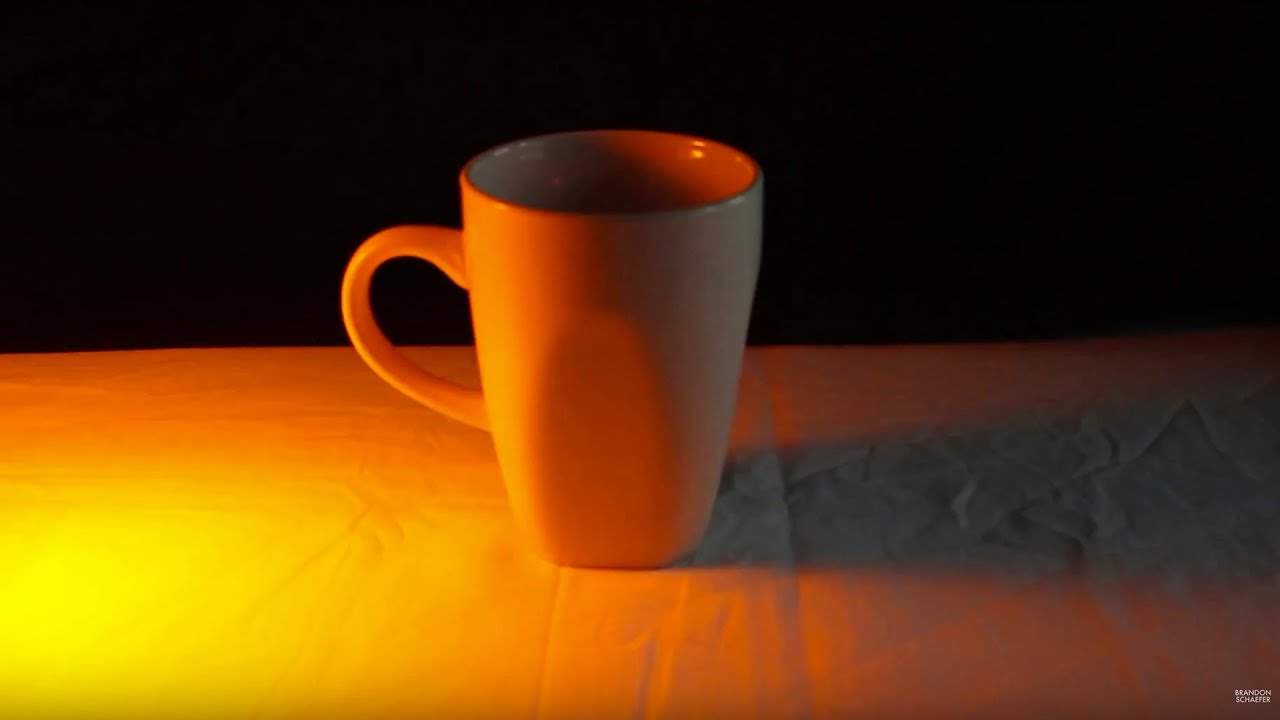
Light & Shadow Colors - Experiment SchaeferArt
video description
Date: 2022-03-09
Related videos






Comments and reviews: 10
Average
For those who are curious: You can't reflect a color of light that isn't there. By doing the experiment in a neutral space with no other ambient light, using a bulb that absorbs all but one color of light, the only color the shadows (and objects) can possibly be is that of the light source. When you do the experiment in a space that does have ambient light, there are other colors already there reflecting as light rays, and the ones which are complimentary to the direct light source stand out more in shadow. This is because the object obscures the direct light and causes its complimentary colors to be over-represented in the shadow by comparison.
It's a subjective thing, like how midtones look dark against light and light against dark when the other value extreme isn't present, except this time it has to do with saturation (and probably how the color cones in our eyes function) instead of value.
How much of each color is represented in the shadow to begin with will depend on the color of the ambient light and color of nearby objects. When you put, for instance, a red piece of paper near the shadow, that red piece of paper absorbs any light rays bouncing around that aren't red. That means colors other than red in the ambient light start to become occluded, and the shadow as a whole might look darker. The red light it does reflect mixes with whatever light wasn't occluded and shifts the shadow towards red. The farther away that paper is, the more ambient light can sneak in, giving the red light less influence over the shadow and the shadow a lighter value.
reply
For those who are curious: You can't reflect a color of light that isn't there. By doing the experiment in a neutral space with no other ambient light, using a bulb that absorbs all but one color of light, the only color the shadows (and objects) can possibly be is that of the light source. When you do the experiment in a space that does have ambient light, there are other colors already there reflecting as light rays, and the ones which are complimentary to the direct light source stand out more in shadow. This is because the object obscures the direct light and causes its complimentary colors to be over-represented in the shadow by comparison.
It's a subjective thing, like how midtones look dark against light and light against dark when the other value extreme isn't present, except this time it has to do with saturation (and probably how the color cones in our eyes function) instead of value.
How much of each color is represented in the shadow to begin with will depend on the color of the ambient light and color of nearby objects. When you put, for instance, a red piece of paper near the shadow, that red piece of paper absorbs any light rays bouncing around that aren't red. That means colors other than red in the ambient light start to become occluded, and the shadow as a whole might look darker. The red light it does reflect mixes with whatever light wasn't occluded and shifts the shadow towards red. The farther away that paper is, the more ambient light can sneak in, giving the red light less influence over the shadow and the shadow a lighter value.
reply
Nathan
Very nice video! I used to think that the rule for color shadow was just to help color harmony, or just to get a more pleasing effect in the painting. For sure it's more interesting to use the complementary instead of just blue, for example.
You asked for a suggestion, here it goes! I never believed the rule of opaque lights and transparent shadows. Maybe you could analise this in a future video, discussing examples for and against this. One thing that occurs to me is that a sun ray, for example, shining through a forest, is very TRANSPARENT! And if you paint it with thick titanium white you will get an amateurish look to your painting.
reply
Very nice video! I used to think that the rule for color shadow was just to help color harmony, or just to get a more pleasing effect in the painting. For sure it's more interesting to use the complementary instead of just blue, for example.
You asked for a suggestion, here it goes! I never believed the rule of opaque lights and transparent shadows. Maybe you could analise this in a future video, discussing examples for and against this. One thing that occurs to me is that a sun ray, for example, shining through a forest, is very TRANSPARENT! And if you paint it with thick titanium white you will get an amateurish look to your painting.
reply
CreativeWatersArt
Thanks for this! I have never accepted at face value the cool light/warm shadow, warm light/cool shadow rule. I was always wanting to do this experiment myself and you just saved me a lot of time. I always felt that the shadow color would have to be influenced by the light being reflected from objects around it.
Still not sure what to make of the complimentary color shadows though, would like to understand the reason behind this. I wonder if it has to do with our perception as a result of the strong color of the lighted areas. Sort of a color compensation thing. Cheers!
reply
Thanks for this! I have never accepted at face value the cool light/warm shadow, warm light/cool shadow rule. I was always wanting to do this experiment myself and you just saved me a lot of time. I always felt that the shadow color would have to be influenced by the light being reflected from objects around it.
Still not sure what to make of the complimentary color shadows though, would like to understand the reason behind this. I wonder if it has to do with our perception as a result of the strong color of the lighted areas. Sort of a color compensation thing. Cheers!
reply
Rjurik
thanks that was very interesting, I think we see complementary colors in shadows mainly outdoors because of a general greying of colors that occurs when the direct sunlight is blocked, and because most of the object we're generally surrounded by are actually cool and quite greyed down in color, like earth, asphalt, mud, grass, vegetation (unless you're standing on red cloth or other very warm objects. and this makes the reflection of the sky bluish color much easier to be viewed on the part of the objet in shadow!
reply
thanks that was very interesting, I think we see complementary colors in shadows mainly outdoors because of a general greying of colors that occurs when the direct sunlight is blocked, and because most of the object we're generally surrounded by are actually cool and quite greyed down in color, like earth, asphalt, mud, grass, vegetation (unless you're standing on red cloth or other very warm objects. and this makes the reflection of the sky bluish color much easier to be viewed on the part of the objet in shadow!
reply
Angela
I have wondered the same exact things about things taught regarding colors to use in shading and painting shadows. Thank you so much for doing this experiment! I always just used what was already on my palette, because it made sense to me. Now I see why it made sense. it was values of colors I was already using for the object and or other objects in the setting. I'm brand new at painting, but I've never been one to have 'blind' faith. Keep up the great videos. Good info!
reply
I have wondered the same exact things about things taught regarding colors to use in shading and painting shadows. Thank you so much for doing this experiment! I always just used what was already on my palette, because it made sense to me. Now I see why it made sense. it was values of colors I was already using for the object and or other objects in the setting. I'm brand new at painting, but I've never been one to have 'blind' faith. Keep up the great videos. Good info!
reply
Sue
Very interesting subject to say the list. Is kind of wanting to light a color by just using white, isn't it? it doesn't apply at all times because looks unrealistic.
But I have a question. Why is that some professional painter use a dark room and artificial light?
I am a self taught painter who believes that there is no white white nor a peach black because there is always something to reflect on, am I wrong?
reply
Very interesting subject to say the list. Is kind of wanting to light a color by just using white, isn't it? it doesn't apply at all times because looks unrealistic.
But I have a question. Why is that some professional painter use a dark room and artificial light?
I am a self taught painter who believes that there is no white white nor a peach black because there is always something to reflect on, am I wrong?
reply
Ricardo
Knowing about the different color schemes is useful for painting but which one do we see in real life? If I was to paint a red apple from imagination, assuming my light source is sunlight, would the shadow side be green (red-s complementary in the red-yellow-blue system) or teal (red-s complementary using the rgb system? I-m self-taught so I-m really curious about this and can-t really find the answer.
reply
Knowing about the different color schemes is useful for painting but which one do we see in real life? If I was to paint a red apple from imagination, assuming my light source is sunlight, would the shadow side be green (red-s complementary in the red-yellow-blue system) or teal (red-s complementary using the rgb system? I-m self-taught so I-m really curious about this and can-t really find the answer.
reply
Kamiccolo
interesting video, still what's the reason for the complimentory color showing up when influenced by daylight? I get that in outdoor scenes the shadows are lit by blue ambient light from the sky which makes the shadows shift towards blue but how did it affect the shadows of the different colored light sources? I remember reading that it's an optical illusion but still I'm not really convinced.
reply
interesting video, still what's the reason for the complimentory color showing up when influenced by daylight? I get that in outdoor scenes the shadows are lit by blue ambient light from the sky which makes the shadows shift towards blue but how did it affect the shadows of the different colored light sources? I remember reading that it's an optical illusion but still I'm not really convinced.
reply
xenontesla122
I think the shadows in the daylight test aren-t actually colored, but look like the complementary color because of an effect called color constancy ( illusionsindex. org/i/grey-strawberries. If I-m right, using an RGB color picker will show that the shadow is always a grey color. This means that you should choose a color that looks like the complement in context, but might not on its own.
reply
I think the shadows in the daylight test aren-t actually colored, but look like the complementary color because of an effect called color constancy ( illusionsindex. org/i/grey-strawberries. If I-m right, using an RGB color picker will show that the shadow is always a grey color. This means that you should choose a color that looks like the complement in context, but might not on its own.
reply
journeytobevin
okay now i understand how the colour palette on photoshop or lightroom the way they are! i certainly agree with your explanation on the colour did affect the shadow of an object cast. thanks for this video!
reply
okay now i understand how the colour palette on photoshop or lightroom the way they are! i certainly agree with your explanation on the colour did affect the shadow of an object cast. thanks for this video!
reply
Add a review, comment
Other channel videos