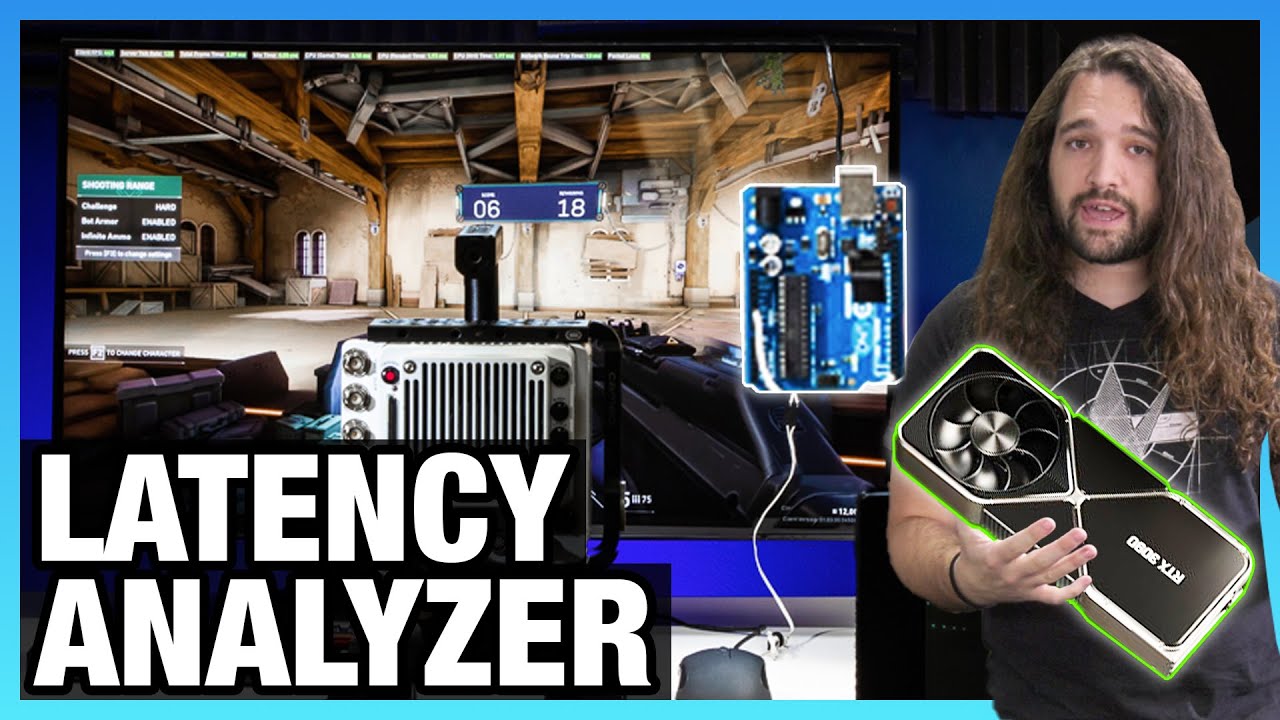
Overhauling System Latency Test Methodology (NVIDIA Latency Analyzer Validation)
video description
Date: 2020-09-08
Related videos


Comments and reviews: 10
Zipo214
QC technician here: if you want higher precision you should look at the traceable calibrations of every instrument you use. If you can trace their calibrations back to a NIST standard that is calibrated by NIST, you can verify the uncertainty of all of your measurements. This does NOT mean you need a NIST calibrated timer, photometer to measure light detection and universal time of the event. Rather if you can validate that every measurement device has been calibrated against a standard device ( a device either calibrated by NIST or a device at NIST) and has a serialized calibration ID and a relative error (uncertainty) issued, you can increase your repeatability and confidence in your actual margin of error.
reply
QC technician here: if you want higher precision you should look at the traceable calibrations of every instrument you use. If you can trace their calibrations back to a NIST standard that is calibrated by NIST, you can verify the uncertainty of all of your measurements. This does NOT mean you need a NIST calibrated timer, photometer to measure light detection and universal time of the event. Rather if you can validate that every measurement device has been calibrated against a standard device ( a device either calibrated by NIST or a device at NIST) and has a serialized calibration ID and a relative error (uncertainty) issued, you can increase your repeatability and confidence in your actual margin of error.
reply
keco185
Just because there isn t software trickery doesn t mean it s fair to use an Nvidia tool for testing Nvidia cards. Because they use the same tool internally, they may accidentally tune their cards to do better in the precise way the tool measures latency. For example, if the tool measures pixel changes in the middle of the screen, and nvidia were to render frames from the middle out, they would do better than the competition that renders from the top down.
That specific example is unlikely but the concept behind it still stands
reply
Just because there isn t software trickery doesn t mean it s fair to use an Nvidia tool for testing Nvidia cards. Because they use the same tool internally, they may accidentally tune their cards to do better in the precise way the tool measures latency. For example, if the tool measures pixel changes in the middle of the screen, and nvidia were to render frames from the middle out, they would do better than the competition that renders from the top down.
That specific example is unlikely but the concept behind it still stands
reply
Matthew
So, when testing for latency, you are taking the average? But, when the CPU benchmarks that were run by the third party company used an average, that was not ok. Not trying to be facetious, or an asshole here. Legitimately just asking a question to better understand a few things.
reply
So, when testing for latency, you are taking the average? But, when the CPU benchmarks that were run by the third party company used an average, that was not ok. Not trying to be facetious, or an asshole here. Legitimately just asking a question to better understand a few things.
reply
Jacob
I really appreciate how open you guys are about your methodology. It's also good for you guys to have something to point people to when they ask the same question hlas 50 other people.
Thank you for being an outlet that I really feel like I can trust the data and the analysis
reply
I really appreciate how open you guys are about your methodology. It's also good for you guys to have something to point people to when they ask the same question hlas 50 other people.
Thank you for being an outlet that I really feel like I can trust the data and the analysis
reply
Yankii
Hey steve ! Do you think the prices of the 30cards will increase after the first two or three months ? I really don't want to buy any card early (before the reviews) but i'm afraid it will go higher than what i can afford
reply
Hey steve ! Do you think the prices of the 30cards will increase after the first two or three months ? I really don't want to buy any card early (before the reviews) but i'm afraid it will go higher than what i can afford
reply
CoolMusicToMyEars
Better off with a dual trace digital scope and measure time between both traces, or use a frequency counter with two inputs ie start finish, dont forget switch bounce
reply
Better off with a dual trace digital scope and measure time between both traces, or use a frequency counter with two inputs ie start finish, dont forget switch bounce
reply
Chandan
Google: Let's just call it negative latency, no one will know or put in the effort to actually validate our claims.
Steve: Let's make a video about latency.
reply
Google: Let's just call it negative latency, no one will know or put in the effort to actually validate our claims.
Steve: Let's make a video about latency.
reply
cooper23231
Great vid once again Steve i really like how you do your testing, feels like there's way more effort than alot of other content creators on the platform
reply
Great vid once again Steve i really like how you do your testing, feels like there's way more effort than alot of other content creators on the platform
reply
Mystery
My favorite part is how heavily they direct this tech toward online gamers... without ever acknowledging internet connection speeds, ping, etc...
reply
My favorite part is how heavily they direct this tech toward online gamers... without ever acknowledging internet connection speeds, ping, etc...
reply
Disobeyedtoast
I hope initiatives like Nvidia Reflex and the latency analyzer will lead people to care about actual latency instead of marketing latency
reply
I hope initiatives like Nvidia Reflex and the latency analyzer will lead people to care about actual latency instead of marketing latency
reply
Add a review, comment
Other channel videos