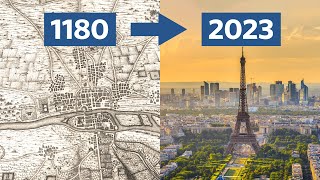
Can we make cities car free?
video description
Date: 2020-12-13
Related videos





Comments and reviews: 10
Bahno
Seems to me like you degrade cars to a form of luxury personal transport. But what about their cargo role? Residents can maybe avoid the need for cargo transportation if they always buy low quantities of food or have their new TV delivered by courier. But that courier has to arrive somehow and park in close vincinity. And worse of all, what about people, that dont have a choice and need to drive car for some reason. For example I am IT support technician. Most of time I work remotely, but there are situations, when I need to visit my customer to fix some hardware issue. I simply cannot take public transport to go there, as my car is my toolbox. In my Fiat Panda i have all the tools, cables and spare parts i can need while trying to fix my client's computer. It's too big and too heavy to carry as person. Also sometimes the issue cannot be resolved on site and I have to carry my client's computer to my lab. And these are no light laptops, I specialize in video editing workstations and drive arrays. In city you imagine as Utopia I cannot do my work anymore. Even if I comply and buy EV instead of my Fiat Panda I will have no way of driving to my client's place and park there. And I can imagine many other downsides of banning cars as a whole, ignoring their cargo role. Or am I missing something? I'd love to be corrected.
reply
Seems to me like you degrade cars to a form of luxury personal transport. But what about their cargo role? Residents can maybe avoid the need for cargo transportation if they always buy low quantities of food or have their new TV delivered by courier. But that courier has to arrive somehow and park in close vincinity. And worse of all, what about people, that dont have a choice and need to drive car for some reason. For example I am IT support technician. Most of time I work remotely, but there are situations, when I need to visit my customer to fix some hardware issue. I simply cannot take public transport to go there, as my car is my toolbox. In my Fiat Panda i have all the tools, cables and spare parts i can need while trying to fix my client's computer. It's too big and too heavy to carry as person. Also sometimes the issue cannot be resolved on site and I have to carry my client's computer to my lab. And these are no light laptops, I specialize in video editing workstations and drive arrays. In city you imagine as Utopia I cannot do my work anymore. Even if I comply and buy EV instead of my Fiat Panda I will have no way of driving to my client's place and park there. And I can imagine many other downsides of banning cars as a whole, ignoring their cargo role. Or am I missing something? I'd love to be corrected.
reply
Ymi_Yugy
It's not just space that makes electric cars a less than ideal solution
Transitioning to sustainable energy is not only a huge technological and economic challenge, but requires lots of emissions and destroys countless habitats.
Ecosystems get destroyed by new dams, cement production emits lots of CO2, many construction machines are not replaceable with electric one, water gets polluted from the iron mining required to build wind turbines, and the lithium required for batteries, etc.
This is why using sustainable energy is not enough, but we not also need to make sure we use it as efficiently as possible.
Electric cars are a huge waste of this precious energy.
This is why cars must become an exceptional means of transportation.
As rural areas do not have economically viable alternatives to cars, have on average much larger living spaces and require more environmentally harmful infrastructure construction urbanization is absolutely necessary to combat climate change and should be politically promoted.
reply
It's not just space that makes electric cars a less than ideal solution
Transitioning to sustainable energy is not only a huge technological and economic challenge, but requires lots of emissions and destroys countless habitats.
Ecosystems get destroyed by new dams, cement production emits lots of CO2, many construction machines are not replaceable with electric one, water gets polluted from the iron mining required to build wind turbines, and the lithium required for batteries, etc.
This is why using sustainable energy is not enough, but we not also need to make sure we use it as efficiently as possible.
Electric cars are a huge waste of this precious energy.
This is why cars must become an exceptional means of transportation.
As rural areas do not have economically viable alternatives to cars, have on average much larger living spaces and require more environmentally harmful infrastructure construction urbanization is absolutely necessary to combat climate change and should be politically promoted.
reply
Chaikovski
You should look at Pontevedra's car removal plan. Pontevedra is arguably one of teh most pedestrian-friendly city in Spain. Barcelona and Madrid are good cities for walking around if you consider their huge size (the first having around 2M inhabitants and the former about 3M) becouse they have extensive metro, bus and commuter rail systems (even trams in the case of Barcelona for the districts that have been traditionally underserved by the metro network. But I'd say that most cities in Spain are great for pedestrians because even the newer parts were built densely and following the mediterranean city model. We're lacking on bike infrastructure because most people are able to commute by foot, so we have some work to improve our bike lanes. Even small cities and towns are densely built: my town of 25. 000 is so dense that when the government set the restrictions of movement to 1km from your house to do sports during the lockdown, I could literally go anywhere in my city haha
reply
You should look at Pontevedra's car removal plan. Pontevedra is arguably one of teh most pedestrian-friendly city in Spain. Barcelona and Madrid are good cities for walking around if you consider their huge size (the first having around 2M inhabitants and the former about 3M) becouse they have extensive metro, bus and commuter rail systems (even trams in the case of Barcelona for the districts that have been traditionally underserved by the metro network. But I'd say that most cities in Spain are great for pedestrians because even the newer parts were built densely and following the mediterranean city model. We're lacking on bike infrastructure because most people are able to commute by foot, so we have some work to improve our bike lanes. Even small cities and towns are densely built: my town of 25. 000 is so dense that when the government set the restrictions of movement to 1km from your house to do sports during the lockdown, I could literally go anywhere in my city haha
reply
R.
I love the idea but to be honest as someone who grew up in the suburbs I dont know if I can do it. I think a lot of this design focus on the needs of downtown socialites. My car for me is more than transportation or convenience, it is my personal space. I grew up using public transit, walking and riding my bike in/to the city but I could never go back to it. As some with high anxiety my car helps me get through the day. If you don't know what I'm talking about its hard to explain but I think one size solution is not the answer. We should allow for sustainable cars to commute in a way that does not overcrowd or increase danger in the city. Again im all for this type of planning, im not the enemy I just feel we need to be more open to alternative models and not so anti car in our sustainable city models. Not everyone is comfortable with crowds and be forced to socialize with others to get to work.
reply
I love the idea but to be honest as someone who grew up in the suburbs I dont know if I can do it. I think a lot of this design focus on the needs of downtown socialites. My car for me is more than transportation or convenience, it is my personal space. I grew up using public transit, walking and riding my bike in/to the city but I could never go back to it. As some with high anxiety my car helps me get through the day. If you don't know what I'm talking about its hard to explain but I think one size solution is not the answer. We should allow for sustainable cars to commute in a way that does not overcrowd or increase danger in the city. Again im all for this type of planning, im not the enemy I just feel we need to be more open to alternative models and not so anti car in our sustainable city models. Not everyone is comfortable with crowds and be forced to socialize with others to get to work.
reply
UzuMaki
Europe may end up with fewer cars on the roads in the core of their cities, but it will NEVER EVER be car free because all these ideas are mostly only feasible in the very heart of a city where its most dense and busy and it might make sense to drastically reduce the number of cars in those areas. Outside of that core area for many cities, I don't see why many people would want to drop driving if they can afford it. Drive less? Perhaps, but not drive at all? I doubt it.
Also outside of enviromental reasons, why stop driving if you actually enjoy it? If I lived in a city with great transit I would consider driving less, but I would NEVER give it up completely when I enjoy simply cruising the streets and going where I want to go without having to be cooped up with other strangers on a bus, subway etc. and being restricted to where I can go based on where the transit goes.
reply
Europe may end up with fewer cars on the roads in the core of their cities, but it will NEVER EVER be car free because all these ideas are mostly only feasible in the very heart of a city where its most dense and busy and it might make sense to drastically reduce the number of cars in those areas. Outside of that core area for many cities, I don't see why many people would want to drop driving if they can afford it. Drive less? Perhaps, but not drive at all? I doubt it.
Also outside of enviromental reasons, why stop driving if you actually enjoy it? If I lived in a city with great transit I would consider driving less, but I would NEVER give it up completely when I enjoy simply cruising the streets and going where I want to go without having to be cooped up with other strangers on a bus, subway etc. and being restricted to where I can go based on where the transit goes.
reply
Lambda
I don't think there is a total solution. Neither complete car culture nor complete car bans work. The most important task of public transit and pedestrian friendly development is the reduction of car traffic in short daily commutes. But cars still offer benefits, that public transport and walking cannot fulfill. Cars are very useful and the longer a trip is, the more viable they become. Not every village can be perfectly reachable by bus and train, that is just not economically possible. And crossing a big city can take more time in public transit, if the path is not a main traffic artery. Outright banning cars is not the best idea, but making other options available for short trips is the better way in my opinion.
reply
I don't think there is a total solution. Neither complete car culture nor complete car bans work. The most important task of public transit and pedestrian friendly development is the reduction of car traffic in short daily commutes. But cars still offer benefits, that public transport and walking cannot fulfill. Cars are very useful and the longer a trip is, the more viable they become. Not every village can be perfectly reachable by bus and train, that is just not economically possible. And crossing a big city can take more time in public transit, if the path is not a main traffic artery. Outright banning cars is not the best idea, but making other options available for short trips is the better way in my opinion.
reply
Phoe
My city, Leuven (pop. = 100k, in Belgium is also car free in the city center. Only busses and the occasional supply vehicle for supermarkets are allowed. In my opinion it vastly improved the livability of the city. Within the ring road around the city, private cars can only drive in so called loops, this means a system of one way streets, they enter one way, drive towards the center, and they have to leave their car behind at the edge of the pedestrian zone in one of the (underground) parkings. Exit is via another road that feeds onto the ring road. There is no way to go from one part of town to the other without going via the ring road, and the center is way better off thanks to that.
reply
My city, Leuven (pop. = 100k, in Belgium is also car free in the city center. Only busses and the occasional supply vehicle for supermarkets are allowed. In my opinion it vastly improved the livability of the city. Within the ring road around the city, private cars can only drive in so called loops, this means a system of one way streets, they enter one way, drive towards the center, and they have to leave their car behind at the edge of the pedestrian zone in one of the (underground) parkings. Exit is via another road that feeds onto the ring road. There is no way to go from one part of town to the other without going via the ring road, and the center is way better off thanks to that.
reply
rjh00
I never thought about how short of a lifespan the car will have had if in the next 50 years we get rid of the car as we know them today when it comes to how long towns, cities and countries have existed. The car will have only lasted for 200 years which is nothing when compared to how long European cities have been around.
I guess when you look at it that way, it's no wonder why America adopted the car as hard as they did, the car showed up when America as a country was in it's late 30's and early 40's even younger if you look at cities, but for Europe it came in when it's countries and cities were in their elder years, so the car didn't look as much of a good thing.
reply
I never thought about how short of a lifespan the car will have had if in the next 50 years we get rid of the car as we know them today when it comes to how long towns, cities and countries have existed. The car will have only lasted for 200 years which is nothing when compared to how long European cities have been around.
I guess when you look at it that way, it's no wonder why America adopted the car as hard as they did, the car showed up when America as a country was in it's late 30's and early 40's even younger if you look at cities, but for Europe it came in when it's countries and cities were in their elder years, so the car didn't look as much of a good thing.
reply
Erik
while I am all for as little cars in cities as possible, we must remember the less mobile. not all of us can use public transport (unless regular public transport adapts a lot of changes and options) to get where one needs to be in a city centre. there are a lot of people who are, e. g, wheelchair bound who it simply takes too much effort to reach a city centre 'by foot', and who, for various reasons, cannot use public transport. again, I am all for getting city centers, if not cities, as car free as possible, but we should remember that there are those of us that only have a car as their only option and they need accomodation aswell.
reply
while I am all for as little cars in cities as possible, we must remember the less mobile. not all of us can use public transport (unless regular public transport adapts a lot of changes and options) to get where one needs to be in a city centre. there are a lot of people who are, e. g, wheelchair bound who it simply takes too much effort to reach a city centre 'by foot', and who, for various reasons, cannot use public transport. again, I am all for getting city centers, if not cities, as car free as possible, but we should remember that there are those of us that only have a car as their only option and they need accomodation aswell.
reply
Mark
I'm a strong proponent for care-less cities. Heck I don't even own a car! However, there are many failed and successful attempts made in the US. Their success and failures should have been included in your video. I suspect a great deal of whether car-less cities are successful has something to do with society subconscious desire to own one (marketing. Also, two factors that were not addressed in your video include are electric cars really carbon neutral, and the economic GDP dependence of many countries on car manufacturing. What will happen to these economies if cars are no longer needed at a large scale? Perhaps a Part 2?
reply
I'm a strong proponent for care-less cities. Heck I don't even own a car! However, there are many failed and successful attempts made in the US. Their success and failures should have been included in your video. I suspect a great deal of whether car-less cities are successful has something to do with society subconscious desire to own one (marketing. Also, two factors that were not addressed in your video include are electric cars really carbon neutral, and the economic GDP dependence of many countries on car manufacturing. What will happen to these economies if cars are no longer needed at a large scale? Perhaps a Part 2?
reply
Add a review, comment
Other channel videos