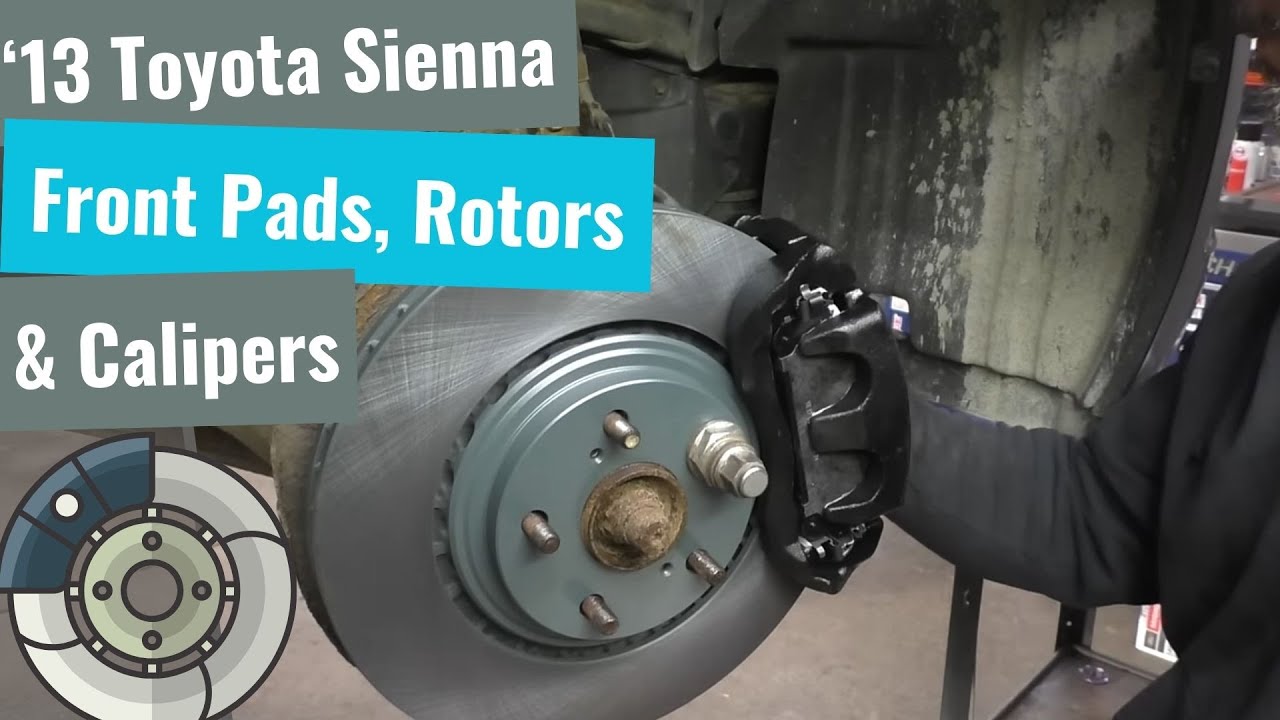
Toyota Sienna - Front Brake Pads. Rotors & Calipers
video description
Date: 2024-11-01
Related videos


Comments and reviews: 20
windward2818
I think it is personal preference as to how to treat the rusty caliper bolts, and I have no actually proof pro or con, but I tend to wire wheel the bolts, inspect them and bore wire brush the mating knuckle threaded holes (I also clean the knuckle raised bracket boss and the bolt flange face with Scotch-Brite, here again I don't know if there is any advantage to this. I clean both the bolt and hole with brake clean and then dry with compressed air.
For the Orange Thread Lock, which I think is an excellent product which Eric is also using in the video, Permatex wants you to prep the threads after cleaning (but they don't say how the threads should be cleaned or what clean means) with Permatex Surface Prep Activator (speeds up curing in cold assembly climates) the threaded mating surfaces. I tend not to use the Surface Prep Activator because I an not in a cold climate. I am not sure Eric's opinion is on this, but mine is the thread lock is to prevent the bolt from backing out under normal operation over time (vibration, where the actual clamping force is done via proper bolt stretch (torqueing to spec.
I don't use the hand brush to clean the rust off of the hub flange face, I use a large wire bore brush in a cordless drill and use the side of it. Here again this is also personal preference.
Where Eric and I differ is I use battery operated cordless impact drivers almost exclusively unless it is 3/4 inch drive. Some are very specialized. For example I have a small 1/2 inch drive impact that I use to tighten wheel lugs. It consistently torques to about 60 lb-ft (the impact is just too small to offer any more torque, after which I then final torque with a torque wrench. Also, I should say that I live in a warm climate where I can wheel a cart outside to do work on a car in the open, one of the reasons I moved to cordless tools. In NY State where Eric works working outside is not as easy, its snowy and cold in the winter time and its hard to make your hands work when they are frozen.
As you can see in the video getting the original factory rotor off is a complete joke in the salt belt. Eric had to air hammer the crap out of it to make it come loose. The OEM should have treated the hub face with anti-seize in order to easily remove the rotor. So, in the rust belt we have to treat the hub face with an anti-seize of some sort. Erik uses Fluid Film. I like to use Loctite LB 771 Nickle Anti-seize only because this is the only type I have seen recommended by an OEM (Ford, but people also have success with the Copper and Silver Anti-Seize.
Also, in the salt belt we have another problem, and that is getting the aluminum alloy wheel off of the rotor face. The wheel in the video came off very easily, actually so easily I was surprised. However, many times you have to Donkey kick the wheels loose. So, before putting the wheels back on you should Scotch-Brite the wheel face to remove any corrosion, and then treat the wheel or the rotor face with something that will prevent the wheels from sticking to the rotor. For this I use Loctite LB 8023 which is a high temp metal free Marine grade anti-seize.
But, we are not done yet, in the video the lug nuts came off rather easily, which is not always the case. So, what do we do so we can take the lug nuts off easily next time the wheel comes off. This is another good question that the OEMs have not really addressed. Here the only real requirement is to use something that will not react with the aluminum wheels, the wheels clear coat if it has one, in the presence of salt spray and other anti ice road chemicals. So, I now use LB 8023 to treat the wheel studs. In my youth I used many different types of high temp anti-seize on my aluminum wheels and I never have had a wheel lug nut loosen or wheel fall off after properly torqueing the lugs. But when I needed to rotate the tires the lugs easily came loose.
reply
I think it is personal preference as to how to treat the rusty caliper bolts, and I have no actually proof pro or con, but I tend to wire wheel the bolts, inspect them and bore wire brush the mating knuckle threaded holes (I also clean the knuckle raised bracket boss and the bolt flange face with Scotch-Brite, here again I don't know if there is any advantage to this. I clean both the bolt and hole with brake clean and then dry with compressed air.
For the Orange Thread Lock, which I think is an excellent product which Eric is also using in the video, Permatex wants you to prep the threads after cleaning (but they don't say how the threads should be cleaned or what clean means) with Permatex Surface Prep Activator (speeds up curing in cold assembly climates) the threaded mating surfaces. I tend not to use the Surface Prep Activator because I an not in a cold climate. I am not sure Eric's opinion is on this, but mine is the thread lock is to prevent the bolt from backing out under normal operation over time (vibration, where the actual clamping force is done via proper bolt stretch (torqueing to spec.
I don't use the hand brush to clean the rust off of the hub flange face, I use a large wire bore brush in a cordless drill and use the side of it. Here again this is also personal preference.
Where Eric and I differ is I use battery operated cordless impact drivers almost exclusively unless it is 3/4 inch drive. Some are very specialized. For example I have a small 1/2 inch drive impact that I use to tighten wheel lugs. It consistently torques to about 60 lb-ft (the impact is just too small to offer any more torque, after which I then final torque with a torque wrench. Also, I should say that I live in a warm climate where I can wheel a cart outside to do work on a car in the open, one of the reasons I moved to cordless tools. In NY State where Eric works working outside is not as easy, its snowy and cold in the winter time and its hard to make your hands work when they are frozen.
As you can see in the video getting the original factory rotor off is a complete joke in the salt belt. Eric had to air hammer the crap out of it to make it come loose. The OEM should have treated the hub face with anti-seize in order to easily remove the rotor. So, in the rust belt we have to treat the hub face with an anti-seize of some sort. Erik uses Fluid Film. I like to use Loctite LB 771 Nickle Anti-seize only because this is the only type I have seen recommended by an OEM (Ford, but people also have success with the Copper and Silver Anti-Seize.
Also, in the salt belt we have another problem, and that is getting the aluminum alloy wheel off of the rotor face. The wheel in the video came off very easily, actually so easily I was surprised. However, many times you have to Donkey kick the wheels loose. So, before putting the wheels back on you should Scotch-Brite the wheel face to remove any corrosion, and then treat the wheel or the rotor face with something that will prevent the wheels from sticking to the rotor. For this I use Loctite LB 8023 which is a high temp metal free Marine grade anti-seize.
But, we are not done yet, in the video the lug nuts came off rather easily, which is not always the case. So, what do we do so we can take the lug nuts off easily next time the wheel comes off. This is another good question that the OEMs have not really addressed. Here the only real requirement is to use something that will not react with the aluminum wheels, the wheels clear coat if it has one, in the presence of salt spray and other anti ice road chemicals. So, I now use LB 8023 to treat the wheel studs. In my youth I used many different types of high temp anti-seize on my aluminum wheels and I never have had a wheel lug nut loosen or wheel fall off after properly torqueing the lugs. But when I needed to rotate the tires the lugs easily came loose.
reply
rsage_
My wife's Sienna has over 250k miles. Still runs like a champ. Although I love my old Land Rover Defenders, diesel Jeep, and a bunch of other old trucks, nothing compares to the quality of a Toyota. Every bolt seems to be over engineered about 20% more than the competition. Rubbers and plastics just last longer. Wiring is just easier to understand and repair. with an 8, 10, 12, 14, and 19, you can pretty much take the whole thing apart. . I know there are exceptions, but in general, I'd take a Toyota with 150k miles over most any vehicle with half the mileage. Only general flaw is that they are boring (cool ones can't be sold in the US Hilux. But for a commuter, a minivan, or a teen car, you can't beat it. If Toyota sold a manual, 4X4, diesel in the US, it'd be game over.
reply
My wife's Sienna has over 250k miles. Still runs like a champ. Although I love my old Land Rover Defenders, diesel Jeep, and a bunch of other old trucks, nothing compares to the quality of a Toyota. Every bolt seems to be over engineered about 20% more than the competition. Rubbers and plastics just last longer. Wiring is just easier to understand and repair. with an 8, 10, 12, 14, and 19, you can pretty much take the whole thing apart. . I know there are exceptions, but in general, I'd take a Toyota with 150k miles over most any vehicle with half the mileage. Only general flaw is that they are boring (cool ones can't be sold in the US Hilux. But for a commuter, a minivan, or a teen car, you can't beat it. If Toyota sold a manual, 4X4, diesel in the US, it'd be game over.
reply
thagerdorn2009
I live in the rust belt, done thousands of brake jobs. never have I put caliper grease under the hardware on the caliper bracket. And never had a problem. I grease the back of the pad and the slide pins. Always worked well for me. Also, aftermarket hardware is absolutely trash. I do not use it. If the car doesn't have OEM hardware already on it, I go to the dealer and buy it. Otherwise more often than not you have to grind the ears of the pads down for them to fit and slide on the hardware on the bracket because aftermarket pads typically aren't machined great. except Powerstop. they are the only brakes I've used in the 16 years I've done this that have fantastic hardware, pads are machined properly and the brakes just work.
reply
I live in the rust belt, done thousands of brake jobs. never have I put caliper grease under the hardware on the caliper bracket. And never had a problem. I grease the back of the pad and the slide pins. Always worked well for me. Also, aftermarket hardware is absolutely trash. I do not use it. If the car doesn't have OEM hardware already on it, I go to the dealer and buy it. Otherwise more often than not you have to grind the ears of the pads down for them to fit and slide on the hardware on the bracket because aftermarket pads typically aren't machined great. except Powerstop. they are the only brakes I've used in the 16 years I've done this that have fantastic hardware, pads are machined properly and the brakes just work.
reply
cm-hw5ww
I had a devil of a time trying to get a couple of reman calipers last year. Ordered one and it looked like it had been through the 2nd Crimean War. Sent it back and ordered another from a different outlet. The jokers sent the same caliper back to me!
Ordered another (but waited to return the first one so they could not send it back to me) and it would not operate smoothly. So back it went.
I did finally get one good reman caliper and found a decent used core and rebuilt it myself. However the one 'good' reman still needed attention.
All of that is not a big deal for me. It's just me and I'm not working on a deadline. I can't imagine trying to navigate that maze trying to run a business.
reply
I had a devil of a time trying to get a couple of reman calipers last year. Ordered one and it looked like it had been through the 2nd Crimean War. Sent it back and ordered another from a different outlet. The jokers sent the same caliper back to me!
Ordered another (but waited to return the first one so they could not send it back to me) and it would not operate smoothly. So back it went.
I did finally get one good reman caliper and found a decent used core and rebuilt it myself. However the one 'good' reman still needed attention.
All of that is not a big deal for me. It's just me and I'm not working on a deadline. I can't imagine trying to navigate that maze trying to run a business.
reply
ChrisLincolnHomes
I had a 1988 Pontiac Firebird Formula 350. I was returning to MA for either Thanksgiving or Christmas break around 1995 or so when my left front caliper locked up on me. I was so much scared of it locking up, it's where it locked up. I was driving to MA from Virginia where I was going to school and I was going over the GW Bridge in NYC. I thought I was going to hit the barrier on the bridge because I was in the left lane. Pucker factor 10 right there. Limped it home, changed the caliper 2x because the reman one was so pitted it wouldn't stop leaking. When I change calipers now I get brand new ones.
reply
I had a 1988 Pontiac Firebird Formula 350. I was returning to MA for either Thanksgiving or Christmas break around 1995 or so when my left front caliper locked up on me. I was so much scared of it locking up, it's where it locked up. I was driving to MA from Virginia where I was going to school and I was going over the GW Bridge in NYC. I thought I was going to hit the barrier on the bridge because I was in the left lane. Pucker factor 10 right there. Limped it home, changed the caliper 2x because the reman one was so pitted it wouldn't stop leaking. When I change calipers now I get brand new ones.
reply
tomoakhill8825
Heater Core: this repair is the reason I have never ever driven a car past the warranty. The heater core failed on my first car, which convinced me that I should not exceed the warranty period. In my economic family life, the manufacturer sells me a car which they tell me will not break for 50, 000 miles and I _believe_ them. No brake jobs, heater cores, wires corroded through due to chaffing, ball joints, front bearings, water pumps, etc. The peace of mind, and a shiny new car, are more than worth it to me. Unlike MegaDrivingSchool I _do_ know the difference between the two words; break and brake.
reply
Heater Core: this repair is the reason I have never ever driven a car past the warranty. The heater core failed on my first car, which convinced me that I should not exceed the warranty period. In my economic family life, the manufacturer sells me a car which they tell me will not break for 50, 000 miles and I _believe_ them. No brake jobs, heater cores, wires corroded through due to chaffing, ball joints, front bearings, water pumps, etc. The peace of mind, and a shiny new car, are more than worth it to me. Unlike MegaDrivingSchool I _do_ know the difference between the two words; break and brake.
reply
andrewb8548
I had the white cardboard washer from a bottle of brake fluid in the bottom of a white clutch reservior I was having a hell of a time bleeding. Ended up pumping fluid backwards through the bleeder. Found it. AND discovered the BEST method of bleeding Ford hydraulic clutches. Service data said pump and bleed 30-50 times. If you fill through bleeder, no pumping necessary. Became hero of flat rate wasting a bunch of time. 0. 5h for nothing.
reply
I had the white cardboard washer from a bottle of brake fluid in the bottom of a white clutch reservior I was having a hell of a time bleeding. Ended up pumping fluid backwards through the bleeder. Found it. AND discovered the BEST method of bleeding Ford hydraulic clutches. Service data said pump and bleed 30-50 times. If you fill through bleeder, no pumping necessary. Became hero of flat rate wasting a bunch of time. 0. 5h for nothing.
reply
YobieTheQuestioner
when I was young and dumb I let a swivel socket fly all out and it popped off and hit me in the cheek right behind my back teeth. I though I broke my jaw. My doctor was a cool dude and asked me how it feels just to hear me mumble something lol. Anyways just deep bruising with no cuts and sore for a month, no eating for a couple days. I was hangry enough to force my mouth open to slurp a blender meal I concocted.
reply
when I was young and dumb I let a swivel socket fly all out and it popped off and hit me in the cheek right behind my back teeth. I though I broke my jaw. My doctor was a cool dude and asked me how it feels just to hear me mumble something lol. Anyways just deep bruising with no cuts and sore for a month, no eating for a couple days. I was hangry enough to force my mouth open to slurp a blender meal I concocted.
reply
ring-and-run
Classic advice on the baby burp. So many parts changers, sadly, don’t know this is even a thing to do. What, with brake job times at 1. 2 or 1. 5 for flat rate, a quality brake job winds up being a losing proposition, unless the guy or gal completing it really cares about the job at hand, the quality of work, and, of course the customer thy are doing the work for.
Thanks for showing us how to do it right.
reply
Classic advice on the baby burp. So many parts changers, sadly, don’t know this is even a thing to do. What, with brake job times at 1. 2 or 1. 5 for flat rate, a quality brake job winds up being a losing proposition, unless the guy or gal completing it really cares about the job at hand, the quality of work, and, of course the customer thy are doing the work for.
Thanks for showing us how to do it right.
reply
lindoncoggins
Mechanic with two front teeth missing here. I lost them via 15/16 wrench that slipped off a nut. Luckily, one of the teeth was already dying because of an impact wobble socket that that flew off a few years prior. My dentist did tell me that once my implants are installed, that they are much harder to break compared to my OG teeth. So that’s a plus. $5, 000 later is definitely the negative.
reply
Mechanic with two front teeth missing here. I lost them via 15/16 wrench that slipped off a nut. Luckily, one of the teeth was already dying because of an impact wobble socket that that flew off a few years prior. My dentist did tell me that once my implants are installed, that they are much harder to break compared to my OG teeth. So that’s a plus. $5, 000 later is definitely the negative.
reply
duckwacker8720
I've had to do brakes on my friends 2015 sienna way to many times. I do them every 3-5 months. Rear 6-8 months and rotors every other time. I've done both lower control arms the passenger side twice the struts once about to do the drivers side because of shitty parts. I've also done both axels and the passenger side twice because the boot ripped.
reply
I've had to do brakes on my friends 2015 sienna way to many times. I do them every 3-5 months. Rear 6-8 months and rotors every other time. I've done both lower control arms the passenger side twice the struts once about to do the drivers side because of shitty parts. I've also done both axels and the passenger side twice because the boot ripped.
reply
autorepair
Eric O’Another great Brake Video. Those copper seals on the banjo Bolt need to flow. In reality, you should come back the next day, and retorque them. You could just use more torque and risk snapping the hollow bolt. But what I do is Torque it, then take a hammer and give the bolt a couple of taps. Then torque it again. This helps the copper flow.
reply
Eric O’Another great Brake Video. Those copper seals on the banjo Bolt need to flow. In reality, you should come back the next day, and retorque them. You could just use more torque and risk snapping the hollow bolt. But what I do is Torque it, then take a hammer and give the bolt a couple of taps. Then torque it again. This helps the copper flow.
reply
ChunkyMonkaayyy
For the pro mechanics out there: I’ve got a question about core charges on remanufactured parts. When billing customers, do you charge the full amount (part core) and keep the core charge (if it’s accepted) Or do you pass the core refund back to the customer later (unless it’s rejected of course) Just curious how you all handle that!
reply
For the pro mechanics out there: I’ve got a question about core charges on remanufactured parts. When billing customers, do you charge the full amount (part core) and keep the core charge (if it’s accepted) Or do you pass the core refund back to the customer later (unless it’s rejected of course) Just curious how you all handle that!
reply
annyer262
I see the tire pressure light was on. It is coming into winter. I was told by a short lived maintenance man that the air is different between summer and winter. He proceeded to let the winter air out (it was May) before inflating the tires with summer air! He did not last long as maintenance mechanic!
reply
I see the tire pressure light was on. It is coming into winter. I was told by a short lived maintenance man that the air is different between summer and winter. He proceeded to let the winter air out (it was May) before inflating the tires with summer air! He did not last long as maintenance mechanic!
reply
crazyedo9979
When I did a break job back in the days I did not only inspect the caliper before Installation I also checked the metal back of the pads that they have a certain amount of gap to the caliper. So they can slide smoothly when the brake operates. Sometimes I had to make some corrections with a file.
reply
When I did a break job back in the days I did not only inspect the caliper before Installation I also checked the metal back of the pads that they have a certain amount of gap to the caliper. So they can slide smoothly when the brake operates. Sometimes I had to make some corrections with a file.
reply
stevedoyle650
I have the same van. Always had trouble with warped rotors. Then i installed PerfectStop HC high carbon steel rotors and Akebono pads. Night and day results. Perfectly smooth brake feel after 3 years. Incredible. No brake rotor rusting. FYI Live in eastern Canada. Rust central.
reply
I have the same van. Always had trouble with warped rotors. Then i installed PerfectStop HC high carbon steel rotors and Akebono pads. Night and day results. Perfectly smooth brake feel after 3 years. Incredible. No brake rotor rusting. FYI Live in eastern Canada. Rust central.
reply
Dallmke
I know the fight. I just did my 2021 Outback and the fight was real. Wound up taking off the bracket and installing the pads, then replacing over the rotor, then caliper. It was way harder than needed. Unfortunately the NAPA hardware was a problem so had to use old hardware.
reply
I know the fight. I just did my 2021 Outback and the fight was real. Wound up taking off the bracket and installing the pads, then replacing over the rotor, then caliper. It was way harder than needed. Unfortunately the NAPA hardware was a problem so had to use old hardware.
reply
motivatedpeon
I hope, the other caliper does have a P stamped on it, since it goes on the passenger side! Apart from confusing right and left anyways 50% all the time, I just can't egree with my sellf where right and left is on a vehicle. But I do know, where the driver sits!
reply
I hope, the other caliper does have a P stamped on it, since it goes on the passenger side! Apart from confusing right and left anyways 50% all the time, I just can't egree with my sellf where right and left is on a vehicle. But I do know, where the driver sits!
reply
hive692000
Eric I just watched you fixing the jeep on the cheap great video! I noticed you have an aftermarket stereo in the jeep, I'm wondering how you wired it in I can not find a harness for my 2005 grand cherokee. Is their any tips you can give me
Thank you
Gary
reply
Eric I just watched you fixing the jeep on the cheap great video! I noticed you have an aftermarket stereo in the jeep, I'm wondering how you wired it in I can not find a harness for my 2005 grand cherokee. Is their any tips you can give me
Thank you
Gary
reply
robertschwarz1568
Mr. O - What is that rubber on the caliper slide pin for I can't find any literature anywhere on it. I as well remove them from new and old slides at the time of a brake job. I would really like to know what they are for Great video as always!
reply
Mr. O - What is that rubber on the caliper slide pin for I can't find any literature anywhere on it. I as well remove them from new and old slides at the time of a brake job. I would really like to know what they are for Great video as always!
reply
Add a review, comment
Other channel videos