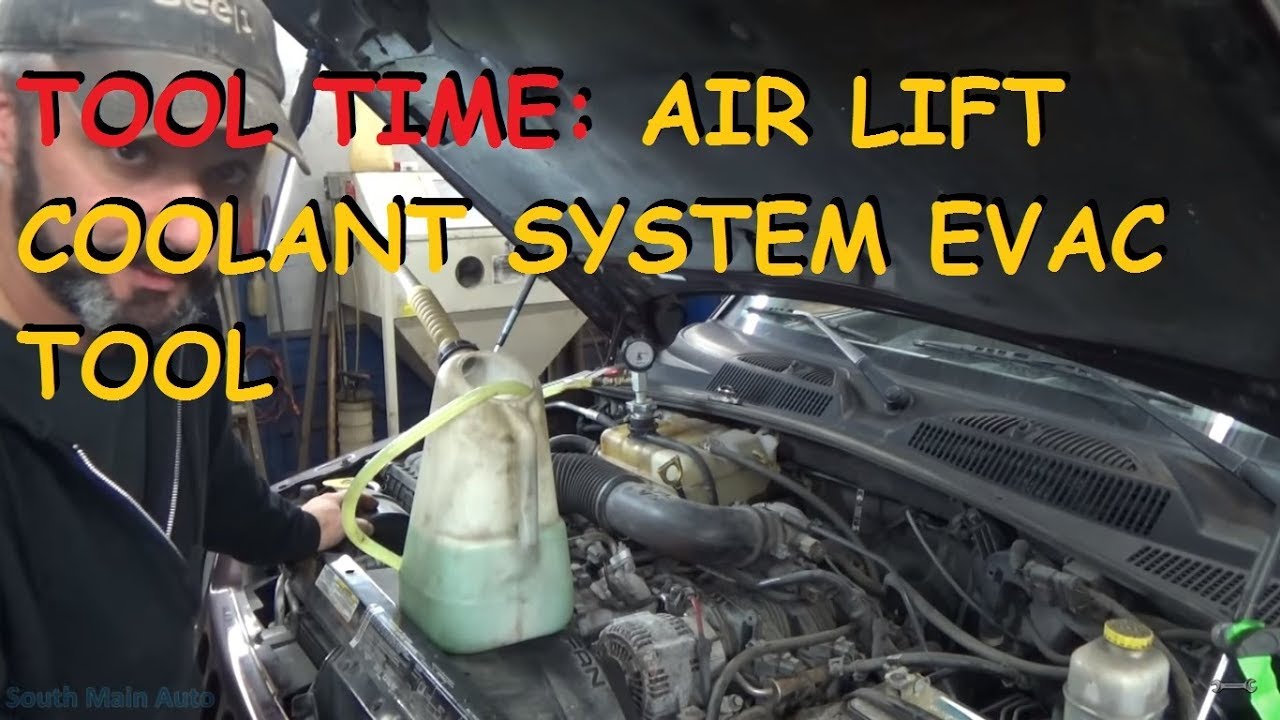
Tool Time: The Coolant Air Lift System
video description
Date: 2020-08-05
Related videos


Comments and reviews: 10
JT
HI Mr O. Time for a little science. 1 atmosphere is 14. 7 pounds more or less. 30 inches of vacuum is basically 0 psi absolute. So 0 psi gauge pressure is actually 14. 7 psi absolute. So now having said all that, we can see that if you pull a full 30 of vacuum the actual pressure on the outside of the system is only 14. 7 psi. another way of saying it is - you have just removed one atmosphere from your system - since you can not obtain 30 of vacuum with your evacuation system you can never even get to the full 14. 7 psi external pressure. Normal operating pressure of the sealed radiator will be up to about 15 or so pounds maybe more. So you can see that 30 of vacuum puts less stress on the system then standard cooling system operating pressure. So basically what happens is when you pull the vacuum your removing the air from the inside. some smart guy once said that pressure always moves from the high pressure to the low pressure. the atmospheric air pressure pushes the coolant into the system that has no pressure in it. Since there is NO pressure in the system there can be no Back Pressure that will stop the coolant or create air locks. that is why the vacuum systems fill so well. one other little bit of food for thought. If you pull a big vacuum on a system you actually lower the boiling point of water. so if you have pulled a big vacuum on a system and you wait several minutes before trying to fill while your checking for leaks. don't get worried about a pressure rise. a vacuum will cause water to vaporize and cause your vacuum to deteriorate. remember your AC theory. you pull a vacuum on a system to remove the moisture from it. That's my story and I'm sticking to it. Keep up the good work guy. Love your videos.
reply
HI Mr O. Time for a little science. 1 atmosphere is 14. 7 pounds more or less. 30 inches of vacuum is basically 0 psi absolute. So 0 psi gauge pressure is actually 14. 7 psi absolute. So now having said all that, we can see that if you pull a full 30 of vacuum the actual pressure on the outside of the system is only 14. 7 psi. another way of saying it is - you have just removed one atmosphere from your system - since you can not obtain 30 of vacuum with your evacuation system you can never even get to the full 14. 7 psi external pressure. Normal operating pressure of the sealed radiator will be up to about 15 or so pounds maybe more. So you can see that 30 of vacuum puts less stress on the system then standard cooling system operating pressure. So basically what happens is when you pull the vacuum your removing the air from the inside. some smart guy once said that pressure always moves from the high pressure to the low pressure. the atmospheric air pressure pushes the coolant into the system that has no pressure in it. Since there is NO pressure in the system there can be no Back Pressure that will stop the coolant or create air locks. that is why the vacuum systems fill so well. one other little bit of food for thought. If you pull a big vacuum on a system you actually lower the boiling point of water. so if you have pulled a big vacuum on a system and you wait several minutes before trying to fill while your checking for leaks. don't get worried about a pressure rise. a vacuum will cause water to vaporize and cause your vacuum to deteriorate. remember your AC theory. you pull a vacuum on a system to remove the moisture from it. That's my story and I'm sticking to it. Keep up the good work guy. Love your videos.
reply
athhud
Arent you fancy with your little factory tool truck tool! I made my own air lift with an old radiator cap and some brass fittings/valves. I can use my Robinair Venturi style vacuum pump, my Mityvac, my electric HVAC style vacuum pump, or even a Milton siphon-feed blow gun. I would only ever use the Mityvac in a post-apocalyptic dont waste the fuel scenario lol manual pumping is for the birds. The downside of using the electric pump is the oil needs to be changed immediately afterward (which you are suppose to be doing after AC evacs anyway, according to the manufacturer, but who does. The Venturi pump works fine, but I hate hearing a compressor run, so the electric pump is my go to. If I have more than 20 in the whole setup Id be surprised, probably closer to 10. I used R12 style flare fittings so it would work with the HVAC pumps. The only other thing I had to buy was a ball valve. Had I been thinking ahead, I didnt even need the ball valve. The setup works perfectly with an old set of manifold gauges. Its just like charging an AC system and has the vacuum gauge and valves built right in!
reply
Arent you fancy with your little factory tool truck tool! I made my own air lift with an old radiator cap and some brass fittings/valves. I can use my Robinair Venturi style vacuum pump, my Mityvac, my electric HVAC style vacuum pump, or even a Milton siphon-feed blow gun. I would only ever use the Mityvac in a post-apocalyptic dont waste the fuel scenario lol manual pumping is for the birds. The downside of using the electric pump is the oil needs to be changed immediately afterward (which you are suppose to be doing after AC evacs anyway, according to the manufacturer, but who does. The Venturi pump works fine, but I hate hearing a compressor run, so the electric pump is my go to. If I have more than 20 in the whole setup Id be surprised, probably closer to 10. I used R12 style flare fittings so it would work with the HVAC pumps. The only other thing I had to buy was a ball valve. Had I been thinking ahead, I didnt even need the ball valve. The setup works perfectly with an old set of manifold gauges. Its just like charging an AC system and has the vacuum gauge and valves built right in!
reply
jr
may never see this post but really thank you mr o and your family dang good people. I am or now live in west tn. even though I was born in Ithaca the last child born in the old hospital across the lake then they moved it I drove by you town a lot visiting family never new a 3 bay shop could produce the quaintly of work and family life as your shop as produced over the years my cousin runs phoenix in Lancaster Pate Neff super guy may have towed you some cars any way thank you and thank your family.
reply
may never see this post but really thank you mr o and your family dang good people. I am or now live in west tn. even though I was born in Ithaca the last child born in the old hospital across the lake then they moved it I drove by you town a lot visiting family never new a 3 bay shop could produce the quaintly of work and family life as your shop as produced over the years my cousin runs phoenix in Lancaster Pate Neff super guy may have towed you some cars any way thank you and thank your family.
reply
Willie
Them dang heater cores tip and turn in so many directions. One thing to watch is when the vehicle begins to warm up the heater core should have/better be putting the heat out through the vents inside the car. If your blowing cold air inside the car/truck when the temp gauge starts going up(or if it isnt registering)Shut that bugger down! Release that pressure after it cools and refill the radiator.
Or get you one of them vacuum fill gizmos Eric just showed us.
reply
Them dang heater cores tip and turn in so many directions. One thing to watch is when the vehicle begins to warm up the heater core should have/better be putting the heat out through the vents inside the car. If your blowing cold air inside the car/truck when the temp gauge starts going up(or if it isnt registering)Shut that bugger down! Release that pressure after it cools and refill the radiator.
Or get you one of them vacuum fill gizmos Eric just showed us.
reply
Lex
I dont think that it would buy a vehicle that would require that because if I cannot fix it in the driveway or a parking lot then I dont want it to blow a leak in a radiator hose late at night or a Sunday afternoon because the shops are all closed so I will just find another hose and fix it right there and fill it with water and get home and make it right there with a new hose and coolant for it if it air locks inside the engine I will sell and get a older car
reply
I dont think that it would buy a vehicle that would require that because if I cannot fix it in the driveway or a parking lot then I dont want it to blow a leak in a radiator hose late at night or a Sunday afternoon because the shops are all closed so I will just find another hose and fix it right there and fill it with water and get home and make it right there with a new hose and coolant for it if it air locks inside the engine I will sell and get a older car
reply
GNX157
So does this tool help evacuate the cooling system any better or do you still drain it like always? Is its main purpose just load in the coolant a bit faster than the normal way? Does it help keep the system from getting air pockets or the need to be bled? If the vacuum runs low during the fill phase can you pause and hook the air system back up and pull the vacuum down again and restart the fill process?
reply
So does this tool help evacuate the cooling system any better or do you still drain it like always? Is its main purpose just load in the coolant a bit faster than the normal way? Does it help keep the system from getting air pockets or the need to be bled? If the vacuum runs low during the fill phase can you pause and hook the air system back up and pull the vacuum down again and restart the fill process?
reply
Glen
I've got a '92 Camaro with the TBI 305, and only 97k miles. every time I'd have to drain the coolant for whatever reason, it gets what I'm assuming is an air pocket in it, and it seems like it takes forever to get it to burp enough to finally finish topping it off. and yes, it makes a huge mess as well. would ya have any ideas what could cause it to do that, and what can I do to get it to stop?
reply
I've got a '92 Camaro with the TBI 305, and only 97k miles. every time I'd have to drain the coolant for whatever reason, it gets what I'm assuming is an air pocket in it, and it seems like it takes forever to get it to burp enough to finally finish topping it off. and yes, it makes a huge mess as well. would ya have any ideas what could cause it to do that, and what can I do to get it to stop?
reply
Gage
The heater core on my 2012 Chrysler 200 3. 6 V6 clogged up with the factory coolant. I had the dealer replace the heater core at great expense. The system now makes sloshing noises. as if they didn't service the system properly with one of these vacuum systems. I wouldn't trust them to fix their mistakes. I'm going to get one of these tools and do it myself.
reply
The heater core on my 2012 Chrysler 200 3. 6 V6 clogged up with the factory coolant. I had the dealer replace the heater core at great expense. The system now makes sloshing noises. as if they didn't service the system properly with one of these vacuum systems. I wouldn't trust them to fix their mistakes. I'm going to get one of these tools and do it myself.
reply
eyesalooking
I know that this video has been up for quite awhile but it was just what I was looking for. I looked at the pictures that came with my new UView Airlift Part 550000 (made in Canada) but your video explained it better. I have a 1993 Ranger that won't come up to normal temperature so I suspect an airlock. Thanks for posting.
reply
I know that this video has been up for quite awhile but it was just what I was looking for. I looked at the pictures that came with my new UView Airlift Part 550000 (made in Canada) but your video explained it better. I have a 1993 Ranger that won't come up to normal temperature so I suspect an airlock. Thanks for posting.
reply
Jay
So I have a question. You mentioned that it would help verify that there are no leaks and I hadn't thought of that being that I've never seen this. My question is this. Say for example you have a head gasket issue that you dont know about. Could it end up sucking oil into the antifreeze if there was a leak that connected the two?
reply
So I have a question. You mentioned that it would help verify that there are no leaks and I hadn't thought of that being that I've never seen this. My question is this. Say for example you have a head gasket issue that you dont know about. Could it end up sucking oil into the antifreeze if there was a leak that connected the two?
reply
Add a review, comment
Other channel videos