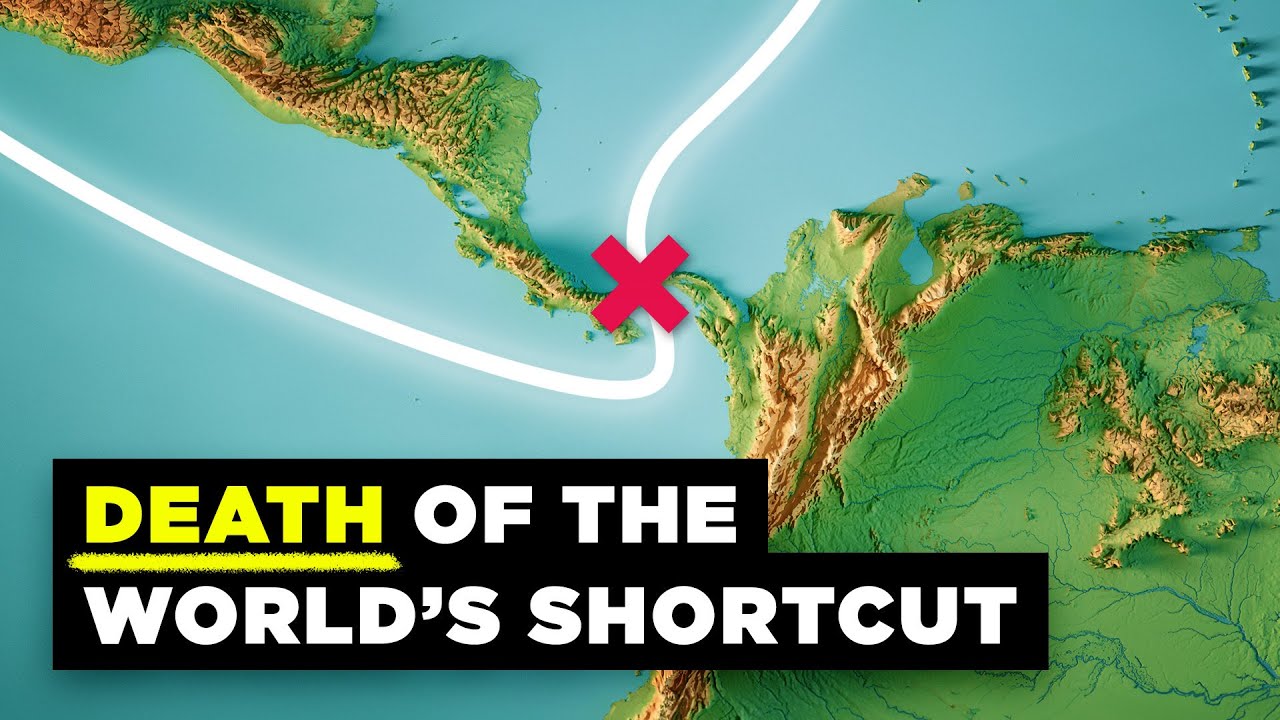
Why the Panama Canal is Dying
video description
Date: 2024-01-30
Related videos





Comments and reviews: 19
Byeuji
I'm surprised you didn't cover any of the North American existing alternatives to the Panama route and other potential yet-to-be-built alternatives. For instance, the container port at Tacoma, WA has been the northwestern terminus of the northern railroads for over a century, and primarily serves as a container port for transfer between ships and trains. It also benefits from having a natural deepwater salt-water port (no dredging necessary, and is one of the deepest natural ports in the world.
Seattle also has a strong port capable of assisting with the transfer of containers. And the Salish Sea and Puget Sound are the pinnacle of safe harbors as a large body of saltwater surrounded on 3 sides, with a quarter of a state guarding it from the weather of the ocean, allowing absolutely huge numbers of ships to anchor safely for long periods of time.
Already some 70% of trade from China to the US comes through these western ports (LA and Vancouver as well, and are loaded on to trains for movement through the interior. Adding traffic to and from Europe on those rails would be trivial, rail is extremely efficient cost-wise like cargo ships, and arguably lowers liability for loss of goods while also impacting the environment much less (and has a very real possibility of being fully electrified in the near future.
Jon Talton, a columnist at the Seattle Times, has been writing on the Puget Sound ports for over a decade and has some great articles out covering these topics. There's a lot of focus on cargo staying in cargo ships, but tbh trains are just as effective and have many fewer downsides -- especially when so much of the goods on the seas are making their way between the US and China.
If tariffs with China were to drop, container traffic in west coast ports could explode and completely eclipse the importance of the Panama Canal.
reply
I'm surprised you didn't cover any of the North American existing alternatives to the Panama route and other potential yet-to-be-built alternatives. For instance, the container port at Tacoma, WA has been the northwestern terminus of the northern railroads for over a century, and primarily serves as a container port for transfer between ships and trains. It also benefits from having a natural deepwater salt-water port (no dredging necessary, and is one of the deepest natural ports in the world.
Seattle also has a strong port capable of assisting with the transfer of containers. And the Salish Sea and Puget Sound are the pinnacle of safe harbors as a large body of saltwater surrounded on 3 sides, with a quarter of a state guarding it from the weather of the ocean, allowing absolutely huge numbers of ships to anchor safely for long periods of time.
Already some 70% of trade from China to the US comes through these western ports (LA and Vancouver as well, and are loaded on to trains for movement through the interior. Adding traffic to and from Europe on those rails would be trivial, rail is extremely efficient cost-wise like cargo ships, and arguably lowers liability for loss of goods while also impacting the environment much less (and has a very real possibility of being fully electrified in the near future.
Jon Talton, a columnist at the Seattle Times, has been writing on the Puget Sound ports for over a decade and has some great articles out covering these topics. There's a lot of focus on cargo staying in cargo ships, but tbh trains are just as effective and have many fewer downsides -- especially when so much of the goods on the seas are making their way between the US and China.
If tariffs with China were to drop, container traffic in west coast ports could explode and completely eclipse the importance of the Panama Canal.
reply
davidhenry7484
Uhhhh, actually, I just got back home from Panama, and you are just fear mongering! There was a small drought last year, but there was but there was never much risk of not being to operate the panama canal. The tropics have heavy rains in the rainy seasons and panama gets hit by that hard AF, and global warming will do nothing but create more rain. And you're cherry picking one year, and it was during el-nino! And you readily admit that we didn't understand climate 100 years ago, as opposed to now, when th weather man is only correct 42% of the time Right, that's called the but we know better now fallacy. You assume we actually understand all the septillions of kazillions of different variables that make up long term climate.
And like I said, you are wrong, I was just there is no drought there! Nobody there is actually worried about his because the wet season is just a few months away.
Not another thing to be worried about!
reply
Uhhhh, actually, I just got back home from Panama, and you are just fear mongering! There was a small drought last year, but there was but there was never much risk of not being to operate the panama canal. The tropics have heavy rains in the rainy seasons and panama gets hit by that hard AF, and global warming will do nothing but create more rain. And you're cherry picking one year, and it was during el-nino! And you readily admit that we didn't understand climate 100 years ago, as opposed to now, when th weather man is only correct 42% of the time Right, that's called the but we know better now fallacy. You assume we actually understand all the septillions of kazillions of different variables that make up long term climate.
And like I said, you are wrong, I was just there is no drought there! Nobody there is actually worried about his because the wet season is just a few months away.
Not another thing to be worried about!
reply
sspectre8217
I’m not surprised it wasn’t mentioned but there was a 5th alternative idea. Haven’t heard anything about it in like 10 years but Costa Rica for a little while considered making a dry canal with a train track and road crossing from coast to coast. The dry canal would be around 50% longer than Tehuantepec but so far hasn’t gotten beyond the early planning stage as we would have to build 2 massive ports.
It could be built in the south close the border with Panama and it would be shorter than Tehuantepec but then it would have to cross the Talamanca mountain range which is just not feasible since the region is very hard to traverse and has very little infrastructure and overall very underdeveloped. At least it could use Golfito (a big-ish port) on the pacific coast and upgrade it instead of building a port from scratch
reply
I’m not surprised it wasn’t mentioned but there was a 5th alternative idea. Haven’t heard anything about it in like 10 years but Costa Rica for a little while considered making a dry canal with a train track and road crossing from coast to coast. The dry canal would be around 50% longer than Tehuantepec but so far hasn’t gotten beyond the early planning stage as we would have to build 2 massive ports.
It could be built in the south close the border with Panama and it would be shorter than Tehuantepec but then it would have to cross the Talamanca mountain range which is just not feasible since the region is very hard to traverse and has very little infrastructure and overall very underdeveloped. At least it could use Golfito (a big-ish port) on the pacific coast and upgrade it instead of building a port from scratch
reply
smileyeagle1021
I'm not an engineer, but why isn't one of the solutions to the freshwater problem to pump the fresh water back up to the top rather than releasing it to the ocean I know that would require MASSIVE pumps that would probably use a lot of energy to run, but it seems like a much simpler solution than boring a massive tunnel to pipe in more fresh water or building a new dam (and is probably more energy efficient than shipping freight across the continent by train or truck. At least to me it makes sense, the problem is that too much fresh water is going out to the ocean, so release less of it into the ocean.
reply
I'm not an engineer, but why isn't one of the solutions to the freshwater problem to pump the fresh water back up to the top rather than releasing it to the ocean I know that would require MASSIVE pumps that would probably use a lot of energy to run, but it seems like a much simpler solution than boring a massive tunnel to pipe in more fresh water or building a new dam (and is probably more energy efficient than shipping freight across the continent by train or truck. At least to me it makes sense, the problem is that too much fresh water is going out to the ocean, so release less of it into the ocean.
reply
TottWriter
A really interesting topic, but man. There is some super shitty writing in this, from a grammar perspective. Redundant or repeated words, sentences which don't flow proplerly, a stilted audio recording.
Something is really off about this video, and overall it just gives bad vibes. Like. The point about an area the size of Austria not having paved roads. you said that twice. Was that because this video was rushed out in a hurry, and you didn't even bother to proof read, or are we looking at some AI shenanigans
reply
A really interesting topic, but man. There is some super shitty writing in this, from a grammar perspective. Redundant or repeated words, sentences which don't flow proplerly, a stilted audio recording.
Something is really off about this video, and overall it just gives bad vibes. Like. The point about an area the size of Austria not having paved roads. you said that twice. Was that because this video was rushed out in a hurry, and you didn't even bother to proof read, or are we looking at some AI shenanigans
reply
aarondewindt
You failed to mention a fifth alternative to the Panama canal. The Panama Canal Railway. Opened in 1855, this is an already well-established cargo trade route linking ports on both sides of the canal. Most shipping companies are just choosing not to use it. Because of this I don't see how many of these other road and rail projects will be able to succeed without a drastic and permanent reduction of cargo capacity through the canal or significant increase in cargo moving between the Atlantic and Pacific.
reply
You failed to mention a fifth alternative to the Panama canal. The Panama Canal Railway. Opened in 1855, this is an already well-established cargo trade route linking ports on both sides of the canal. Most shipping companies are just choosing not to use it. Because of this I don't see how many of these other road and rail projects will be able to succeed without a drastic and permanent reduction of cargo capacity through the canal or significant increase in cargo moving between the Atlantic and Pacific.
reply
sshuggi
For one ship, 52 million gallons of water raised 85 ft is 13. 9MWh of energy. That's about as much as a single US home's annual energy consumption (10. 6 MWh.
That energy normally comes from the rainfall, but theoretically, we could park a nuclear aircraft carrier at either end of the canal and use them to pump the lock water back up to Lake Gatun's level. (Which produce about 100MW of electrical power each, so 14 ships an hour or 120, 000 a year. More than the 14, 000 ships that went through last year)
reply
For one ship, 52 million gallons of water raised 85 ft is 13. 9MWh of energy. That's about as much as a single US home's annual energy consumption (10. 6 MWh.
That energy normally comes from the rainfall, but theoretically, we could park a nuclear aircraft carrier at either end of the canal and use them to pump the lock water back up to Lake Gatun's level. (Which produce about 100MW of electrical power each, so 14 ships an hour or 120, 000 a year. More than the 14, 000 ships that went through last year)
reply
luhs6839
I'm curious why for the Bi-Oceanic Corridor, they didn't opt to go for a multi-track railroad With the capacity of modern container ships, it seems like relying on hundreds of trucks and drivers places some caps on the system's reliability and capacity if the purpose is to offload a ship on one side and reload on the other. As for growing local economies, it could certainly be transformative. But as an alternative to the panama canal, seems like a questionable investment.
reply
I'm curious why for the Bi-Oceanic Corridor, they didn't opt to go for a multi-track railroad With the capacity of modern container ships, it seems like relying on hundreds of trucks and drivers places some caps on the system's reliability and capacity if the purpose is to offload a ship on one side and reload on the other. As for growing local economies, it could certainly be transformative. But as an alternative to the panama canal, seems like a questionable investment.
reply
jaredthehawk3870
The Panama Canal Authority will always have at least one consistent and reliable customer, the United States Navy. The canal is the primary way the USN transfers warships from the Atlantic to the Pacific aside from its super carriers, which are too large for the canal. If it comes to a strategic military situation, the US will come to the rescue to help foot the bill to upgrade and maintain the canal.
reply
The Panama Canal Authority will always have at least one consistent and reliable customer, the United States Navy. The canal is the primary way the USN transfers warships from the Atlantic to the Pacific aside from its super carriers, which are too large for the canal. If it comes to a strategic military situation, the US will come to the rescue to help foot the bill to upgrade and maintain the canal.
reply
magnuszerum9177
If I owned Panama, I would do two things.
1: Go ahead and dam the Indio river.
2: Invest in nuclear power plants that would pull hydrogen out of the ocean water and pipe it to Lake Gatun. At lake Gatun, I would run it through fuel cells to generate electricity and water. The water would go to the lake, the electricity would power trains that cross the country as an alternative to the canal.
reply
If I owned Panama, I would do two things.
1: Go ahead and dam the Indio river.
2: Invest in nuclear power plants that would pull hydrogen out of the ocean water and pipe it to Lake Gatun. At lake Gatun, I would run it through fuel cells to generate electricity and water. The water would go to the lake, the electricity would power trains that cross the country as an alternative to the canal.
reply
RobertAndersonRALA
One minor detail. You mention that they pump water into the fist lock from the second. Only this is not how it works. It is all operated by gravity. At the beginning of this century I was working for a firm that was building a rail and shipping facility that would take containers by rail from one end to the other to accommodate super max ships. Perhaps they will have to move ahead with this.
reply
One minor detail. You mention that they pump water into the fist lock from the second. Only this is not how it works. It is all operated by gravity. At the beginning of this century I was working for a firm that was building a rail and shipping facility that would take containers by rail from one end to the other to accommodate super max ships. Perhaps they will have to move ahead with this.
reply
johntaylor4084
I listen to this and a simple large desalination plant providing free energy to Panama but pumping water 24/7 into the system coupled with fresh water recovery from the final sea locks would suffice paid for by global trade! But the issue is about panicking the people with this Climate change evils so the world has to suffer to stop the change! UN con men at work again
reply
I listen to this and a simple large desalination plant providing free energy to Panama but pumping water 24/7 into the system coupled with fresh water recovery from the final sea locks would suffice paid for by global trade! But the issue is about panicking the people with this Climate change evils so the world has to suffer to stop the change! UN con men at work again
reply
wafflingmean4477
Topics like this are what we need to focus on in the Climate Change debate. The sad fact is corporate suits don't give a damn if they cause an entire country to run out of water and damn tens of millions to dying of thirst. But if a canal they depend on for their profits dries up, that will phase them. Appealing to compassion will never work on people who have none.
reply
Topics like this are what we need to focus on in the Climate Change debate. The sad fact is corporate suits don't give a damn if they cause an entire country to run out of water and damn tens of millions to dying of thirst. But if a canal they depend on for their profits dries up, that will phase them. Appealing to compassion will never work on people who have none.
reply
rejvaik00
TL; DR
The man-made lake in the center of the Panama canal is running out of water to raise the ships to the height to traverse the length of the canal
And its loosing water because of global warming reasons (more droughts) and because it looses water each and every time the locks are opened to operate the canal as the lake's fresh water drains out to the sea
reply
TL; DR
The man-made lake in the center of the Panama canal is running out of water to raise the ships to the height to traverse the length of the canal
And its loosing water because of global warming reasons (more droughts) and because it looses water each and every time the locks are opened to operate the canal as the lake's fresh water drains out to the sea
reply
JorgeOrpinel
0. They're not called Houthi and it's unclear who backs them. You're just blindly distributing D. C. propaganda.
4. Mexico's corridor wasn't announced in 2020, it actually started construction in 2018 as soon as AMLO came to power, as it had been a proposal of his for decades. And it's not going to be operational in the 2030s but this year (2024, actually.
reply
0. They're not called Houthi and it's unclear who backs them. You're just blindly distributing D. C. propaganda.
4. Mexico's corridor wasn't announced in 2020, it actually started construction in 2018 as soon as AMLO came to power, as it had been a proposal of his for decades. And it's not going to be operational in the 2030s but this year (2024, actually.
reply
maybehuman2148
A simple solution would be to pump seawater between the locks and not only rely on local precipitation. You have two massive oceans on both ends but are still complaining about water. The freshwater and seawater contamination will still be negligible considering the size of Lake Gatun. But I suspect the environmentalists are blocking that from happening.
reply
A simple solution would be to pump seawater between the locks and not only rely on local precipitation. You have two massive oceans on both ends but are still complaining about water. The freshwater and seawater contamination will still be negligible considering the size of Lake Gatun. But I suspect the environmentalists are blocking that from happening.
reply
SaroopD
Why can't they pump the fresh water backwards to the start poimt instead of releasing it into the ocean The energy expended to do this with Solar would be cheaper and easier to do than building more dams wouldn't it And since the water would only be in the locks, mixing salt water with fresh water wouldn't be a concern.
reply
Why can't they pump the fresh water backwards to the start poimt instead of releasing it into the ocean The energy expended to do this with Solar would be cheaper and easier to do than building more dams wouldn't it And since the water would only be in the locks, mixing salt water with fresh water wouldn't be a concern.
reply
DisabilityExams
The records go back to the 1950s - which is less than one human lifespan. So a once in a lifetime weather event means the end of the world as we know it - got it! All bad weather everywhere is due to climate change. No bad weather existed before humans began using fossil fuels in the late 1800s.
reply
The records go back to the 1950s - which is less than one human lifespan. So a once in a lifetime weather event means the end of the world as we know it - got it! All bad weather everywhere is due to climate change. No bad weather existed before humans began using fossil fuels in the late 1800s.
reply
suntitan4429
Wouldn’t it make more sense to build a bunch of straight line railroads across the shortest part of Panama unload the ships on one side and load the goods onto ships on the other it would take some serious logistics but your basically having the canal still operational even when it isn’t
reply
Wouldn’t it make more sense to build a bunch of straight line railroads across the shortest part of Panama unload the ships on one side and load the goods onto ships on the other it would take some serious logistics but your basically having the canal still operational even when it isn’t
reply
Add a review, comment
Other channel videos