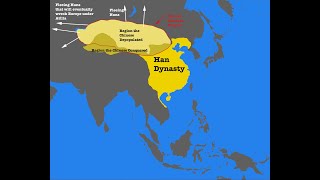
What if the Mongols Conquered Europe?
video description
It is unequal, but it has only signed a treaty of mutual friendship.
The Goryeo and Yan Dynasty were influenced by each other, not unilaterally controlled. King Goryeo had the right to elect the Emperor of the Yuan Dynasty.
War between Goryeo (Korea) and Mongolia
1st invasion: Date: August 1231-March 1232
30, 000 Mongolian troops invaded. Goryeo succeeded in defending an important castle and bound half of the soldiers, but the capital was besieged, sending the royal family hostages and signing a peace treaty.
3. 2. 2nd invasion
Date: August 1232-December 1232
Goryeo moved the palace to the island for war against Mongolia, and Mongolia invaded again.
Mongolia could not properly occupy a single castle, and the commander-in-chief was killed in battle and retreated.
3. 3. 3rd invasion
Date: July 1235-April 1239
When the Geum Dynasty fell in 1234, it attacked Goryeo. Mongolia lost several defeats, devastating Goryeo territory over four years and inflicting enormous damage.
Eventually, in the winter of 1238, the Goryeo court proposed Ganghwa to Mongolia, and Mongolia also withdrew in the spring of 1239 on condition of Goryeo Gojong's entrance. But didn't fulfill the promise
3. 5. 4th invasion
Date: July 1247-March 1248
Due to the short period, there was no significant damage, and the Mongolian emperor died and withdrew.
3. 6. 5th invasion
Date: July 1253-January 1254
It came down to the central part of the Korean peninsula, but was withdrawn without capturing Chungju, an important adult.
3. 7. 6th invasion
Date: July 1254-December 1254
The Mongolian army lost all three major siege battles and withdrew.
However, the Mongol army plundered severely and captured 200, 000 people, causing great damage.
3. 8. 1. 7th Invasion-Mongolia's Amphibious Operation
Date: September 1255-June 1256
The Mongolian army won one battle, but lost six battles and withdrew.
3. 8. 2. 8th invasion
Date: May 1257-October 1257
Mongolia lost two battles and withdrew when Goryeo promised friendship.
3. 8. 3. 9th invasion
Date: April 1258-March 1259
Mongolia lost two battles and withdrew when Goryeo promised friendship.
1259 Goryeo Prince meets and discusses with Kublai, and Goryeo and Mongolia conclude a peace agreement, although they are unequal.
Mongolia invaded 9 times, but each time they were defeated, they knew it was impossible to conquer Goryeo.
Mongolian emperor Kublai made six promises and said he would not interfere with Goryeo.
The clothes and hats worn on the head do not need to be changed according to the customs of Goryeo
Envoys are banned from anything other than those sent by the Yuan court.
Return to the capital can be adjusted in time at Goryeojeong.
The troops withdrew in the fall.
All of the Official from Mongolia are withdrawn.
Those who volunteered to stay in Mongolia are investigated and returned.
After the discussion, Prince Goryeo asked Kublai to become son-in-law.
Afterwards, the kings of Goryeo became son-in-law of Kublai and his descendants and had the right to elect the emperor.
The Mongolian emperor was able to replace the son-in-law, King Goryeo, but due to Kublai's promise, he could not interfere with anything in Goryeo.
Mongolia could not occupy Goryeo and only signed a peace treaty.
The Mongol emperor was able to replace the king of Goryeo, but he could not easily replace the king of Goryeo, an important member of the imperial family.
Date: 2022-07-15
Related videos






Comments and reviews: 9
adamnesico
Im spanish.
An heroic victory in the Pyrenees.
Oh yeah. In OTL the catalan company kicked the asses of the turks in Anatoly, those skirmishers would be great in their own terrain, spanish has always been great in guerrilla.
You are sure spanish inquisition would be in this timeline?
Until Isabel, spanish inquisition wasnt worst than in other places of Europe, with a diferent set of kings like Pedro I of Castile Spain could had been a more tolerant and progressive place.
Well, its truth that Spain was build in a crusader spirit, and presence of dangerous foreigners both in North and South would trigger fanaticism.
No Portugal, bad detail.
And why Renaissance just in Britain?
What triggered Renaissance in Italy in my opinion was:
1 Getting to wealth and knowledge thanks to trade with muslims.
2 Political fragmentation of city states that made lords competing between them in patronize art and culture.
3 The strong position of merchants in the society.
4 Watching with their eyes the corruption of papacy.
Im sure i left important points.
Spain was more divided than England and too had better access to muslims, in fact, Renaissance gardens are based in andalusi ones. Aragon dominated west mediterranean commerce, and Portugal started very commercial soon too. Too in this timeline they would be watching the pope, its with them.
If Renaissance isnt triggered in a place more similar to the original, why in England, that, while Italy was in Renaissance, England was in a feudal civil war?
Following the meme that England and Japan are analoges, what if in this world, an England driven to isolation from the Woods Khanate, ended in his own 150 years civil war, and after it, a unification govern would try to employ the soldiers in reconquer France, succesfully?
Well, England was never as isolated as Japan, fool analogy.
And one big assumption in this: Why no traders?
The silk road was the biggest land trade route of the Old world, and with mogols lived a a golden moment.
Hehehe, good point the detail of relation between mogols and democracy.
I guess in this world, the first european revolution would be in Spain instead of France.
reply
Im spanish.
An heroic victory in the Pyrenees.
Oh yeah. In OTL the catalan company kicked the asses of the turks in Anatoly, those skirmishers would be great in their own terrain, spanish has always been great in guerrilla.
You are sure spanish inquisition would be in this timeline?
Until Isabel, spanish inquisition wasnt worst than in other places of Europe, with a diferent set of kings like Pedro I of Castile Spain could had been a more tolerant and progressive place.
Well, its truth that Spain was build in a crusader spirit, and presence of dangerous foreigners both in North and South would trigger fanaticism.
No Portugal, bad detail.
And why Renaissance just in Britain?
What triggered Renaissance in Italy in my opinion was:
1 Getting to wealth and knowledge thanks to trade with muslims.
2 Political fragmentation of city states that made lords competing between them in patronize art and culture.
3 The strong position of merchants in the society.
4 Watching with their eyes the corruption of papacy.
Im sure i left important points.
Spain was more divided than England and too had better access to muslims, in fact, Renaissance gardens are based in andalusi ones. Aragon dominated west mediterranean commerce, and Portugal started very commercial soon too. Too in this timeline they would be watching the pope, its with them.
If Renaissance isnt triggered in a place more similar to the original, why in England, that, while Italy was in Renaissance, England was in a feudal civil war?
Following the meme that England and Japan are analoges, what if in this world, an England driven to isolation from the Woods Khanate, ended in his own 150 years civil war, and after it, a unification govern would try to employ the soldiers in reconquer France, succesfully?
Well, England was never as isolated as Japan, fool analogy.
And one big assumption in this: Why no traders?
The silk road was the biggest land trade route of the Old world, and with mogols lived a a golden moment.
Hehehe, good point the detail of relation between mogols and democracy.
I guess in this world, the first european revolution would be in Spain instead of France.
reply
Edward
Too breezy when discussing Mogol cavalry vs European castles. There were many more advanced castles in Europe than in China. China used border fortifications and a few major city fortifications. Europeans fortified strategic points. Seige warfare requires long term logistics. Mongols traveled light using horse to transport food ans water which requires a large amount of grazing land (enough for about 130, 000 calvary men plus supply horse plus spares) hard to get in forests. Then it's cavalry vs fortified infantry or cavalry vs infantry in the forests. A new study has come out suggesting that a wetter, colder climate made the plains of Hungary spongy and swampy (not good for cavalry) which caused the Mongols to seek easier targets South. Also, Germans have always been a tough opponent for invaders since Roman times. .what makes you think that the would accept subjugation and not fight back the way that Gaul fought back the Romans? The constant suppression of revolts would make the center of Europe an unlikely capital. The length of supply and communication chains would be cost prohibitive when there are closer, richer lands to conquer. Also, Europe wasn't poor it was unorganized to the point that it's wealth could not be extracted easily (think of current Afghanistan that sits on natural gas, oil, rare earths, and metal ores. not not as extreme as there is commerce all over Europe at the time)
reply
Too breezy when discussing Mogol cavalry vs European castles. There were many more advanced castles in Europe than in China. China used border fortifications and a few major city fortifications. Europeans fortified strategic points. Seige warfare requires long term logistics. Mongols traveled light using horse to transport food ans water which requires a large amount of grazing land (enough for about 130, 000 calvary men plus supply horse plus spares) hard to get in forests. Then it's cavalry vs fortified infantry or cavalry vs infantry in the forests. A new study has come out suggesting that a wetter, colder climate made the plains of Hungary spongy and swampy (not good for cavalry) which caused the Mongols to seek easier targets South. Also, Germans have always been a tough opponent for invaders since Roman times. .what makes you think that the would accept subjugation and not fight back the way that Gaul fought back the Romans? The constant suppression of revolts would make the center of Europe an unlikely capital. The length of supply and communication chains would be cost prohibitive when there are closer, richer lands to conquer. Also, Europe wasn't poor it was unorganized to the point that it's wealth could not be extracted easily (think of current Afghanistan that sits on natural gas, oil, rare earths, and metal ores. not not as extreme as there is commerce all over Europe at the time)
reply
Me
There is a huge mistake in this video.
Using Kublai's conquest of southern China as a base to look at a Mongol conquest of Europe is problematic.
For one, the conquest of Song China was not the typical Mongol conquest with horse archers, farmlands turned to pasture, piles of skulls and horrible raids. It was effectively a Chinese dynasty conquering another. With armies mainly composed of Chinese footmen and Chinese boatmen to take the Yangtze. And even then it took 50 years.
So equating the situation to Europe, the Mongols would have to take a foothold somewhere in Eastern Europe in either the Pannonian bassin or around Kiev (much further away from Mongolia where steppe politics happened) And then spend a generation slowly conquering Germany, France and Italy using European warfare (and there is still the possibility of a Vietnam happening)
Not taking this element into account makes the whole scenario extremely flawed.
reply
There is a huge mistake in this video.
Using Kublai's conquest of southern China as a base to look at a Mongol conquest of Europe is problematic.
For one, the conquest of Song China was not the typical Mongol conquest with horse archers, farmlands turned to pasture, piles of skulls and horrible raids. It was effectively a Chinese dynasty conquering another. With armies mainly composed of Chinese footmen and Chinese boatmen to take the Yangtze. And even then it took 50 years.
So equating the situation to Europe, the Mongols would have to take a foothold somewhere in Eastern Europe in either the Pannonian bassin or around Kiev (much further away from Mongolia where steppe politics happened) And then spend a generation slowly conquering Germany, France and Italy using European warfare (and there is still the possibility of a Vietnam happening)
Not taking this element into account makes the whole scenario extremely flawed.
reply
Tom
Not sure if Italy would fall as easily as you say. They were still part of the Holy Roman Empire at the time, and with northern Italy being a heavily mountainous area that area may have been a holdout, and the rebellions the HRE suffered might not even come to pass as unity in the face of the Mongol invasion and threats of ex-communication for those who would fight other Christians while this pagan army invaded would bring them together. Also, the region that eventually formed Switzerland would also probably be a holdout for the HRE.
Back to Italy, Venice in particular would certainly resist continuously with little way for the Mongols to defeat them. They'd probably be one of the new power players in the region.
And I'm not sure how the Ottomans didn't get smashed in this timeline. Byzantine resurgence?
reply
Not sure if Italy would fall as easily as you say. They were still part of the Holy Roman Empire at the time, and with northern Italy being a heavily mountainous area that area may have been a holdout, and the rebellions the HRE suffered might not even come to pass as unity in the face of the Mongol invasion and threats of ex-communication for those who would fight other Christians while this pagan army invaded would bring them together. Also, the region that eventually formed Switzerland would also probably be a holdout for the HRE.
Back to Italy, Venice in particular would certainly resist continuously with little way for the Mongols to defeat them. They'd probably be one of the new power players in the region.
And I'm not sure how the Ottomans didn't get smashed in this timeline. Byzantine resurgence?
reply
Jack
I'm not no sure that the Mongol conquest of Germany would be as easy as that. When they invaded Poland and Hungary again in the late 1200s, the Europeans had built even more castles and fielded even more knights than they had in 1241, and managed to defeat the Mongols quite soundly. I can see the Mongol advance into Germany slowing to a crawl with the Germans striking from their forts to attack Mongol supply trains and kill their foragers, like they usually did in Western Medieval Warfare. Eventually, the Mongols would make Germany their frontier zone and it would become a battleground between the Mongol Empire and the United German States for the next two hundred years or so.
reply
I'm not no sure that the Mongol conquest of Germany would be as easy as that. When they invaded Poland and Hungary again in the late 1200s, the Europeans had built even more castles and fielded even more knights than they had in 1241, and managed to defeat the Mongols quite soundly. I can see the Mongol advance into Germany slowing to a crawl with the Germans striking from their forts to attack Mongol supply trains and kill their foragers, like they usually did in Western Medieval Warfare. Eventually, the Mongols would make Germany their frontier zone and it would become a battleground between the Mongol Empire and the United German States for the next two hundred years or so.
reply
MoritzRill
The mongols would never have taken central Europe. They would have gotten butchered like it happened in the second invasion of Hungary.
But the chinese were conquered too
well, the chinese cant fight. Knights are OP and they learned their lesson in the first invasion. I dont see how it is reasonable to assume that the europeans wouldnt adapt. Even at Mohi, the Hungarians actually gave them a good trashing and lost because of their inferior organization and leadership, not because you cant beat the Mongols in the field. All it takes is to connect with them, then its melee boogaloo and there they just couldnt stand up to knights and heavy men at arms.
reply
The mongols would never have taken central Europe. They would have gotten butchered like it happened in the second invasion of Hungary.
But the chinese were conquered too
well, the chinese cant fight. Knights are OP and they learned their lesson in the first invasion. I dont see how it is reasonable to assume that the europeans wouldnt adapt. Even at Mohi, the Hungarians actually gave them a good trashing and lost because of their inferior organization and leadership, not because you cant beat the Mongols in the field. All it takes is to connect with them, then its melee boogaloo and there they just couldnt stand up to knights and heavy men at arms.
reply
Bunny
I highly doubt that cultural conservatism would have taken root in that timeline. For one thing Europe wasn't unused to conquering, the feudal system is basically what led to the renaissance, unlike in some other places such as China or the middle East, which had strong centralized powers with very little cultural challenges. The renaissance would have still happened in most of Europe, though the source probably wouldn't have been from the crusades, but from the ottoman's reconquering the Balkans and cultural exchange between the newly conquered English/Swedish states.
reply
I highly doubt that cultural conservatism would have taken root in that timeline. For one thing Europe wasn't unused to conquering, the feudal system is basically what led to the renaissance, unlike in some other places such as China or the middle East, which had strong centralized powers with very little cultural challenges. The renaissance would have still happened in most of Europe, though the source probably wouldn't have been from the crusades, but from the ottoman's reconquering the Balkans and cultural exchange between the newly conquered English/Swedish states.
reply
Lawbringer
its kind of mad that so many parts of the world were spared from the mongols through basically luck although with the 20000 castles in germany nowadays alone and the fact that the mongol empire collapsed relatively quickly and how it took 7 years to seige baghdad europe could have just waited it out and that the mongols would just be picked off while trying to siege it by archers and could be forced into a melee by european cavalry but the mongols also did have trebuchets (albeit a inferior design to the middle east and europe.
reply
its kind of mad that so many parts of the world were spared from the mongols through basically luck although with the 20000 castles in germany nowadays alone and the fact that the mongol empire collapsed relatively quickly and how it took 7 years to seige baghdad europe could have just waited it out and that the mongols would just be picked off while trying to siege it by archers and could be forced into a melee by european cavalry but the mongols also did have trebuchets (albeit a inferior design to the middle east and europe.
reply
Crypto
Europe was saved from Ogedia death. Batu and Ogedia son who became the successor Khan were bitter rivals who hated each other. Batu knew the bigger threat to him was his cousin than the Europeans ever could be so he solidified his power to fight his cousin. Subutai wanted to push forward its most likely we would of have a European Khanate if they did. Europe was way to divided, France had so many states all competing with each other.
reply
Europe was saved from Ogedia death. Batu and Ogedia son who became the successor Khan were bitter rivals who hated each other. Batu knew the bigger threat to him was his cousin than the Europeans ever could be so he solidified his power to fight his cousin. Subutai wanted to push forward its most likely we would of have a European Khanate if they did. Europe was way to divided, France had so many states all competing with each other.
reply
Add a review, comment
Other channel videos