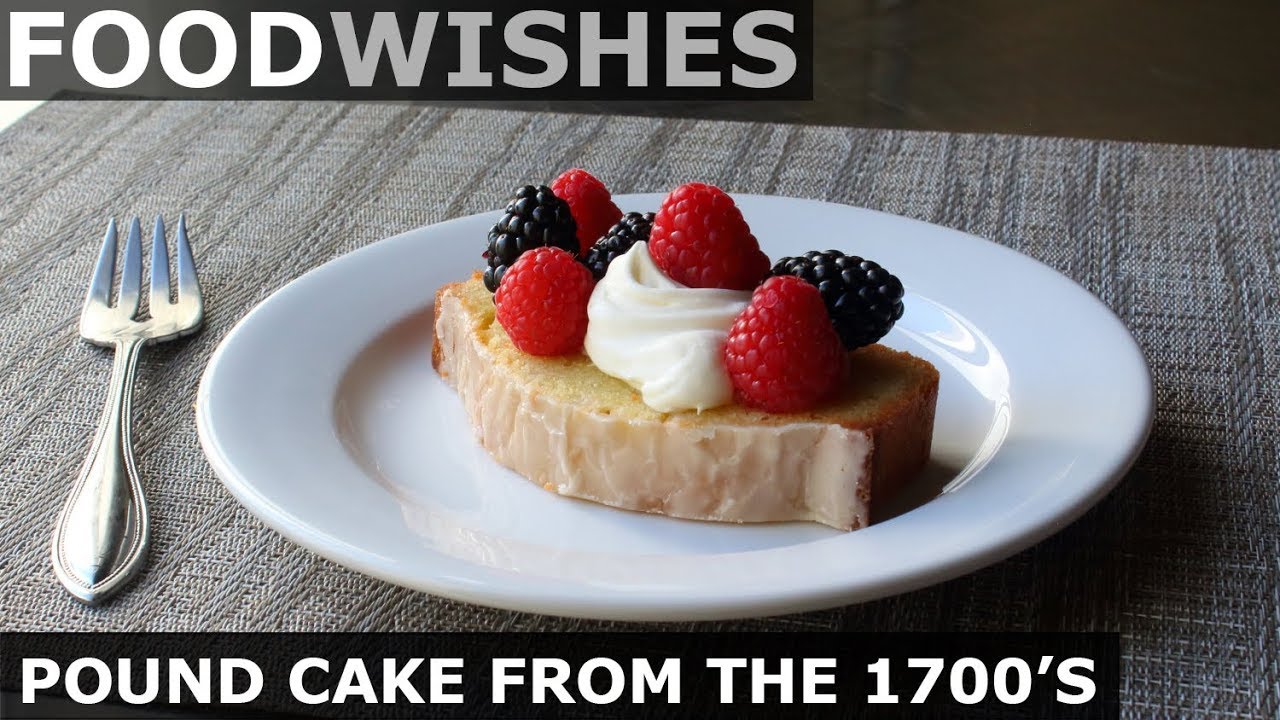
Pound Cake from the 1700's
video description
Date: 2020-03-04
Related videos



Comments and reviews: 10
Deer
When I was growing up, my grandmother never used an electric mixer. She would tuck the bowl under her arm and stir vigorously in a sideways sort of way. (this is hard to describe accurately) It's a sort of lift and drop motion with the whisk or wooden spoon. You can leverage much more strength and the whisking action lifts the butter/eggs/whipping cream/whatever from the bowl and incorporates much more air than if you try to do it on the table. I still do this sometimes if I just don't feel like dealing with washing all the mixer parts (no dishwasher. She also churned butter in a butter churn, so. yeah. I grew up like living in the 1700's. right down to curing our own meats (which we still do) and wearing a bonnet to keep the sun off when we went outside (which I do not still do. And no, we are not of any particularly anti-modern religious persuasion, just poor and farmers. Point being, there's a technique to working the air into the cake that involves holding the bowl up and at an angle that makes it much easier to get a lovely, fluffy cake; or meringue or whipped cream, without the arm fatigue.
reply
When I was growing up, my grandmother never used an electric mixer. She would tuck the bowl under her arm and stir vigorously in a sideways sort of way. (this is hard to describe accurately) It's a sort of lift and drop motion with the whisk or wooden spoon. You can leverage much more strength and the whisking action lifts the butter/eggs/whipping cream/whatever from the bowl and incorporates much more air than if you try to do it on the table. I still do this sometimes if I just don't feel like dealing with washing all the mixer parts (no dishwasher. She also churned butter in a butter churn, so. yeah. I grew up like living in the 1700's. right down to curing our own meats (which we still do) and wearing a bonnet to keep the sun off when we went outside (which I do not still do. And no, we are not of any particularly anti-modern religious persuasion, just poor and farmers. Point being, there's a technique to working the air into the cake that involves holding the bowl up and at an angle that makes it much easier to get a lovely, fluffy cake; or meringue or whipped cream, without the arm fatigue.
reply
nelliebly
If you had enough money in the 1700's to afford this cake, wouldn't the butter be fresh because maybe a servant just finished churning it? And if it was fresh butter wouldn't it have been easier to mix it with the sugar? They may have sifted the flour 4 or 5 times as well. They may have whipped the eggs before adding them too. The 1700's wasn't exactly Medieval times. We are talking about the height of the Classical period. Careme was the chef of royalty. He wouldn't be allowed to give the King or the young Queen from Austria with the goofy hairdos sub-par cakes. They may have even used it in lieu of bread for toast as well. They may have used Rose or Orange Blossom Water as flavoring depending where you lived. A lot of early American, Colonial recipes used Roseose or Orange Blossom Water, Vanilla was cost prohibitive. But I guess if you were King, your chefs had vanilla on hand. Marie probably used it in her bath, and as a perfume.
reply
If you had enough money in the 1700's to afford this cake, wouldn't the butter be fresh because maybe a servant just finished churning it? And if it was fresh butter wouldn't it have been easier to mix it with the sugar? They may have sifted the flour 4 or 5 times as well. They may have whipped the eggs before adding them too. The 1700's wasn't exactly Medieval times. We are talking about the height of the Classical period. Careme was the chef of royalty. He wouldn't be allowed to give the King or the young Queen from Austria with the goofy hairdos sub-par cakes. They may have even used it in lieu of bread for toast as well. They may have used Rose or Orange Blossom Water as flavoring depending where you lived. A lot of early American, Colonial recipes used Roseose or Orange Blossom Water, Vanilla was cost prohibitive. But I guess if you were King, your chefs had vanilla on hand. Marie probably used it in her bath, and as a perfume.
reply
Jan
Ok, so pound cake is equivalent to what we call quatre-quart (four-quarts) cake, but we put the batter together differently. We mix half the sugar with the softened butter and the other half we beat into the eggs, creating what's known as a ruban, then we combine the two with half the flower and fold in the rest like you showed. That's how my grandmother was taught the recipe in the early 1900s. We always made them by hand, and I don't recall it as being particularly hard work. Beating the ruban is tedious, so that got farmed out to me when I was a kid, but I don't recall ever being sore from making quatre-quart cake, even when I did it on my own as I got older. I haven't made one in more than a decade, though, because it's 25% butter, so maybe I should give it another go now that I'm 50 and see if it tuckers me out.
reply
Ok, so pound cake is equivalent to what we call quatre-quart (four-quarts) cake, but we put the batter together differently. We mix half the sugar with the softened butter and the other half we beat into the eggs, creating what's known as a ruban, then we combine the two with half the flower and fold in the rest like you showed. That's how my grandmother was taught the recipe in the early 1900s. We always made them by hand, and I don't recall it as being particularly hard work. Beating the ruban is tedious, so that got farmed out to me when I was a kid, but I don't recall ever being sore from making quatre-quart cake, even when I did it on my own as I got older. I haven't made one in more than a decade, though, because it's 25% butter, so maybe I should give it another go now that I'm 50 and see if it tuckers me out.
reply
Neli
Cakes were made this way until the seventies and eighties in some countries. I watched my aunt beating cakes by hand with a wooden spoon, and I did the same too. I was 12 years old when tried to make my first cake which was baked in a stove top not in the oven. It was a disaster but at the third attempt it came out perfectly. The butter back then, at room temperature, was much softer than this one and so it was easier to beat together with the sugar. We had cakes that were soft which raised perfectly.
reply
Cakes were made this way until the seventies and eighties in some countries. I watched my aunt beating cakes by hand with a wooden spoon, and I did the same too. I was 12 years old when tried to make my first cake which was baked in a stove top not in the oven. It was a disaster but at the third attempt it came out perfectly. The butter back then, at room temperature, was much softer than this one and so it was easier to beat together with the sugar. We had cakes that were soft which raised perfectly.
reply
Happy
Sorry, Chef John. I have been following you for about five years now, and you have put out some great stuff. But this has to be perhaps the worst video you have ever made. I don't want to hear about how miserable it was toomics everything together by hand, or how much better it would have been have you used modern technology to greatly simplify the process and improve the final result. I'm not going anywhere, don't worry. But you can do way better than this.
reply
Sorry, Chef John. I have been following you for about five years now, and you have put out some great stuff. But this has to be perhaps the worst video you have ever made. I don't want to hear about how miserable it was toomics everything together by hand, or how much better it would have been have you used modern technology to greatly simplify the process and improve the final result. I'm not going anywhere, don't worry. But you can do way better than this.
reply
Roger
Reading from Hannah Glasse The Art of Cookery Made Plain and Easy, published 1765, page 272: Beat a pound of butter until it is like a thick, fine cream. Beat 12 egg yolks and 6 whites well, then beat into the butter. Then beat in a pound of flour, a pound of sugar, and a few caraway seeds. Beat all together for an hour with a wooden spoon then pour into a buttered pan. Bake for one hour in a quick oven. And yes, I got the book from Townsend's.
reply
Reading from Hannah Glasse The Art of Cookery Made Plain and Easy, published 1765, page 272: Beat a pound of butter until it is like a thick, fine cream. Beat 12 egg yolks and 6 whites well, then beat into the butter. Then beat in a pound of flour, a pound of sugar, and a few caraway seeds. Beat all together for an hour with a wooden spoon then pour into a buttered pan. Bake for one hour in a quick oven. And yes, I got the book from Townsend's.
reply
Robert
Yeah they had electricity in the 1700s. it was called lightning. and if they made their invisible all knowing all seeing abusive sky daddy mad he would launch a few bolts your way. Maybe chef J should do more Amish related recipes. seeing how they dont use electricity either. youll be able to toughen up those unused muscles to the level of an Amish grandma who bakes all day.
reply
Yeah they had electricity in the 1700s. it was called lightning. and if they made their invisible all knowing all seeing abusive sky daddy mad he would launch a few bolts your way. Maybe chef J should do more Amish related recipes. seeing how they dont use electricity either. youll be able to toughen up those unused muscles to the level of an Amish grandma who bakes all day.
reply
azzura
My grandmother made cakes with just a wooden spoon and whisk. Her cakes always came out soft and moist. I continued her legacy by not using electric mixer. Yes, your arms hurt and you'll sweat buckets but once you've mastered how much strength to use with different mixes or dough, the end product will turn out just as nice. And you'll be much more appreciative of your work.
reply
My grandmother made cakes with just a wooden spoon and whisk. Her cakes always came out soft and moist. I continued her legacy by not using electric mixer. Yes, your arms hurt and you'll sweat buckets but once you've mastered how much strength to use with different mixes or dough, the end product will turn out just as nice. And you'll be much more appreciative of your work.
reply
Johan
Separate the eggs and beat the yolks into the butter and then beat the whites into stiff peaks, add the whites last by carufully folding them in. Fluffy cake is then a more likely prospect. Be careful not to disturb it when it's in the oven though, because it will deflate ctastrophically if you poke it too soon. This would also be a thing they could do in the 18th century.
reply
Separate the eggs and beat the yolks into the butter and then beat the whites into stiff peaks, add the whites last by carufully folding them in. Fluffy cake is then a more likely prospect. Be careful not to disturb it when it's in the oven though, because it will deflate ctastrophically if you poke it too soon. This would also be a thing they could do in the 18th century.
reply
zsazsavoom
I can't believe you put flour into that obviously unincorporated grainy, flat mixture or bothered to taste the resulting greasy mess. My mother used to make this without an electric mixer but she knew enough not to use a lightweight whisk or a super bendy spatula. Of course, she weighed almost 100lbs, so she was really able to muscle it into perfection.
reply
I can't believe you put flour into that obviously unincorporated grainy, flat mixture or bothered to taste the resulting greasy mess. My mother used to make this without an electric mixer but she knew enough not to use a lightweight whisk or a super bendy spatula. Of course, she weighed almost 100lbs, so she was really able to muscle it into perfection.
reply
Add a review, comment
Other channel videos