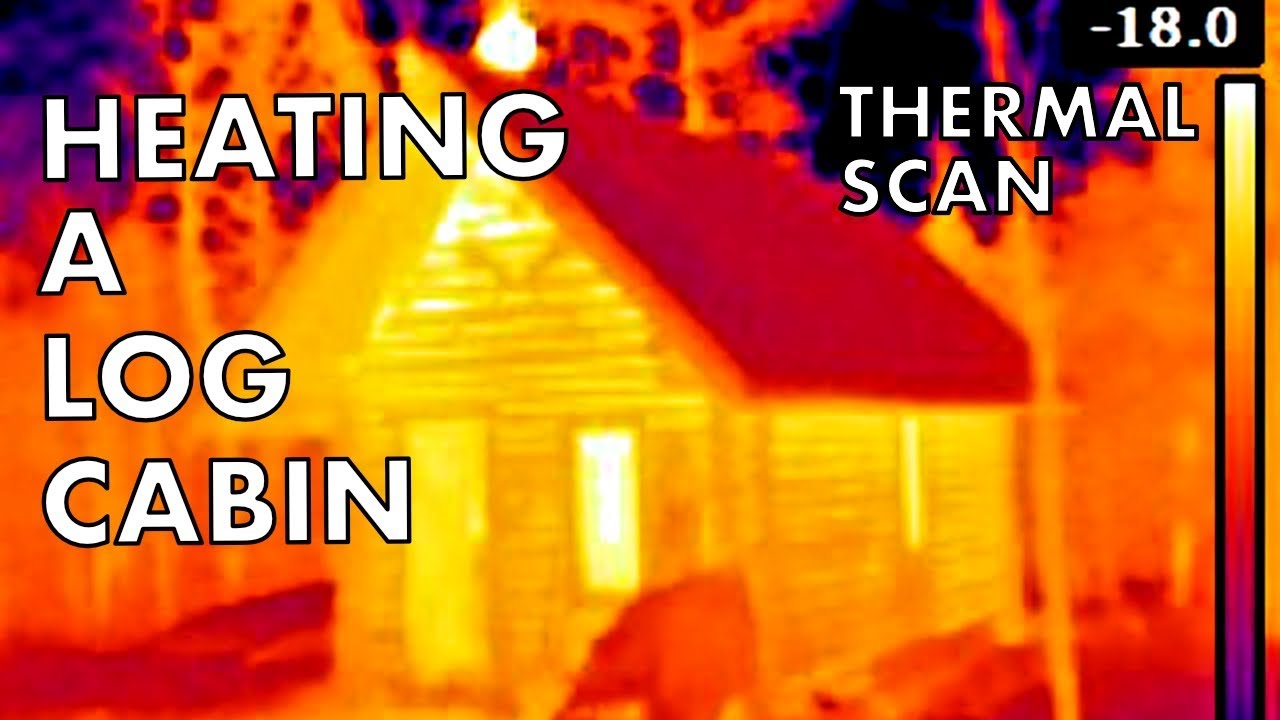
How to Heat an Off Grid Log Cabin with Wood, Thermal Imaging Scan (infrared)
video description
Date: 2020-11-30
Related videos


Comments and reviews: 10
Guillo
Hi Shawn,
I live in south of PA. Vermont Castings are very good stoves. Mine is Encore NC 1450 and I go thru the hole winter with not problem. It is a large house and at night we have to close doors of three up-stair bedrooms because too hot for sleeping.
Suggestion in order to get the most from your stove:
1) close the Damper(left handle) only when you have a good bed of amber and or to prevent over heating.
2)Adjust the Air Control (front right handle) but avoid complete closing since air from it controls fire and keeps front glass windows clean.
3)When starting and or reviving the fire open damper and ajar one front door. Opening the ash door to create draft is a fire risk; also, the grate may warp and eventually brakes because uneven cooling. (It happened to me)
4)The refractory shoe is a very important part for this stove. It's just below the flue at the rear wall. It acts as a manifold, sending fresh air to the flue in order to have better draft and balancing heat; it sends air to the lower rear area of the combustion for more even burning of the wood; it also supply air to the front doors to keep glass clean. (note: clean glass with wet ash)
Suggestion for your future workshop:
I have a double barrel stove in a three cars garage/workshop (not insulation. It is amazing the much heat generated for this homemade stove. I always get 30+ degree higher inside then whatever temp may be outside. The kit is less then 50 and two steel drums 10 each. This stove takes very good size logs and they don't have to be in the best condition for burning.
reply
Hi Shawn,
I live in south of PA. Vermont Castings are very good stoves. Mine is Encore NC 1450 and I go thru the hole winter with not problem. It is a large house and at night we have to close doors of three up-stair bedrooms because too hot for sleeping.
Suggestion in order to get the most from your stove:
1) close the Damper(left handle) only when you have a good bed of amber and or to prevent over heating.
2)Adjust the Air Control (front right handle) but avoid complete closing since air from it controls fire and keeps front glass windows clean.
3)When starting and or reviving the fire open damper and ajar one front door. Opening the ash door to create draft is a fire risk; also, the grate may warp and eventually brakes because uneven cooling. (It happened to me)
4)The refractory shoe is a very important part for this stove. It's just below the flue at the rear wall. It acts as a manifold, sending fresh air to the flue in order to have better draft and balancing heat; it sends air to the lower rear area of the combustion for more even burning of the wood; it also supply air to the front doors to keep glass clean. (note: clean glass with wet ash)
Suggestion for your future workshop:
I have a double barrel stove in a three cars garage/workshop (not insulation. It is amazing the much heat generated for this homemade stove. I always get 30+ degree higher inside then whatever temp may be outside. The kit is less then 50 and two steel drums 10 each. This stove takes very good size logs and they don't have to be in the best condition for burning.
reply
desild
I see people in Western Europe and NA are heavy users of cast iron stoves. In Eastern Europe we only use these in rooms where you must also cook. Everywhere else we use masonry stoves. They are bulkier, more expensive & permanent but also much more efficient and even in the heaviest of winters you only need to execute a burn twice a day (morning and evening) and then just let the heat stored in masonry radiate, freeing up a lot of your time and attention. Rocket stoves are an extreme version of masonry stoves more similar to Russian stoves. They are more suitable for large open spaces or situations where you can build multiple rooms or even the whole house around this kind of stove. My point is, while cast iron stoves are cheap and versatile, they are inefficient when considered just for heating.
reply
I see people in Western Europe and NA are heavy users of cast iron stoves. In Eastern Europe we only use these in rooms where you must also cook. Everywhere else we use masonry stoves. They are bulkier, more expensive & permanent but also much more efficient and even in the heaviest of winters you only need to execute a burn twice a day (morning and evening) and then just let the heat stored in masonry radiate, freeing up a lot of your time and attention. Rocket stoves are an extreme version of masonry stoves more similar to Russian stoves. They are more suitable for large open spaces or situations where you can build multiple rooms or even the whole house around this kind of stove. My point is, while cast iron stoves are cheap and versatile, they are inefficient when considered just for heating.
reply
Kirk
Thanks for you video. Logs are a fairly good insulator - cement is not. Foam spray would greatly improve your insulation. Stopping all leaks as possible is another one. Your stove is way better than a fireplace. 1 in of wood is equal to about 1 inch of insulation. Foam as many holes as possible. That is why making a circular groove to lie each log into and possibly using weather stripping - 2 pieces is always a good idea. A small trapped air space is also a great insulator. If you cut your logs with a bandsaw then weatherstrip and make sure the fit is tight. Foam around windows is a must as is double or triple glazing.
reply
Thanks for you video. Logs are a fairly good insulator - cement is not. Foam spray would greatly improve your insulation. Stopping all leaks as possible is another one. Your stove is way better than a fireplace. 1 in of wood is equal to about 1 inch of insulation. Foam as many holes as possible. That is why making a circular groove to lie each log into and possibly using weather stripping - 2 pieces is always a good idea. A small trapped air space is also a great insulator. If you cut your logs with a bandsaw then weatherstrip and make sure the fit is tight. Foam around windows is a must as is double or triple glazing.
reply
DStray
Awesome video. I was wondering if you ever considered Heat Loss. You've answered a lot of questions. Oh! I love the Bow. AWESOME! Rocket stoves are very efficient, but they really lack in Esthetics. I would keep the stove you have on that alone. BTW, That is not regular glass in the doors of the stove, but Ceramic Glass. It can handle temperatures upwards of 500F. Perhaps a double pane could improve the RH, but you'd have to find a way to make that happen. I sold my old Pot-belly Stove a few years ago, but yours is a butt-kicker. Enjoy it and Love it: -)
reply
Awesome video. I was wondering if you ever considered Heat Loss. You've answered a lot of questions. Oh! I love the Bow. AWESOME! Rocket stoves are very efficient, but they really lack in Esthetics. I would keep the stove you have on that alone. BTW, That is not regular glass in the doors of the stove, but Ceramic Glass. It can handle temperatures upwards of 500F. Perhaps a double pane could improve the RH, but you'd have to find a way to make that happen. I sold my old Pot-belly Stove a few years ago, but yours is a butt-kicker. Enjoy it and Love it: -)
reply
craig
Thank you soooo much for flashing up the alternate temperature scale. Thousands of us have to look it up every time someone says a temperature. We're Celsius in sunny South Australia, so in this case it isn't required, but on behalf of all those others. Thank you, thank you, thank you. Also thanks for the videos. They are slowly convincing me to calm down a little: )
- 120ThingsIn20Years/BullwinkleII/Craig
reply
Thank you soooo much for flashing up the alternate temperature scale. Thousands of us have to look it up every time someone says a temperature. We're Celsius in sunny South Australia, so in this case it isn't required, but on behalf of all those others. Thank you, thank you, thank you. Also thanks for the videos. They are slowly convincing me to calm down a little: )
- 120ThingsIn20Years/BullwinkleII/Craig
reply
Mario
Will be better to get a different stove. Smaller box with a larger top area for cooking and heating water. Also a copper coil around the chimney connected to a water tank will help having almost constant warm/hot water when the stove is in use. There are also ovens heated by the chimney heat. .That stove is kind of out of place. Does not blend in with everything inside the cabin. My opinion. Good luck.
reply
Will be better to get a different stove. Smaller box with a larger top area for cooking and heating water. Also a copper coil around the chimney connected to a water tank will help having almost constant warm/hot water when the stove is in use. There are also ovens heated by the chimney heat. .That stove is kind of out of place. Does not blend in with everything inside the cabin. My opinion. Good luck.
reply
Frank
The thermostat handle (on your right side facing the stove) is pushed all the way back which shuts off air to the fire box and may put the fire out. Pull the handle towards you to allow more air into the firebox. The thermostat is intensionally adjustable. full open (handle pulled toward you) to start the stove. half open (handle pointed down) for more controlled burn after logs are fully engaged.
reply
The thermostat handle (on your right side facing the stove) is pushed all the way back which shuts off air to the fire box and may put the fire out. Pull the handle towards you to allow more air into the firebox. The thermostat is intensionally adjustable. full open (handle pulled toward you) to start the stove. half open (handle pointed down) for more controlled burn after logs are fully engaged.
reply
Darren
Hi Shawn, great vid. I am a huge fan of wood burning stoves as I have two, one for my house and one for my workshop.
Have you considered attaching a couple of copper air pipes running from an inch off the floor, up the stove pipe, flared and angled at both ends. This heats the air very efficiently as it pulls in cooler air and expels hot air. This wood also work great for your sauna.
reply
Hi Shawn, great vid. I am a huge fan of wood burning stoves as I have two, one for my house and one for my workshop.
Have you considered attaching a couple of copper air pipes running from an inch off the floor, up the stove pipe, flared and angled at both ends. This heats the air very efficiently as it pulls in cooler air and expels hot air. This wood also work great for your sauna.
reply
otahu
Your Stove need a damper in the chimney! And Bigger brick area. Loose the stove with a grate for ash pan. it's not sealing tight enough. The simpler the stove the better. Like you were talking about the older front bottom draft stove. . It will cut down your use of a cord of wood a month to half that and get a stove without GLASS. Again more thermal mass.
reply
Your Stove need a damper in the chimney! And Bigger brick area. Loose the stove with a grate for ash pan. it's not sealing tight enough. The simpler the stove the better. Like you were talking about the older front bottom draft stove. . It will cut down your use of a cord of wood a month to half that and get a stove without GLASS. Again more thermal mass.
reply
Jeff
Nice set up. Only thing I'd do differently is have that heat shield on the wall behind the stove spaced out from the wall an inch. and have it an inch off the ground to allow the heat to circulate around the shield. Wouldn't want to run the risk of heat being transferred from the heat shield to the log. Cheers!
reply
Nice set up. Only thing I'd do differently is have that heat shield on the wall behind the stove spaced out from the wall an inch. and have it an inch off the ground to allow the heat to circulate around the shield. Wouldn't want to run the risk of heat being transferred from the heat shield to the log. Cheers!
reply
Add a review, comment
Other channel videos




 11:16
11:16