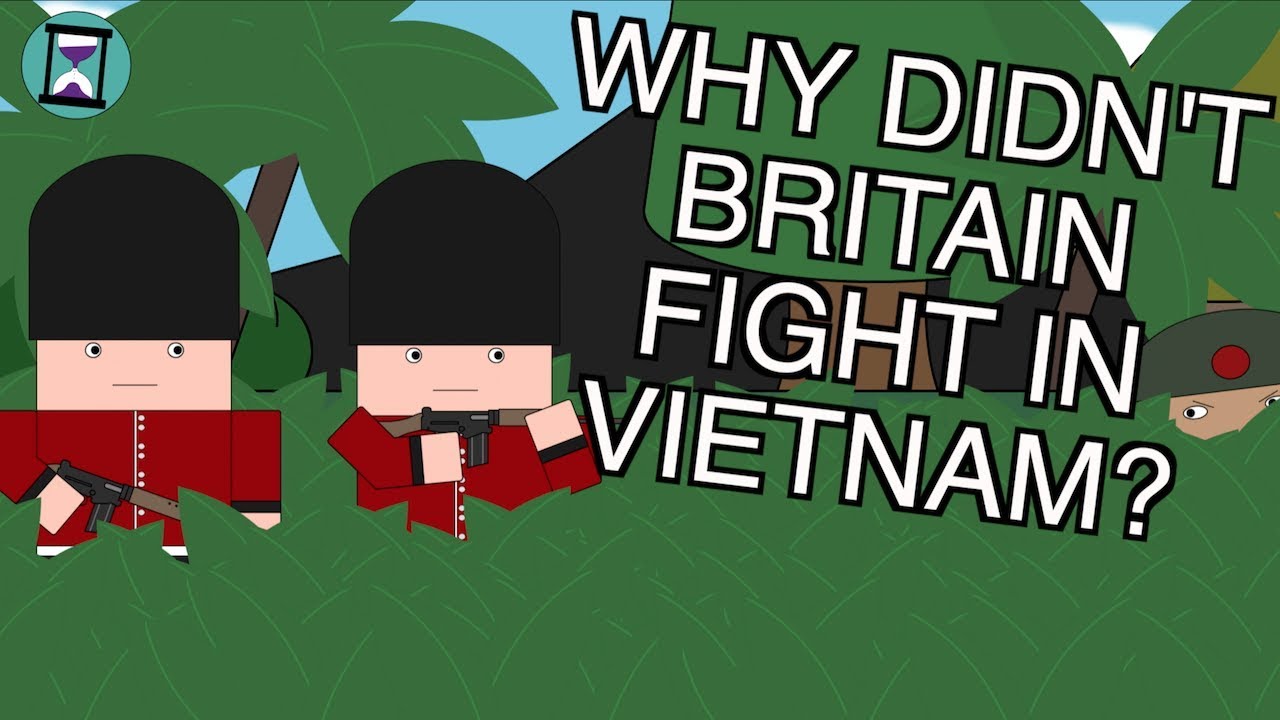
Why didn't Britain fight in Vietnam? Documentary
video description
Even though we didn't get involved with conventional military means, we were still strongly invested in this war diplomatically from 1965-1967. Harold Wilson undertook multiple initiatives to bring peace in Vietnam during the early stages of the war, these took the form of multi-lateral initiatives with the Commonwealth and solo initiatives by sending particularly left-wing members of the Labour Party to Vietnam (namely Harold Davies. However the closest Wilson got to ending the war was through Operation SUNFLOWER in 1967; a bilaterally negotiated (with the USSR) initiatives based on an A/B proposal in which the US would halt bombing in return for NVA/Vietcong troops halting there advances across the DMZ into South Vietnam. This failed due to a last-minute reversal of the proposal by the American Government and subsequent North Vietnamese disagreement - but before this Wilson was within 1 hour of ending the war in 1967 - a huge achievement that has gone basically unnoticed by his critics (and supporters.
So why was he involved diplomatically? There are many reasons and this was the main focus of my dissertation:
As the video states, the economy was a factor and the US did try to manipulate us by offering us financial assistance in return for troops - we denied this however and it was a pretty quick 'no'. This video stresses the economic factor a bit too much compared to the other factors that also influenced our diplomatic involvement.
Mainly, Wilson didn't commit troops, and took the diplomatic route, because of electorate pressure (as the video mentions, but also due to Parliamentary Labour Party uneasiness about the conflict - he needed to maintain support (thin majority in the HoC until 1966 and further instability post-devaluation) and the best way of doing that was to prove he was a strong leader by negotiating a settlement in Vietnam and not-committing us to a long war. We had our own foreign commitments 'East of Suez', particularly in Malaysia and just couldn't justify the expenditure without weakening his own position domestically.
We also did co-Chair the Geneva Conference on Vietnam in 1954 with the Soviet Union so were bound to protect peace in the area, but this was easy enough to ignore and we largely did apart from to guilt USSR into getting involved in our peace initiatives and using it as an early excuse against US pressure.
Largely, the diplomatic route was a 'middle ground' for Wilson - a way to placate domestic and PLP pressures while also refuting American persistence. Diplomacy was a stronger excuse than just a no troops, which caused strain on the Special Relationship, and legitimised Britain's involvement in the conflict which in turn legitimised their position on the world stage.
Also Anglo-US relations were better than this video claims as both Wilson and LBJ reached a general consensus that they were both doing their own thing and had their own difficulties.
If anyone wants me to point them toward books/sources that expand on stuff not mentioned in this video, I am happy to.
Date: 2022-07-19
Related videos





Comments and reviews: 19
Redsen
The Wilson Labour government very sensibly, indeed, very wisely, wanted nothing at all to do with U. S. military involvement in Vietnam. The British government under Wilson knew a quagmire when they saw one.
It's a pity the Americans' political and military leadership lacked the same sharp perception and good judgment as the Brits. Perhaps they were naive in this department and overestimated themselves and underestimated their Vietnamese enemy.
The other thing was that the left-of-center political parties in Western Europe were generally very sympathetic and morally supportive of the revolutionary-nationalist guerrillas of the National Liberation Front/People's Liberation Armed Forces and of the North Vietnamese.
Many Europeans looked at the U. S. as being a quasi-imperialist bully and the aggressor in Vietnam. Consequently, many Europeans gloated like hell at the United States' strategic failure and its heavy reverse in Vietnam.
These gloating Europeans rightly or wrongly considered that the Americans had brought down on their own heads their failure and defeat in Vietnam as a result of the Americans' hubris and arrogance, and their conceit and vanity. Personally, I'm not convinced of that.
reply
The Wilson Labour government very sensibly, indeed, very wisely, wanted nothing at all to do with U. S. military involvement in Vietnam. The British government under Wilson knew a quagmire when they saw one.
It's a pity the Americans' political and military leadership lacked the same sharp perception and good judgment as the Brits. Perhaps they were naive in this department and overestimated themselves and underestimated their Vietnamese enemy.
The other thing was that the left-of-center political parties in Western Europe were generally very sympathetic and morally supportive of the revolutionary-nationalist guerrillas of the National Liberation Front/People's Liberation Armed Forces and of the North Vietnamese.
Many Europeans looked at the U. S. as being a quasi-imperialist bully and the aggressor in Vietnam. Consequently, many Europeans gloated like hell at the United States' strategic failure and its heavy reverse in Vietnam.
These gloating Europeans rightly or wrongly considered that the Americans had brought down on their own heads their failure and defeat in Vietnam as a result of the Americans' hubris and arrogance, and their conceit and vanity. Personally, I'm not convinced of that.
reply
spankymcflych
Out of all the proxy wars and interventions since the end of wwII, the korean war seems like the only success, and only a partial success at that. I think history has shown that we should leave the willfully ignorant to their fate when they embrace communism. Let them enjoy their communist paradise. Britain was smart to stay out of the vietnam war. Of course on the flipside if britain had joined in perhaps the west could have won and vietnam might now be another beacon of prosperity like south korea is today. Missed opportunity or smart choice? Nobody knows for sure. But realistically it's not our job to save the world, let them wallow in their barbarity.
reply
Out of all the proxy wars and interventions since the end of wwII, the korean war seems like the only success, and only a partial success at that. I think history has shown that we should leave the willfully ignorant to their fate when they embrace communism. Let them enjoy their communist paradise. Britain was smart to stay out of the vietnam war. Of course on the flipside if britain had joined in perhaps the west could have won and vietnam might now be another beacon of prosperity like south korea is today. Missed opportunity or smart choice? Nobody knows for sure. But realistically it's not our job to save the world, let them wallow in their barbarity.
reply
Thomas
It is good they did not join in. It was a problem to be sorted out by the Vietnamese people themselves. America had no business getting involved in bombing the living shit out of that country. 4 million Vietnamese people died during that war. What a waste of human life and resources. By the way, it is still a Communist country and America now has normal business relations with them. So, my neighbor that the government drafted and sent over there, died in Vietnam, and was shipped home in a box- his life and death were meaningless.
reply
It is good they did not join in. It was a problem to be sorted out by the Vietnamese people themselves. America had no business getting involved in bombing the living shit out of that country. 4 million Vietnamese people died during that war. What a waste of human life and resources. By the way, it is still a Communist country and America now has normal business relations with them. So, my neighbor that the government drafted and sent over there, died in Vietnam, and was shipped home in a box- his life and death were meaningless.
reply
Mally
NONSENSE with Contrived RUBBISH. SHAME on You, Plonker, don't you feel any shred of Responsibility to be Accurate? We were fighting against Indonesia who invaded Colonies Sarawak & Brunei where Oil was discovered at that time. Though LOW Key, British Military had around 250, 000 Troops rotating in Sarawak Borneo and Malaya. Our Lads would've been most uncomfortable waging War in Vietnam with a Popsicle in one hand while being doused with Agent Orange anyway.
reply
NONSENSE with Contrived RUBBISH. SHAME on You, Plonker, don't you feel any shred of Responsibility to be Accurate? We were fighting against Indonesia who invaded Colonies Sarawak & Brunei where Oil was discovered at that time. Though LOW Key, British Military had around 250, 000 Troops rotating in Sarawak Borneo and Malaya. Our Lads would've been most uncomfortable waging War in Vietnam with a Popsicle in one hand while being doused with Agent Orange anyway.
reply
James
I believe the British SAS were in Vietnam. Not sure what difference it would have made sending troops, most would have been national service as the regulars were thinned out after WW2 or posted to keep an eye on the USSR. I'm still waiting for the Falklands blockbuster to come out and our forces won that war! I don't think we like picking a scab the way the US does, it does give them something to talk about. a bit of History?
reply
I believe the British SAS were in Vietnam. Not sure what difference it would have made sending troops, most would have been national service as the regulars were thinned out after WW2 or posted to keep an eye on the USSR. I'm still waiting for the Falklands blockbuster to come out and our forces won that war! I don't think we like picking a scab the way the US does, it does give them something to talk about. a bit of History?
reply
ram64man
Britain was in North Korea before the north split for independence, but were angry Following the separatists and leaving Burma they didnt want any further action that could be seen as a violation of treaties especially with communist China now in power whilst we still held Hong Kong plus both army and Troops were more invested in the Egypt Canal crisis and growing Cold War in mainland Europe
reply
Britain was in North Korea before the north split for independence, but were angry Following the separatists and leaving Burma they didnt want any further action that could be seen as a violation of treaties especially with communist China now in power whilst we still held Hong Kong plus both army and Troops were more invested in the Egypt Canal crisis and growing Cold War in mainland Europe
reply
Andrew
One thing that's appears to be unknown by many is that the USA was asked to be in Sth Vietnam by the Vietnamese Government (The Laos Government also asked them in to Lao in an effort to stop the Chinese supported Communist party of Laos taking over by force.
So the USA were not an invading force as many people wrongly believe.
reply
One thing that's appears to be unknown by many is that the USA was asked to be in Sth Vietnam by the Vietnamese Government (The Laos Government also asked them in to Lao in an effort to stop the Chinese supported Communist party of Laos taking over by force.
So the USA were not an invading force as many people wrongly believe.
reply
LegoLife
From what I've read over the years, and from speaking to my father and his mates, it seems that the entire Vietnam experience was one of people constantly refusing to listen to what anyone else was saying.
To me, that is the biggest tragedy of all, and while naive, I really hope it never happens again.
reply
From what I've read over the years, and from speaking to my father and his mates, it seems that the entire Vietnam experience was one of people constantly refusing to listen to what anyone else was saying.
To me, that is the biggest tragedy of all, and while naive, I really hope it never happens again.
reply
James
Britain DID fight in Vietnam, in1946 the fourteenth army (or, at least a bit of it) Kicked Ho Chi Minh' s butt and was on the verge of finally defeating his soldiers when the French turned up and said merci beaucoup, mes ami, now we can take over from here. The rest is history
reply
Britain DID fight in Vietnam, in1946 the fourteenth army (or, at least a bit of it) Kicked Ho Chi Minh' s butt and was on the verge of finally defeating his soldiers when the French turned up and said merci beaucoup, mes ami, now we can take over from here. The rest is history
reply
kmotch
The British army was deployed to Vietnam just never officially, the story I was told from former military intelligence was the yanks wearing tons of aftershave in jungle warfare, we had to tell them to knock that on the head as the VC could smell them from a click away!
reply
The British army was deployed to Vietnam just never officially, the story I was told from former military intelligence was the yanks wearing tons of aftershave in jungle warfare, we had to tell them to knock that on the head as the VC could smell them from a click away!
reply
education
If Britain had got involved in the Vietnam war alongside with the U. S., it too, would have suffered the same consequences as the Americans; with the defeat & chaotic exit in the last days where the victorious NVC army came rushing into the former capital, Saigon.
reply
If Britain had got involved in the Vietnam war alongside with the U. S., it too, would have suffered the same consequences as the Americans; with the defeat & chaotic exit in the last days where the victorious NVC army came rushing into the former capital, Saigon.
reply
David
makes sense not to listen to a country that successfully beat communist guerrillas. many people are unaware that Britain was in Vietnam in 45, we looked after it for the French and we fought the Proto VC and won, and guess who we used some solider from, Japan.
reply
makes sense not to listen to a country that successfully beat communist guerrillas. many people are unaware that Britain was in Vietnam in 45, we looked after it for the French and we fought the Proto VC and won, and guess who we used some solider from, Japan.
reply
Jerry
The UK used to send In teams of commandos from British war ships and subs on sabotage mission's, I used to work with an ex seaman who told me they dropped them off at night in rubber dinghies at night and pick them up in the morning.
reply
The UK used to send In teams of commandos from British war ships and subs on sabotage mission's, I used to work with an ex seaman who told me they dropped them off at night in rubber dinghies at night and pick them up in the morning.
reply
David
It was an extremely pointless war, the US ignored our advice and went in, ignored our advice on fighting it (from seasoned soldiers, in similar wars) and did badly, ignored our advice on getting out and prolonged it. and then lost.
reply
It was an extremely pointless war, the US ignored our advice and went in, ignored our advice on fighting it (from seasoned soldiers, in similar wars) and did badly, ignored our advice on getting out and prolonged it. and then lost.
reply
Joe
Had Great Britain sent its armies
to defend Viet Nam, it could have
changed the course of history.
The nato alliance would have collapsed.
The indochinese war would have been
shortened. Beyond that, who knows?
reply
Had Great Britain sent its armies
to defend Viet Nam, it could have
changed the course of history.
The nato alliance would have collapsed.
The indochinese war would have been
shortened. Beyond that, who knows?
reply
David
We did fight in Vietnam, please check the Vietnam casualties list.
Please get facts right before you desecrate any more serviceman's souls by saying WE never fought when we did,
Oh my actual word
reply
We did fight in Vietnam, please check the Vietnam casualties list.
Please get facts right before you desecrate any more serviceman's souls by saying WE never fought when we did,
Oh my actual word
reply
Bob
Lyndon Johnson actually blackmailed NZ into sending troops. He threatened our trade with the US. To his credit, the PM at the time even though he was right wing decided to only send a token force.
reply
Lyndon Johnson actually blackmailed NZ into sending troops. He threatened our trade with the US. To his credit, the PM at the time even though he was right wing decided to only send a token force.
reply
Nick
What's not mentionned is that Brits had ALREADY put down the Viet Minh post WWII with the help of Japanese prisoners. It was going well until the French said, 'we'll have our colony back now'.
reply
What's not mentionned is that Brits had ALREADY put down the Viet Minh post WWII with the help of Japanese prisoners. It was going well until the French said, 'we'll have our colony back now'.
reply
hellojam100
British workers in that period enjoyed their highest quality of life ever. Then Margaret Thatcher and Ronald Reagan resolved that problem and got Britain back as a proper Junior Partner
reply
British workers in that period enjoyed their highest quality of life ever. Then Margaret Thatcher and Ronald Reagan resolved that problem and got Britain back as a proper Junior Partner
reply
Add a review, comment
Other channel videos