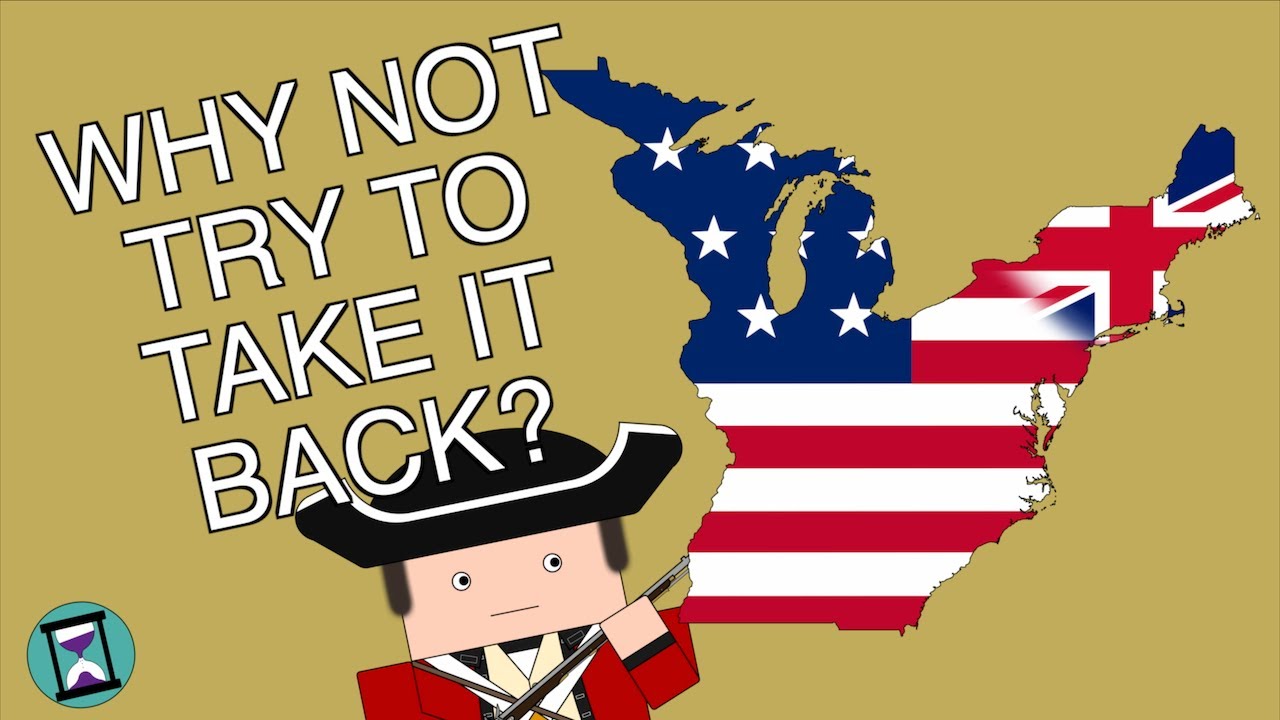
Why didn't Britain ever try to retake the United States (Short Animated Documentary)
video description
Date: 2024-07-06
Related videos





Comments and reviews: 20
bonaggy
I think a lot of people forget that the British Empire was foremost a mercantile one and had other irons in the fire, so to speak. Around that time, Britain was focused on expanding its market network further into India and beyond where it could source exotic goods. Our exports to the New World colonies made that life possible and enabled them to have a high standard of living. IIRC, America imported 80% of its manufactured goods from Britain prior to the war. In return, America exported cash crops; fish, rice, tobacco, and wood among others.
Apart from the Seven Years War and the Revolutionary War; most of the British focus was on expanding markets in India. I think cooler heads in Britain prevailed; we’d lost the American colonies, the effort to try and take it back was logistically and financially excessive; we had a significant market there still and our traders wanted to instead develop that into a major trading partner, which war would obviously interfere with. In the Treaty of Paris, Britain took quite a far-sighted approach and concluded it with this future trade in mind. We were not getting the colonies back, we settled borders (as we understood them at the time, and both countries continued to benefit from the trade. Much to France’s chagrin, no doubt. They had invested a lot into the American Revolution that they really couldn’t afford. I think they’d been banking on becoming the major US trade partner on its independence. It didn’t happen. Of course, with their own efforts to raise taxes to pay for their involvement led to their own revolutionary problems.
There will always be those in both governments who wanted to see each other fail, of course there were, but the majority within their respective governments realised that the better option was to put the war behind them and go with enlightened self interest: focusing on the option that benefitted them the most.
reply
I think a lot of people forget that the British Empire was foremost a mercantile one and had other irons in the fire, so to speak. Around that time, Britain was focused on expanding its market network further into India and beyond where it could source exotic goods. Our exports to the New World colonies made that life possible and enabled them to have a high standard of living. IIRC, America imported 80% of its manufactured goods from Britain prior to the war. In return, America exported cash crops; fish, rice, tobacco, and wood among others.
Apart from the Seven Years War and the Revolutionary War; most of the British focus was on expanding markets in India. I think cooler heads in Britain prevailed; we’d lost the American colonies, the effort to try and take it back was logistically and financially excessive; we had a significant market there still and our traders wanted to instead develop that into a major trading partner, which war would obviously interfere with. In the Treaty of Paris, Britain took quite a far-sighted approach and concluded it with this future trade in mind. We were not getting the colonies back, we settled borders (as we understood them at the time, and both countries continued to benefit from the trade. Much to France’s chagrin, no doubt. They had invested a lot into the American Revolution that they really couldn’t afford. I think they’d been banking on becoming the major US trade partner on its independence. It didn’t happen. Of course, with their own efforts to raise taxes to pay for their involvement led to their own revolutionary problems.
There will always be those in both governments who wanted to see each other fail, of course there were, but the majority within their respective governments realised that the better option was to put the war behind them and go with enlightened self interest: focusing on the option that benefitted them the most.
reply
dat581
One reason rarely discussed for Britain not trying very hard to retake the USA, nor not trying very hard during the Revolutionary War was they felt they were fighting kin and found that very distasteful. If you look at all of the other wars they fought in roughly the same period they were utterly ruthless. In the Revolutionary War they pulled their punches. Britain was hoping the Colonials would give up and just go home. In many battles, some which the Americans celebrate today, the British did not make much of an effort and did not obliterate the Colonial forces like they would have the French. Even after the war there was not much in the way of hatred between Britain and the USA. The modern American view of the war came from the copious amounts of propaganda that surrounded the War of 1812.
reply
One reason rarely discussed for Britain not trying very hard to retake the USA, nor not trying very hard during the Revolutionary War was they felt they were fighting kin and found that very distasteful. If you look at all of the other wars they fought in roughly the same period they were utterly ruthless. In the Revolutionary War they pulled their punches. Britain was hoping the Colonials would give up and just go home. In many battles, some which the Americans celebrate today, the British did not make much of an effort and did not obliterate the Colonial forces like they would have the French. Even after the war there was not much in the way of hatred between Britain and the USA. The modern American view of the war came from the copious amounts of propaganda that surrounded the War of 1812.
reply
history_matters
This follows the odd revisionist history perpetuated by a number of english sources. The War of 1812 was indeed deadly serious for the english and they fully intended to take New Orleans, occupy it, set up their own governorship and then negate the Louisiana Purchase as they considered the sale by Bonaparte to be indefensible. This is established fact. It is not your fault as this is not taught in english schools nor in european history lessons either.
It is as disturbing as the fact that the english still act as if WWII ended on VE day. One might suppose that the extensive empire losses in the asian arena would have made the english more mindful of their own history. The neglect and revisionism of the loss to the colonies in the Americas is understandable but not excusable.
reply
This follows the odd revisionist history perpetuated by a number of english sources. The War of 1812 was indeed deadly serious for the english and they fully intended to take New Orleans, occupy it, set up their own governorship and then negate the Louisiana Purchase as they considered the sale by Bonaparte to be indefensible. This is established fact. It is not your fault as this is not taught in english schools nor in european history lessons either.
It is as disturbing as the fact that the english still act as if WWII ended on VE day. One might suppose that the extensive empire losses in the asian arena would have made the english more mindful of their own history. The neglect and revisionism of the loss to the colonies in the Americas is understandable but not excusable.
reply
jamesalias595
Great Britain didn't have enough population to take the USA back. It couldn't hold it during the revolution and by 1800 the USA had a population of just shy of 5 million not counting slaves while England had a population of 8 million (can't count all of UK as many people didn't want to be subjects. So while England had a slight population advantage it couldn't employ that against US home turf while protecting the rest of the empire. so there never was any chance of the UK taking back the United States at all. Since Britain didn't free it's slaves until 1833, it couldn't even use a slave revolt to overthrow the USA. So Great Britain could never have retaken the USA.
reply
Great Britain didn't have enough population to take the USA back. It couldn't hold it during the revolution and by 1800 the USA had a population of just shy of 5 million not counting slaves while England had a population of 8 million (can't count all of UK as many people didn't want to be subjects. So while England had a slight population advantage it couldn't employ that against US home turf while protecting the rest of the empire. so there never was any chance of the UK taking back the United States at all. Since Britain didn't free it's slaves until 1833, it couldn't even use a slave revolt to overthrow the USA. So Great Britain could never have retaken the USA.
reply
captainclarky5352
The North American economy relied on vast amounts of labour to make the land profitable. The native population had tanked and the trans-Atlantic slave trade was no longer under British control, so the British Empire would have had difficulty making the states profitable for them again after reconquering them. Meanwhile, India had an already subjected population to provide labour, and Africa's resources were ripe for exploitation. What they did do was support the native confederacies as much as possible to try and limit the USA's expansion and force concessions. A native buffer state around the Great Lakes was even considered in the early 1800s
reply
The North American economy relied on vast amounts of labour to make the land profitable. The native population had tanked and the trans-Atlantic slave trade was no longer under British control, so the British Empire would have had difficulty making the states profitable for them again after reconquering them. Meanwhile, India had an already subjected population to provide labour, and Africa's resources were ripe for exploitation. What they did do was support the native confederacies as much as possible to try and limit the USA's expansion and force concessions. A native buffer state around the Great Lakes was even considered in the early 1800s
reply
TheAmpsych
The United Kingdom has been divided into administrative divisions known as counties, now sometimes referred to as historical counties, since the Norman invasion nearly a thousand years ago. The original Thirteen Colonies, before their transition into states following the Revolutionary War, were also divided into counties by the British. But today 44 out of 50 States are entirely composed of counties, the newest being County Bloomfield in Colorado established in 2001; why why is the American Republic divided into the administrative areas used by William the Conqueror
reply
The United Kingdom has been divided into administrative divisions known as counties, now sometimes referred to as historical counties, since the Norman invasion nearly a thousand years ago. The original Thirteen Colonies, before their transition into states following the Revolutionary War, were also divided into counties by the British. But today 44 out of 50 States are entirely composed of counties, the newest being County Bloomfield in Colorado established in 2001; why why is the American Republic divided into the administrative areas used by William the Conqueror
reply
repippeas
There was also no need to retake America. Pomeranz's book The Great Divergance touches on this, there was no need for the UK to invade the US as they only needed it for its resources (rather than say, its taxes or manpower) and since the US embraced free marketeerism it could just buy these resources on the market just as before the revolution. Given that America was now self-govening and self-defending, it actually remvoed the costs for the British empire, but not the benefits. Essentially American independence was a win-win.
reply
There was also no need to retake America. Pomeranz's book The Great Divergance touches on this, there was no need for the UK to invade the US as they only needed it for its resources (rather than say, its taxes or manpower) and since the US embraced free marketeerism it could just buy these resources on the market just as before the revolution. Given that America was now self-govening and self-defending, it actually remvoed the costs for the British empire, but not the benefits. Essentially American independence was a win-win.
reply
seanbigay1042
Didn't the Pig War happen somewhere in the middle of all this Put very briefly, a pig owned by an English settler wandered onto an American's farm and was shot for trespassing. An argument ensued and troops were sent by both sides. But no shots were fired, the hostilities never rose beyond the level of Your mother wears army boots! Yeah Well, your mother IS an army boot! And eventually the dispute was amicably settled and the troops happily went home. The only casualty was the pig.
reply
Didn't the Pig War happen somewhere in the middle of all this Put very briefly, a pig owned by an English settler wandered onto an American's farm and was shot for trespassing. An argument ensued and troops were sent by both sides. But no shots were fired, the hostilities never rose beyond the level of Your mother wears army boots! Yeah Well, your mother IS an army boot! And eventually the dispute was amicably settled and the troops happily went home. The only casualty was the pig.
reply
ChaffyExpert
They kind of did try in 1812 and failed to do anything, was a logistical nightmare, and the US was only getting stronger. Britain didn't really have the power to invade the US and attempt an occupation, they couldn't even land on the US without getting defeated and they couldn't hold on to that part of Maine forever nor would the US give it up especially after the Battle of New Orleans.
Considering how powerful Britain actually was, The war of 1812 was a nightmare for them.
reply
They kind of did try in 1812 and failed to do anything, was a logistical nightmare, and the US was only getting stronger. Britain didn't really have the power to invade the US and attempt an occupation, they couldn't even land on the US without getting defeated and they couldn't hold on to that part of Maine forever nor would the US give it up especially after the Battle of New Orleans.
Considering how powerful Britain actually was, The war of 1812 was a nightmare for them.
reply
LadyTsunade777
By the mid 19th century, the US was far too great a power for the British to ever risk war without potentially losing Canada.
Man, imagine an alternate timeline where the UK does decide to try to retake the US, and they end up losing Canada to the US.
Would we have felt confident/arrogant enough after beating back the British a second time and taking all of Canada, to push onward south in the Mexican-American war to try to take all of Mexico too
reply
By the mid 19th century, the US was far too great a power for the British to ever risk war without potentially losing Canada.
Man, imagine an alternate timeline where the UK does decide to try to retake the US, and they end up losing Canada to the US.
Would we have felt confident/arrogant enough after beating back the British a second time and taking all of Canada, to push onward south in the Mexican-American war to try to take all of Mexico too
reply
history_matters
I think you hit the main reason in a preoccupation with India and Africa even during the Revolution Britain had more troops in India then fighting the Americans. America was never really profitable for Britain, even Canada was a better investment, especially since the cotton trade continued and expanded even with the US being independent. Britain made far more in tariffs on the US trade then they ever made in taxes on the colonies.
reply
I think you hit the main reason in a preoccupation with India and Africa even during the Revolution Britain had more troops in India then fighting the Americans. America was never really profitable for Britain, even Canada was a better investment, especially since the cotton trade continued and expanded even with the US being independent. Britain made far more in tariffs on the US trade then they ever made in taxes on the colonies.
reply
clarkwilson6340
Love it but you left off the fact that 1/3 of Britain's elite AGREED with the Americans that the Brits had been in the wrong; The biggest hold up to US returning was Britain's realizing that any return would have to have full representation in Parliament Much as Scotland and Wales Which the Scots opposed and most of the British elite did also, ; Unlike Canada and other White Colonies who were ok with the lack of representation;
reply
Love it but you left off the fact that 1/3 of Britain's elite AGREED with the Americans that the Brits had been in the wrong; The biggest hold up to US returning was Britain's realizing that any return would have to have full representation in Parliament Much as Scotland and Wales Which the Scots opposed and most of the British elite did also, ; Unlike Canada and other White Colonies who were ok with the lack of representation;
reply
Cryptic0013
Admittedly a grossly oversimplified overgeneralisation, but most former colonies eventually gained freedom for the same reason: The people fighting to hold them all wanted to go home, but the people fighting for freedom already were home and had nowhere else to go.
Eventually, no matter the superiority of the occupying force, the sheer weight of sagging morale and strained logistics will break your back.
reply
Admittedly a grossly oversimplified overgeneralisation, but most former colonies eventually gained freedom for the same reason: The people fighting to hold them all wanted to go home, but the people fighting for freedom already were home and had nowhere else to go.
Eventually, no matter the superiority of the occupying force, the sheer weight of sagging morale and strained logistics will break your back.
reply
ram0166
They came very close to defeating and dividing the US in the war of 1812. They burned Washington and if they had succeeded at the Battle of Fort McHenry they could have gone on a campaign of divide and conquer. Fort McHenry was able to persevere because the British failed to destroy the fort’s arsenal. The one cannon ball that they managed to land on it was a dud.
reply
They came very close to defeating and dividing the US in the war of 1812. They burned Washington and if they had succeeded at the Battle of Fort McHenry they could have gone on a campaign of divide and conquer. Fort McHenry was able to persevere because the British failed to destroy the fort’s arsenal. The one cannon ball that they managed to land on it was a dud.
reply
jpx1508
Maybe it's even simpler - the thinking British Imperialists following the American Revolution:
1) The British Raj, Cape Colony and Celestial Empire were mis-matches against The Crown and available for the taking.
2) As proven in the American Revolution and War of 1812, the American Colonists were hard, bloody work.
3) And, then, there was Napoleon.
reply
Maybe it's even simpler - the thinking British Imperialists following the American Revolution:
1) The British Raj, Cape Colony and Celestial Empire were mis-matches against The Crown and available for the taking.
2) As proven in the American Revolution and War of 1812, the American Colonists were hard, bloody work.
3) And, then, there was Napoleon.
reply
keymaker2112
1: 17 Obviously this never happened.
HA. Jokes on you, The Anglo-American Establishment, by Carroll Quigley basically confirms it did happen. but in a weird anti-climactic economically and culturally driven way that sorta happened on accident because of geopolitical circumstances and economic and cultural commonalities.
. so ha.
reply
1: 17 Obviously this never happened.
HA. Jokes on you, The Anglo-American Establishment, by Carroll Quigley basically confirms it did happen. but in a weird anti-climactic economically and culturally driven way that sorta happened on accident because of geopolitical circumstances and economic and cultural commonalities.
. so ha.
reply
ArthurCSchaperMR
This video made me think of the musical Hamilton, and the three scenes where King George sings about how the United States will come back. Very funny! But a very profound point, that the British Parliament and the king didn't think that the American colonies would last as a new United States of America. But boy did we show them!
reply
This video made me think of the musical Hamilton, and the three scenes where King George sings about how the United States will come back. Very funny! But a very profound point, that the British Parliament and the king didn't think that the American colonies would last as a new United States of America. But boy did we show them!
reply
bloqk16
With the aspect that early US would revert to a monarchy, some of the historical accounts of George Washington's first inaugural address as the newly elected President. .. it was commented that the lofty tone of George Washington's speech gave the impression that the US had traded the UK King George the Third for King George the First.
reply
With the aspect that early US would revert to a monarchy, some of the historical accounts of George Washington's first inaugural address as the newly elected President. .. it was commented that the lofty tone of George Washington's speech gave the impression that the US had traded the UK King George the Third for King George the First.
reply
joermnyc
The visitor center next to the USS Constitution had an exhibit that really dug into the War of 1812 and asked the hard question: who actually won the war, and who really lost the war The conclusion was that nobody really won, but the Native Americans who took the side of the UK most certainly were the biggest losers of the war.
reply
The visitor center next to the USS Constitution had an exhibit that really dug into the War of 1812 and asked the hard question: who actually won the war, and who really lost the war The conclusion was that nobody really won, but the Native Americans who took the side of the UK most certainly were the biggest losers of the war.
reply
benh. 92
This is the Brit I like.
UK: Well, there were various factors including no upkeep trade with the independent colonies, domestic factors that were determining the very fabric of how it run, there were diplomatic issues happening right next door that threatened to spill over into Britain.
US: Sht, I'd like to see you try.
reply
This is the Brit I like.
UK: Well, there were various factors including no upkeep trade with the independent colonies, domestic factors that were determining the very fabric of how it run, there were diplomatic issues happening right next door that threatened to spill over into Britain.
US: Sht, I'd like to see you try.
reply
Add a review, comment
Other channel videos