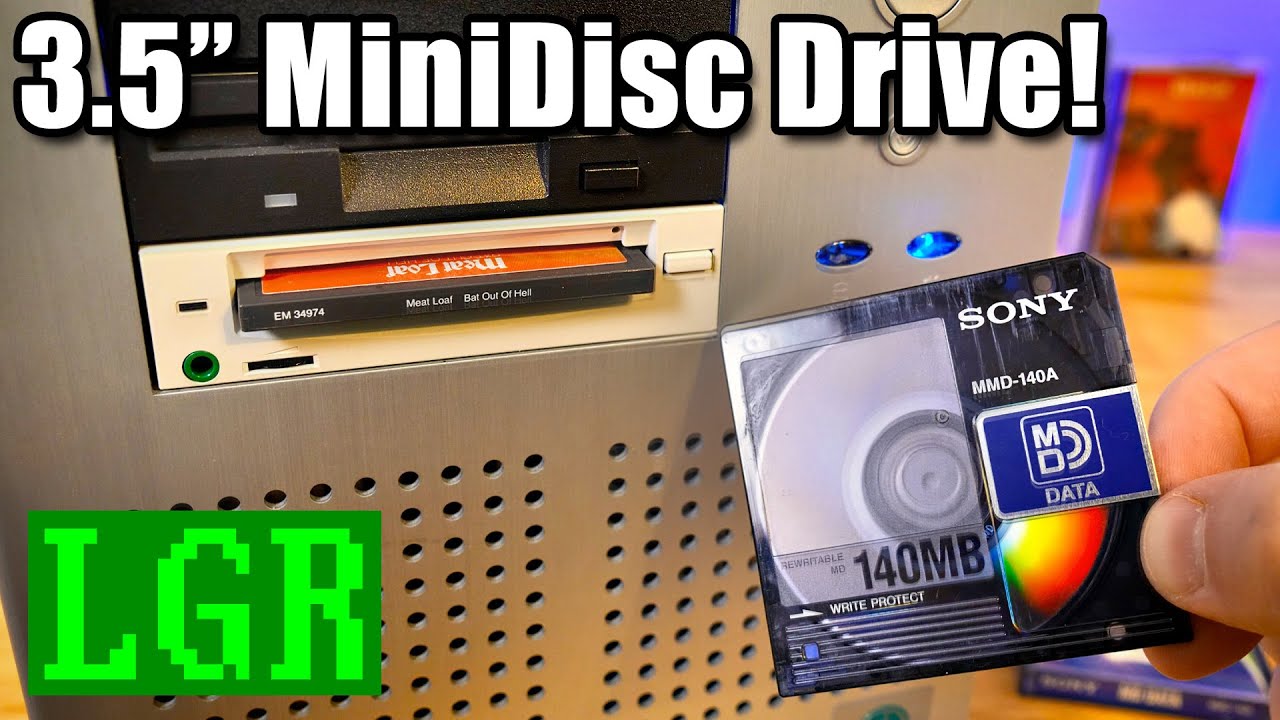
Sony's Internal PC MiniDisc Data Drive: MDM-111
video description
Date: 2025-05-10
Related videos




Comments and reviews: 20
adammeehan828
nostalgia overgasim love your vids i grew up on this stuff and seeing it again makes me long for the simpler times we hit a tipping point where around ps1 ff7 came out we gathered round yee ol ps1 and our minds exploderated. I remember the exact moment we sat around me and 2 friends and lost our collective ish when the open sequence played. since then the graphics get insanely better speeds get faster but recycling a turd just makes it smell worse. I would sit there and play diablo and terminal velocity SHAREWARE cause thats how we did it dX-D back in the day unless you social engineered it up unplugging the modem while trying to activate it writing down cracked codes and hoping no ones paying attention. Siggggggghhhhh. Kids these days thats why they got no discipline never caught a whooping from picking up the phone while someone was online. Accidentally logging into a bbs in brazil so when your mom opens her $400 phone bill you get them hands. X-D the good ol days. Just built my 2nd bd790 pc and no power no lights no nada found myself praying for the hdd clicks but there were no clicks to be had sir.
reply
nostalgia overgasim love your vids i grew up on this stuff and seeing it again makes me long for the simpler times we hit a tipping point where around ps1 ff7 came out we gathered round yee ol ps1 and our minds exploderated. I remember the exact moment we sat around me and 2 friends and lost our collective ish when the open sequence played. since then the graphics get insanely better speeds get faster but recycling a turd just makes it smell worse. I would sit there and play diablo and terminal velocity SHAREWARE cause thats how we did it dX-D back in the day unless you social engineered it up unplugging the modem while trying to activate it writing down cracked codes and hoping no ones paying attention. Siggggggghhhhh. Kids these days thats why they got no discipline never caught a whooping from picking up the phone while someone was online. Accidentally logging into a bbs in brazil so when your mom opens her $400 phone bill you get them hands. X-D the good ol days. Just built my 2nd bd790 pc and no power no lights no nada found myself praying for the hdd clicks but there were no clicks to be had sir.
reply
MM.
$30 for a robust, 140MB rewritable disks with a protective cartridge in 1995 really isn't half-bad, you certainly weren't getting 100 floppy disks for that kind of money. Come to think, the history of storage media is quite idiosyncratic and perhaps a bit unfortunate in places, and it's interesting to think how the world of computing developed if things had been different. Instead of the logical continuation of floppy disks, the backwards-compatible LS120, we got the Zip disk with all its problems, and the MD Data may have actually been a very solid choice for commercial software over easily scratched and of course bigger CD-ROMs (pre-recorded disks weren't MO, but pressed, like CDs); I suppose we wouldn't have seen all those gaudy FMV games in the early to mid-nineties, with 650MB MD Data2 disks becoming available only in 1997.
reply
$30 for a robust, 140MB rewritable disks with a protective cartridge in 1995 really isn't half-bad, you certainly weren't getting 100 floppy disks for that kind of money. Come to think, the history of storage media is quite idiosyncratic and perhaps a bit unfortunate in places, and it's interesting to think how the world of computing developed if things had been different. Instead of the logical continuation of floppy disks, the backwards-compatible LS120, we got the Zip disk with all its problems, and the MD Data may have actually been a very solid choice for commercial software over easily scratched and of course bigger CD-ROMs (pre-recorded disks weren't MO, but pressed, like CDs); I suppose we wouldn't have seen all those gaudy FMV games in the early to mid-nineties, with 650MB MD Data2 disks becoming available only in 1997.
reply
fsfs555
Sony really should've just used the MD Data format for the whole line. It's way too easy to get dust into the disc cartridge with the open spindle on the audio discs and it's a huge pain to clean it out, where the data discs have a full cover (like proper MO discs. It would've been a better selling point if they could've used the same disc for audio and data with portable drives able to read/write both discs (assuming the drive's not playback-only) but Sony's Sony so what they ended up with was a niche audio format and a nearly ignored data format that they quietly dropped. They ended up combining audio and data formats with HiMD but that was too little, too late (and they should've used HiMD on the PSP which would've expanded the market for HiMD and improved the utility of the PSP, but Sony did a Sony again.
reply
Sony really should've just used the MD Data format for the whole line. It's way too easy to get dust into the disc cartridge with the open spindle on the audio discs and it's a huge pain to clean it out, where the data discs have a full cover (like proper MO discs. It would've been a better selling point if they could've used the same disc for audio and data with portable drives able to read/write both discs (assuming the drive's not playback-only) but Sony's Sony so what they ended up with was a niche audio format and a nearly ignored data format that they quietly dropped. They ended up combining audio and data formats with HiMD but that was too little, too late (and they should've used HiMD on the PSP which would've expanded the market for HiMD and improved the utility of the PSP, but Sony did a Sony again.
reply
kellysalyer1972
Hey Clint, I miss my own Lian Li PC-60 case I used to build multiple computers in from when I got it brand new in 2000 through my last build in it in 2009. When I was in college from 1999 through 2004 I used a minidisc portable to record my college lectures during class while taking notes. then when I got home I would feed the recorded class lectures into the Dragon Dictate program on my PC so that I would have each class lecture in written transcribed notes from the Dragon Dictate software. It was a bit buggy at first since it had to learn multiple professor's speech patterns, but work it did. It helped me and several students in my classes pass our tests and write really good subject matter papers. And pass those classes with high grades.
reply
Hey Clint, I miss my own Lian Li PC-60 case I used to build multiple computers in from when I got it brand new in 2000 through my last build in it in 2009. When I was in college from 1999 through 2004 I used a minidisc portable to record my college lectures during class while taking notes. then when I got home I would feed the recorded class lectures into the Dragon Dictate program on my PC so that I would have each class lecture in written transcribed notes from the Dragon Dictate software. It was a bit buggy at first since it had to learn multiple professor's speech patterns, but work it did. It helped me and several students in my classes pass our tests and write really good subject matter papers. And pass those classes with high grades.
reply
richardsmith4992
Tascam were the go to for multitrack home studios back in the 80's and pretty much dominated the market with the C cassette tape format - 4 track, 8 track, even MIDI capable units. Then the move to a digital domain came along and they initially opted to kind of hybrid the design by using MD-Data minidiscs. bad move. The Tascam 564 was their only unit that used this format - was only 4-track, limited to about 30 minutes per disc, using crazy expensive MD-DATA discs, hugely unreliable - try finding a working one on auctions sites today, plenty of spares/non working MD unit offerings. They never went down this route again and moved into hard disk units soon after. Apparently the mixer section was pretty good.
reply
Tascam were the go to for multitrack home studios back in the 80's and pretty much dominated the market with the C cassette tape format - 4 track, 8 track, even MIDI capable units. Then the move to a digital domain came along and they initially opted to kind of hybrid the design by using MD-Data minidiscs. bad move. The Tascam 564 was their only unit that used this format - was only 4-track, limited to about 30 minutes per disc, using crazy expensive MD-DATA discs, hugely unreliable - try finding a working one on auctions sites today, plenty of spares/non working MD unit offerings. They never went down this route again and moved into hard disk units soon after. Apparently the mixer section was pretty good.
reply
hunkydory419
My dad had the Sony MD deck recorder bundle that came with a portable MD player\recorder. Thought it was pretty cool back in the late 90's and the lossy ATRAC audio compression, at the time, sounded way better than MP3 files. Not too long afterwards, my Dad bought a JVC UX_MD9000 stereo shelf system. 20 years later, it still sounds great and is the soundbar for my living room TV. The minidisc portion doesn't work, think it might be a bad transport\mechanical issue. But, the CD player still works and the S/PDIF over TOSLINK from the TV works perfectly. Never had the opportunity to use the DATA side of MD unfortunately but, that's pretty awesome using that type of data compression with DOS, lol.
reply
My dad had the Sony MD deck recorder bundle that came with a portable MD player\recorder. Thought it was pretty cool back in the late 90's and the lossy ATRAC audio compression, at the time, sounded way better than MP3 files. Not too long afterwards, my Dad bought a JVC UX_MD9000 stereo shelf system. 20 years later, it still sounds great and is the soundbar for my living room TV. The minidisc portion doesn't work, think it might be a bad transport\mechanical issue. But, the CD player still works and the S/PDIF over TOSLINK from the TV works perfectly. Never had the opportunity to use the DATA side of MD unfortunately but, that's pretty awesome using that type of data compression with DOS, lol.
reply
me0262
2: 12 Interesting! It actually clicks into place! Normally you just have the drive injector take it in!
25: 55 Open the slider and check the top of the disc, make sure there aren't any scratches on it. I got a VAIO minidisc computer that is having audio cutout issues when it's recording, and the record head appears to be scratching the top surface. I've been talking in the Minidisc reddit thread and the common solution I've been finding is to check the belt, relube the rails, and clean the lens. Pretty much standard faire maintenance for drives that are now pushing 25 years old.
reply
2: 12 Interesting! It actually clicks into place! Normally you just have the drive injector take it in!
25: 55 Open the slider and check the top of the disc, make sure there aren't any scratches on it. I got a VAIO minidisc computer that is having audio cutout issues when it's recording, and the record head appears to be scratching the top surface. I've been talking in the Minidisc reddit thread and the common solution I've been finding is to check the belt, relube the rails, and clean the lens. Pretty much standard faire maintenance for drives that are now pushing 25 years old.
reply
Aproximal
Bit of a thing for people out there. DMD drives and discs still get used by many radio stations in the UK/EU/Japan because they were INSANELY good price to performance in audio. I work in game music here in Japan, and know that Sega still keep a large amount of Mini-disc related media in storage because it's just great stuff. Sony released this stuff too soon, and if they had opened up the tech to being easier to make, it think we'd still be using it. These things are STILL used in some UK radio stations too. Amazing stuff.
reply
Bit of a thing for people out there. DMD drives and discs still get used by many radio stations in the UK/EU/Japan because they were INSANELY good price to performance in audio. I work in game music here in Japan, and know that Sega still keep a large amount of Mini-disc related media in storage because it's just great stuff. Sony released this stuff too soon, and if they had opened up the tech to being easier to make, it think we'd still be using it. These things are STILL used in some UK radio stations too. Amazing stuff.
reply
skunkmyrddyn
With respect to recorded vs produced media, I wonder if it's a difference in the ATRAC versions. There were 4 to 6 versions (depending on how you look at it) across different eras. All models could only read up to the maximum version they supported. So if the newer recordings were done in ATRAC 4, I'd bet the MDM111 might only support the first or maybe second versions of the format. There was also a Type R and Type S version released as well.
reply
With respect to recorded vs produced media, I wonder if it's a difference in the ATRAC versions. There were 4 to 6 versions (depending on how you look at it) across different eras. All models could only read up to the maximum version they supported. So if the newer recordings were done in ATRAC 4, I'd bet the MDM111 might only support the first or maybe second versions of the format. There was also a Type R and Type S version released as well.
reply
clavius5734
The MZ-R1 Hi-MD recorder can be used as a mass storage device, which will give you 1Gb on a Hi-MD, but get this: you can also data-format a REGULAR MD with it to work in the same way- just with 140Mb. So it could be done, Sony just didn’t want it for the first decade of the format’s life. Always bothered me, this could have very well been the successor of the floppy. Atrac could have been MP3, if only we could have gotten them off the disc
reply
The MZ-R1 Hi-MD recorder can be used as a mass storage device, which will give you 1Gb on a Hi-MD, but get this: you can also data-format a REGULAR MD with it to work in the same way- just with 140Mb. So it could be done, Sony just didn’t want it for the first decade of the format’s life. Always bothered me, this could have very well been the successor of the floppy. Atrac could have been MP3, if only we could have gotten them off the disc
reply
SoujiMonaru
Still own a portable player/recorder but don't know if it still works. I haven't used it in a very long time. Back in 1998-2000 I lived in Japan, so I knew a lot about MDs. I own another player/recorder I was gifted from a friend there, so I can't use it since I don't have the right power source (I live in Australia, and never bothered to get a good power converter. I have about 25 MiniDiscs that I copied Jpop and other songs onto.
reply
Still own a portable player/recorder but don't know if it still works. I haven't used it in a very long time. Back in 1998-2000 I lived in Japan, so I knew a lot about MDs. I own another player/recorder I was gifted from a friend there, so I can't use it since I don't have the right power source (I live in Australia, and never bothered to get a good power converter. I have about 25 MiniDiscs that I copied Jpop and other songs onto.
reply
Izzy84075
With recorded discs, there's technically two formats. This drive is likely one of the early ones that only support the original format, later drives/players support MDLP(MiniDisc Long Play, which is a lower bitrate version of the encoding that lets you put more music on any given disc. MDLP discs will act strange on non-MDLP-supporting drives, usually either showing up blank, or showing the track titles but playing garbage audio.
reply
With recorded discs, there's technically two formats. This drive is likely one of the early ones that only support the original format, later drives/players support MDLP(MiniDisc Long Play, which is a lower bitrate version of the encoding that lets you put more music on any given disc. MDLP discs will act strange on non-MDLP-supporting drives, usually either showing up blank, or showing the track titles but playing garbage audio.
reply
stephenkeen6044
The later HiMD players with USB could also be used for storing data on normal MiniDiscs (such as the MZ-RH1 and MZ-NH1, 384MB per standard disc, 1GB per HiMD if I remember correctly, even using a modern OS. Which I like as a way to store smallish amounts of data that I value. It's obscure and very durable, much more so than other removable writable or re-writable formats of time and possibly even today.
reply
The later HiMD players with USB could also be used for storing data on normal MiniDiscs (such as the MZ-RH1 and MZ-NH1, 384MB per standard disc, 1GB per HiMD if I remember correctly, even using a modern OS. Which I like as a way to store smallish amounts of data that I value. It's obscure and very durable, much more so than other removable writable or re-writable formats of time and possibly even today.
reply
lazygamereviews
I think I probably say this on every LGR MiniDisc video but for me, the MiniDisc is hands down the ultimate late 80's, early 90's, sci-fi film storage medium of choice. The scene where the protagonist steals data from the shadowy corporation just wouldn't be the same if they were using a USB stick, or a full size CD. a MiniDisc smuggled underneath a CD in a jewel case Sure. But just a plain old CD Meh.
reply
I think I probably say this on every LGR MiniDisc video but for me, the MiniDisc is hands down the ultimate late 80's, early 90's, sci-fi film storage medium of choice. The scene where the protagonist steals data from the shadowy corporation just wouldn't be the same if they were using a USB stick, or a full size CD. a MiniDisc smuggled underneath a CD in a jewel case Sure. But just a plain old CD Meh.
reply
Lothos88
I worked at Circuit City back in the day in the PC department. The only time I ever saw one of these in person was in a top of the line Sony Vaio desktop that was like $3000 that I think we only ever sold 1 or 2 of. I was a minidisc enthusiast for the portable music players/recorders, and even I was kinda like what's the point as CD burners were becoming a more common thing (believe that same PC had one.
reply
I worked at Circuit City back in the day in the PC department. The only time I ever saw one of these in person was in a top of the line Sony Vaio desktop that was like $3000 that I think we only ever sold 1 or 2 of. I was a minidisc enthusiast for the portable music players/recorders, and even I was kinda like what's the point as CD burners were becoming a more common thing (believe that same PC had one.
reply
TheWhatnought
I love mini discs and if there was a modern capacity size I would absolutely be using it. I totally want that drive but I'd settle for that driver. Why am I just finding out about that now I must go to sleep on it to prevent immediate impulse purchase!
Yeaaaaaah, I'll probably still buy it tomorrow. And then make it do horrible things at work.
reply
I love mini discs and if there was a modern capacity size I would absolutely be using it. I totally want that drive but I'd settle for that driver. Why am I just finding out about that now I must go to sleep on it to prevent immediate impulse purchase!
Yeaaaaaah, I'll probably still buy it tomorrow. And then make it do horrible things at work.
reply
DayJobWorkAccount
If the user-recorded discs are MDLP (LP2/LP4, I'd say that could be why they don't work. If they're SP and they don't work, I would say it's likely because the MDM-111 doesn't like ATRAC3, and it needs the audio to be ATRAC1 or ATRAC2 codec.
I was at VCF East! I wish I could have gotten a bracelet like that and a copy of that MD! :( Bummer.
reply
If the user-recorded discs are MDLP (LP2/LP4, I'd say that could be why they don't work. If they're SP and they don't work, I would say it's likely because the MDM-111 doesn't like ATRAC3, and it needs the audio to be ATRAC1 or ATRAC2 codec.
I was at VCF East! I wish I could have gotten a bracelet like that and a copy of that MD! :( Bummer.
reply
maaadkat
Sony are wholly to blame for failing to seize the opportunity to revolutionise portable media of that era. Their piracy paranoia led them to make some really dumb decisions. There's no good reason why MD couldn't have replaced CDROM (for many usecases - granted, not all) as well as floppy, and could have been the basis for DVD and BluRay.
reply
Sony are wholly to blame for failing to seize the opportunity to revolutionise portable media of that era. Their piracy paranoia led them to make some really dumb decisions. There's no good reason why MD couldn't have replaced CDROM (for many usecases - granted, not all) as well as floppy, and could have been the basis for DVD and BluRay.
reply
jimi-w
I miss my MiniDisc gear. I forked out for a particular sound card (23 years ago so long forgotten which) that had S/PDIF so I could record MP3 straight to my Sony MZ-R70. I kept a sample of my TDK XS-iV discs at least. This unit (and playing audio from MD on MS-DOS) blows my aging mind! I would've sold a kidney for one back in those days.
reply
I miss my MiniDisc gear. I forked out for a particular sound card (23 years ago so long forgotten which) that had S/PDIF so I could record MP3 straight to my Sony MZ-R70. I kept a sample of my TDK XS-iV discs at least. This unit (and playing audio from MD on MS-DOS) blows my aging mind! I would've sold a kidney for one back in those days.
reply
Capturing-Memories
This probably pre-dates the HiMD format. Last year I acquired the Sony MZ-NH3D a portable HiMD deck that connects to PC via a USB cable and able to transfer all formats to computer as well as make MD discs in all formats, It's so cool to control a device from computer such as DAT, DV, HDV, D-VHS which I also have.
reply
This probably pre-dates the HiMD format. Last year I acquired the Sony MZ-NH3D a portable HiMD deck that connects to PC via a USB cable and able to transfer all formats to computer as well as make MD discs in all formats, It's so cool to control a device from computer such as DAT, DV, HDV, D-VHS which I also have.
reply
Add a review, comment
Other channel videos