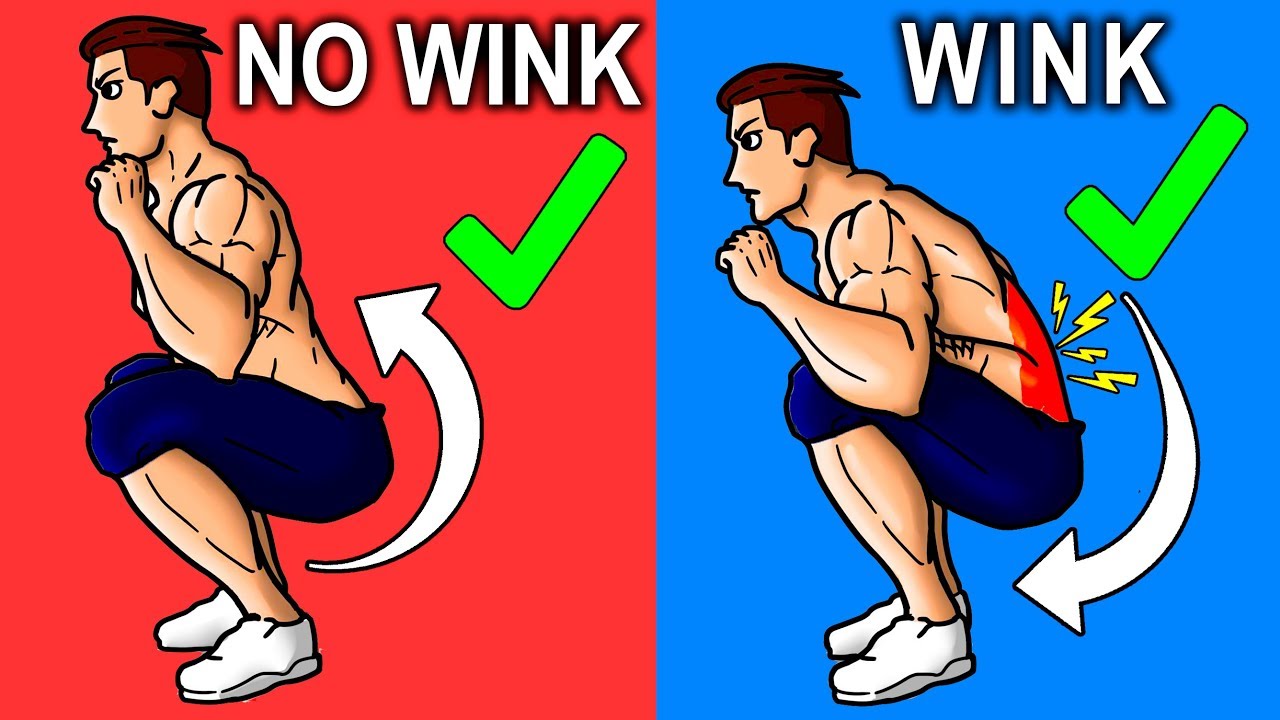
Butt Wink Squat Myth (EVERYONE HAS IT)
video description
Date: 2021-12-23
Related videos


Comments and reviews: 10
Clinton
I think there's something to genetics effecting it and I think it has more to do with the type of spine you have.
Example; the Asian squat or crouching position. The is the ability to crouch down on the floor with your feet perfectly flat without rolling back.
Asians are able to do this naturally while a lot of us Caucasians struggle. I know that I personally have to round my back just to keep my weight forward when doing this, otherwise I end up rolling backwards.
And I think it's because of the shape of the spine. If the upper back swoops backwards, that's going to pull the weight of the shoulder girdle, the neck and the head backwards, and so a need to compensate is needed. I think something similar is going on with the butt wink.
That's just a theory of mine andI could be wrong.
reply
I think there's something to genetics effecting it and I think it has more to do with the type of spine you have.
Example; the Asian squat or crouching position. The is the ability to crouch down on the floor with your feet perfectly flat without rolling back.
Asians are able to do this naturally while a lot of us Caucasians struggle. I know that I personally have to round my back just to keep my weight forward when doing this, otherwise I end up rolling backwards.
And I think it's because of the shape of the spine. If the upper back swoops backwards, that's going to pull the weight of the shoulder girdle, the neck and the head backwards, and so a need to compensate is needed. I think something similar is going on with the butt wink.
That's just a theory of mine andI could be wrong.
reply
Luke
You could argue that ATG squats arent usually performed with a heavy weight on the back (such as when people take a shit. Yes, yes you could argue that lol. I feel like you glossed over that. I think that some people do experience low back pain as a result of PPT under load, and I think Im one of those people. As such I try to limit my depth to the point where it feels that its not placing strain on my lower back. It feels really tough to gauge sometimes.
Also, since many of us are perpetually in a state of APT, Ive heard it suggested that before initiating a squat you should squeeze your glutes and actually start by posteriorly tilting your pelvis (into neutral) before beginning the movement.
reply
You could argue that ATG squats arent usually performed with a heavy weight on the back (such as when people take a shit. Yes, yes you could argue that lol. I feel like you glossed over that. I think that some people do experience low back pain as a result of PPT under load, and I think Im one of those people. As such I try to limit my depth to the point where it feels that its not placing strain on my lower back. It feels really tough to gauge sometimes.
Also, since many of us are perpetually in a state of APT, Ive heard it suggested that before initiating a squat you should squeeze your glutes and actually start by posteriorly tilting your pelvis (into neutral) before beginning the movement.
reply
JasArtStudios
You've got a tall hill to climb here, AthleanX is vehemently opposed to butt wink. But, (lol, butt) I like the counter-argument you pose here. I've been more considerate of the amount of butt wink, and the moment I experience it ever since learning about it. But (he-he-he-he) I don't feasibly see a reality where a person could go past parallel (ass to grass) and _not_ experience butt wink.
reply
You've got a tall hill to climb here, AthleanX is vehemently opposed to butt wink. But, (lol, butt) I like the counter-argument you pose here. I've been more considerate of the amount of butt wink, and the moment I experience it ever since learning about it. But (he-he-he-he) I don't feasibly see a reality where a person could go past parallel (ass to grass) and _not_ experience butt wink.
reply
Tiberius
6: 34 THE WRESTLING CLIP IS FROM MY COLLEGE TEAM. Thats Sacramento citys Derik aka Kama leeloy wrestling Arman Frayazi from Santa Ana. Im on the side watching this match with coach Pacheco. Kama went on to become a state champ. Arman took 3rd. I also pinned Arman in the first round that year. Im so tripped out that Im in your video!
reply
6: 34 THE WRESTLING CLIP IS FROM MY COLLEGE TEAM. Thats Sacramento citys Derik aka Kama leeloy wrestling Arman Frayazi from Santa Ana. Im on the side watching this match with coach Pacheco. Kama went on to become a state champ. Arman took 3rd. I also pinned Arman in the first round that year. Im so tripped out that Im in your video!
reply
Flaffa
good video but this kind of message will make trainees even more lazy than they already are. gaining rom in ankle dorsaflexion and hip internal rotation will Always reduce buttwink in any athlete. im not saying buttwink is 100% wrong but its better to reduce as much as possible by corrective mobilisation.
reply
good video but this kind of message will make trainees even more lazy than they already are. gaining rom in ankle dorsaflexion and hip internal rotation will Always reduce buttwink in any athlete. im not saying buttwink is 100% wrong but its better to reduce as much as possible by corrective mobilisation.
reply
Mystery47
It's hard to feel bad for morons who squat without safety bars in place. A couple of your clips were really cringeworthy. As for how low - use the first couple sets of squats when you are using relatively light weight to squat all the way down. Then, do the rest of your sets without a butt-wink.
reply
It's hard to feel bad for morons who squat without safety bars in place. A couple of your clips were really cringeworthy. As for how low - use the first couple sets of squats when you are using relatively light weight to squat all the way down. Then, do the rest of your sets without a butt-wink.
reply
Andres
Besides youre spine and pelvis I feel like youre knees play a huge roll in squats obviously. I deal with some pain in right hip and my knees. I have a wide stance when doing squats. If try to go more narrow I start to experience a lot of pain in my right kneecap and hip. Anybody else?
reply
Besides youre spine and pelvis I feel like youre knees play a huge roll in squats obviously. I deal with some pain in right hip and my knees. I have a wide stance when doing squats. If try to go more narrow I start to experience a lot of pain in my right kneecap and hip. Anybody else?
reply
Dani
I think this video is preety good but it has a mistake at the very end, hamstrings doesnt stretch at all in the squat cause as u flex ur knees, u flex ur hip and the relative stretch on your hamstring shouldnt change that much. However stretching ankles and lowerback should help.
reply
I think this video is preety good but it has a mistake at the very end, hamstrings doesnt stretch at all in the squat cause as u flex ur knees, u flex ur hip and the relative stretch on your hamstring shouldnt change that much. However stretching ankles and lowerback should help.
reply
Julianna
Thank you so so much. I dont feel like a failure at the squat anymore. i think youre truly right about genetics and having deep or shallow hip sockets, hence why some ppl have easier time learning and getting into splits as an adult compared to others.
reply
Thank you so so much. I dont feel like a failure at the squat anymore. i think youre truly right about genetics and having deep or shallow hip sockets, hence why some ppl have easier time learning and getting into splits as an adult compared to others.
reply
Sofiane
Look at those wheigts they put on their backs though. You're a humain, you have one body, don't overload. And don't try to progress too fast on it. It's the same for everything, I already (slightly) injured my left shoulder while doing pull-ups so
reply
Look at those wheigts they put on their backs though. You're a humain, you have one body, don't overload. And don't try to progress too fast on it. It's the same for everything, I already (slightly) injured my left shoulder while doing pull-ups so
reply
Add a review, comment
Other channel videos




 5:28
5:28